Help us get this right
Does this portrait look right for Minh Hương?
Nobody has judged this one yet. You would be the first.
Minh Hương Erotic
Central and southern Vietnam (Hội An, Biên Hòa, Mỹ Tho, Hà Tiên, Chợ Lớn in today's Ho Chi Minh City); origins in Fujian and Guangdong, southern China.
Originally southern Chinese varieties such as Hokkien, Cantonese and Teochew (Sino-Tibetan, Sinitic); shifted to Vietnamese (Austroasiatic, Vietic), with Classical Chinese kept for ritual and records.
Chinese folk religion and ancestor veneration, with Mahayana Buddhism and Confucian ritual; temple cults of Quan Công (Guan Yu) and Thiên Hậu (Mazu).
Sino-Vietnamese community of Ming loyalist descent; legally distinct from later Qing-era Chinese migrants (Thanh nhân, today's Hoa); descendants absorbed into the Kinh majority.
About Minh Hương People
The Minh Hương were the Ming loyalist Chinese who fled the Qing conquest in the 17th century and settled in what is now central and southern Vietnam, together with the mixed Chinese and Vietnamese families they founded; by the early 20th century they had merged into the Vietnamese majority, and their descendants today are counted as Kinh, not as ethnic Chinese. The name says what they were about. It was first written with characters meaning Ming incense, for people who kept the incense burning for a fallen dynasty. In 1827 the emperor Minh Mạng had it rewritten as Ming village, an administrative edit that turned a political loyalty into a place of origin.
They came in waves. Fujianese merchants had a Minh Hương village at the port of Hội An by the mid 1600s. In 1679 two Ming commanders, Dương Ngạn Địch and Trần Thượng Xuyên, arrived with about three thousand men and fifty ships, and the Nguyễn lord, unwilling to keep a foreign army near his capital, pointed them south to the Mekong frontier, on land that was still Khmer. They built trading towns at Mỹ Tho and Cù Lao Phố near Biên Hòa. When the Tây Sơn wars wrecked Cù Lao Phố in the 1770s, its merchants moved downriver and built what became Chợ Lớn, now part of Ho Chi Minh City. Farther west, the Guangdong-born Mạc Cửu ran Hà Tiên as a near independent port before placing it under Nguyễn protection in 1708.
What set them apart from later Chinese arrivals was law as much as ancestry. The Nguyễn state registered Minh Hương in their own villages, separate from the congregations of "Qing people" who came afterward and stayed foreign on paper. Minh Hương men married Vietnamese women, wore Vietnamese dress, never adopted the Qing queue, were taxed under their own category, and could sit the civil service examinations. Trịnh Hoài Đức, who wrote the standard gazetteer of the south, and Ngô Nhân Tịnh were both Minh Hương mandarins, and Phan Thanh Giản, the court's negotiator with the French, came from a Minh Hương family.
Language went the way of dress. The settlers spoke Hokkien, Cantonese, Teochew and other southern Chinese tongues; within a few generations their households spoke Vietnamese, with classical Chinese kept for ritual and record. Religion held longer. Minh Hương communal houses and temples to Quan Công and Thiên Hậu doubled as guild halls and archives, and some still stand. At the Minh Hương Gia Thạnh hall in Chợ Lớn, founded in 1789, descendants still gather to honor the founding generation. Under French rule they were classed legally with the Vietnamese, and that is where they have stayed.
Related ethnic groups
Groups that share Minh Hương's homeland, region, language, or religious tradition. These are likely candidates for comparative phenotype reference.
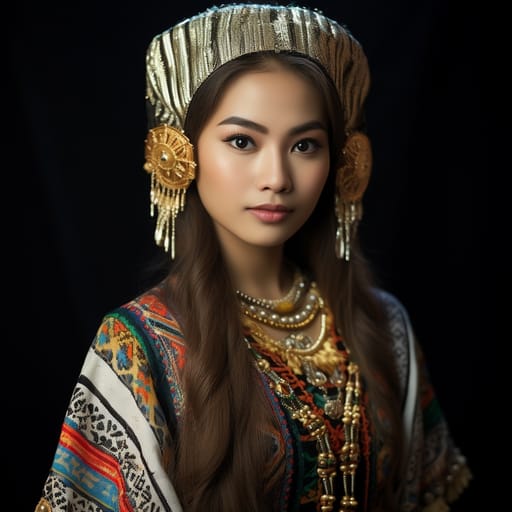
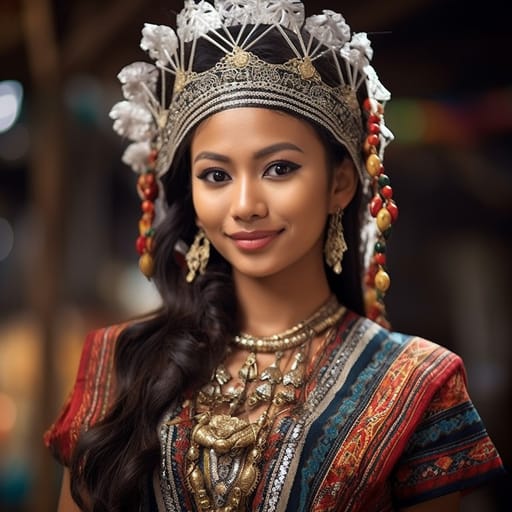
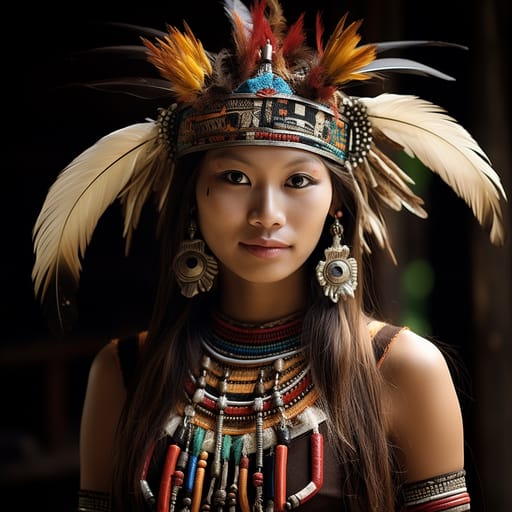
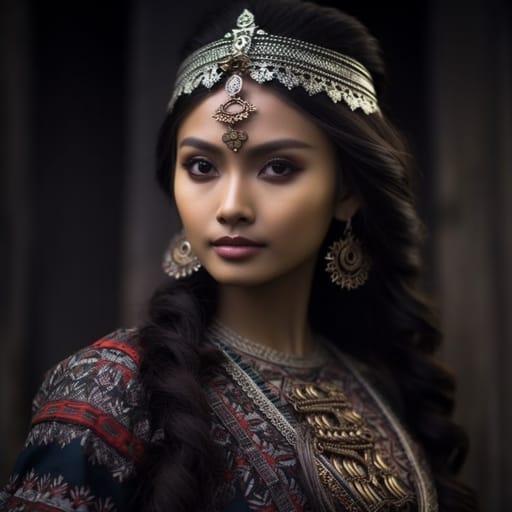
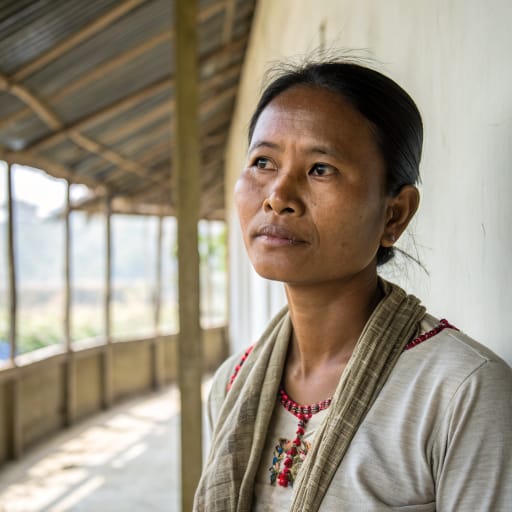
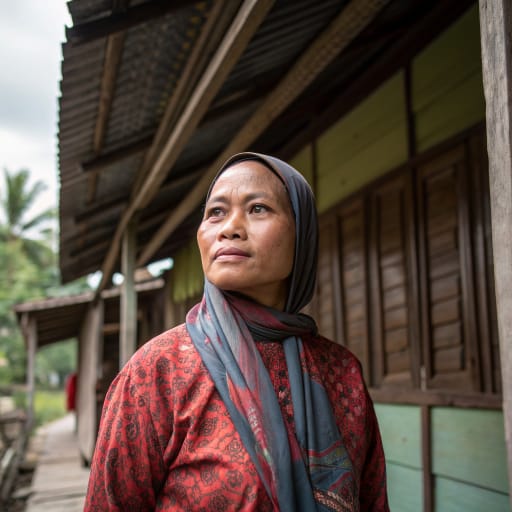
Typical Minh Hương Phenotypes
Reference for AI generation: hair, eyes, skin, facial structure, build
Minh Hương Body & Anatomy Reference
Anatomy by feature, Southeast Asian Austronesian / Austroasiatic phenotype
Minh Hương Boobs & Breasts
Minh Hương boobs follow the Southeast Asian Austronesian / Austroasiatic profile: small-to-medium cup, modest projection. Areolar diameter is usually 26-38mm, and the coloring is medium-brown to dark-brown areolar pigmentation against the tan-to-medium-brown skin tone. Breast shape tracks body composition (ectomorph, petite frame, mean adult female BMI 20-23), so Minh Hương breasts tend to be firm, modest projection. Expect a forward-set shape, not the fuller South Asian or Polynesian bust.
Minh Hương Ass & Hips
Minh Hương ass and hip morphology presents as small-to-medium, modest projection, narrower hip profile, distinctly different from the fuller glutes of the Pacific Islander phenotype. The Minh Hương pelvic profile shows narrow-to-medium iliac crests, anchored in the Southeast Asian Austronesian / Austroasiatic skeletal pattern. Minh Hương butt shots in adult AI imagery should render the small-to-medium, modest projection, narrower hip profile silhouette with the overall build (ectomorph, petite frame) and the fat distribution typical of the Southeast Asian Austronesian / Austroasiatic phenotype.
Minh Hương Vagina & Pussy
Minh Hương pussy anatomy typically shows medium-brown to dark-brown labial pigmentation. Pubic hair is usually straight-to-wavy fine-to-medium texture. In AI-generated Minh Hương nudes, labial color should blend into the tan to medium-brown skin with a gradual transition, and the hair should keep its straight-to-wavy fine-to-medium texture.
Minh Hương Dicks & Penis
Penis reference for Minh Hương men: regional mean ~11cm erect, moderate girth. Coloring: medium-brown shaft pigmentation. An accurate Minh Hương cock in AI imagery matches the surrounding tan to medium-brown skin rather than a generic porn default. Circumcision depends on religion and custom, not ancestry.
Minh Hương Body, Curves & Build
The Minh Hương figure is generally ectomorph, petite frame, with mean adult female BMI 20-23, characteristic of Southeast Asian Austronesian / Austroasiatic ancestry. AI image tools tend to flatten regional body types into a few stock shapes; here the Minh Hương build is kept as its own reference.
Minh Hương Skin Tone & Hair Texture
Skin: tan to medium-brown (Fitzpatrick III-V). Hair: straight-to-wavy 1A-2A, dark-brown to black. Both are typical of Southeast Asian Austronesian / Austroasiatic ancestry. The most common mistake in AI nudes of Minh Hương women is a body rendered lighter than the face.
Explore phenotype categories
Structured taxonomy with peer-reviewed scales · 22 anatomical categories
Erotic Poses & Sex Positions
From the pose catalog: 219 named positions with reference skeletons
Frequently asked questions about Minh Hương people
Where is the Minh Hương homeland?
The Minh Hương homeland is Central and southern Vietnam (Hội An, Biên Hòa, Mỹ Tho, Hà Tiên, Chợ Lớn in today's Ho Chi Minh City); origins in Fujian and Guangdong, southern China. in Southeast Asia.
What language do Minh Hương people speak?
Minh Hương people primarily speak Originally southern Chinese varieties such as Hokkien, Cantonese and Teochew (Sino-Tibetan, Sinitic); shifted to Vietnamese (Austroasiatic, Vietic), with Classical Chinese kept for ritual and records..
What religion do Minh Hương people practice?
The predominant religion among Minh Hương people is Chinese folk religion and ancestor veneration, with Mahayana Buddhism and Confucian ritual; temple cults of Quan Công (Guan Yu) and Thiên Hậu (Mazu)..






Make your own Minh Hương images
Five a day, free, no credits to buy. The studio starts from this group's phenotype data, so you can set body type, pose and style and keep the traits accurate.
Start with Minh Hương