
Help us get this right
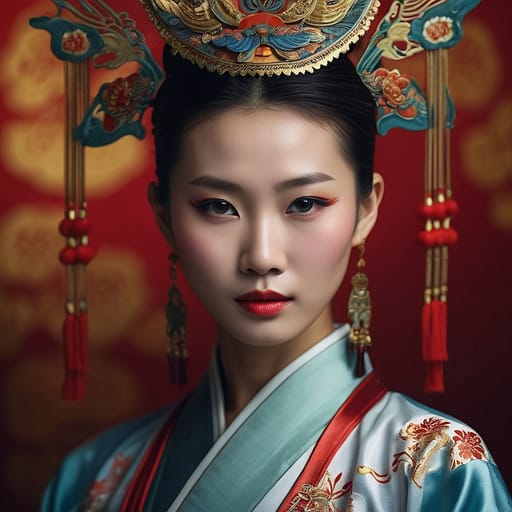
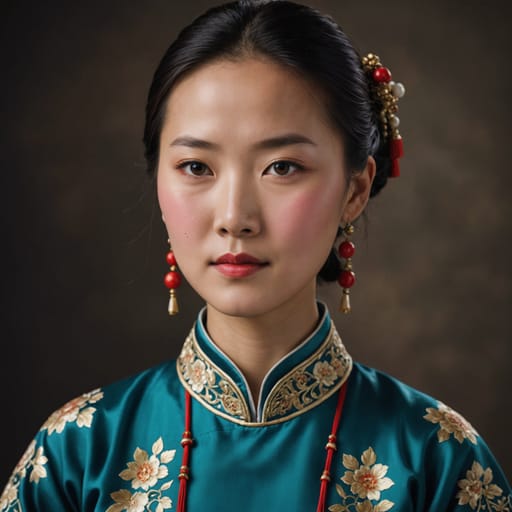
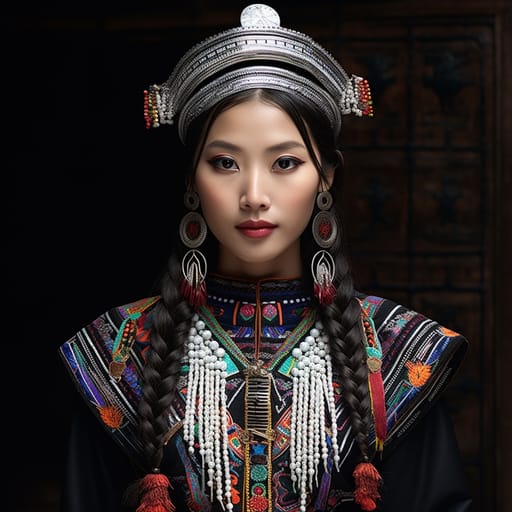
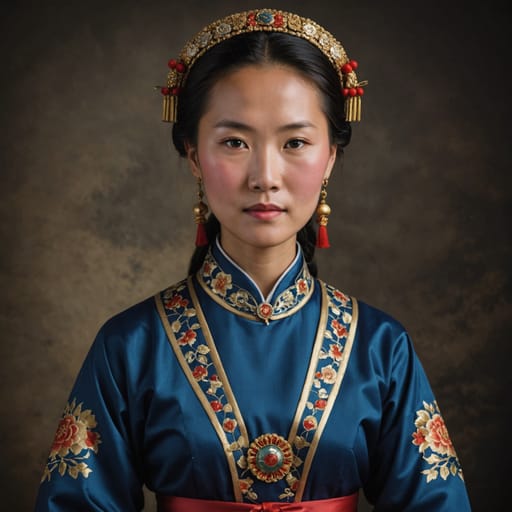
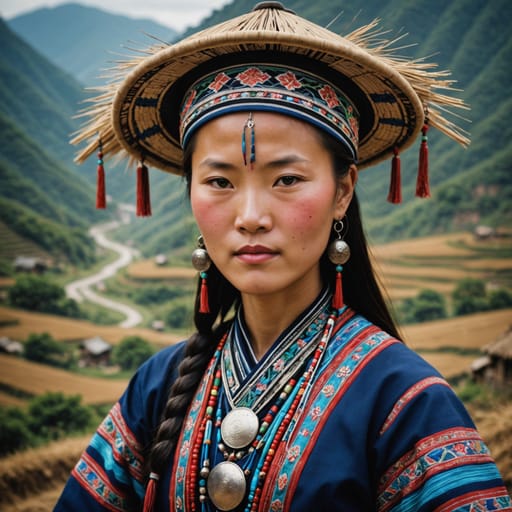
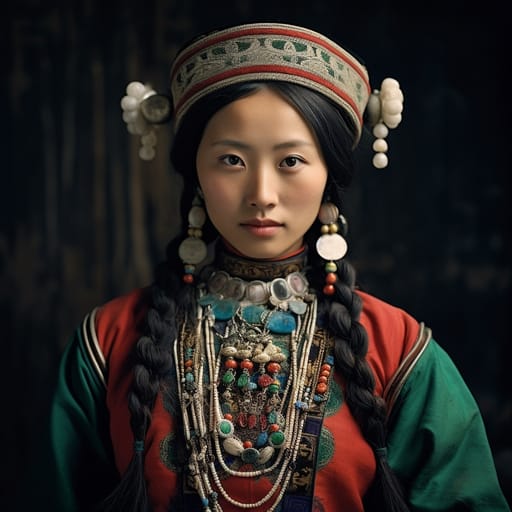
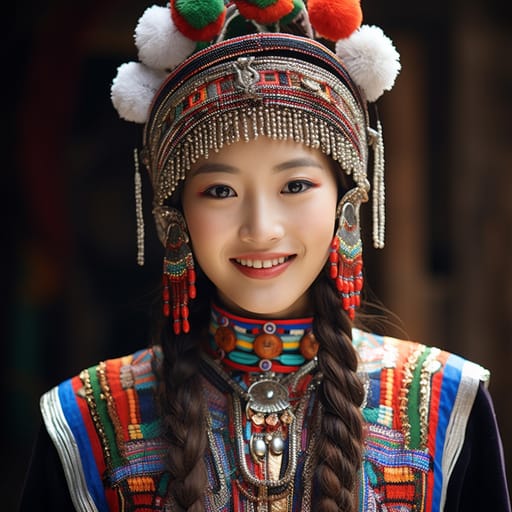
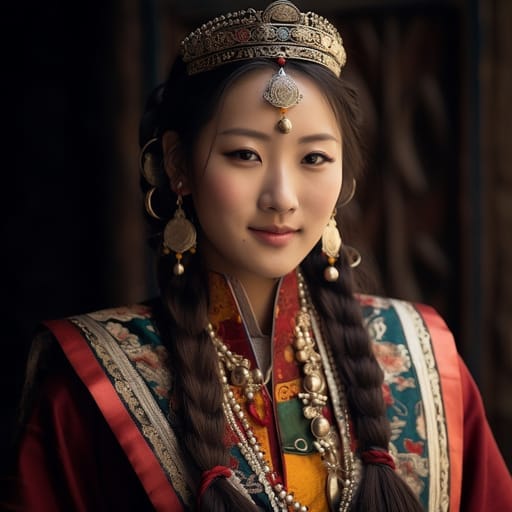
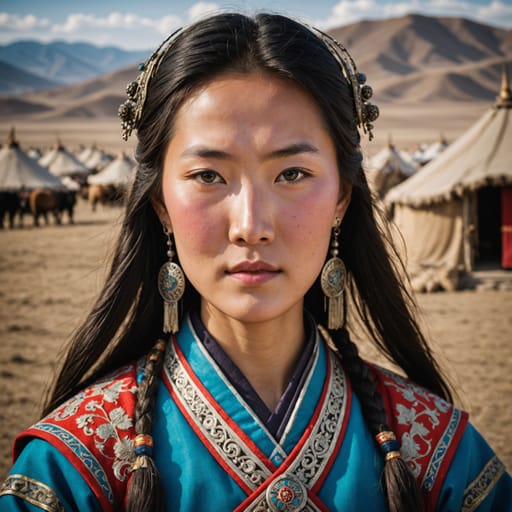
Does this portrait look right for Han Chinese?
One tap. It takes a second and it is recorded.
1 says it looks right, 0 say it looks off.

China
CNEast Asia
China is home to 10 documented ethnic groups in East Asia, led by Han Chinese (~92%), Other Chinese Minorities (~2%), Zhuang (~1%), Hui (~1%). This page blends their phenotype and demographic data into one weighted reference: skin tone, facial features, hair texture and build, drawn from published census and ancestry sources.
Demographic Composition
Composition weights are derived from self-identification in published census and demographic surveys. Each row links to the source ethnic-group atlas page.
| Ethnic group | Weight | Source |
|---|---|---|
 Han Chinese Han Chinese | 91.7% | National Bureau of Statistics of China, 7th National Population Census 2020 (Seventh Population Census), self-identified Han (~91.1% of mainland population, ~1.286 billion people); the largest single ethnic group in the world by population. The Han umbrella encompasses substantial regional sub-populations (Northern Han, Southern Han, Hakka, Hoklo/Min, Cantonese/Yue, Wu, Hunanese, Sichuanese) with detectable genetic and phenotypic differentiation along a north-south gradient documented in Chinese genome-wide studies |
 Other Chinese Minorities Other Chinese Minorities | 2.3% | China 2020 Census, self-identified other recognized ethnic minorities (~32.4M combined); the residual after the major minority groups, comprising approximately 46 of China's 55 officially-recognized ethnic minority nationalities including Tujia, Dong, Bouyei, Yao, Bai, Korean (Chosŏnjok), Hani, Kazakh, Li, Dai, She, Lisu, Gelao, Lahu, Va, Sui, Naxi, Qiang, Tu, Mulao, Xibe, Kyrgyz, Salar, Daur, Bonan, Maonan, Tajik, Pumi, Achang, Nu, Evenki, Jing, Jino, De'ang, Uzbek, Russian, Yugur, Bonan, Monba, Oroqen, Drung, Tatar, Hezhen, Lhoba, Gaoshan (the PRC term for Taiwan Indigenous peoples) |
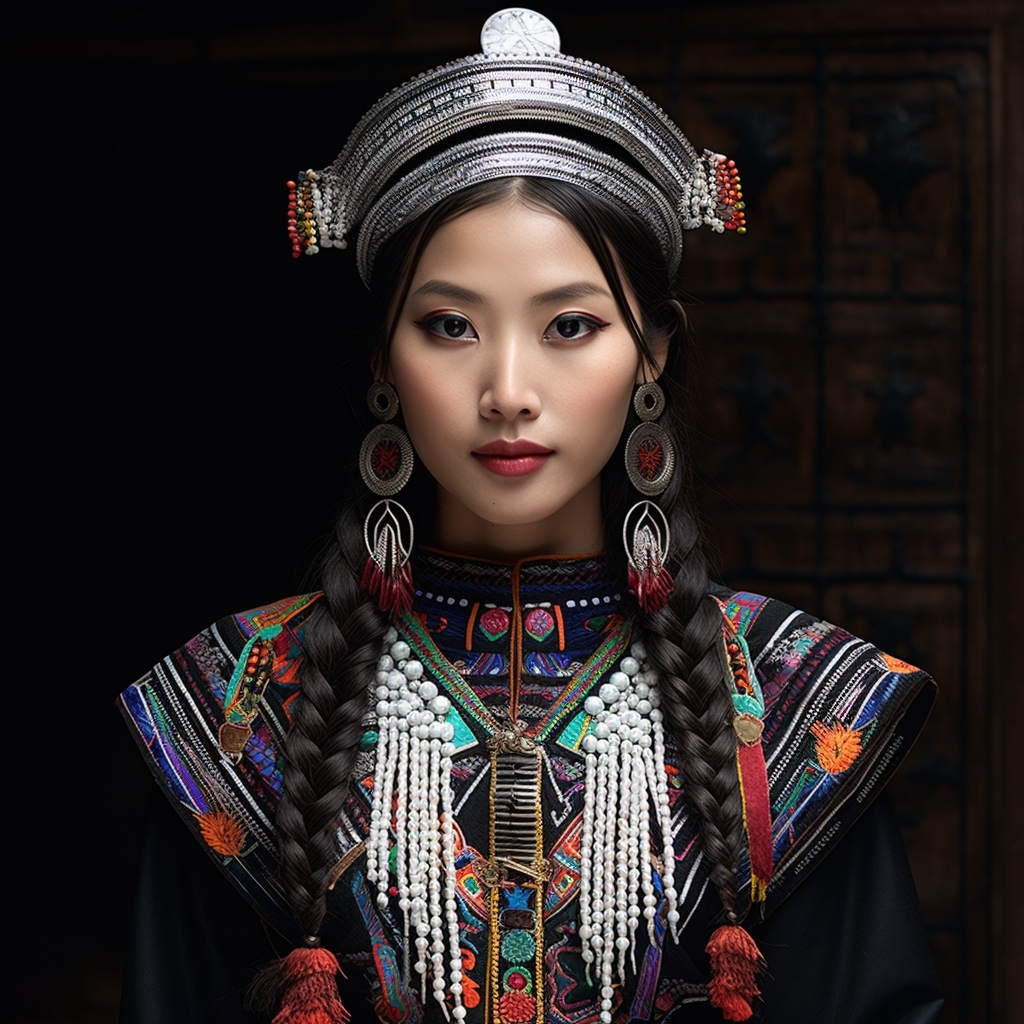 Zhuang Zhuang | 1.3% | China 2020 Census, self-identified Zhuang (~19.6M); the largest ethnic minority in China, concentrated in Guangxi Zhuang Autonomous Region with smaller populations in Yunnan and Guangdong. Speak Tai-Kadai language family languages |
 Hui Hui | 0.8% | China 2020 Census, self-identified Hui (~11.4M); the Sinophone Muslim ethnic group, distributed across China with concentrations in Ningxia Hui Autonomous Region, Gansu, Henan, Xinjiang, and Yunnan. Han Chinese-language-speaking but distinct in religion (Sunni Islam) and culinary tradition |
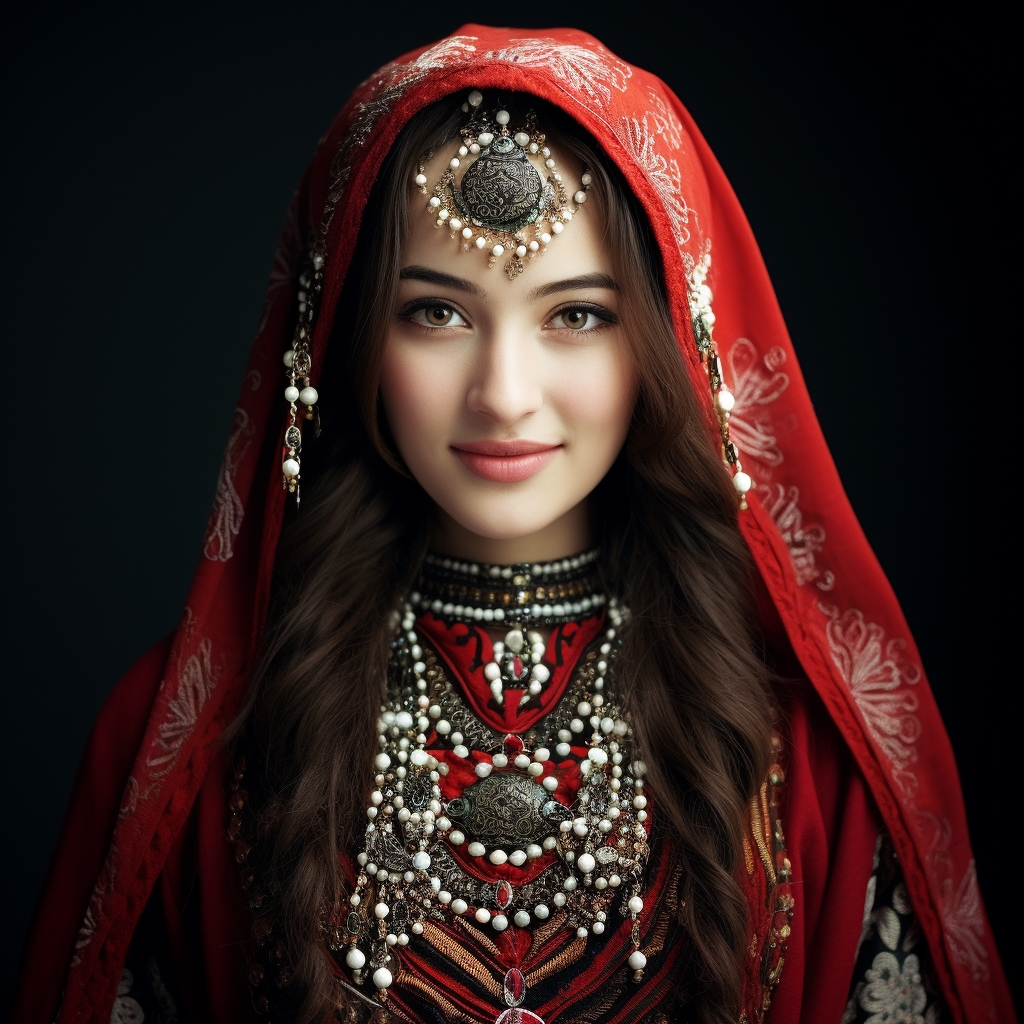 Uyghur Uyghur | 0.8% | China 2020 Census, self-identified Uyghur (~11.8M); concentrated in Xinjiang Uyghur Autonomous Region. Turkic-language-speaking Sunni Muslim population with substantial cultural and linguistic ties to Central Asia. Subject to documented mass detention and surveillance under Chinese state policy 2017-present |
 Miao Miao | 0.8% | China 2020 Census, self-identified Miao (~11.1M); concentrated in Guizhou, Hunan, Yunnan, Sichuan, Hubei, and Guangxi. Hmong-Mien language family. The cross-border population includes the Hmong of Vietnam, Laos, Thailand, and the United States diaspora |
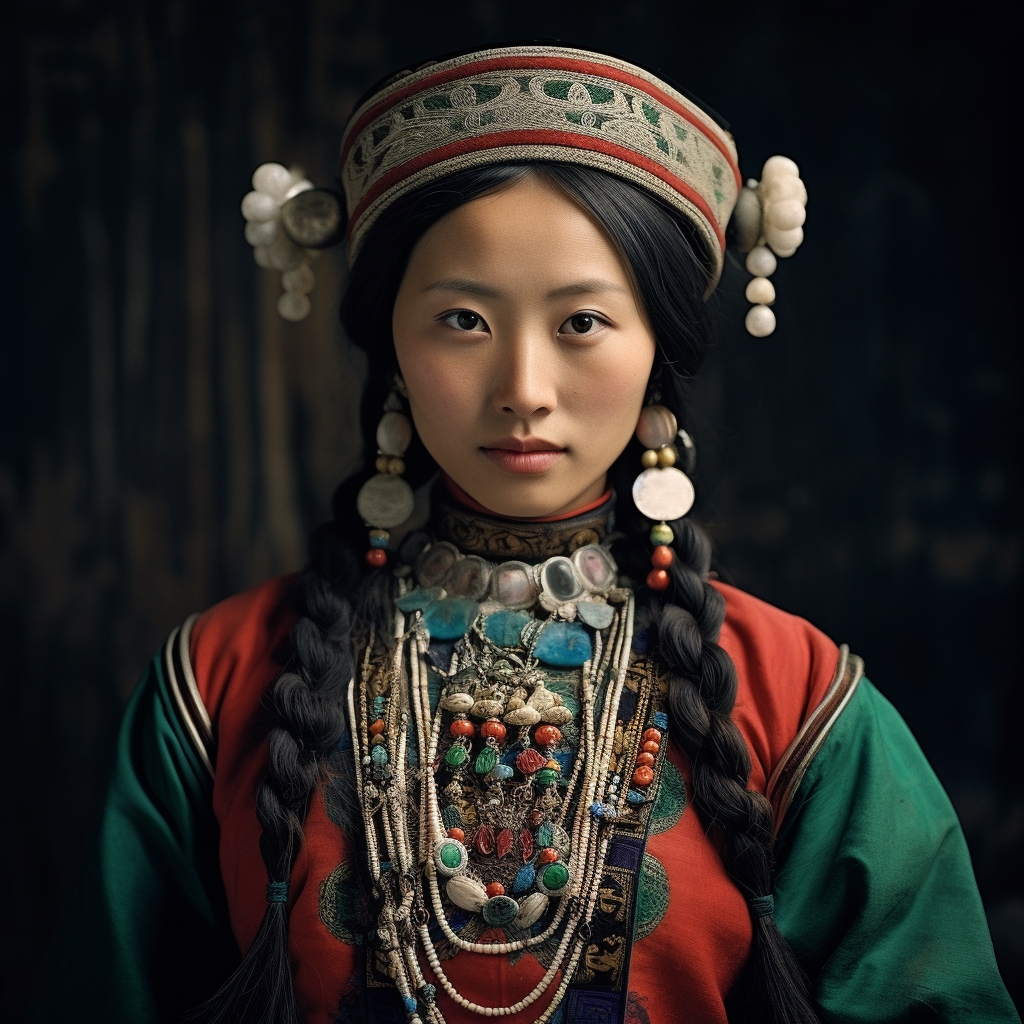 Manchu Manchu | 0.7% | China 2020 Census, self-identified Manchu (~10.4M); the historical ruling ethnic group of the Qing Dynasty (1644-1912), now concentrated in Liaoning, Hebei, Heilongjiang, Jilin, and Beijing. The Manchu language is critically endangered with only a few hundred fluent speakers, but ethnic self-identification has remained strong |
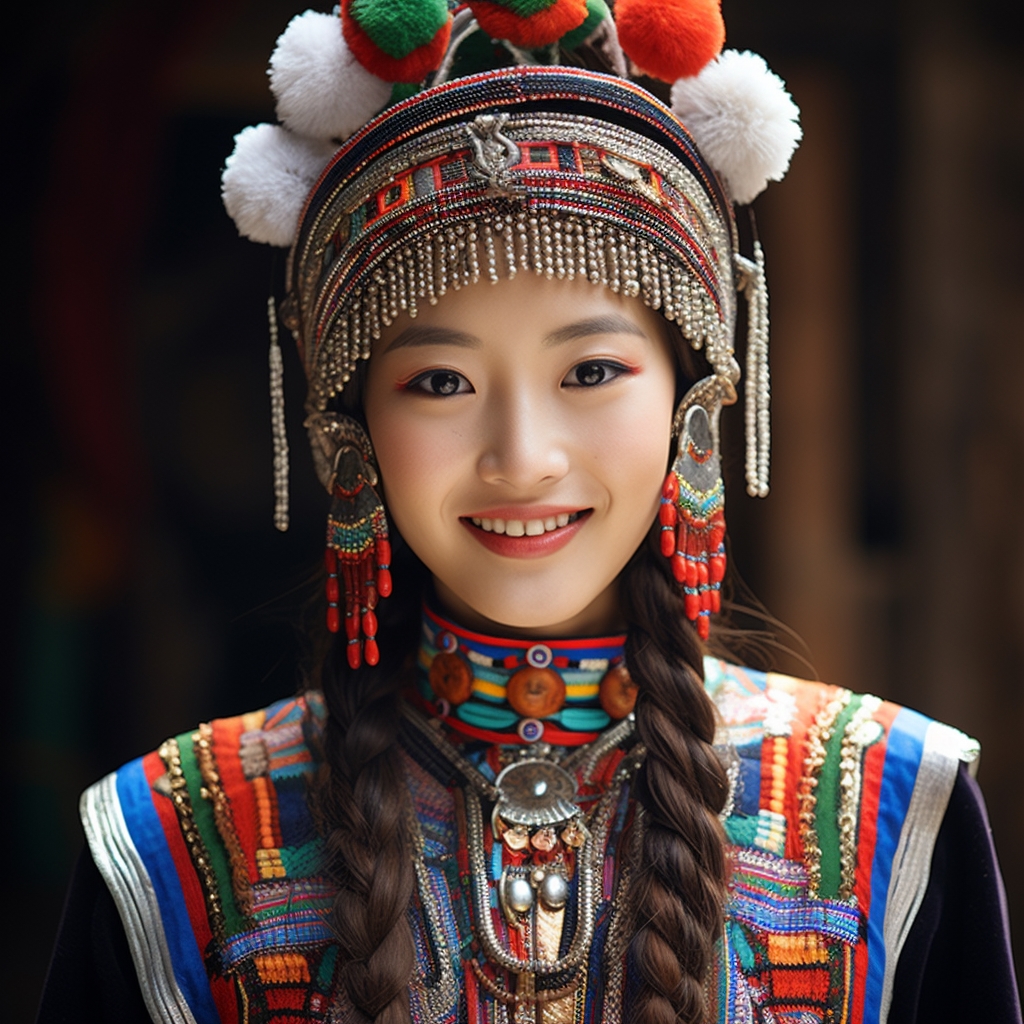 Yi Yi | 0.7% | China 2020 Census, self-identified Yi (~9.8M); concentrated in Yunnan, Sichuan, and Guizhou. Tibeto-Burman language family. Historically called Lolo in older Western ethnographic literature |
 Tibetan Tibetan | 0.5% | China 2020 Census, self-identified Tibetan (~7.1M in PRC); concentrated in Tibet Autonomous Region, Qinghai, Sichuan, Gansu, and Yunnan. The cross-border ethnic Tibetan population includes substantial communities in India, Nepal, and Bhutan plus the global Tibetan diaspora |
 Mongol Chinese Mongol Chinese | 0.4% | China 2020 Census, self-identified Mongol (~6.3M in PRC); concentrated in Inner Mongolia Autonomous Region, with smaller populations in Liaoning, Jilin, Heilongjiang, Xinjiang, and Qinghai. Cross-border population shared with the independent state of Mongolia |
Measured in portraits
Per-group trait distributions from documented photographs
China Phenotype Profile
China's population is dominated by the Han Chinese ethnic group (~91.1% per the 2020 Census) plus 55 officially-recognized ethnic minority nationalities (~8.9% combined, approximately 125 million people). The country's demographic structure reflects approximately 4,000+ years of population processes: the Han ethnogenesis along the Yellow River basin and southward expansion, the survival of pre-Han Indigenous populations in southwestern uplands and southern uplands (Zhuang, Miao, Yi, Bai, Tujia, Dong, etc.), the Northeast Asian Tungusic and Mongolic populations of Manchuria and Inner Mongolia, the Tibetan and Tibeto-Burman populations of the western highland plateau, the Turkic and Iranian populations of the northwestern oasis-and-desert zone (Uyghur, Kazakh, Kyrgyz, Uzbek, Tatar, Tajik, Salar), and the historical Sinophone Muslim Hui population distributed across the country. Genome-wide studies (HUGO Pan-Asian SNP Consortium 2009, Chen et al. 2009, Xu et al. 2008, Yang et al. 2017) document a complex internal genetic structure with a clear north-south Han gradient plus distinct ethnic-minority clusters that align with broader Eurasian patterns: Northern Han clusters with Korean and Manchurian populations; Southern Han clusters with Tai-Kadai and Austroasiatic-speaking populations of southern China and Southeast Asia; Tibetan, Tibeto-Burman, and Mongolic populations form distinct East Asian clusters; Uyghur and other northwestern Turkic-speaking populations occupy an intermediate position between East and West Eurasian source populations.
Skin tone across the population spans Fitzpatrick II-V with III the modal value nationally. The northern half of the country (Northeast, North, Northwest excluding Xinjiang) skews toward II-III. Southern China (Guangdong, Guangxi, Hainan, Yunnan, Fujian, Hunan, Jiangxi) skews toward III-IV. Tibetan Plateau populations skew toward III-IV with copper-bronze undertone. Xinjiang populations show the broadest within-region phenotype range due to the substantial Uyghur and other Turkic populations carrying ~50% West Eurasian ancestry. Hair is overwhelmingly straight (Andre Walker 1A-1B) and uniformly black/very dark brown across most of the population, with the Uyghur and northwestern Turkic populations showing somewhat broader hair-texture (1A-2B) and color (some medium-brown and lighter variants) distributions. Eye color is uniformly brown to dark brown across most of the population, with elevated light-eye frequencies in Uyghur and other northwestern Turkic populations. Facial features and build similarly track the regional and ethnic-source-population distinctions. Internal variance is substantial; the country's regional and ethnic-minority diversity is among the most extensive of any single national population.
China Body & Anatomy Reference
Per-feature anatomical profile for AI nude generation: East Asian Sinitic / Mongoloid phenotype dominant in China
China Women: Boobs & Breasts
China women's tits and boobs reflect the small-to-medium cup, modest projection East Asian Sinitic / Mongoloid bust profile dominant in the China demographic composition. China nipples and areolas show light-pink to medium-brown areolar pigmentation against the light-to-medium skin tone, with areolar diameter typically in the 26-36mm range, distinct from the the fuller South Asian or Levantine bust profile. China breast morphology trends firm and modestly projecting; smaller cup size than the South Asian or Western Asian average, a function of the ectomorph-to-mesomorph, lean frame body habitus and mean adult female BMI 20-23. For anatomically-accurate AI-generated China nude women the render should preserve: small-to-medium cup, modest projection shape, 26-36mm areolas with regional pigmentation, and the torso proportions of the East Asian Sinitic / Mongoloid phenotype.
China Women: Ass & Hips
China women's ass and hip morphology presents as small-to-medium, modest projection, narrower hip profile, distinctly different from the fuller projected glutes of the West African or Polynesian phenotype. China pelvic profile shows narrower iliac crests, less gluteal-femoral fat deposition, anchored in the East Asian Sinitic / Mongoloid skeletal pattern that dominates the China ethnic composition. China butt shots in adult AI imagery should render the small-to-medium, modest projection, narrower hip profile silhouette with the ectomorph-to-mesomorph, lean frame build and the gluteal-femoral fat distribution typical of the East Asian Sinitic / Mongoloid phenotype rather than defaulting to a globally-averaged shape that generic AI generators produce.
China Women: Vagina & Pussy
China women's pussy and vulvar anatomy presents light-pink to medium-brown labial pigmentation, smaller labia minora, consistent with the East Asian Sinitic / Mongoloid phenotype's pigmentation pattern dominant in China. China pubic hair is typically straight fine texture, sparser distribution than the South Asian norm, distributed in the inverted-triangle pattern with regional-typical density. AI-generated China nude imagery should preserve the light-pink to medium-brown labial pigmentation and the straight fine texture hair texture rather than defaulting to a Western-European pink-and-sparse template. For anatomically-accurate China pussy renders the labial pigmentation should match the surrounding light to medium skin tone of the East Asian Sinitic / Mongoloid phenotype.
China Men: Dicks & Penis
China men's dick and penile anatomy in adult AI generation should anchor on the regional reference data: regional mean ~11-12cm erect, moderate girth, and light-brown shaft pigmentation. China cock profile reflects the East Asian Sinitic / Mongoloid ancestral population's anthropometric measurements rather than a globally-averaged Western-pornography default. For anatomically-accurate China nude male imagery the shaft pigmentation should track the surrounding light to medium skin tone, with continuous glans-to-shaft pigmentation transition and the straight fine texture pubic-hair texture distributed in the typical inverted-V escutcheon. Circumcision status across China men varies by religious and cultural tradition rather than ancestral phenotype.
China People: Body, Curves & Build
China body type and overall build presents as ectomorph-to-mesomorph, lean frame, with mean adult female BMI 20-23: the characteristic East Asian Sinitic / Mongoloid habitus dominant in the China demographic composition. China curves and proportions in adult AI imagery should preserve the regional skeletal frame (height, shoulder-to-hip ratio, limb proportions) rather than scaling to a Western-European mesomorph default. The China nude female form, when rendered with anatomical fidelity, shows the height range, frame width, and adipose distribution pattern typical of the East Asian Sinitic / Mongoloid phenotype. Generic AI image generators tend to collapse regional body types into a few default shapes; the Ethnic Erotic phenotype-anchored approach preserves the China build as its own reference category.
China People: Skin Tone & Hair Texture
China skin tone falls in the light to medium (Fitzpatrick II-IV) band, the surface signal most often miscalibrated by generic AI nude generators trained on Western-photographic datasets. China hair texture is typically straight 1A, fine-to-medium, predominantly black, characteristic of the East Asian Sinitic / Mongoloid phenotype. For anatomically-accurate China nude renders the skin should hold the Fitzpatrick band consistently across body surface rather than showing the lighter-than-face body shading that AI generators default to. China hair pigmentation and texture on body, pubic, and head should match across the figure rather than mixing textures (a common AI artefact).
A descriptive view, not a claim about individuals
This page shows a weighted aggregate of phenotype observations across the China population, based on demographic composition from published census and ancestry sources. Phenotypes within any country are far more varied than the aggregate suggests; this is a descriptive reference, not a deterministic claim about any individual. For source-level detail on individual ethnic groups, see the constituent atlas pages linked below.
China in the History of Erotic Depiction
Manuals, literature & art traditions of this country · full timeline →
Su Nü Jing (Classic of the Plain Girl)
manualChinese (Han dynasty tradition) · c. 2nd century BCE–2nd century CE; preserved in the Japanese Ishimpō (984 CE)
The Nine Ways of the Chinese bedchamber classics — animal-named positions (Dragon, Tiger, Monkey, Cicada, Tortoise, Phoenix, Rabbit, Fish, Crane) — survive through the Ishimpō's medical compilation.
Dongxuanzi (Master of the Cavern Mystery)
manualChinese (Tang dynasty) · c. 7th century CE
Tang-era manual enumerating thirty poetic positions — Silkworm Spinning a Cocoon, Mandarin Ducks, Fluttering Butterflies, the Late-Spring Donkey — that shaped East Asian erotic vocabulary.
Chinese spring-palace albums
artChinese (Ming–Qing) · 16th–18th century CE
Painted 'spring pictures' (chungong hua) circulated as albums of garden and chamber scenes, illustrating the classical manuals' positions — chair-seated unions are a recurring signature.
- Huaying Jinzhen ("Variegated Battle Arrays of the Flowery Camp"), Muban Foundation, London
- Fengliu Juechang Tu ("Pictures of the Height of Sophistication"), Muban Foundation, London
- Erotic leaves attrib. Gu Jianlong, from a Jin Ping Mei illustration album, Nelson-Atkins Museum (2006.18.4)
- "Secret Play on a Spring Night," fenben copy after Zhou Fang, Bertholet Collection (context-supported)
- + 1 more on the timeline
Methodology Notes
Composition weights are derived from the 7th National Population Census 2020 (Seventh Population Census) conducted by the National Bureau of Statistics of China, the most recent comprehensive Chinese census. The PRC enumerates 55 officially-recognized ethnic minority nationalities (shaoshu minzu) plus the Han majority. Genome-wide ancestry context (HUGO Pan-Asian 2009, Chen et al. 2009, Xu et al. 2008, Yang et al. 2017, Yi et al. 2010 for Tibetan high-altitude adaptation) supports phenotype interpretation. Caveats: (1) the Han umbrella aggregates substantial north-south regional sub-populations with detectable genetic and phenotypic differentiation — Northern Han, Southern Han, Cantonese, Hakka, Hoklo/Min, Hunanese, Sichuanese, etc. are not separately enumerated despite being culturally salient; (2) the PRC's ethnic-minority classification reflects state classification decisions made during the 1953-1990s ethnic-identification campaigns rather than necessarily community self-identification — some classification decisions consolidated multiple distinct linguistic and cultural communities into single official nationalities (Yi, Miao, Yao, Zhuang umbrellas in particular); (3) the Uyghur self-identification share has been subject to substantial state-policy disruption since approximately 2017 with documented mass detention and population control; (4) Hong Kong (HK) and Macau (MO) Special Administrative Regions are enumerated separately in EE composition (and have separate country pages), as is Taiwan (TW) which the PRC does not control; (5) the 'other Chinese minorities' umbrella aggregates ~46 distinct nationalities with substantial phenotype heterogeneity that the country-aggregate cannot capture.
Primary Sources
- 1.National Bureau of Statistics of China. Bulletin of the Seventh National Population Census of the People's Republic of China (No. 1 through No. 8). Beijing: NBSC; 2021.
- 2.HUGO Pan-Asian SNP Consortium. Mapping human genetic diversity in Asia. Science. 2009;326(5959):1541-1545. doi:10.1126/science.1177074
- 3.Chen J, Zheng H, Bei JX, et al. Genetic structure of the Han Chinese population revealed by genome-wide SNP variation. Am J Hum Genet. 2009;85(6):775-785. doi:10.1016/j.ajhg.2009.10.016
- 4.Xu S, Huang W, Qian J, Jin L. Analysis of genomic admixture in Uyghur and its implication in mapping strategy. Am J Hum Genet. 2008;82(4):883-894. doi:10.1016/j.ajhg.2008.01.017
- 5.Yi X, Liang Y, Huerta-Sanchez E, et al. Sequencing of 50 human exomes reveals adaptation to high altitude. Science. 2010;329(5987):75-78. doi:10.1126/science.1190371
Other countries in East Asia
Aggregate phenotype references for neighbouring East Asia nations, weighted by demographic composition.