Help us get this right
Does this portrait look right for Other Chinese Minorities?
Nobody has judged this one yet. You would be the first.
Other Chinese Minorities Erotic
About Other Chinese Minorities People
Related ethnic groups
Groups that share Other Chinese Minorities's homeland, region, language, or religious tradition. These are likely candidates for comparative phenotype reference.
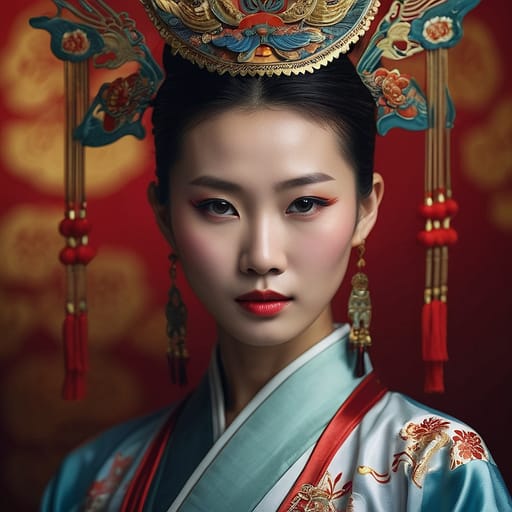
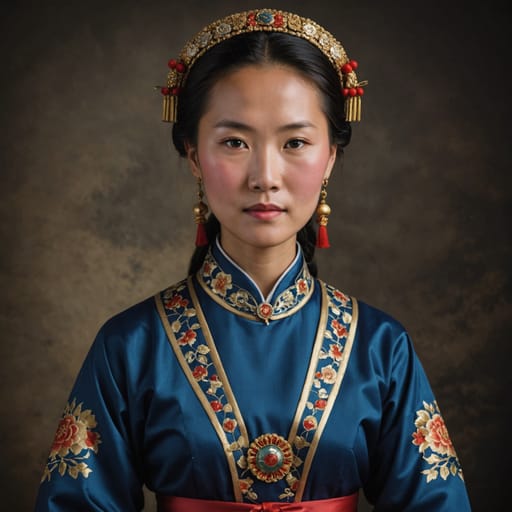
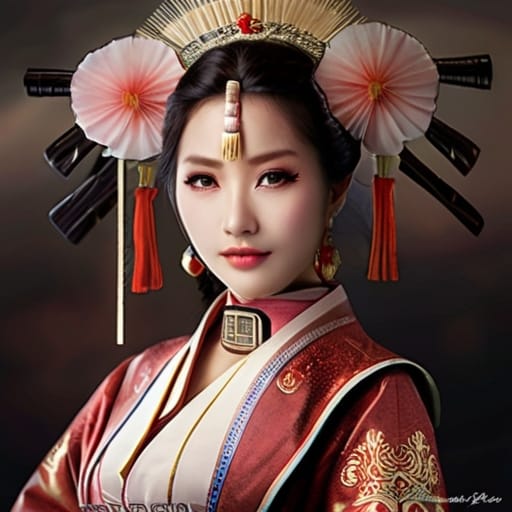
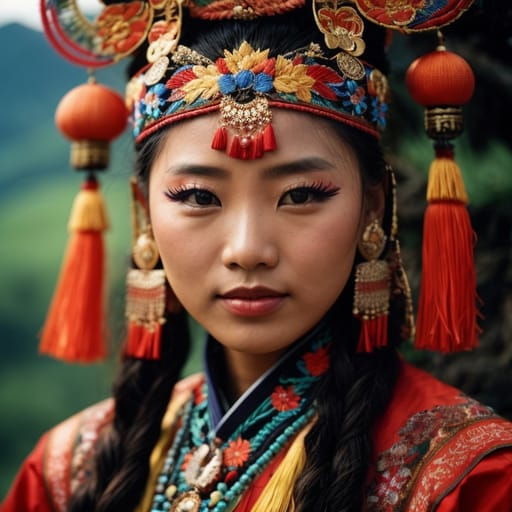
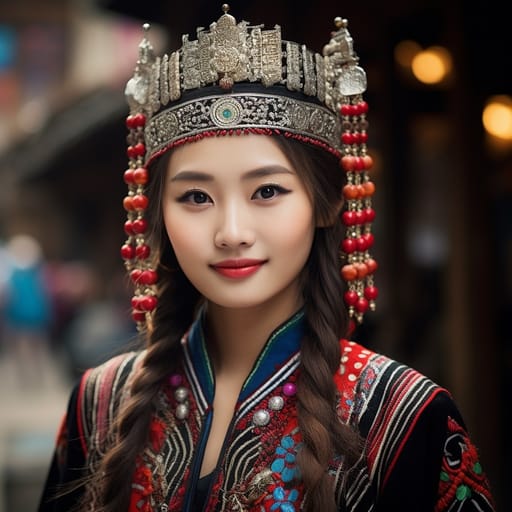
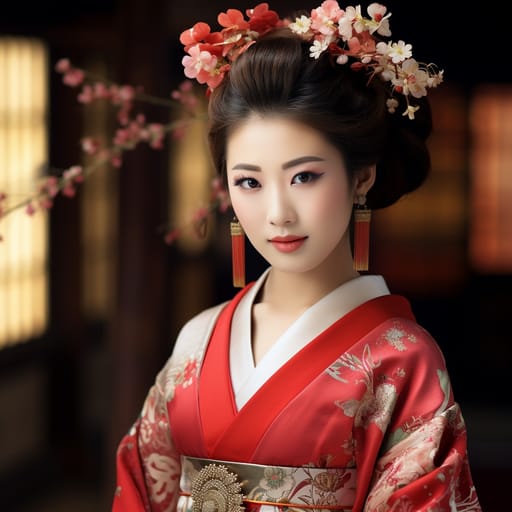
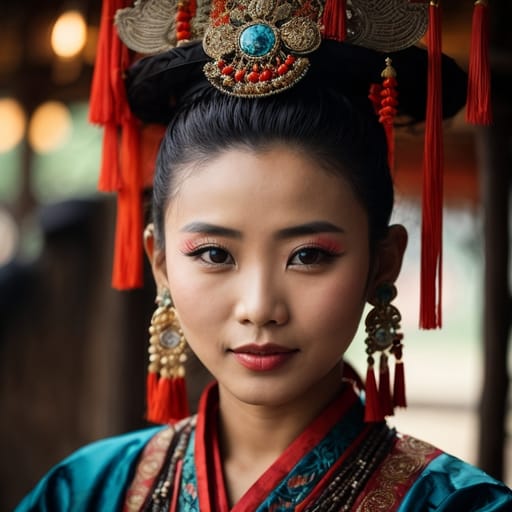
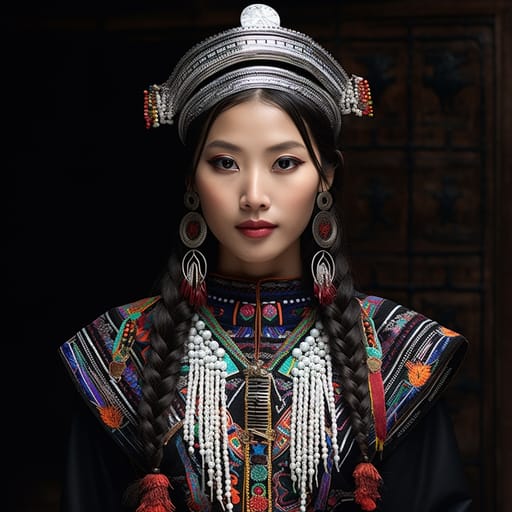
Geographic Distribution: Other Chinese Minorities populations across 1 country
Each row is ranked by the group's share of that country's population, with the source citation drawn from published census and demographic surveys. Click through for the full per-country phenotype profile.
| Country | Share | Source |
|---|---|---|
| China | 2.3% | China 2020 Census, self-identified other recognized ethnic minorities (~32.4M combined); the residual after the major minority groups, comprising approximately 46 of China's 55 officially-recognized ethnic minority nationalities including Tujia, Dong, Bouyei, Yao, Bai, Korean (Chosŏnjok), Hani, Kazakh, Li, Dai, She, Lisu, Gelao, Lahu, Va, Sui, Naxi, Qiang, Tu, Mulao, Xibe, Kyrgyz, Salar, Daur, Bonan, Maonan, Tajik, Pumi, Achang, Nu, Evenki, Jing, Jino, De'ang, Uzbek, Russian, Yugur, Bonan, Monba, Oroqen, Drung, Tatar, Hezhen, Lhoba, Gaoshan (the PRC term for Taiwan Indigenous peoples) |
Typical Other Chinese Minorities Phenotypes
Reference for AI generation: hair, eyes, skin, facial structure, build
Other Chinese Minorities Body & Anatomy Reference
Anatomy by feature, East Asian Sinitic / Mongoloid phenotype
Other Chinese Minorities Boobs & Breasts
Other Chinese Minorities boobs follow the East Asian Sinitic / Mongoloid profile: small-to-medium cup, modest projection. Areolar diameter is usually 26-36mm, and the coloring is light-pink to medium-brown areolar pigmentation against the light-to-medium skin tone. Breast shape tracks body composition (ectomorph-to-mesomorph, lean frame, mean adult female BMI 20-23), so Other Chinese Minorities breasts tend to be firm and modestly projecting; smaller cup size than the South Asian or Western Asian average. Expect a forward-set shape, not the fuller South Asian or Levantine bust profile.
Other Chinese Minorities Ass & Hips
Other Chinese Minorities ass and hip morphology presents as small-to-medium, modest projection, narrower hip profile, distinctly different from the fuller projected glutes of the West African or Polynesian phenotype. The Other Chinese Minorities pelvic profile shows narrower iliac crests, less gluteal-femoral fat deposition, anchored in the East Asian Sinitic / Mongoloid skeletal pattern. Other Chinese Minorities butt shots in adult AI imagery should render the small-to-medium, modest projection, narrower hip profile silhouette with the overall build (ectomorph-to-mesomorph, lean frame) and the fat distribution typical of the East Asian Sinitic / Mongoloid phenotype.
Other Chinese Minorities Vagina & Pussy
Other Chinese Minorities pussy anatomy typically shows light-pink to medium-brown labial pigmentation, smaller labia minora. Pubic hair is usually straight fine texture, sparser distribution than the South Asian norm. In AI-generated Other Chinese Minorities nudes, labial color should blend into the light to medium skin with a gradual transition, and the hair should keep its straight fine texture.
Other Chinese Minorities Dicks & Penis
Penis reference for Other Chinese Minorities men: regional mean ~11-12cm erect, moderate girth. Coloring: light-brown shaft pigmentation. An accurate Other Chinese Minorities cock in AI imagery matches the surrounding light to medium skin rather than a generic porn default. Circumcision depends on religion and custom, not ancestry.
Other Chinese Minorities Body, Curves & Build
The Other Chinese Minorities figure is generally ectomorph-to-mesomorph, lean frame, with mean adult female BMI 20-23, characteristic of East Asian Sinitic / Mongoloid ancestry. AI image tools tend to flatten regional body types into a few stock shapes; here the Other Chinese Minorities build is kept as its own reference.
Other Chinese Minorities Skin Tone & Hair Texture
Skin: light to medium (Fitzpatrick II-IV). Hair: straight 1A, fine-to-medium, predominantly black. Both are typical of East Asian Sinitic / Mongoloid ancestry. The most common mistake in AI nudes of Other Chinese Minorities women is a body rendered lighter than the face.
Explore phenotype categories
Structured taxonomy with peer-reviewed scales · 22 anatomical categories
Erotic Poses & Sex Positions
From the pose catalog: 219 named positions with reference skeletons
Frequently asked questions about Other Chinese Minorities people
Where is the Other Chinese Minorities homeland?
The Other Chinese Minorities homeland is China in East Asia.
What countries do Other Chinese Minorities people live in?
Other Chinese Minorities populations are documented across 1 country: China.






Make your own Other Chinese Minorities images
Five a day, free, no credits to buy. The studio starts from this group's phenotype data, so you can set body type, pose and style and keep the traits accurate.
Start with Other Chinese Minorities