No portrait yet
Blang Erotic
Mountain villages of southern Yunnan, China, chiefly Xishuangbanna, Pu'er and Lincang prefectures, with related communities across the border in northeastern Myanmar
Blang (Austroasiatic, Palaungic branch), with Tai Lue and Mandarin widely used as second languages
Theravada Buddhism in the south, layered over village spirit and ancestor practice; northern communities are largely animist
Palaungic peoples, alongside the Wa and De'ang; several local self-designations, including Blang, Awa, Puman and Ang, are grouped under one Chinese classification
About Blang People
The Blang are a tea people, and that is not a marketing line. Their villages sit in the mountains of southern Yunnan, above the Mekong valley in Xishuangbanna and scattered north through Pu'er and Lincang, and the slopes around them carry tea gardens old enough that the plants have trunks rather than stems. The Bulang range in Menghai County is one of the source regions for puer, and Blang families have worked those groves for centuries, some of their villages founded well over a thousand years ago according to dates kept in the Dai script. They also do something with tea that most drinkers never encounter: pack the leaves into bamboo tubes, bury them, and let them ferment into a sour mash that is eaten rather than brewed.
Linguistically they are outsiders in their own neighborhood. Blang belongs to the Palaungic branch of Austroasiatic, which makes their nearest relatives the Wa and the De'ang and puts them at a real distance from the Tai-speaking Dai in the valleys below. All three are usually traced back to the Pu, the Austroasiatic population that held much of southwest China before Tai and Han migrations reshaped it. The language has no script of its own, so literate Blang have historically read and written in Dai, learned in the village monastery.
That monastery is the other half of the picture. In Xishuangbanna the Blang took Theravada Buddhism from their Dai neighbors, along with the calendar, the retreat that opens and closes the rainy season, and the practice of sending boys to ordain as novices for a stretch of their childhood. Further north the Buddhist layer thins and older practice dominates: village guardian spirits, the founding ancestor, the gate that marks where the village's protection begins. Neither displaced the other, and households keep both.
Older Blang, women especially, are recognizable by blackened teeth, lacquered over years with smoke and betel and read as a mark of adulthood and good looks rather than neglect. Courtship was conducted by night visiting, and a new husband was expected to live and work in his wife's household for several years before bringing her to his own. Roughly 120,000 people in China call themselves Blang, under a name that covers several communities with their own self-designations, plus relatives across the Burmese border who were sorted into different national categories entirely.
Related ethnic groups
Groups that share Blang's homeland, region, language, or religious tradition. These are likely candidates for comparative phenotype reference.
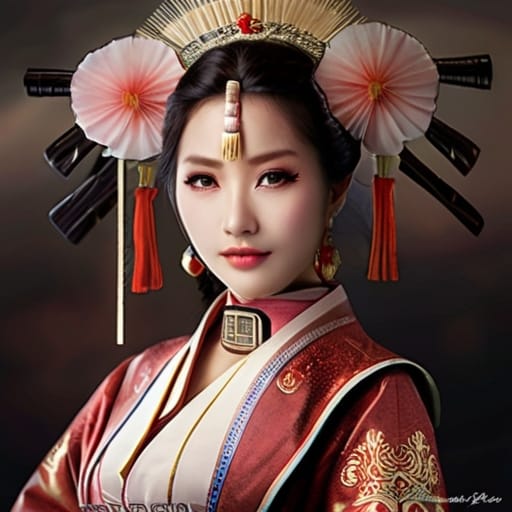
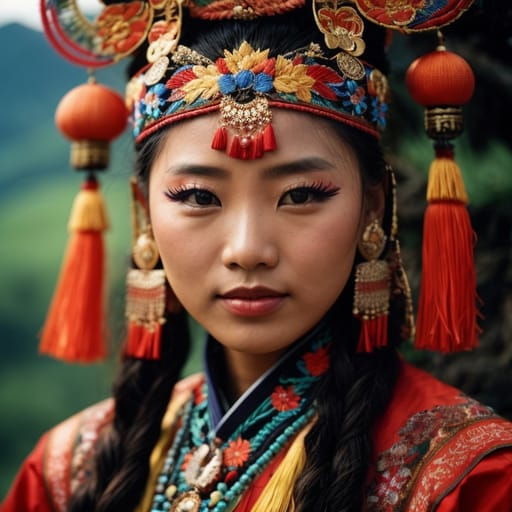
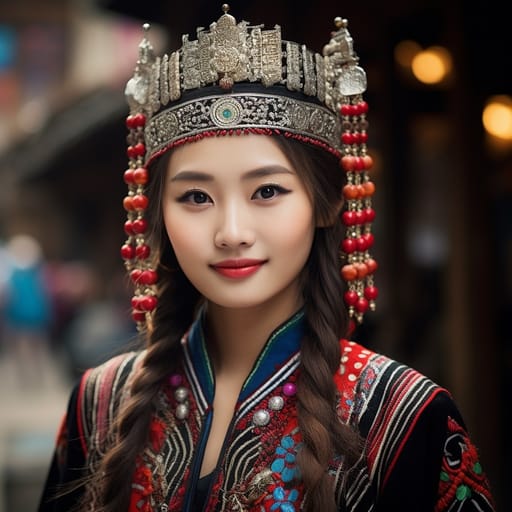
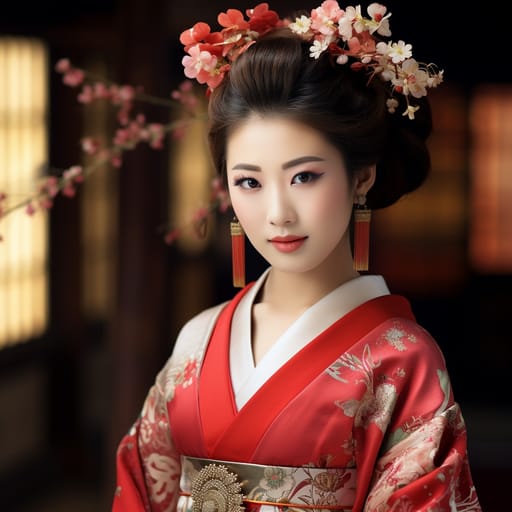
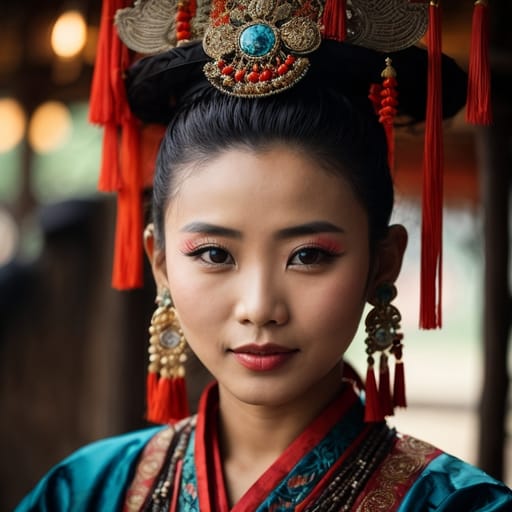
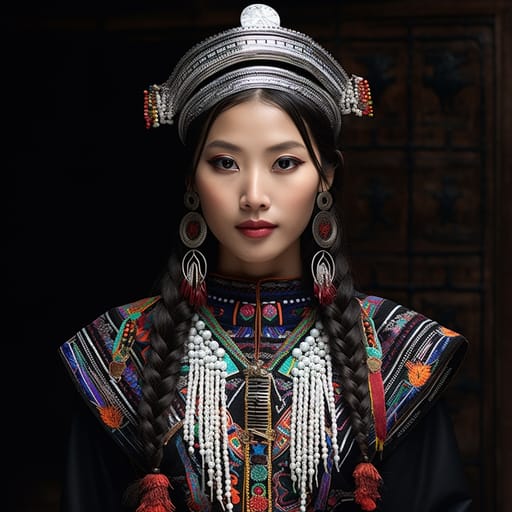
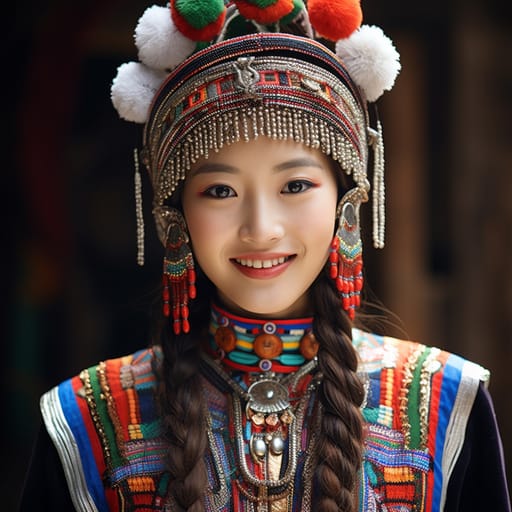
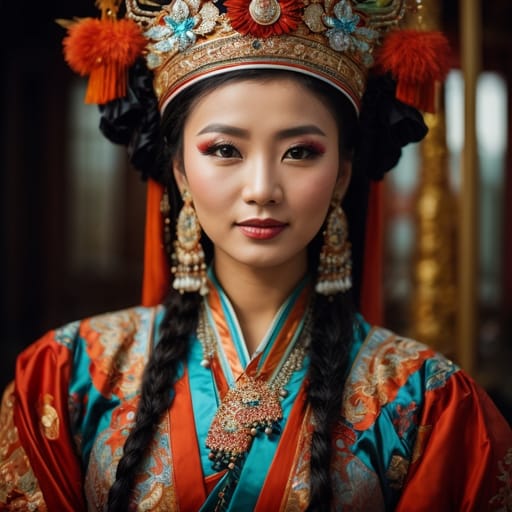
Typical Blang Phenotypes
Reference for AI generation: hair, eyes, skin, facial structure, build
Blang Body & Anatomy Reference
Anatomy by feature, East Asian Sinitic / Mongoloid phenotype
Blang Boobs & Breasts
Blang boobs follow the East Asian Sinitic / Mongoloid profile: small-to-medium cup, modest projection. Areolar diameter is usually 26-36mm, and the coloring is light-pink to medium-brown areolar pigmentation against the light-to-medium skin tone. Breast shape tracks body composition (ectomorph-to-mesomorph, lean frame, mean adult female BMI 20-23), so Blang breasts tend to be firm and modestly projecting; smaller cup size than the South Asian or Western Asian average. Expect a forward-set shape, not the fuller South Asian or Levantine bust profile.
Blang Ass & Hips
Blang ass and hip morphology presents as small-to-medium, modest projection, narrower hip profile, distinctly different from the fuller projected glutes of the West African or Polynesian phenotype. The Blang pelvic profile shows narrower iliac crests, less gluteal-femoral fat deposition, anchored in the East Asian Sinitic / Mongoloid skeletal pattern. Blang butt shots in adult AI imagery should render the small-to-medium, modest projection, narrower hip profile silhouette with the overall build (ectomorph-to-mesomorph, lean frame) and the fat distribution typical of the East Asian Sinitic / Mongoloid phenotype.
Blang Vagina & Pussy
Blang pussy anatomy typically shows light-pink to medium-brown labial pigmentation, smaller labia minora. Pubic hair is usually straight fine texture, sparser distribution than the South Asian norm. In AI-generated Blang nudes, labial color should blend into the light to medium skin with a gradual transition, and the hair should keep its straight fine texture.
Blang Dicks & Penis
Penis reference for Blang men: regional mean ~11-12cm erect, moderate girth. Coloring: light-brown shaft pigmentation. An accurate Blang cock in AI imagery matches the surrounding light to medium skin rather than a generic porn default. Circumcision depends on religion and custom, not ancestry.
Blang Body, Curves & Build
The Blang figure is generally ectomorph-to-mesomorph, lean frame, with mean adult female BMI 20-23, characteristic of East Asian Sinitic / Mongoloid ancestry. AI image tools tend to flatten regional body types into a few stock shapes; here the Blang build is kept as its own reference.
Blang Skin Tone & Hair Texture
Skin: light to medium (Fitzpatrick II-IV). Hair: straight 1A, fine-to-medium, predominantly black. Both are typical of East Asian Sinitic / Mongoloid ancestry. The most common mistake in AI nudes of Blang women is a body rendered lighter than the face.
Explore phenotype categories
Structured taxonomy with peer-reviewed scales · 22 anatomical categories
Erotic Poses & Sex Positions
From the pose catalog: 219 named positions with reference skeletons
Frequently asked questions about Blang people
Where is the Blang homeland?
The Blang homeland is Mountain villages of southern Yunnan, China, chiefly Xishuangbanna, Pu'er and Lincang prefectures, with related communities across the border in northeastern Myanmar in East Asia.
What language do Blang people speak?
Blang people primarily speak Blang (Austroasiatic, Palaungic branch), with Tai Lue and Mandarin widely used as second languages.
What religion do Blang people practice?
The predominant religion among Blang people is Theravada Buddhism in the south, layered over village spirit and ancestor practice; northern communities are largely animist.






Make your own Blang images
Five a day, free, no credits to buy. The studio starts from this group's phenotype data, so you can set body type, pose and style and keep the traits accurate.
Start with Blang