Help us get this right
Does this portrait look right for Tunbao?
One tap. It takes a second and it is recorded.
0 say it looks right, 1 says it looks off.
Tunbao Erotic
Central Guizhou, China, concentrated in and around Anshun, including Xixiu and Pingba districts and Puding and Zhenning counties
Tunbao speech, a local variety of Southwestern Mandarin (Sinitic, Sino-Tibetan); Standard Mandarin
Chinese folk religion blending ancestor veneration, Buddhism and Taoism, with village cults such as that of Wang Gong
Subgroup of Han Chinese descended from Ming garrison settlers; distinct from later Qing-era Han migrants in Guizhou
About Tunbao People
Drive through the karst country around Anshun in central Guizhou and some villages stand out right away. Their walls, roofs and lanes are all gray stone, packed tight for defense, and older women walk them in long blue robes unlike anything else worn in the province. These are the Tunbao, Han Chinese whose ancestors came as Ming dynasty soldiers and stayed. The name joins tun, a garrison farming colony, and bao, a fortified settlement. The identity behind it rests on a shared memory of where they came from.
The story starts in 1381, when the Hongwu Emperor sent an army southwest to take Yunnan from the last Yuan loyalists. To keep the road through Guizhou open, the court set up garrisons along it, and the soldiers farmed the land around their forts with their families beside them. Many came from the lower Yangtze, the Jiangnan region around Nanjing and Anhui. The women's robe is still sometimes called Fengyang Han dress, after the emperor's home district. The Qing later broke up the garrison system and the forts became ordinary villages, but their people stayed distinct. They set themselves apart from the Buyei, Miao and Gelao around them, and also from Han migrants who arrived under the Qing. Outsiders long called them the Old Han.
Clothing is the most visible marker. The wide-sleeved robe has embroidered trim and is tied with a long black sash. It is worn with embroidered shoes that turn up at the toe, with the hair gathered into a bun under a headcloth. For many older women it is daily wear, not a costume. The other signature is dixi, or ground opera, now on China's national intangible heritage list. Masked performers sing and fight their way through war epics of the Three Kingdoms, Tang and Song on open ground instead of a stage. They wear carved wooden masks on the forehead with black gauze hiding the face below, and gongs and drums drive the action.
Belief blends ancestor veneration, Buddhism, Taoism and local gods. Early in the lunar year, some villages carry the image of Wang Gong, a deified figure from Huizhou in Anhui, around the village in procession, a rite that points straight back to the Jiangnan homeland. Their speech is a local form of Southwestern Mandarin, which keeps them inside the Han language mainstream even as their customs set them apart. Tianlong and other stone villages now draw tourists, and most younger Tunbao dress and work like anyone else their age. What survives does so because communities keep choosing to practice it.
Related ethnic groups
Groups that share Tunbao's homeland, region, language, or religious tradition. These are likely candidates for comparative phenotype reference.
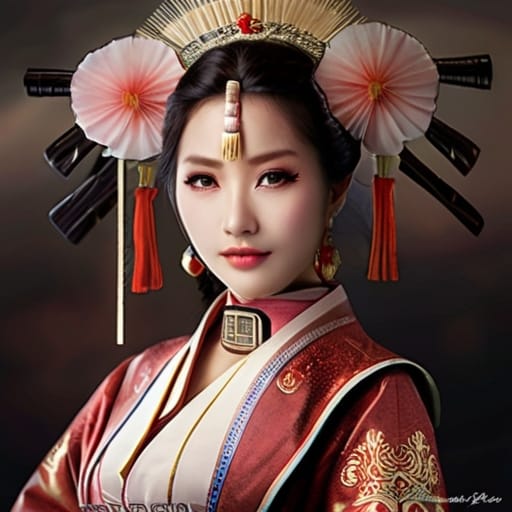
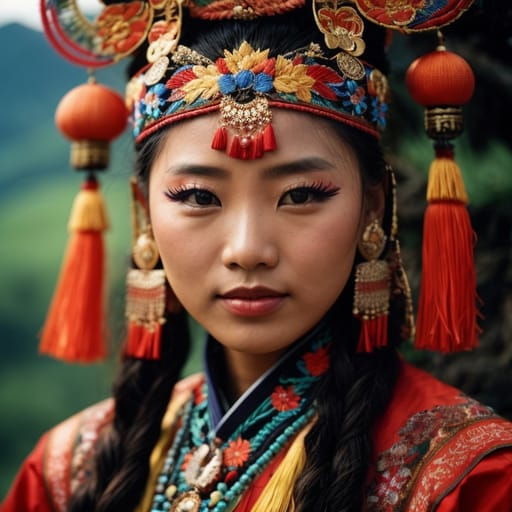
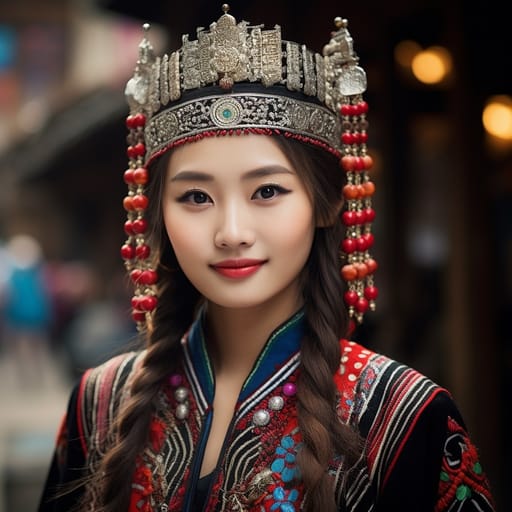
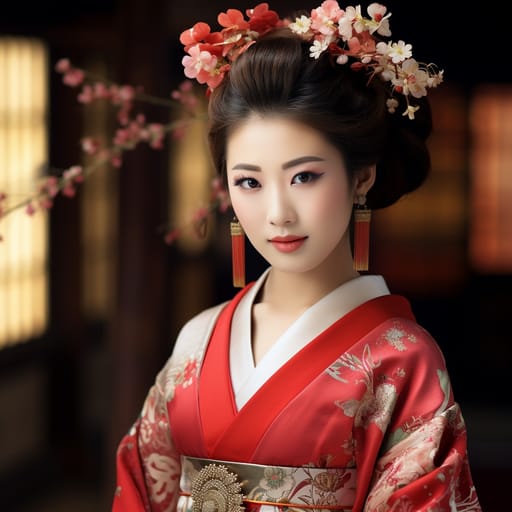
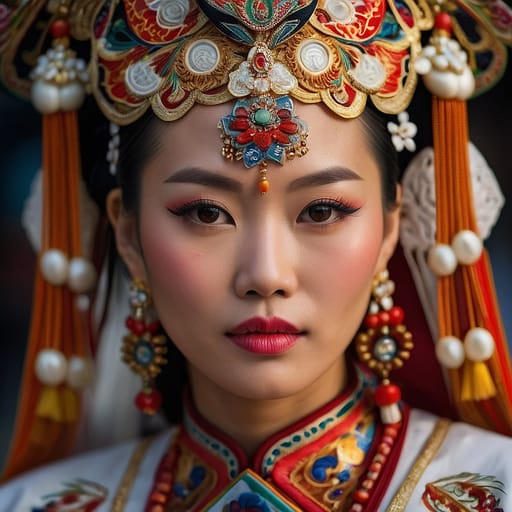
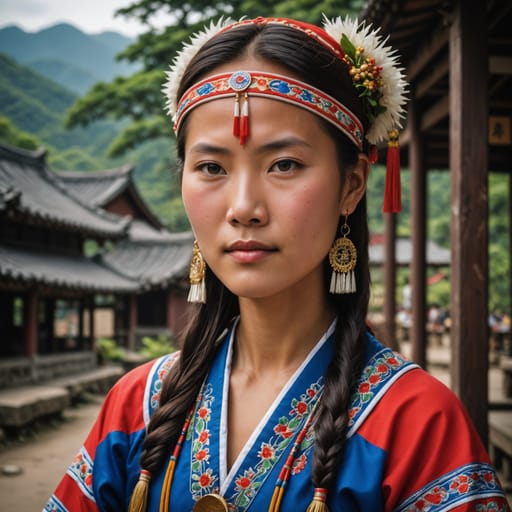
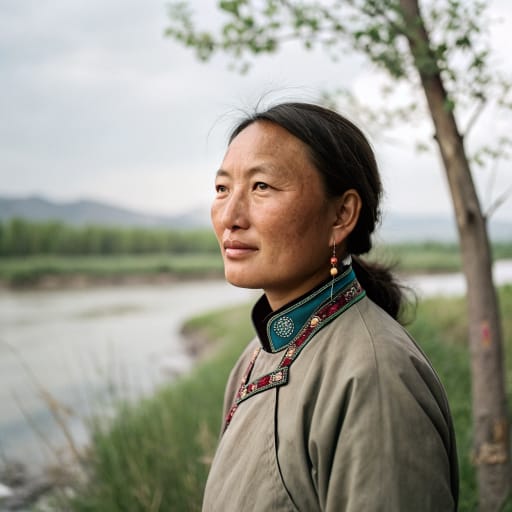
Typical Tunbao Phenotypes
Reference for AI generation: hair, eyes, skin, facial structure, build
Tunbao Body & Anatomy Reference
Per-feature anatomical profile for AI nude generation: East Asian Sinitic / Mongoloid phenotype
Tunbao Boobs & Breasts
The typical Tunbao bust is small-to-medium cup, modest projection, in line with the wider East Asian Sinitic / Mongoloid pattern. Areolas usually fall in the 26-36mm range, with light-pink to medium-brown areolar pigmentation against the light-to-medium skin tone. Compared with the fuller South Asian or Levantine bust profile, Tunbao breasts sit forward and are generally firm and modestly projecting; smaller cup size than the South Asian or Western Asian average. A faithful AI render of Tunbao tits keeps that shape and areola size.
Tunbao Ass & Hips
Butt shape among Tunbao women: small-to-medium, modest projection, narrower hip profile, over narrower iliac crests, less gluteal-femoral fat deposition. This follows East Asian Sinitic / Mongoloid ancestry and looks quite unlike the fuller projected glutes of the West African or Polynesian phenotype. An accurate Tunbao ass in adult AI imagery keeps both the silhouette and the overall build (ectomorph-to-mesomorph, lean frame) instead of a generic average.
Tunbao Vagina & Pussy
Vulvar anatomy among Tunbao women: light-pink to medium-brown labial pigmentation, smaller labia minora. Pubic hair tends to be straight fine texture, sparser distribution than the South Asian norm, in the usual inverted-triangle pattern. Both follow East Asian Sinitic / Mongoloid pigmentation, which is why Tunbao pussy renders should not fall back on a pale, sparse Western template.
Tunbao Dicks & Penis
The Tunbao cock profile, from East Asian Sinitic / Mongoloid anthropometric data: regional mean ~11-12cm erect; moderate girth; light-brown shaft pigmentation. Pubic hair has a straight fine texture and forms the usual inverted-V pattern. Whether Tunbao men are circumcised follows religious and cultural practice rather than phenotype.
Tunbao Body, Curves & Build
Build and curves among Tunbao women follow the East Asian Sinitic / Mongoloid pattern: ectomorph-to-mesomorph, lean frame, mean adult female BMI 20-23. Proportions matter as much as skin tone, so Tunbao figures should keep their regional height and limb ratios.
Tunbao Skin Tone & Hair Texture
The Tunbao skin range is light to medium (Fitzpatrick II-IV), and hair tends to be straight 1A, fine-to-medium, predominantly black. That combination marks the East Asian Sinitic / Mongoloid phenotype, and skin tone is the trait AI generators most often get wrong for Tunbao women.
Explore phenotype categories
Structured taxonomy with peer-reviewed scales · 22 anatomical categories
Erotic Poses & Sex Positions
From the pose catalog: 219 named positions with reference skeletons
Frequently asked questions about Tunbao people
Where is the Tunbao homeland?
The Tunbao homeland is Central Guizhou, China, concentrated in and around Anshun, including Xixiu and Pingba districts and Puding and Zhenning counties in East Asia.
What language do Tunbao people speak?
Tunbao people primarily speak Tunbao speech, a local variety of Southwestern Mandarin (Sinitic, Sino-Tibetan); Standard Mandarin.
What religion do Tunbao people practice?
The predominant religion among Tunbao people is Chinese folk religion blending ancestor veneration, Buddhism and Taoism, with village cults such as that of Wang Gong.






Make your own Tunbao images
Five a day, free, no credits to buy. The studio starts from this group's phenotype data, so you can set body type, pose and style and keep the traits accurate.
Start with Tunbao