No image yet

Babuza Erotic

Homeland

The coastal plain between the Dadu and Zhuoshui rivers, Changhua and Yunlin counties, west-central Taiwan, with descendant communities inland in the Puli basin, Nantou.

Language

Babuza, also called Favorlang (Austronesian, Western Plains Formosan), no longer spoken; Taiwanese Hokkien and Mandarin today

Part of the Austronesian language family

Religion

Ancestral and spirit worship historically; Dutch Reformed Christianity briefly under the VOC; today Chinese folk religion, Buddhism and Christianity, as among their Taiwanese neighbors

Subgroups

One of the Pingpu, the plains indigenous peoples of Taiwan; grouped linguistically with the Taokas; historically allied with Papora, Pazeh and Hoanya in the Middag confederation

Region

East Asia

About Babuza People

The Babuza are a plains people of west-central Taiwan, from the flat alluvial country between the Dadu and Zhuoshui rivers in what are now Changhua and Yunlin counties. Before the paddy fields, this was deer range, and the deer trade is what pulled Chinese merchants and then the Dutch East India Company onto their doorstep. Babuza villages sat on the fan of the plain and back toward the coastal sand flats; one of them, Banxian, stood where Changhua city stands today, so the county seat is built on a Babuza site under a Chinese name. The Dutch called them Favorlang after one cluster of their settlements, and the name stuck hardest to the language. Babuza, or Favorlang, is Austronesian, part of the Western Plains branch of the Formosan languages, closest to Taokas among its neighbors. It has no speakers left, and it is still one of the best recorded languages on the island: a Dutch chaplain named Gilbertus Happart assembled a Favorlang word book around 1650, Jacobus Vertrecht wrote sermons and dialogues in it, and Medhurst printed the dictionary in Batavia in 1840. Linguists working on the deep Austronesian past of Taiwan, which is to say the deep past of half the Pacific, still open that book.

The Dutch sent punitive expeditions against Favorlang villages in 1637 and 1642 before the villages came to terms and began sending elders to the colonial assemblies. When Koxinga's forces took the island, Babuza communities were part of the Middag confederation, a loose alliance of central plains villages under a paramount figure the Dutch called Quataong, and it fought the newcomers rather than folding. Under the Qing the pressure changed shape: Han settlers arrived in numbers, village land passed into tenancy and then out of Babuza hands through rents and debt, and families took Chinese surnames, Pan above all. Babuza villages joined the rising that began at Dajia in 1731 and ran south through the central plains. In 1823 a coalition of plains groups, Babuza among them, negotiated their way into the Puli basin in the hills of Nantou and moved, which is why descendants are scattered inland as well as along the coast. The language went quiet, Hokkien took over, and the official record stopped counting them. Taiwan recognizes sixteen indigenous peoples and the Babuza are not one of them, a status the Pingpu peoples have contested for decades through the courts, local registration drives and their own associations. There are families in Changhua and Yunlin who can still name the village they came from.

Related ethnic groups

Groups that share Babuza's homeland, region, language, or religious tradition — likely candidates for comparative phenotype reference.

Typical Babuza Phenotypes

Reference for AI generation — hair, eyes, skin, facial structure, build

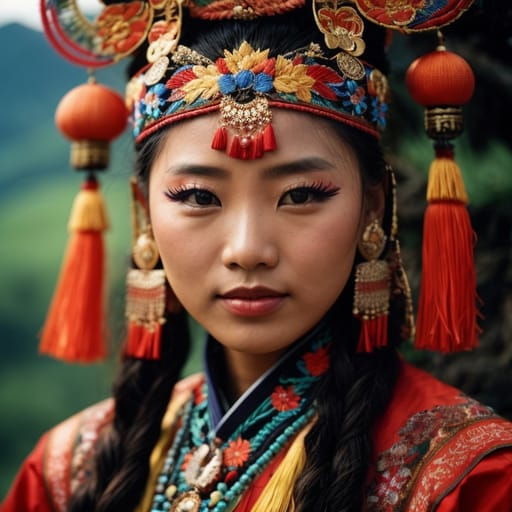
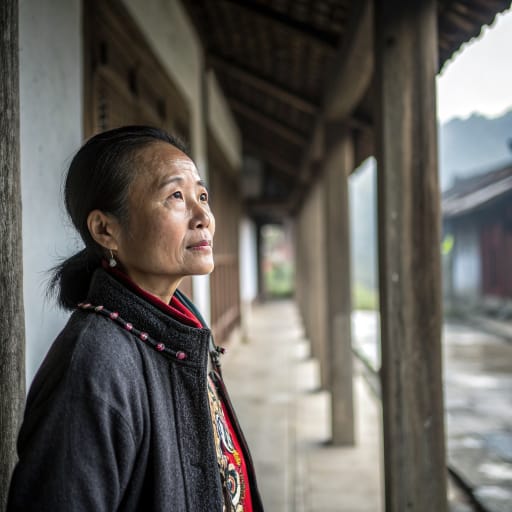
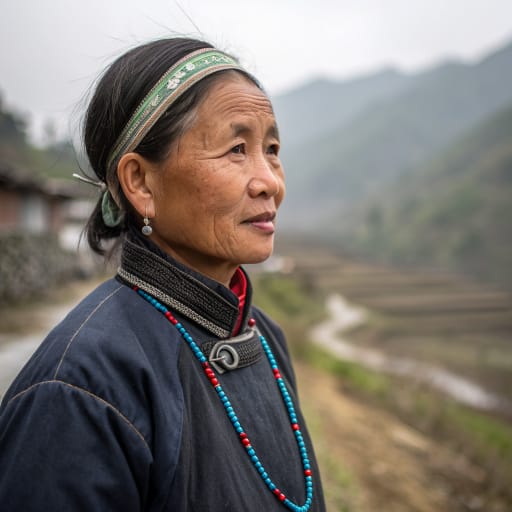
Austronesian Taiwanese features: skin tones from light olive to medium brown, straight to lightly wavy black hair, medium stature, broad cheekbones. Four centuries of intermarriage with Hokkien settlers mean present-day descendants are not visually distinct from other Taiwanese. Dutch-era accounts describe deerskin worked into capes and leggings, woven hemp and ramie cloth, and ornaments of shell, brass and traded beads. Traditional dress now appears only as reconstruction at Pingpu cultural events; daily clothing is ordinary modern Taiwanese.

Babuza Body & Anatomy Reference

Per-feature anatomical profile for AI nude generation — East Asian Sinitic / Mongoloid phenotype

Babuza Boobs & Breasts

Babuza tits and boobs run small-to-medium cup, modest projection — the classic East Asian Sinitic / Mongoloid bust profile. Babuza nipples and areolas show light-pink to medium-brown areolar pigmentation against the light-to-medium skin tone, with areolar diameter typically in the 26-36mm range and forward-set positioning rather than the the fuller South Asian or Levantine bust profile. Babuza breasts trend firm and modestly projecting; smaller cup size than the South Asian or Western Asian average, a function of the ectomorph-to-mesomorph, lean frame body habitus and the mean adult female BMI 20-23. For anatomically-accurate AI-generated Babuza nudes the render preserves: small-to-medium cup, modest projection shape, 26-36mm areolas with light-pink to medium-brown pigmentation, and the torso proportions of the East Asian Sinitic / Mongoloid phenotype.

Babuza Ass & Hips

Babuza ass and hip morphology presents as small-to-medium, modest projection, narrower hip profile — distinctly different from the fuller projected glutes of the West African or Polynesian phenotype. The Babuza pelvic profile shows narrower iliac crests, less gluteal-femoral fat deposition, anchored in the East Asian Sinitic / Mongoloid skeletal pattern. Babuza butt shots in adult AI imagery should render the small-to-medium, modest projection, narrower hip profile silhouette with the ectomorph-to-mesomorph, lean frame build and the gluteal-femoral fat distribution typical of the East Asian Sinitic / Mongoloid phenotype rather than defaulting to a globally-averaged "ethnic" butt that generic AI generators produce. The hip-to-waist ratio characteristic of Babuza women is one of the identifying features of the East Asian Sinitic / Mongoloid regional phenotype.

Babuza Vagina & Pussy

Babuza pussy and vulvar anatomy presents light-pink to medium-brown labial pigmentation, smaller labia minora — consistent with the East Asian Sinitic / Mongoloid phenotype's pigmentation pattern. Babuza pubic hair is typically straight fine texture, sparser distribution than the South Asian norm, distributed in the inverted-triangle pattern with regional-typical density. AI-generated Babuza nude imagery should preserve the light-pink to medium-brown labial pigmentation and the straight fine texture hair texture rather than defaulting to a Western-European pink-and-sparse template. For anatomically-accurate Babuza pussy renders the labial pigmentation and coloration should match the surrounding light to medium skin tone of the East Asian Sinitic / Mongoloid phenotype, with continuous gradient rather than an abrupt color transition.

Babuza Dicks & Penis

Babuza dick and penile anatomy in adult AI generation should anchor on the regional reference data: regional mean ~11-12cm erect, moderate girth, and light-brown shaft pigmentation. The Babuza cock profile reflects the East Asian Sinitic / Mongoloid ancestral population's anthropometric measurements rather than a globally-averaged Western-pornography default. For anatomically-accurate Babuza nude male imagery the shaft pigmentation should track the surrounding light to medium skin tone, the glans-to-shaft pigmentation transition should be continuous, and the pubic hair pattern should match straight fine texture texture distributed in the typical inverted-V escutcheon. Circumcision status in Babuza populations varies by religious-cultural tradition rather than ancestral phenotype.

Babuza Body, Curves & Build

Babuza body type and overall build presents as ectomorph-to-mesomorph, lean frame, with mean adult female BMI 20-23 — the characteristic East Asian Sinitic / Mongoloid habitus. Babuza curves and proportions in adult AI imagery should preserve the regional skeletal frame (height, shoulder-to-hip ratio, limb proportions) rather than scaling to a Western-European mesomorph default. The Babuza nude female form, when rendered with anatomical fidelity, shows the height range, frame width, and adipose distribution pattern typical of the East Asian Sinitic / Mongoloid phenotype. Generic AI image generators tend to collapse regional body types into a few default shapes; the EthnicErotic phenotype-anchored approach preserves the Babuza build as its own reference category.

Babuza Skin Tone & Hair Texture

Babuza skin tone falls in the light to medium (Fitzpatrick II-IV) band — the surface signal most often miscalibrated by generic AI nude generators trained on Western-photographic datasets. Babuza hair texture is typically straight 1A, fine-to-medium, predominantly black, characteristic of the East Asian Sinitic / Mongoloid phenotype. For anatomically-accurate Babuza nude renders the skin should hold the Fitzpatrick band consistently across body surface rather than showing the lighter-than-face body shading that AI generators default to. Babuza hair pigmentation and texture on body, pubic, and head should match across the figure rather than mixing textures (a common AI artefact).

Get notified when there’s a new post about Babuza.

Discussion Board

Have a view on this? Sign in to post — your first one earns 2 generation credits.

No posts on this board yet

Log in to start the conversation.

See what’s active across the community →

Erotic Poses & Sex Positions

From the pose catalog — 219 named positions with reference skeletons

Frequently asked questions about Babuza people

Where is the Babuza homeland?

The Babuza homeland is The coastal plain between the Dadu and Zhuoshui rivers, Changhua and Yunlin counties, west-central Taiwan, with descendant communities inland in the Puli basin, Nantou. in East Asia.

What language do Babuza people speak?

Babuza people primarily speak Babuza, also called Favorlang (Austronesian, Western Plains Formosan), no longer spoken; Taiwanese Hokkien and Mandarin today.

What religion do Babuza people practice?

The predominant religion among Babuza people is Ancestral and spirit worship historically; Dutch Reformed Christianity briefly under the VOC; today Chinese folk religion, Buddhism and Christianity, as among their Taiwanese neighbors.


What does a typical Babuza woman look like?

Austronesian Taiwanese features: skin tones from light olive to medium brown, straight to lightly wavy black hair, medium stature, broad cheekbones. Four centuries of intermarriage with Hokkien settlers mean present-day descendants are not visually distinct from other Taiwanese.