Help us get this right
Does this portrait look right for Baatud?
Nobody has judged this one yet. You would be the first.
Baatud Erotic
Western Mongolia and Dzungaria (northern Xinjiang, China), within the wider Oirat population
Oirat (Mongolic); standard Khalkha Mongolian widely used in Mongolia
Tibetan Buddhism (Gelug school), alongside older Mongolian folk practices
An Oirat (Western Mongol) group, named in some traditional lists of the Four Oirat alliance
About Baatud People
The Baatud are one of the old named groupings of the Oirats, the western Mongols. What holds them together is descent and a shared name, not a language or territory of their own. The name is usually traced to baatar, the Mongolian word for hero. The Baatud appear in some versions of the list of the Four Oirat, the alliance that rose on the western steppe after the Yuan dynasty fell, but the surviving lists rarely agree on who the four were. That tells you something: steppe alliances formed around leaders and family lines, and groups merged, split and changed names as their fortunes shifted. Oirat country is the high grassland, lake basins and mountain ranges of western Mongolia and Dzungaria, which is now northern Xinjiang in China. Oirat power peaked with the Dzungar Khanate and ended when Qing armies destroyed it in the 1750s. That disaster killed a large share of the population and scattered the rest, and smaller groups were broken up and absorbed into larger ones.
They speak Oirat, a Mongolic language close to standard Khalkha Mongolian but with its own sounds and vocabulary. In Mongolia, schooling in the Khalkha standard has worn the dialect down. In Xinjiang, people still use the Clear Script, which the monk Zaya Pandita created in 1648 to fit Oirat speech better than the older Mongolian script did. Tibetan Buddhism of the Gelug school took hold among the Oirats in the early seventeenth century, and it was tied to political loyalty as much as to private faith. In Mongolia the monasteries were destroyed in the purges of the 1930s, and the revival since 1990 has been uneven but real. Older habits continue alongside it: stones added to ovoo cairns on mountain passes, milk flicked into the air for a safe journey, and rules about the hearth fire in the ger, which is not to be stepped over or poked with a knife. Mongolia's socialist government also pushed clan names out of use. When citizens were asked to register them again around 2000, many families went back to old tribal names. For groups like the Baatud, that is mostly where the identity lives now: in family memory and descent rather than in politics.
Related ethnic groups
Groups that share Baatud's homeland, region, language, or religious tradition. These are likely candidates for comparative phenotype reference.

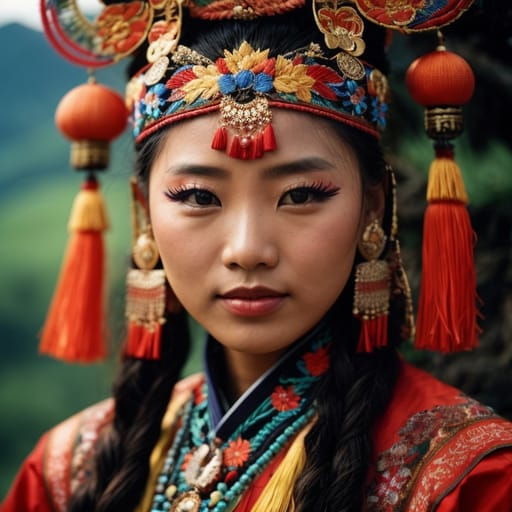
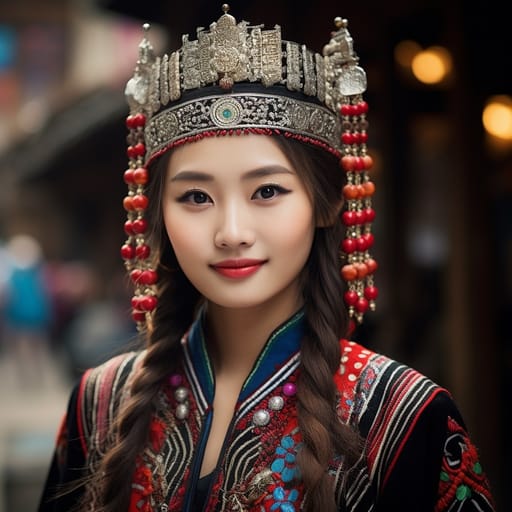

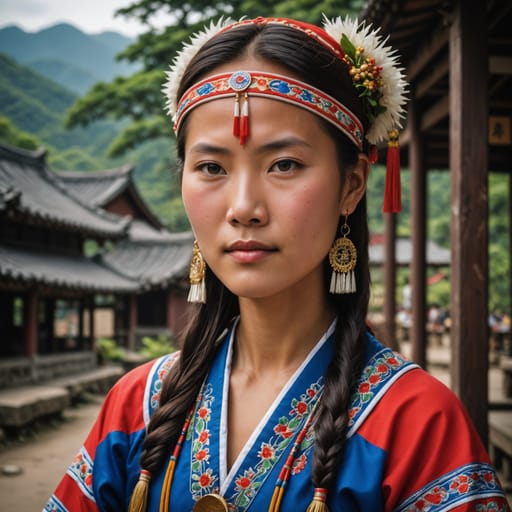
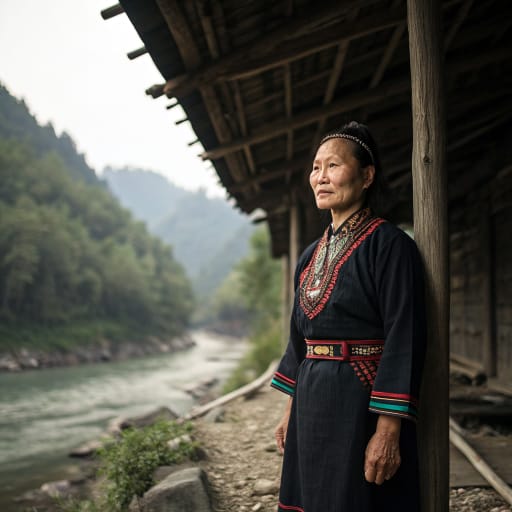
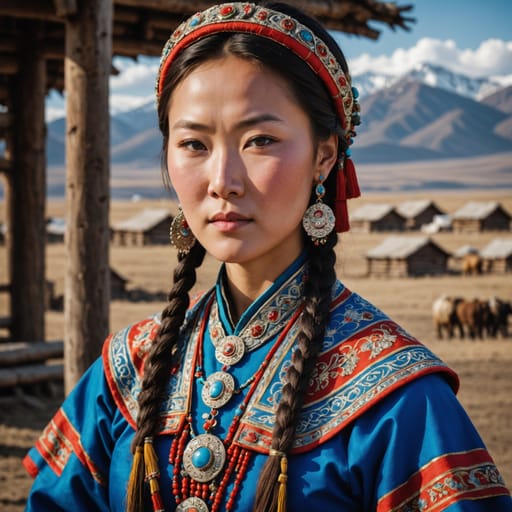
Typical Baatud Phenotypes
Reference for AI generation: hair, eyes, skin, facial structure, build
Baatud Body & Anatomy Reference
Per-feature anatomical profile for AI nude generation: East Asian Sinitic / Mongoloid phenotype
Baatud Boobs & Breasts
Bust reference for Baatud women: small-to-medium cup, modest projection, which is typical of East Asian Sinitic / Mongoloid ancestry. Areolas measure about 26-36mm across, with light-pink to medium-brown pigmentation. Body type (ectomorph-to-mesomorph, lean frame) shapes the bust as well, so Baatud tits are usually firm and modestly projecting; smaller cup size than the South Asian or Western Asian average. In AI imagery, keep the forward-set shape rather than drifting toward the fuller South Asian or Levantine bust profile.
Baatud Ass & Hips
The Baatud ass is typically small-to-medium, modest projection, narrower hip profile, which sets it apart from the fuller projected glutes of the West African or Polynesian phenotype. Underneath, the pelvis shows narrower iliac crests, less gluteal-femoral fat deposition, part of the East Asian Sinitic / Mongoloid skeletal pattern. For Baatud butt pics and AI renders, match that silhouette and the overall build (ectomorph-to-mesomorph, lean frame).
Baatud Vagina & Pussy
Baatud pussy and vulvar anatomy presents light-pink to medium-brown labial pigmentation, smaller labia minora, consistent with the East Asian Sinitic / Mongoloid phenotype's pigmentation pattern. Baatud pubic hair is typically straight fine texture, sparser distribution than the South Asian norm, in the inverted-triangle pattern. For anatomically accurate Baatud pussy renders the labial coloration should match the surrounding light to medium skin tone with a continuous gradient, and the hair should keep its straight fine texture.
Baatud Dicks & Penis
Baatud dicks follow the East Asian Sinitic / Mongoloid reference data: regional mean ~11-12cm erect; moderate girth; light-brown shaft pigmentation. Shaft color should track the light to medium skin tone with a smooth change toward the glans, and Baatud pubic hair keeps its straight fine texture.
Baatud Body, Curves & Build
Baatud body type and overall build presents as ectomorph-to-mesomorph, lean frame, with mean adult female BMI 20-23: the characteristic East Asian Sinitic / Mongoloid habitus. Baatud curves and proportions should keep the regional skeletal frame (height, shoulder-to-hip ratio, limb proportions) rather than a generic mesomorph default.
Baatud Skin Tone & Hair Texture
Baatud skin sits in the light to medium (Fitzpatrick II-IV) band. Hair is typically straight 1A, fine-to-medium, predominantly black, in keeping with the East Asian Sinitic / Mongoloid phenotype. In nude renders the skin should stay one even tone from face to body, and body, pubic and head hair should match.
Explore phenotype categories
Structured taxonomy with peer-reviewed scales · 22 anatomical categories
Erotic Poses & Sex Positions
From the pose catalog: 219 named positions with reference skeletons
Frequently asked questions about Baatud people
Where is the Baatud homeland?
The Baatud homeland is Western Mongolia and Dzungaria (northern Xinjiang, China), within the wider Oirat population in East Asia.
What language do Baatud people speak?
Baatud people primarily speak Oirat (Mongolic); standard Khalkha Mongolian widely used in Mongolia.
What religion do Baatud people practice?
The predominant religion among Baatud people is Tibetan Buddhism (Gelug school), alongside older Mongolian folk practices.






Make your own Baatud images
Five a day, free, no credits to buy. The studio starts from this group's phenotype data, so you can set body type, pose and style and keep the traits accurate.
Start with Baatud