Help us get this right
Does this portrait look right for Albazinians?
Nobody has judged this one yet. You would be the first.
Albazinians Erotic
Beijing, China; ancestral origin at the Albazin fort on the Amur River, now Albazino in Amur Oblast, Russia.
Mandarin Chinese (Sino-Tibetan); ancestral Russian (Indo-European, East Slavic) was lost within a few generations; Church Slavonic and Chinese in Orthodox worship.
Eastern Orthodox Christianity, historically centered on the Russian Ecclesiastical Mission in Beijing; practiced today by a small number of families.
Descendants of Russian Cossacks and frontier settlers absorbed into Beijing's Manchu and Han population; part of the wider Russian minority in China.
About Albazinians People
The Albazinians are a small community in Beijing whose family histories go back to a Russian fort on the Amur River. Albazin was a Cossack stronghold on the disputed frontier between the Russian tsardom and the Qing empire. When Qing forces took it in 1685, a few dozen of its defenders went south with the winners instead of retreating to Russian territory, and they joined other Russians already captured along the river. The Kangxi Emperor did not keep them as prisoners for long. He enrolled them as a company in the Bordered Yellow Banner, part of the Eight Banners that made up the dynasty's hereditary military elite. He also gave them stipends and quarters in the northeast of the capital, and they married local women. Their priest, Maxim Leontiev, came with them, and so did an icon of St. Nicholas. A temple given to the settlers became their chapel. The parish grew into the base of the Russian Ecclesiastical Mission, which for well over a century also served as Russia's informal foothold in the Qing capital. The old northern mission grounds are now the site of the Russian Embassy.
They blended into Beijing quickly. Within a few generations Russian was gone and Beijing Mandarin had replaced it. The children of Russian fathers and Manchu or Han mothers spoke, dressed and lived like their neighbors. Two things held: banner status and the Orthodox faith. The faith cost them badly in 1900, when Boxer fighters destroyed the mission and killed 222 Chinese Orthodox believers, many of them Albazinian descendants. The Orthodox Church honors them as the Holy Martyrs of China. The twentieth century brought slower losses: the banner system collapsed after the Qing fell, and Chinese Orthodoxy declined under the People's Republic. Today Albazinian identity lives mostly inside families, in genealogies, in stories about the fort on the Amur, and in the Orthodox practice some still keep. They are Chinese in every everyday sense and Russian in memory.
Related ethnic groups
Groups that share Albazinians's homeland, region, language, or religious tradition. These are likely candidates for comparative phenotype reference.
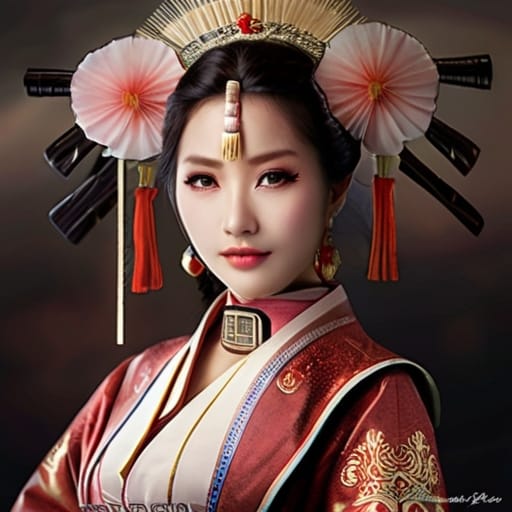
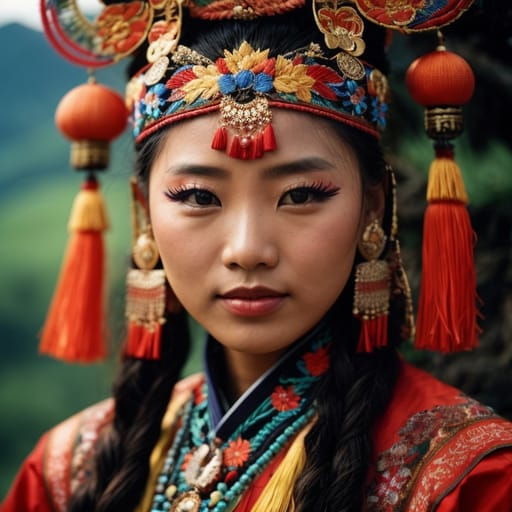
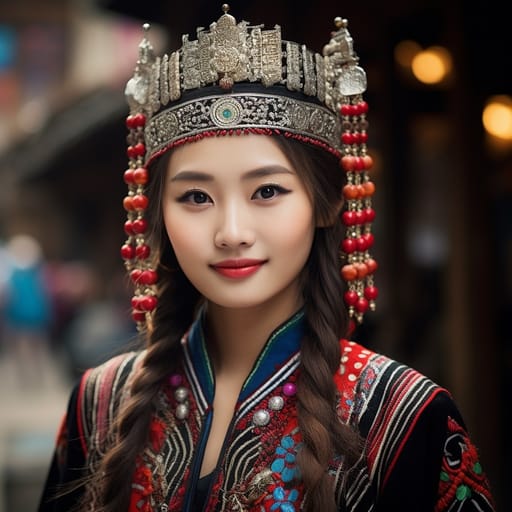
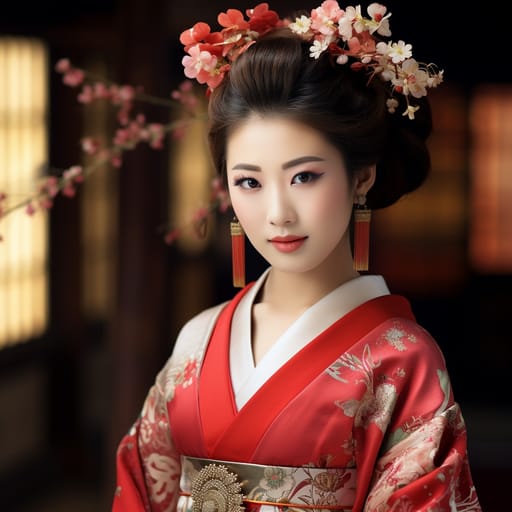
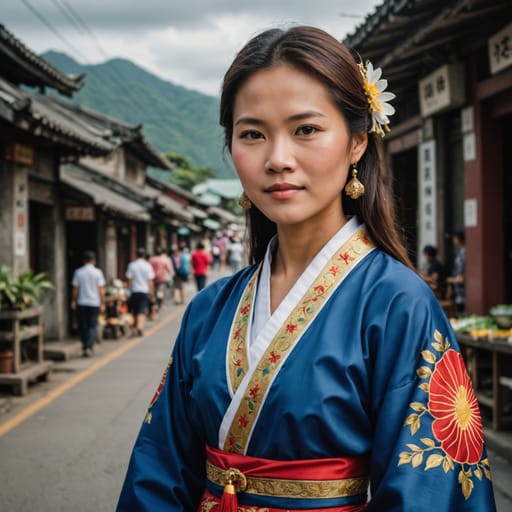
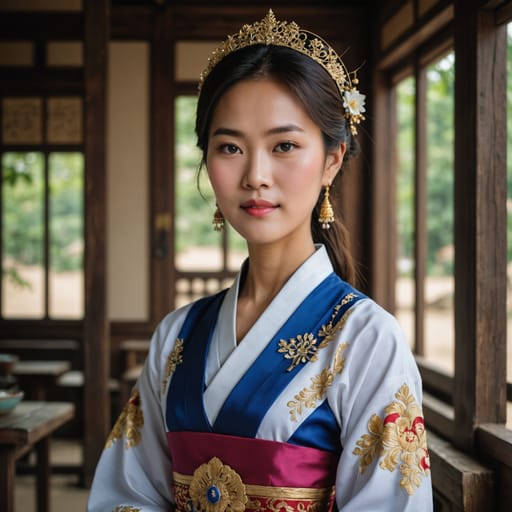
Typical Albazinians Phenotypes
Reference for AI generation: hair, eyes, skin, facial structure, build
Albazinians Body & Anatomy Reference
Anatomy by feature, East Asian Sinitic / Mongoloid phenotype
Albazinians Boobs & Breasts
Albazinians tits and boobs run small-to-medium cup, modest projection, the classic East Asian Sinitic / Mongoloid bust profile. Albazinians nipples and areolas show light-pink to medium-brown areolar pigmentation against the light-to-medium skin tone, with areolar diameter typically in the 26-36mm range and forward-set positioning rather than the fuller South Asian or Levantine bust profile. Albazinians breasts trend firm and modestly projecting; smaller cup size than the South Asian or Western Asian average, a function of the ectomorph-to-mesomorph, lean frame body habitus and the mean adult female BMI 20-23. For anatomically accurate AI-generated Albazinians nudes the render preserves the small-to-medium cup, modest projection shape, 26-36mm areolas with light-pink to medium-brown pigmentation, and the torso proportions of the East Asian Sinitic / Mongoloid phenotype.
Albazinians Ass & Hips
Albazinians hips and butt usually read as small-to-medium, modest projection, narrower hip profile. The skeletal base is narrower iliac crests, less gluteal-femoral fat deposition, the East Asian Sinitic / Mongoloid pattern. Set against the fuller projected glutes of the West African or Polynesian phenotype, the difference is easy to see, and the hip-to-waist ratio is often what identifies Albazinians women in photos.
Albazinians Vagina & Pussy
Expect light-pink to medium-brown labial pigmentation, smaller labia minora on Albazinians women, in keeping with East Asian Sinitic / Mongoloid ancestry. The pubic hair is straight fine texture, sparser distribution than the South Asian norm. Coloring should run evenly from the light to medium skin of the thighs to the labia, and Albazinians nude imagery should keep the hair's straight fine texture.
Albazinians Dicks & Penis
Albazinians dick and penile anatomy in adult AI generation should anchor on the regional reference data: regional mean ~11-12cm erect, moderate girth, and light-brown shaft pigmentation. The Albazinians cock profile reflects the East Asian Sinitic / Mongoloid population's anthropometric measurements. The shaft pigmentation should track the surrounding light to medium skin tone, and the pubic hair should keep its straight fine texture in the typical inverted-V escutcheon.
Albazinians Body, Curves & Build
Albazinians body type: ectomorph-to-mesomorph, lean frame, with mean adult female BMI 20-23. This is the typical East Asian Sinitic / Mongoloid build. Height range, shoulder-to-hip ratio and fat distribution all follow from it, which is what an accurate Albazinians nude body should show.
Albazinians Skin Tone & Hair Texture
Albazinians skin tone falls in the light to medium (Fitzpatrick II-IV) band, the surface signal most often miscalibrated by generic AI nude generators. Albazinians hair texture is typically straight 1A, fine-to-medium, predominantly black, characteristic of the East Asian Sinitic / Mongoloid phenotype. In Albazinians nude renders the skin should hold that band consistently across the body.
Explore phenotype categories
Structured taxonomy with peer-reviewed scales · 22 anatomical categories
Erotic Poses & Sex Positions
From the pose catalog: 219 named positions with reference skeletons
Frequently asked questions about Albazinians people
Where is the Albazinians homeland?
The Albazinians homeland is Beijing, China; ancestral origin at the Albazin fort on the Amur River, now Albazino in Amur Oblast, Russia. in East Asia.
What language do Albazinians people speak?
Albazinians people primarily speak Mandarin Chinese (Sino-Tibetan); ancestral Russian (Indo-European, East Slavic) was lost within a few generations; Church Slavonic and Chinese in Orthodox worship..
What religion do Albazinians people practice?
The predominant religion among Albazinians people is Eastern Orthodox Christianity, historically centered on the Russian Ecclesiastical Mission in Beijing; practiced today by a small number of families..






Make your own Albazinians images
Five a day, free, no credits to buy. The studio starts from this group's phenotype data, so you can set body type, pose and style and keep the traits accurate.
Start with Albazinians