No portrait yet
Papora Erotic
The Dadu plateau and adjoining coastal plain of central western Taiwan, now the Dadu, Shalu, Qingshui, Wuqi and Longjing districts of Taichung, with a later resettled community in the Puli basin, Nantou County
Papora (Austronesian, Formosan; usually grouped with Hoanya in the Western Plains cluster), no longer spoken; Taiwanese Hokkien and Mandarin today
Traditionally animist and ancestor-centered; descendants today follow Chinese folk religion, Taoism and Buddhism, with some Christianity
One of the Pingpu (plains indigenous) peoples of Taiwan; villages of Dadu, Shalu, Gomach and Shuiliwu; core member of the Kingdom of Middag confederation alongside Babuza, Pazeh, Hoanya and Taokas
About Papora People
The Papora held the Dadu plateau and the coastal flats beneath it, on Taiwan's central west coast, in the districts that make up the western half of Taichung today. Colonial paperwork names four of their villages: Dadu, Shalu, Gomach and Shuiliwu. What made them legible as a people rather than a scatter of settlements, to anyone who was writing things down, was politics. In the 1600s they formed the core of a confederation the Dutch called the Kingdom of Middag, roughly twenty villages under a paramount leader whom VOC clerks styled an emperor. It was the one indigenous polity on the island substantial enough that the Dutch East India Company negotiated with it before it fought it. Their language, Papora, belonged to the Formosan languages, the Austronesian tongues native to Taiwan and the most internally varied part of a family that later reached Madagascar and Hawaii. Specialists usually class it with neighboring Hoanya. It fell out of use in the nineteenth century, and what is left is thin: short word lists, fragments gathered by Japanese-era fieldworkers, and place names still on the map, ground down into Chinese characters.
The rest is a sequence of pressures. Dutch campaigns in the 1640s forced Middag into tributary status. Zheng troops arrived after 1661 wanting farmland, and in 1670 they destroyed Shalu; the accounts that survive count the survivors in handfuls. Under the Qing, the plains peoples lost ground steadily to Han settlers through rents, debt and outright fraud, and after the failed uprising of 1731 the confederation was finished as a political fact. In the 1820s and 1830s, Papora families joined the wider plains migration inland to the Puli basin in Nantou, where several formerly separate peoples resettled side by side and intermarried. What stayed on the coast was absorbed: Han surnames, Han households, the gods of the temples standing there now. Their ceremonial life went largely unrecorded before it stopped, which is its own kind of loss, and honest writing about them has to say so rather than fill the hole with guesswork. Descendants exist and know what they are descended from. Along with Taiwan's other plains peoples, known collectively as Pingpu, they have spent decades pressing the state for formal indigenous recognition, a fight conducted in courts and legislative committees, and one that moves slowly.
Related ethnic groups
Groups that share Papora's homeland, region, language, or religious tradition. These are likely candidates for comparative phenotype reference.

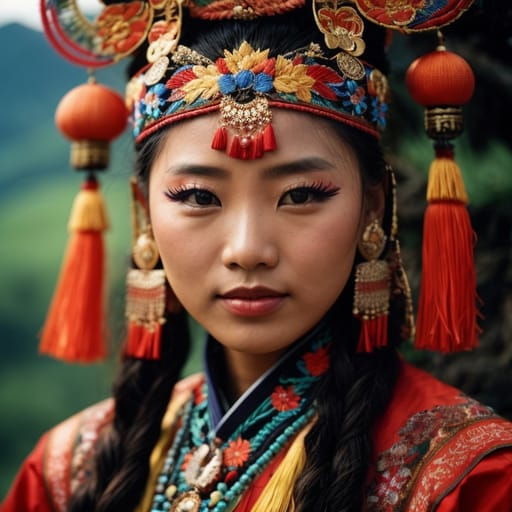
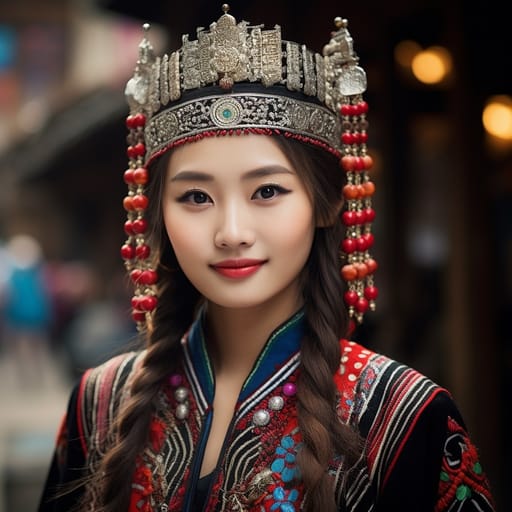

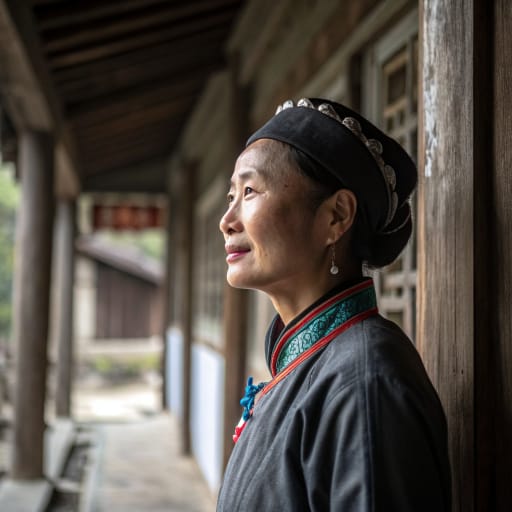
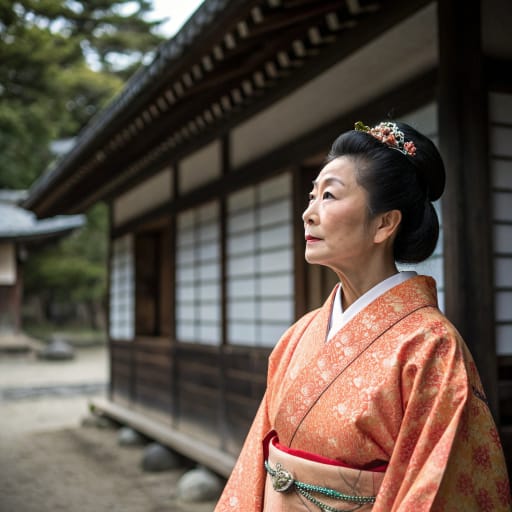
Typical Papora Phenotypes
Reference for AI generation: hair, eyes, skin, facial structure, build
Papora Body & Anatomy Reference
East Asian Sinitic / Mongoloid phenotype: anatomy reference for AI nude generation
Papora Boobs & Breasts
The typical Papora bust is small-to-medium cup, modest projection, in line with the wider East Asian Sinitic / Mongoloid pattern. Areolas usually fall in the 26-36mm range, with light-pink to medium-brown areolar pigmentation against the light-to-medium skin tone. Compared with the fuller South Asian or Levantine bust profile, Papora breasts sit forward and are generally firm and modestly projecting; smaller cup size than the South Asian or Western Asian average. A faithful AI render of Papora tits keeps that shape and areola size.
Papora Ass & Hips
Butt shape among Papora women: small-to-medium, modest projection, narrower hip profile, over narrower iliac crests, less gluteal-femoral fat deposition. This follows East Asian Sinitic / Mongoloid ancestry and looks quite unlike the fuller projected glutes of the West African or Polynesian phenotype. An accurate Papora ass in adult AI imagery keeps both the silhouette and the overall build (ectomorph-to-mesomorph, lean frame) instead of a generic average.
Papora Vagina & Pussy
Vulvar anatomy among Papora women: light-pink to medium-brown labial pigmentation, smaller labia minora. Pubic hair tends to be straight fine texture, sparser distribution than the South Asian norm, in the usual inverted-triangle pattern. Both follow East Asian Sinitic / Mongoloid pigmentation, which is why Papora pussy renders should not fall back on a pale, sparse Western template.
Papora Dicks & Penis
The Papora cock profile, from East Asian Sinitic / Mongoloid anthropometric data: regional mean ~11-12cm erect; moderate girth; light-brown shaft pigmentation. Pubic hair has a straight fine texture and forms the usual inverted-V pattern. Whether Papora men are circumcised follows religious and cultural practice rather than phenotype.
Papora Body, Curves & Build
Build and curves among Papora women follow the East Asian Sinitic / Mongoloid pattern: ectomorph-to-mesomorph, lean frame, mean adult female BMI 20-23. Proportions matter as much as skin tone, so Papora figures should keep their regional height and limb ratios.
Papora Skin Tone & Hair Texture
The Papora skin range is light to medium (Fitzpatrick II-IV), and hair tends to be straight 1A, fine-to-medium, predominantly black. That combination marks the East Asian Sinitic / Mongoloid phenotype, and skin tone is the trait AI generators most often get wrong for Papora women.
Explore phenotype categories
Structured taxonomy with peer-reviewed scales · 22 anatomical categories
Erotic Poses & Sex Positions
From the pose catalog: 219 named positions with reference skeletons
Frequently asked questions about Papora people
Where is the Papora homeland?
The Papora homeland is The Dadu plateau and adjoining coastal plain of central western Taiwan, now the Dadu, Shalu, Qingshui, Wuqi and Longjing districts of Taichung, with a later resettled community in the Puli basin, Nantou County in East Asia.
What language do Papora people speak?
Papora people primarily speak Papora (Austronesian, Formosan; usually grouped with Hoanya in the Western Plains cluster), no longer spoken; Taiwanese Hokkien and Mandarin today.
What religion do Papora people practice?
The predominant religion among Papora people is Traditionally animist and ancestor-centered; descendants today follow Chinese folk religion, Taoism and Buddhism, with some Christianity.






Make your own Papora images
Five a day, free, no credits to buy. The studio starts from this group's phenotype data, so you can set body type, pose and style and keep the traits accurate.
Start with Papora