No portrait yet
Siraya Erotic
Chianan Plain of southwestern Taiwan around Tainan, with descendant communities in Hualien and Taitung on the east coast
Siraya (Austronesian, Formosan), dormant since the early twentieth century and under revival; Taiwanese Hokkien and Mandarin in daily use
Ancestral spirit (Alid) worship centered on the kuva shrine, alongside Taiwanese folk religion, Buddhism and Presbyterian Christianity
Plains indigenous (Pingpu) people; historical communities Sinckan, Soulang, Mattau and Bakloan; the Taivoan and Makatao are sometimes classed as Siraya branches
About Siraya People
The Siraya are the people the Dutch met first when they built Fort Zeelandia on the Tainan coast in 1624, and for most of the next four centuries outsiders assumed they had melted into the Chinese population. They had not, quite. They are a Plains indigenous group of southwestern Taiwan, one of the peoples known collectively as Pingpu, and their heartland is the flat, hot Chianan Plain around Tainan, where the four big villages in Dutch ledgers, Sinckan, Soulang, Mattau and Bakloan, are now the districts of Xinshi, Jiali, Madou and Shanhua. As Chinese settlers took the paddy land, some Siraya moved into the hills toward Yujing, and in the nineteenth century others crossed the mountains to the east coast, so Siraya descendants also live around Fuli in Hualien and in Taitung.
Their language is Austronesian, one of the Formosan languages that make Taiwan the likely starting point for the family that stretches from Madagascar to Easter Island. It had fallen silent as an everyday tongue by the early twentieth century, but Dutch missionaries had taught the Siraya to write it in Roman letters, and villagers kept using that script for land contracts long after the Dutch were expelled in 1662. Those contracts, the Sinckan Manuscripts, plus a 1661 translation of the Gospel of Matthew, are the raw material a small group of activists has used since the 2000s to rebuild the language and get it into a handful of Tainan primary schools.
Seventeenth-century Dutch writers were startled by Siraya society: women farmed and ran the religion, priestesses called inibs presided over spirit rites, husbands lived apart in men's houses and visited their wives at night, and villages were run by councils of elders rather than chiefs. What survives of that world is the worship of Alid, the ancestral spirit, kept in a village shrine called a kuva as water-filled pots rather than images. In Jibeishua and Toushe the annual Night Festival still brings pig offerings, female mediums, and lines of women in white singing and stepping in a slow circle, everyone crowned with garlands of Eupatorium leaves. In daily life most Siraya practice the same folk religion, Buddhism or Christianity as their neighbors, and the kuva is where the older identity concentrates.
Legally they have spent decades in limbo. Taiwan's national indigenous status excludes the Plains peoples, so Tainan granted the Siraya local recognition in 2005, and in 2022 the Constitutional Court ruled the exclusion unconstitutional and ordered the law changed. Recognition matters beyond the registered families, because a large share of southern Taiwanese who consider themselves Han have Siraya grandmothers somewhere in the line.
Related ethnic groups
Groups that share Siraya's homeland, region, language, or religious tradition. These are likely candidates for comparative phenotype reference.

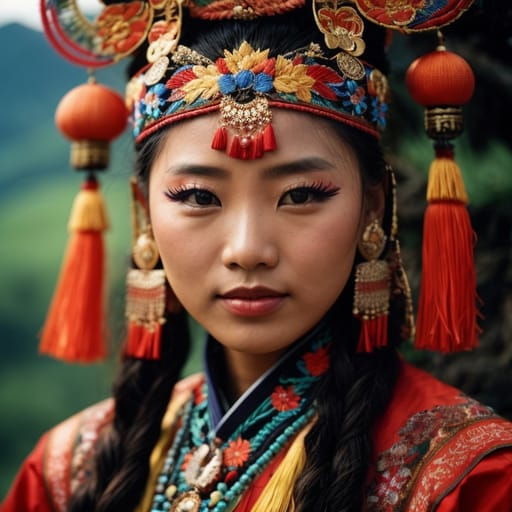
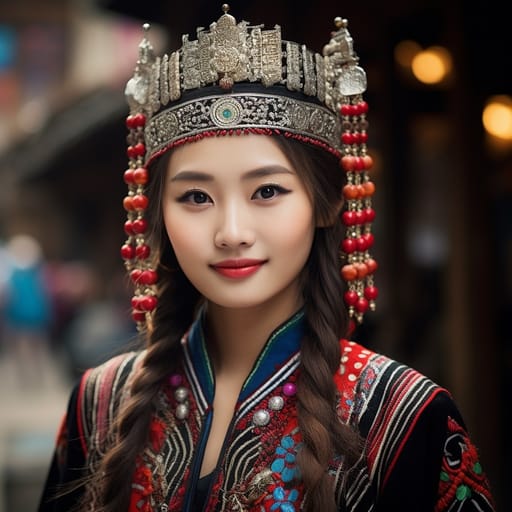
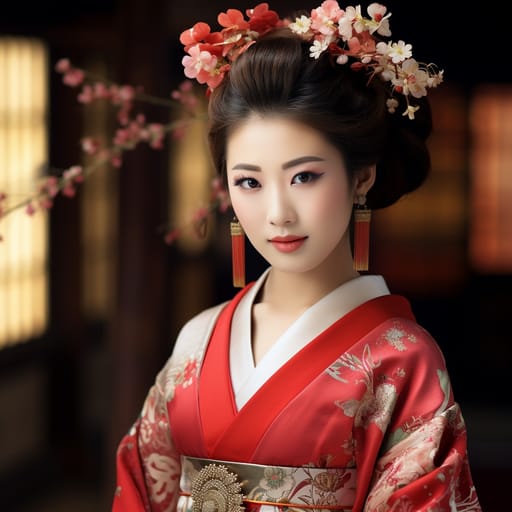
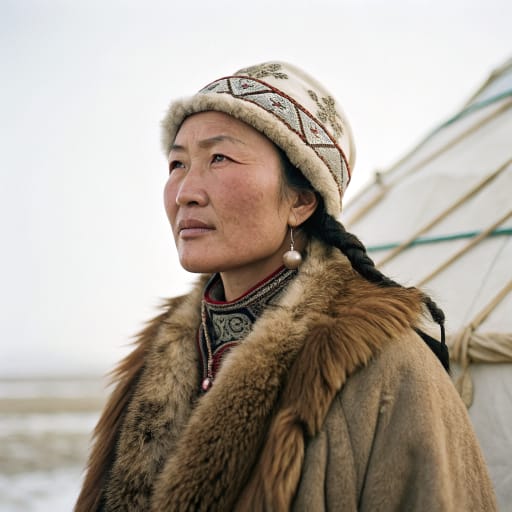
Typical Siraya Phenotypes
Reference for AI generation: hair, eyes, skin, facial structure, build
Siraya Body & Anatomy Reference
Anatomy by feature, East Asian Sinitic / Mongoloid phenotype
Siraya Boobs & Breasts
The typical Siraya bust is small-to-medium cup, modest projection, in line with the wider East Asian Sinitic / Mongoloid pattern. Areolas usually fall in the 26-36mm range, with light-pink to medium-brown areolar pigmentation against the light-to-medium skin tone. Compared with the fuller South Asian or Levantine bust profile, Siraya breasts sit forward and are generally firm and modestly projecting; smaller cup size than the South Asian or Western Asian average. A faithful AI render of Siraya tits keeps that shape and areola size.
Siraya Ass & Hips
Butt shape among Siraya women: small-to-medium, modest projection, narrower hip profile, over narrower iliac crests, less gluteal-femoral fat deposition. This follows East Asian Sinitic / Mongoloid ancestry and looks quite unlike the fuller projected glutes of the West African or Polynesian phenotype. An accurate Siraya ass in adult AI imagery keeps both the silhouette and the overall build (ectomorph-to-mesomorph, lean frame) instead of a generic average.
Siraya Vagina & Pussy
Vulvar anatomy among Siraya women: light-pink to medium-brown labial pigmentation, smaller labia minora. Pubic hair tends to be straight fine texture, sparser distribution than the South Asian norm, in the usual inverted-triangle pattern. Both follow East Asian Sinitic / Mongoloid pigmentation, which is why Siraya pussy renders should not fall back on a pale, sparse Western template.
Siraya Dicks & Penis
The Siraya cock profile, from East Asian Sinitic / Mongoloid anthropometric data: regional mean ~11-12cm erect; moderate girth; light-brown shaft pigmentation. Pubic hair has a straight fine texture and forms the usual inverted-V pattern. Whether Siraya men are circumcised follows religious and cultural practice rather than phenotype.
Siraya Body, Curves & Build
Build and curves among Siraya women follow the East Asian Sinitic / Mongoloid pattern: ectomorph-to-mesomorph, lean frame, mean adult female BMI 20-23. Proportions matter as much as skin tone, so Siraya figures should keep their regional height and limb ratios.
Siraya Skin Tone & Hair Texture
The Siraya skin range is light to medium (Fitzpatrick II-IV), and hair tends to be straight 1A, fine-to-medium, predominantly black. That combination marks the East Asian Sinitic / Mongoloid phenotype, and skin tone is the trait AI generators most often get wrong for Siraya women.
Explore phenotype categories
Structured taxonomy with peer-reviewed scales · 22 anatomical categories
Erotic Poses & Sex Positions
From the pose catalog: 219 named positions with reference skeletons
Frequently asked questions about Siraya people
Where is the Siraya homeland?
The Siraya homeland is Chianan Plain of southwestern Taiwan around Tainan, with descendant communities in Hualien and Taitung on the east coast in East Asia.
What language do Siraya people speak?
Siraya people primarily speak Siraya (Austronesian, Formosan), dormant since the early twentieth century and under revival; Taiwanese Hokkien and Mandarin in daily use.
What religion do Siraya people practice?
The predominant religion among Siraya people is Ancestral spirit (Alid) worship centered on the kuva shrine, alongside Taiwanese folk religion, Buddhism and Presbyterian Christianity.






Make your own Siraya images
Five a day, free, no credits to buy. The studio starts from this group's phenotype data, so you can set body type, pose and style and keep the traits accurate.
Start with Siraya