No portrait yet
Naimans Erotic
Western Mongolia between the Altai and Khangai ranges, reaching the upper Irtysh (present-day Mongolia, with margins in Kazakhstan, Russia and China)
Disputed: Turkic (Turkic family) or Mongolic (Mongolic family), possibly both; the ethnonym itself is Mongolic
Church of the East (Nestorian) Christianity among the elite, alongside Tengrist shamanism
Confederation of eight clans by name; descendant Naiman clans survive among Kazakhs (Middle Jüz), Mongols, Kyrgyz, Uzbeks, Nogais and Bashkirs
About Naimans People
The Naimans were a steppe confederation that dominated western Mongolia through the twelfth century until 1204, when Genghis Khan broke them at the battle of Chakirmaut and folded their people into the new Mongol state; their name survives today as a clan among Kazakhs, Mongols and several other Turkic peoples, and as a banner in Inner Mongolia. What set them apart on the plateau was organization. While most of their neighbors were loose tribal alliances, the Naimans ran something closer to a kingdom, with a khan's court, a chancellery staffed by literate Uyghur scribes, and a state seal. Their rulers carried Turkic titles, and their most powerful khan, Inanch Bilge, held a realm stretching from the Altai Mountains east toward the Khangai and west along the upper Irtysh, sitting astride the routes that linked Central Asia with the Tangut kingdom and Jin China.
The name is Mongolic and means eight, most likely a count of the constituent clans. Yet the language the Naimans themselves spoke is one of the open questions of medieval Inner Asia. Their titles and a possible descent from the Sekiz Oghuz, the eight Oghuz of the Uyghur era, argue for Turkic; the Mongolic name and their deep entanglement with Mongol politics argue otherwise. They may well have been bilingual, which on that frontier would not have been unusual. In religion they are less ambiguous. The Naiman elite had adopted Christianity from the Church of the East, the so-called Nestorian church that spread along the Silk Road, and practiced it alongside older shamanist customs; the Naimans and their Kereit rivals were the two Christian powers of the plateau when Temujin was rising. That rivalry ended grimly: when the Kereit ruler Ong Khan fled toward Naiman territory in 1203, a border guard killed him without recognizing him, and his skull was brought to the Naiman court and treated as a relic.
The confederation's undoing was a succession fight. Inanch Bilge's sons, Tayang Khan and Buyruq, split the realm and were defeated separately. Tayang died of wounds from Chakirmaut; Buyruq was hunted down two years later; Tayang's son Kuchlug fled west, seized the Qara Khitai throne in 1211, and was killed by Mongol pursuers in 1218. The Naimans' most durable gift to their conquerors was administrative. Tata-tonga, the Uyghur keeper of the Naiman seal, was captured in 1204 and taught the Mongols to write their language in Uyghur letters. That vertical script is still used in Inner Mongolia and has been restored to official status in Mongolia, which means every line of Mongolian written in the traditional script carries a Naiman inheritance.
Related ethnic groups
Groups that share Naimans's homeland, region, language, or religious tradition. These are likely candidates for comparative phenotype reference.

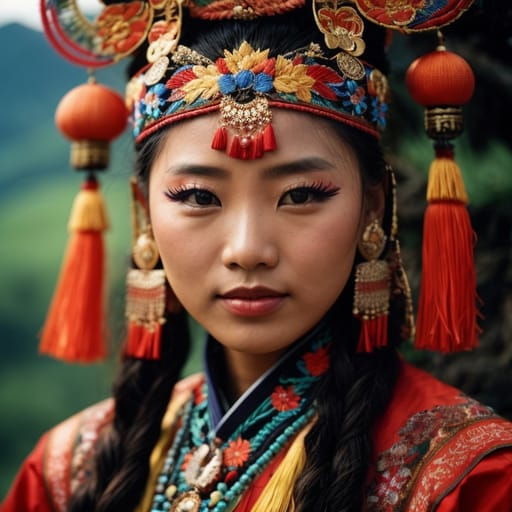
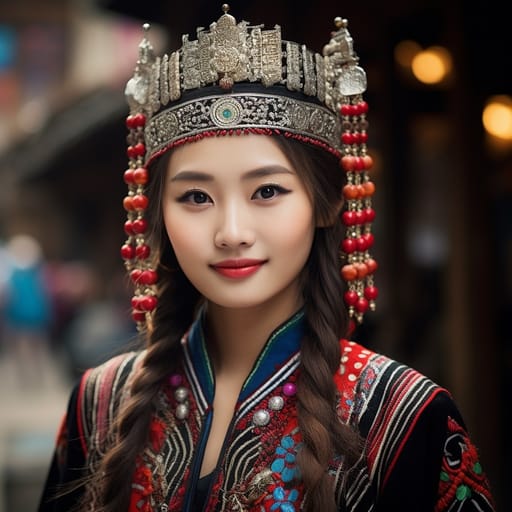

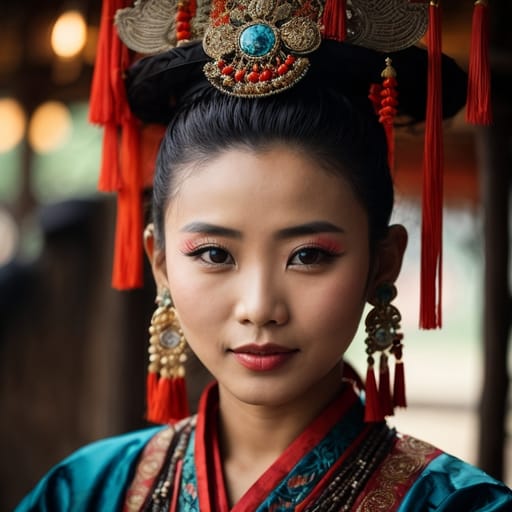
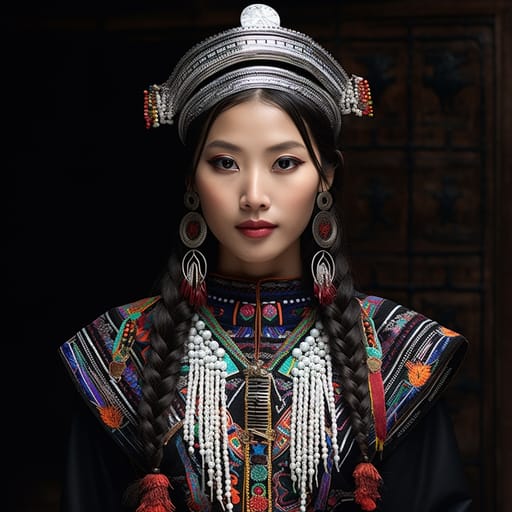
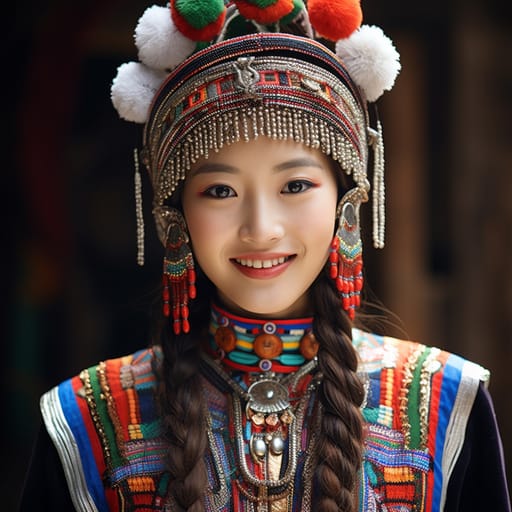
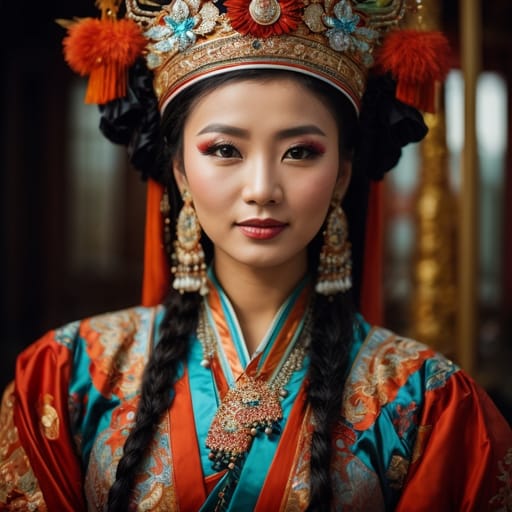
Typical Naimans Phenotypes
Reference for AI generation: hair, eyes, skin, facial structure, build
Naimans Body & Anatomy Reference
Anatomy by feature, East Asian Sinitic / Mongoloid phenotype
Naimans Boobs & Breasts
The typical Naimans bust is small-to-medium cup, modest projection, in line with the wider East Asian Sinitic / Mongoloid pattern. Areolas usually fall in the 26-36mm range, with light-pink to medium-brown areolar pigmentation against the light-to-medium skin tone. Compared with the fuller South Asian or Levantine bust profile, Naimans breasts sit forward and are generally firm and modestly projecting; smaller cup size than the South Asian or Western Asian average. A faithful AI render of Naimans tits keeps that shape and areola size.
Naimans Ass & Hips
Butt shape among Naimans women: small-to-medium, modest projection, narrower hip profile, over narrower iliac crests, less gluteal-femoral fat deposition. This follows East Asian Sinitic / Mongoloid ancestry and looks quite unlike the fuller projected glutes of the West African or Polynesian phenotype. An accurate Naimans ass in adult AI imagery keeps both the silhouette and the overall build (ectomorph-to-mesomorph, lean frame) instead of a generic average.
Naimans Vagina & Pussy
Vulvar anatomy among Naimans women: light-pink to medium-brown labial pigmentation, smaller labia minora. Pubic hair tends to be straight fine texture, sparser distribution than the South Asian norm, in the usual inverted-triangle pattern. Both follow East Asian Sinitic / Mongoloid pigmentation, which is why Naimans pussy renders should not fall back on a pale, sparse Western template.
Naimans Dicks & Penis
The Naimans cock profile, from East Asian Sinitic / Mongoloid anthropometric data: regional mean ~11-12cm erect; moderate girth; light-brown shaft pigmentation. Pubic hair has a straight fine texture and forms the usual inverted-V pattern. Whether Naimans men are circumcised follows religious and cultural practice rather than phenotype.
Naimans Body, Curves & Build
Build and curves among Naimans women follow the East Asian Sinitic / Mongoloid pattern: ectomorph-to-mesomorph, lean frame, mean adult female BMI 20-23. Proportions matter as much as skin tone, so Naimans figures should keep their regional height and limb ratios.
Naimans Skin Tone & Hair Texture
The Naimans skin range is light to medium (Fitzpatrick II-IV), and hair tends to be straight 1A, fine-to-medium, predominantly black. That combination marks the East Asian Sinitic / Mongoloid phenotype, and skin tone is the trait AI generators most often get wrong for Naimans women.
Explore phenotype categories
Structured taxonomy with peer-reviewed scales · 22 anatomical categories
Erotic Poses & Sex Positions
From the pose catalog: 219 named positions with reference skeletons
Frequently asked questions about Naimans people
Where is the Naimans homeland?
The Naimans homeland is Western Mongolia between the Altai and Khangai ranges, reaching the upper Irtysh (present-day Mongolia, with margins in Kazakhstan, Russia and China) in East Asia.
What language do Naimans people speak?
Naimans people primarily speak Disputed: Turkic (Turkic family) or Mongolic (Mongolic family), possibly both; the ethnonym itself is Mongolic.
What religion do Naimans people practice?
The predominant religion among Naimans people is Church of the East (Nestorian) Christianity among the elite, alongside Tengrist shamanism.






Make your own Naimans images
Five a day, free, no credits to buy. The studio starts from this group's phenotype data, so you can set body type, pose and style and keep the traits accurate.
Start with Naimans