Help us get this right
Does this portrait look right for Khoshut?
Nobody has judged this one yet. You would be the first.
Khoshut Erotic
Grasslands around Qinghai Lake (Kokonor) in Qinghai, China, with communities in Alxa in Inner Mongolia, Bayingolin in Xinjiang, and Kalmykia in Russia; originally Dzungaria
Oirat (Mongolic), historically written in the Clear Script; Tibetan and Mandarin are widely used in Qinghai, Russian among the Kalmyk Khoshut
Tibetan Buddhism of the Gelug school, layered over older steppe ritual
One of the four Oirat tribes, with the Choros or Dzungar, the Torghut and the Dorbet; includes the Upper Mongols (Deed Mongol) of Qinghai, the Alxa Khoshut, the Hoshut of Bayingolin, and a Khoshut division among the Kalmyks
About Khoshut People
The Khoshut are one of the four tribes of the Oirat, the western Mongols, and the one whose princes could claim something the others could not: descent from Hasar, the younger brother of Genghis Khan. Among Oirat nobility that mattered enormously. It gave the Khoshut a right of precedence that the Choros and Torghut houses had to argue their way around, and it goes some distance toward explaining why a tribe of middling size kept turning up at the head of coalitions. The name itself is usually read as vanguard, from the wedge of riders sent out ahead of an army.
Their homeland was Dzungaria, but one seventeenth-century decision scattered them across four political worlds. In the 1630s Gushi Khan led them south and east to the grasslands around Kokonor, the great salt lake in what is now Qinghai, and from that high, cold base he intervened in a Tibetan civil war. By 1642 he had broken the rulers of Tsang and handed temporal authority over Tibet to the Fifth Dalai Lama, keeping the title of king and the army for himself. The arrangement held until 1717, when Dzungar cavalry took Lhasa and killed the last Khoshut khan there. A Khoshut rising against the Qing at Kokonor in 1723 ended the next year with the survivors reorganized into banners under Manchu supervision. Their descendants, the Deed Mongol or Upper Mongols, still herd in Qinghai, where centuries of living beside Amdo Tibetans have left many families trilingual and much of the material culture Tibetan in cut. Other Khoshut ended up in the Alxa desert of Inner Mongolia, in Bayingolin in Xinjiang, and on the Volga, where they form one of the divisions of the Kalmyks and where their nobles raised the Khosheutovsky temple, a Buddhist khurul fronted with a Russian imperial colonnade, to mark Kalmyk service against Napoleon. They speak Oirat, a Mongolic language close enough to Khalkha to be argued about and distinct enough to have been given its own alphabet: the Clear Script, devised in 1648 by Zaya Pandita, himself the son of a Khoshut noble, sent to Tibet to study in another man's place. Their Buddhism is Gelug and unembarrassed, layered over older steppe practice: cairns heaped on the passes, offerings made to the fire, a lama consulted about the timing of a move.
Related ethnic groups
Groups that share Khoshut's homeland, region, language, or religious tradition. These are likely candidates for comparative phenotype reference.
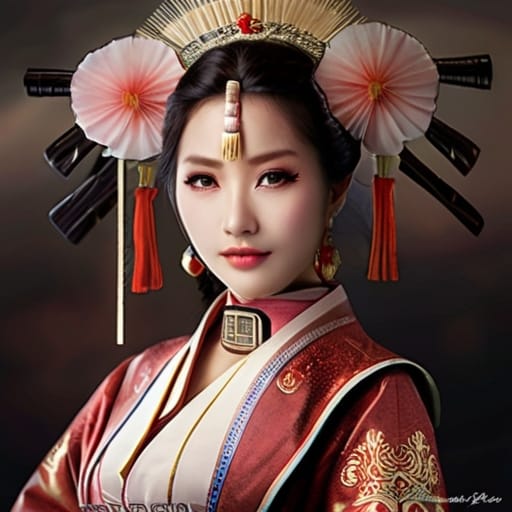
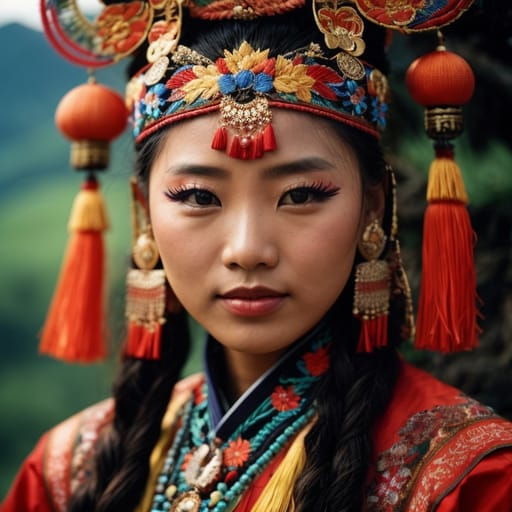
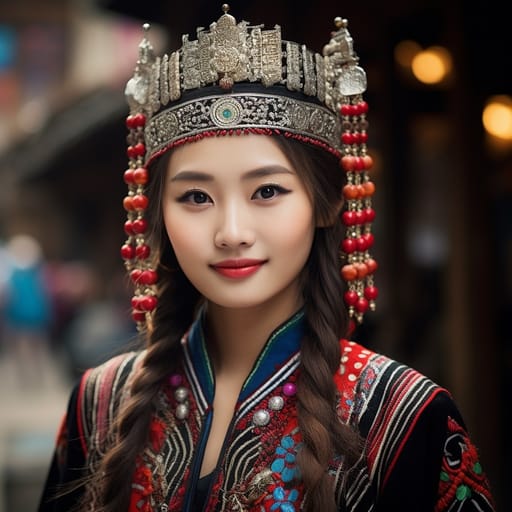
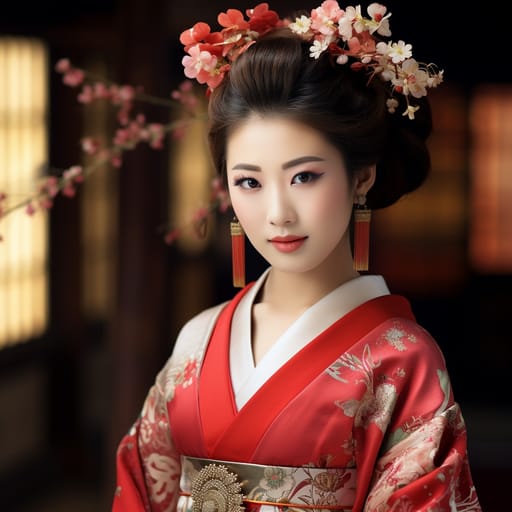
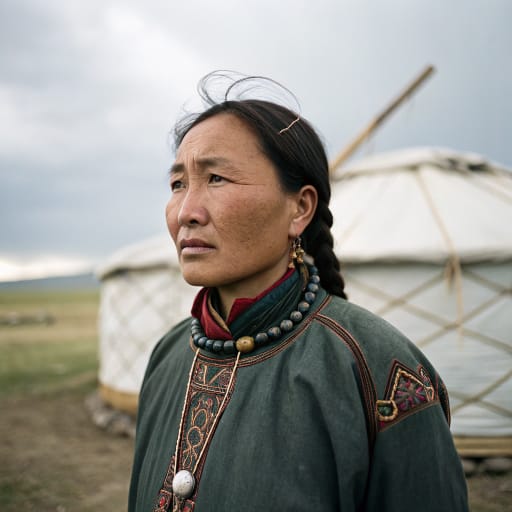
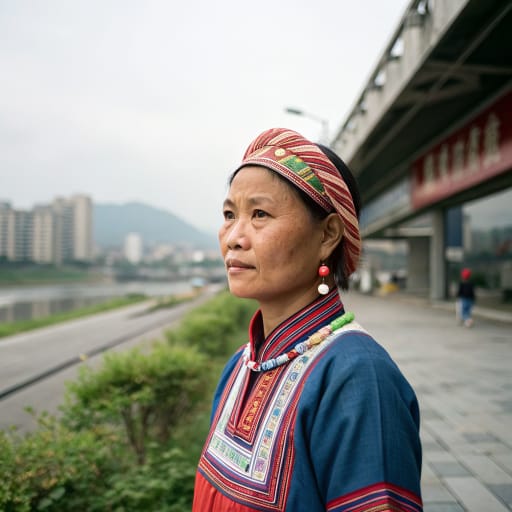
Typical Khoshut Phenotypes
Reference for AI generation: hair, eyes, skin, facial structure, build
Khoshut Body & Anatomy Reference
Anatomy by feature, East Asian Sinitic / Mongoloid phenotype
Khoshut Boobs & Breasts
Khoshut boobs follow the East Asian Sinitic / Mongoloid profile: small-to-medium cup, modest projection. Areolar diameter is usually 26-36mm, and the coloring is light-pink to medium-brown areolar pigmentation against the light-to-medium skin tone. Breast shape tracks body composition (ectomorph-to-mesomorph, lean frame, mean adult female BMI 20-23), so Khoshut breasts tend to be firm and modestly projecting; smaller cup size than the South Asian or Western Asian average. Expect a forward-set shape, not the fuller South Asian or Levantine bust profile.
Khoshut Ass & Hips
Khoshut ass and hip morphology presents as small-to-medium, modest projection, narrower hip profile, distinctly different from the fuller projected glutes of the West African or Polynesian phenotype. The Khoshut pelvic profile shows narrower iliac crests, less gluteal-femoral fat deposition, anchored in the East Asian Sinitic / Mongoloid skeletal pattern. Khoshut butt shots in adult AI imagery should render the small-to-medium, modest projection, narrower hip profile silhouette with the overall build (ectomorph-to-mesomorph, lean frame) and the fat distribution typical of the East Asian Sinitic / Mongoloid phenotype.
Khoshut Vagina & Pussy
Khoshut pussy anatomy typically shows light-pink to medium-brown labial pigmentation, smaller labia minora. Pubic hair is usually straight fine texture, sparser distribution than the South Asian norm. In AI-generated Khoshut nudes, labial color should blend into the light to medium skin with a gradual transition, and the hair should keep its straight fine texture.
Khoshut Dicks & Penis
Penis reference for Khoshut men: regional mean ~11-12cm erect, moderate girth. Coloring: light-brown shaft pigmentation. An accurate Khoshut cock in AI imagery matches the surrounding light to medium skin rather than a generic porn default. Circumcision depends on religion and custom, not ancestry.
Khoshut Body, Curves & Build
The Khoshut figure is generally ectomorph-to-mesomorph, lean frame, with mean adult female BMI 20-23, characteristic of East Asian Sinitic / Mongoloid ancestry. AI image tools tend to flatten regional body types into a few stock shapes; here the Khoshut build is kept as its own reference.
Khoshut Skin Tone & Hair Texture
Skin: light to medium (Fitzpatrick II-IV). Hair: straight 1A, fine-to-medium, predominantly black. Both are typical of East Asian Sinitic / Mongoloid ancestry. The most common mistake in AI nudes of Khoshut women is a body rendered lighter than the face.
Explore phenotype categories
Structured taxonomy with peer-reviewed scales · 22 anatomical categories
Erotic Poses & Sex Positions
From the pose catalog: 219 named positions with reference skeletons
Frequently asked questions about Khoshut people
Where is the Khoshut homeland?
The Khoshut homeland is Grasslands around Qinghai Lake (Kokonor) in Qinghai, China, with communities in Alxa in Inner Mongolia, Bayingolin in Xinjiang, and Kalmykia in Russia; originally Dzungaria in East Asia.
What language do Khoshut people speak?
Khoshut people primarily speak Oirat (Mongolic), historically written in the Clear Script; Tibetan and Mandarin are widely used in Qinghai, Russian among the Kalmyk Khoshut.
What religion do Khoshut people practice?
The predominant religion among Khoshut people is Tibetan Buddhism of the Gelug school, layered over older steppe ritual.






Make your own Khoshut images
Five a day, free, no credits to buy. The studio starts from this group's phenotype data, so you can set body type, pose and style and keep the traits accurate.
Start with Khoshut