Help us get this right
Does this portrait look right for Darkhad?
Nobody has judged this one yet. You would be the first.
Darkhad Erotic
The Darkhad Depression (Shishged) in northern Khövsgöl Province, west of Lake Khövsgöl, in northern Mongolia near the Russian border with Tuva
Darkhad dialect of Mongolian (Mongolic), with features shared with both Khalkha and Oirat; standard Khalkha Mongolian (Mongolic) in schools and government
Tibetan Buddhism alongside a strong, openly practiced shamanic tradition
A Mongol subgroup of northern Mongolia, historically formed from Khalkha, Oirat and Mongolized Uriankhai lineages
About Darkhad People
The Darkhad are Mongols of a single valley, and the valley explains a lot about them. The Darkhad Depression, also called Shishged, is a wide basin of marsh, larch forest and scattered lakes in the far north of Khövsgöl Province. The Khoridol Saridag range cuts it off from Lake Khövsgöl, and on its other sides the mountains climb toward Tuva and Siberia. Winters here are long and harsh even by Mongolian standards. Roughly twenty thousand people identify as Darkhad. Most are herders or townspeople in districts such as Rinchinlkhümbe, Ulaan-Uul and Tsagaannuur. They keep sheep, goats, cattle, yaks and horses, and they add to that with hunting, fishing and gathering in the forest.
Their name is usually read as the exempt ones, and it points to the central fact of their history. Until the revolutionary period of the 1920s, the Darkhad belonged to the estate of the Jebtsundamba Khutughtu, the highest Buddhist incarnation in Mongolia. As subjects of that church estate, they owed labor and tribute to the monasteries rather than taxes and military service to secular princes. The people who came to share this status did not come from one source: Khalkha, Oirat and Mongolized Uriankhai lineages all went into the mix. Their speech is a Mongolian dialect that linguists have never filed neatly, since it has features that point toward both Khalkha and Oirat. Standard Khalkha is what schools and government use.
Within Mongolia, the Darkhad are best known for shamanism. Many households keep Buddhist practice, but the older tradition of the böö, the male shaman, and the udgan, the female shaman, never disappeared. The socialist state attacked both religions hard in the 1930s. Even so, the valley's remoteness let shamanic knowledge pass quietly from one generation to the next. Since 1990 it has come back into the open, and Darkhad shamans now draw clients from Ulaanbaatar and beyond who travel north for drum rituals and for dealings with ancestral spirits. In daily life, most Darkhad move between the two traditions without seeing much contradiction. In the taiga to the west live the Dukha, the Tuvan-speaking reindeer herders often called Tsaatan, and the two peoples have long lived in close contact along the forest edge.
Related ethnic groups
Groups that share Darkhad's homeland, region, language, or religious tradition. These are likely candidates for comparative phenotype reference.
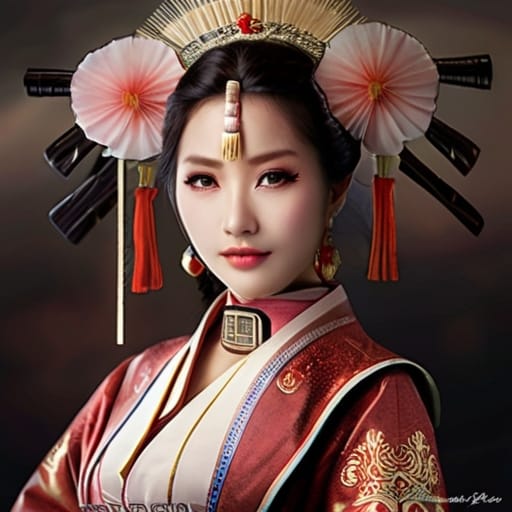
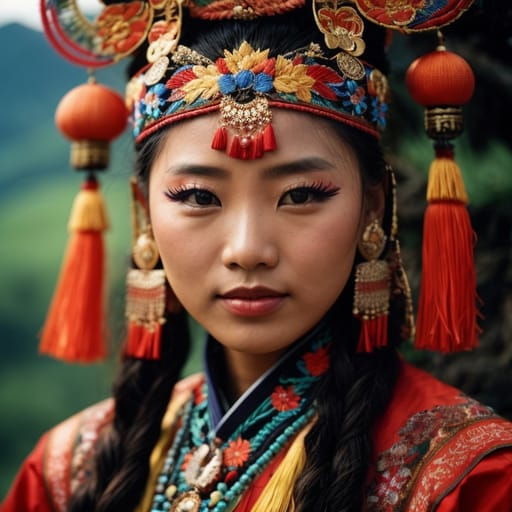
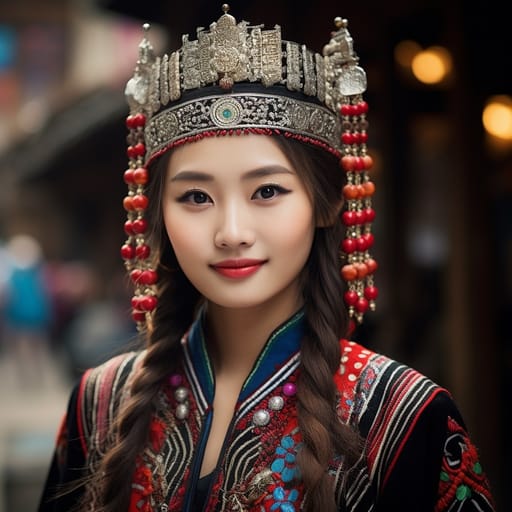
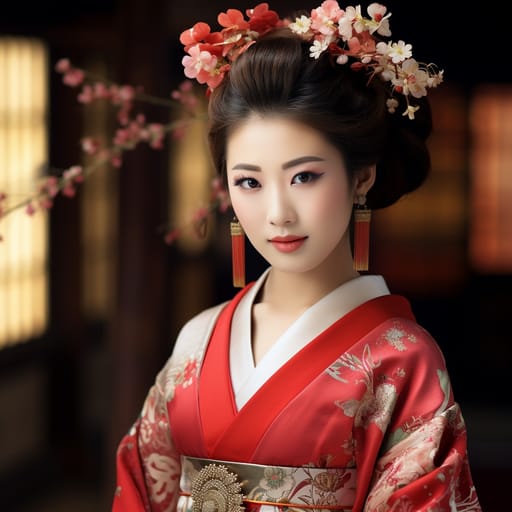
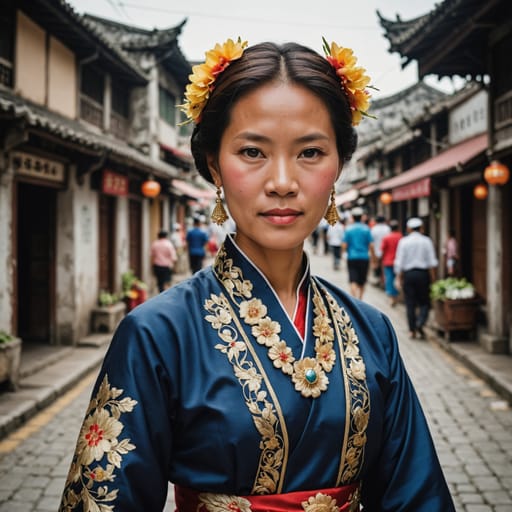
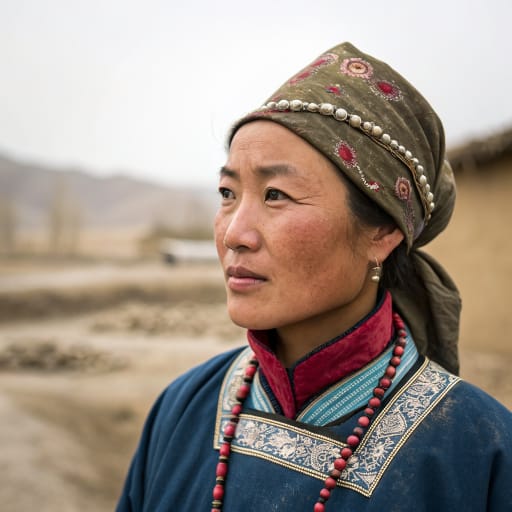
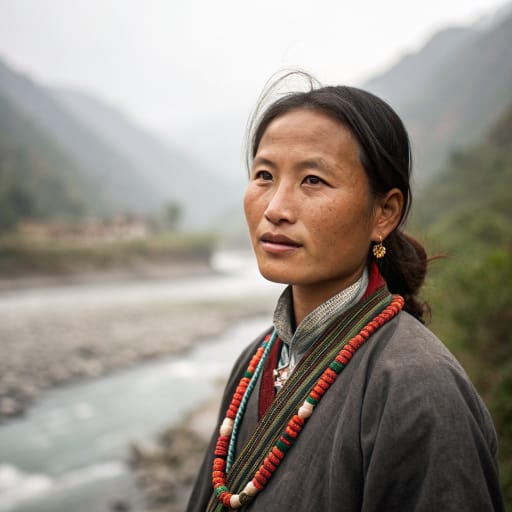
Typical Darkhad Phenotypes
Reference for AI generation: hair, eyes, skin, facial structure, build
Darkhad Body & Anatomy Reference
East Asian Sinitic / Mongoloid phenotype: anatomy reference for AI nude generation
Darkhad Boobs & Breasts
The typical Darkhad bust is small-to-medium cup, modest projection, in line with the wider East Asian Sinitic / Mongoloid pattern. Areolas usually fall in the 26-36mm range, with light-pink to medium-brown areolar pigmentation against the light-to-medium skin tone. Compared with the fuller South Asian or Levantine bust profile, Darkhad breasts sit forward and are generally firm and modestly projecting; smaller cup size than the South Asian or Western Asian average. A faithful AI render of Darkhad tits keeps that shape and areola size.
Darkhad Ass & Hips
Butt shape among Darkhad women: small-to-medium, modest projection, narrower hip profile, over narrower iliac crests, less gluteal-femoral fat deposition. This follows East Asian Sinitic / Mongoloid ancestry and looks quite unlike the fuller projected glutes of the West African or Polynesian phenotype. An accurate Darkhad ass in adult AI imagery keeps both the silhouette and the overall build (ectomorph-to-mesomorph, lean frame) instead of a generic average.
Darkhad Vagina & Pussy
Vulvar anatomy among Darkhad women: light-pink to medium-brown labial pigmentation, smaller labia minora. Pubic hair tends to be straight fine texture, sparser distribution than the South Asian norm, in the usual inverted-triangle pattern. Both follow East Asian Sinitic / Mongoloid pigmentation, which is why Darkhad pussy renders should not fall back on a pale, sparse Western template.
Darkhad Dicks & Penis
The Darkhad cock profile, from East Asian Sinitic / Mongoloid anthropometric data: regional mean ~11-12cm erect; moderate girth; light-brown shaft pigmentation. Pubic hair has a straight fine texture and forms the usual inverted-V pattern. Whether Darkhad men are circumcised follows religious and cultural practice rather than phenotype.
Darkhad Body, Curves & Build
Build and curves among Darkhad women follow the East Asian Sinitic / Mongoloid pattern: ectomorph-to-mesomorph, lean frame, mean adult female BMI 20-23. Proportions matter as much as skin tone, so Darkhad figures should keep their regional height and limb ratios.
Darkhad Skin Tone & Hair Texture
The Darkhad skin range is light to medium (Fitzpatrick II-IV), and hair tends to be straight 1A, fine-to-medium, predominantly black. That combination marks the East Asian Sinitic / Mongoloid phenotype, and skin tone is the trait AI generators most often get wrong for Darkhad women.
Explore phenotype categories
Structured taxonomy with peer-reviewed scales · 22 anatomical categories
Erotic Poses & Sex Positions
From the pose catalog: 219 named positions with reference skeletons
Frequently asked questions about Darkhad people
Where is the Darkhad homeland?
The Darkhad homeland is The Darkhad Depression (Shishged) in northern Khövsgöl Province, west of Lake Khövsgöl, in northern Mongolia near the Russian border with Tuva in East Asia.
What language do Darkhad people speak?
Darkhad people primarily speak Darkhad dialect of Mongolian (Mongolic), with features shared with both Khalkha and Oirat; standard Khalkha Mongolian (Mongolic) in schools and government.
What religion do Darkhad people practice?
The predominant religion among Darkhad people is Tibetan Buddhism alongside a strong, openly practiced shamanic tradition.






Make your own Darkhad images
Five a day, free, no credits to buy. The studio starts from this group's phenotype data, so you can set body type, pose and style and keep the traits accurate.
Start with Darkhad