Help us get this right
Does this portrait look right for Barga?
Nobody has judged this one yet. You would be the first.
Barga Erotic
Hulunbuir in northeastern Inner Mongolia, China, mainly Chen Barag, New Barag Left and New Barag Right banners; a small community in eastern Mongolia
Barga, a variety usually grouped with Buryat (Mongolic); also standard Mongolian (Mongolic) and Mandarin Chinese (Sino-Tibetan)
Tibetan Buddhism (Gelug), practiced alongside ovoo worship and older shamanic traditions
Old Barga (Huuchin Barga) and New Barga (Shine Barga); a Mongol people closely related to the Buryats
About Barga People
The Barga are the herders of the western Hulunbuir steppe, the stretch of grassland in northeastern Inner Mongolia where China, Mongolia and Russia meet. Two things set them apart from other Mongols in China. Their speech and many of their customs link them to the Buryats around Lake Baikal, and three centuries on the Qing frontier made them a people in their own right. Their name is still on the map. Chen Barag Banner is home to the Old Barga, and the two New Barag banners are home to the New Barga. The split comes from the order in which the Qing court moved them there.
Their story starts farther north. The Secret History of the Mongols names Bargujin Tokum, a lowland country east of Baikal, and traces the mother of Alan Gua, the legendary ancestress of Chinggis Khan, to its ruling house. Russian expansion in the 17th century pushed the Barga south. In the 1730s the Qing settled two waves of them in Hulunbuir as banner soldiers guarding the Russian border, and that military start shaped them. When the dynasty fell in 1911, Barga and Daur leaders in Hulunbuir sided with the new Mongolian government in Urga. For decades after, the region was a bargaining chip among China, Russia and later the Japanese puppet state of Manchukuo, until it became part of the People's Republic.
Most linguists group Barga speech with Buryat, a Mongolic language, though Chinese classification files it under Mongolian. Children learn standard Mongolian in the vertical classical script, and Mandarin is widely spoken, especially in towns. Religion follows the pattern of the eastern steppe: Tibetan Buddhism of the Gelug school was added on top of older practice and did not replace it. Families leave offerings at ovoo, the stone cairns on hilltops and passes. Summer ovoo ceremonies still draw herders from across the banners, and wrestling, horse racing and archery often follow. Ganjur Monastery was founded in the late 18th century in what is now New Barag Left Banner. For generations it was both the region's religious center and the site of its big yearly trade fair. Many Barga still raise sheep, cattle and horses on the same grasslands, while others work in Hailar or Manzhouli. The long robe comes out for weddings and festivals.
Related ethnic groups
Groups that share Barga's homeland, region, language, or religious tradition. These are likely candidates for comparative phenotype reference.
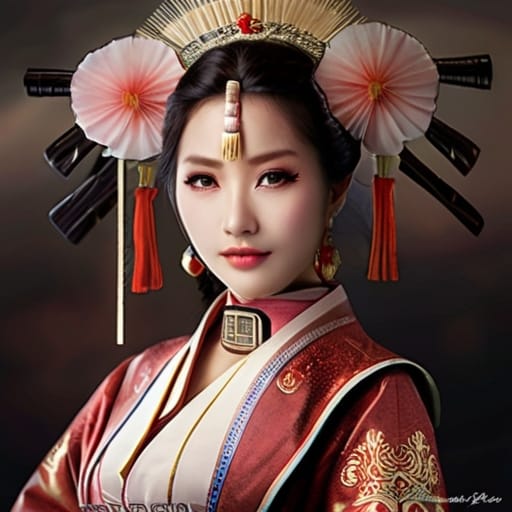
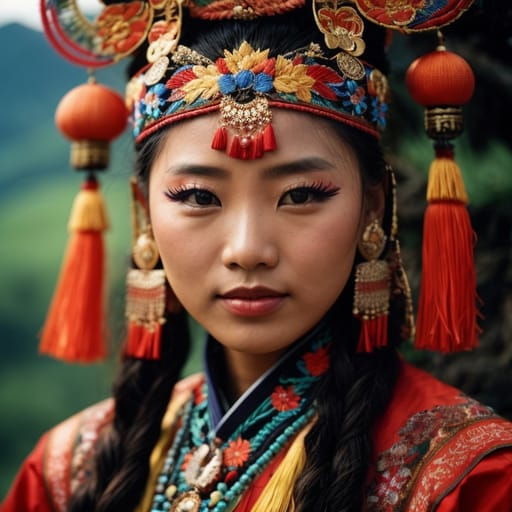
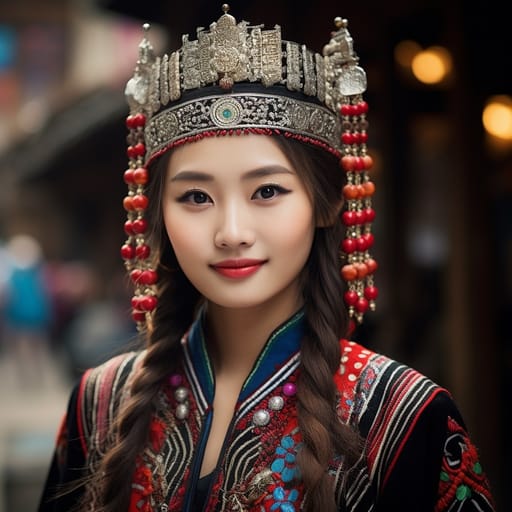
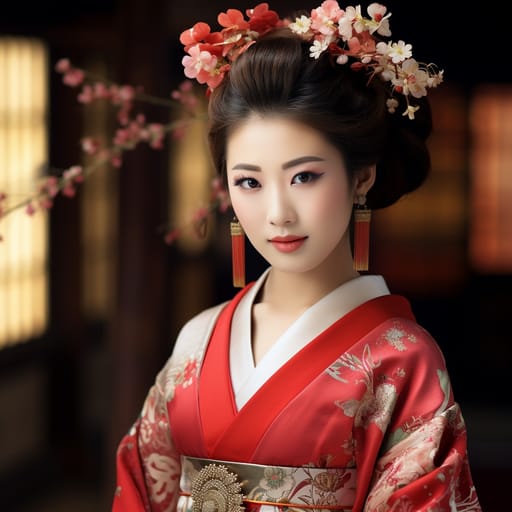
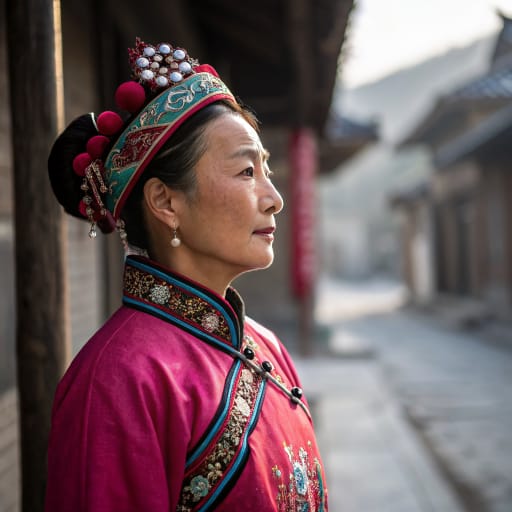
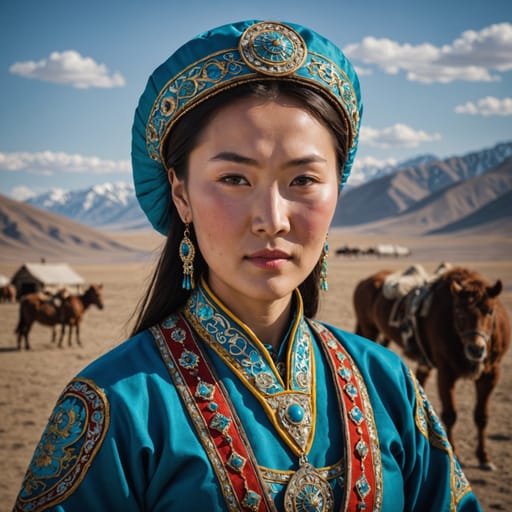
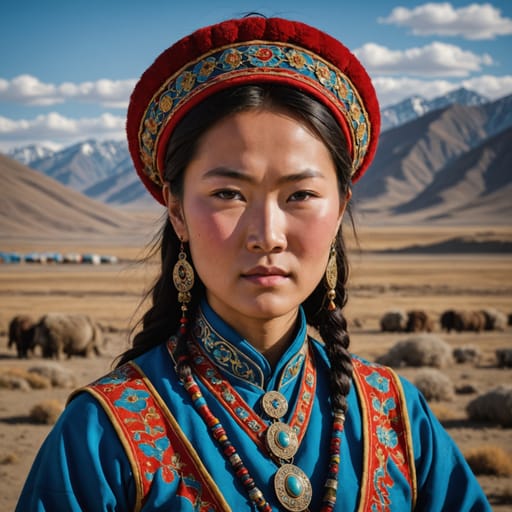
Typical Barga Phenotypes
Reference for AI generation: hair, eyes, skin, facial structure, build
Barga Body & Anatomy Reference
Per-feature anatomical profile for AI nude generation: East Asian Sinitic / Mongoloid phenotype
Barga Boobs & Breasts
The typical Barga bust is small-to-medium cup, modest projection, in line with the wider East Asian Sinitic / Mongoloid pattern. Areolas usually fall in the 26-36mm range, with light-pink to medium-brown areolar pigmentation against the light-to-medium skin tone. Compared with the fuller South Asian or Levantine bust profile, Barga breasts sit forward and are generally firm and modestly projecting; smaller cup size than the South Asian or Western Asian average. A faithful AI render of Barga tits keeps that shape and areola size.
Barga Ass & Hips
Butt shape among Barga women: small-to-medium, modest projection, narrower hip profile, over narrower iliac crests, less gluteal-femoral fat deposition. This follows East Asian Sinitic / Mongoloid ancestry and looks quite unlike the fuller projected glutes of the West African or Polynesian phenotype. An accurate Barga ass in adult AI imagery keeps both the silhouette and the overall build (ectomorph-to-mesomorph, lean frame) instead of a generic average.
Barga Vagina & Pussy
Vulvar anatomy among Barga women: light-pink to medium-brown labial pigmentation, smaller labia minora. Pubic hair tends to be straight fine texture, sparser distribution than the South Asian norm, in the usual inverted-triangle pattern. Both follow East Asian Sinitic / Mongoloid pigmentation, which is why Barga pussy renders should not fall back on a pale, sparse Western template.
Barga Dicks & Penis
The Barga cock profile, from East Asian Sinitic / Mongoloid anthropometric data: regional mean ~11-12cm erect; moderate girth; light-brown shaft pigmentation. Pubic hair has a straight fine texture and forms the usual inverted-V pattern. Whether Barga men are circumcised follows religious and cultural practice rather than phenotype.
Barga Body, Curves & Build
Build and curves among Barga women follow the East Asian Sinitic / Mongoloid pattern: ectomorph-to-mesomorph, lean frame, mean adult female BMI 20-23. Proportions matter as much as skin tone, so Barga figures should keep their regional height and limb ratios.
Barga Skin Tone & Hair Texture
The Barga skin range is light to medium (Fitzpatrick II-IV), and hair tends to be straight 1A, fine-to-medium, predominantly black. That combination marks the East Asian Sinitic / Mongoloid phenotype, and skin tone is the trait AI generators most often get wrong for Barga women.
Explore phenotype categories
Structured taxonomy with peer-reviewed scales · 22 anatomical categories
Erotic Poses & Sex Positions
From the pose catalog: 219 named positions with reference skeletons
Frequently asked questions about Barga people
Where is the Barga homeland?
The Barga homeland is Hulunbuir in northeastern Inner Mongolia, China, mainly Chen Barag, New Barag Left and New Barag Right banners; a small community in eastern Mongolia in East Asia.
What language do Barga people speak?
Barga people primarily speak Barga, a variety usually grouped with Buryat (Mongolic); also standard Mongolian (Mongolic) and Mandarin Chinese (Sino-Tibetan).
What religion do Barga people practice?
The predominant religion among Barga people is Tibetan Buddhism (Gelug), practiced alongside ovoo worship and older shamanic traditions.






Make your own Barga images
Five a day, free, no credits to buy. The studio starts from this group's phenotype data, so you can set body type, pose and style and keep the traits accurate.
Start with Barga