Help us get this right
Does this portrait look right for Basay?
Nobody has judged this one yet. You would be the first.
Basay Erotic
The northern coast of Taiwan, from Tamsui around Keelung to the Yilan plain
Basay (Austronesian, East Formosan branch, Basaic group), the trade language of Taiwan's north coast. Extinct by the mid twentieth century, recorded from the last speakers in the 1930s.
Indigenous ritual practice led by female specialists. A brief Dominican Catholic mission under Spanish rule at Keelung and Tamsui, 1626 to 1642. Descendants long since absorbed into Han folk religion, with some Christian affiliation.
Basaic group of the East Formosan Austronesians, with the closely related Trobiawan and Linaw of Yilan. Local communities included Kimaurri, Taparri and Kipas. Japanese era ethnography folded them into the wider 'Ketagalan' label, and they count among Tai
About Basay People
The Basay were a coastal people of northern Taiwan, documented closely from the 1620s and absorbed into the Han Chinese population of the Taipei Basin across the eighteenth and nineteenth centuries. Their descendants are still in the north, mostly carrying no official ethnic label, since Taiwan recognizes almost none of its plains Indigenous peoples. What set the Basay apart from their neighbors is that they were not primarily farmers. They lived by craft and by carriage: smithing iron, building boats and houses, hiring out their labor, and moving goods along the shore from Tamsui around the northern cape to the Yilan plain. Sulfur from the hills behind Tamsui, deer hides, cloth and iron tools passed through their hands, and rice they largely bought. Their principal towns stood at Keelung harbor, Kimaurri on the island the Spanish later fortified and Taparri beside it, with kin settlements up the Tamsui river and a southern offshoot, the Trobiawan, on the Yilan plain.
Because they traveled constantly, their language traveled with them, and Basay served as the trade tongue of the entire north coast. That made them indispensable to every outsider who showed up. The Spanish, who built at Keelung in 1626, and the Dutch, who took the fort from them in 1642, both conducted their northern business through Basay interpreters, and Basay guides led Dutch expeditions down the east coast after the gold rumored at Turoboan. Dominican friars baptized in the Basay towns for about fifteen years. The mission ended when the Spanish presence did, and it left little behind. Ritual authority rested with female specialists, a pattern the Basay shared with other plains societies on the island. The end, when it came, was commercial rather than dramatic. Han settlement of the basin from the early eighteenth century turned land tenure against them, Hokkien displaced Basay in daily use, and by the Japanese colonial period the ethnographer Ino Kanori was filing them under a tidy umbrella name, Ketagalan, that later scholars have taken apart. In the 1930s the linguist Erin Asai found a handful of elderly speakers in Yilan and wrote down what they still held. Those notebooks, published decades afterward, are most of what survives of the language. The iron smelting furnaces excavated at Shisanhang, near the mouth of the Tamsui river, are generally read as their ancestors' work, and Ketagalan Boulevard in front of Taiwan's Presidential Office was renamed in 1996 as a gesture toward them.
Related ethnic groups
Groups that share Basay's homeland, region, language, or religious tradition. These are likely candidates for comparative phenotype reference.

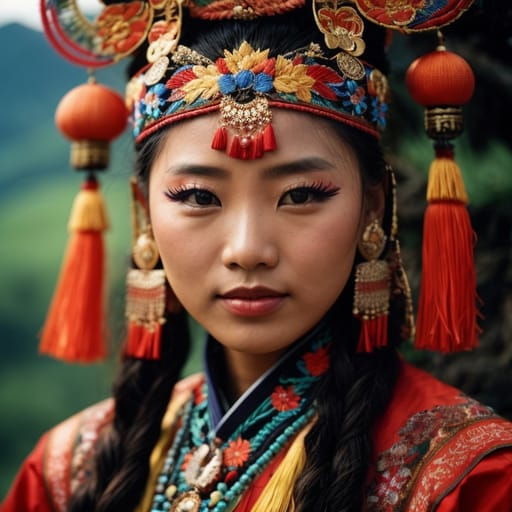


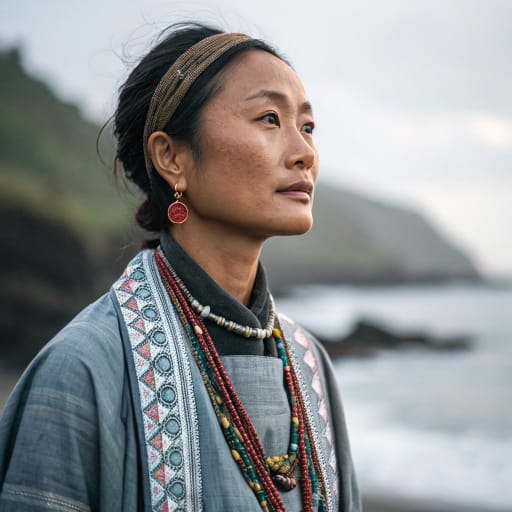
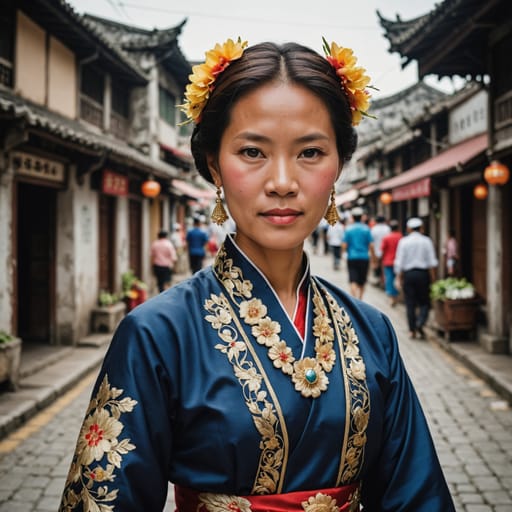
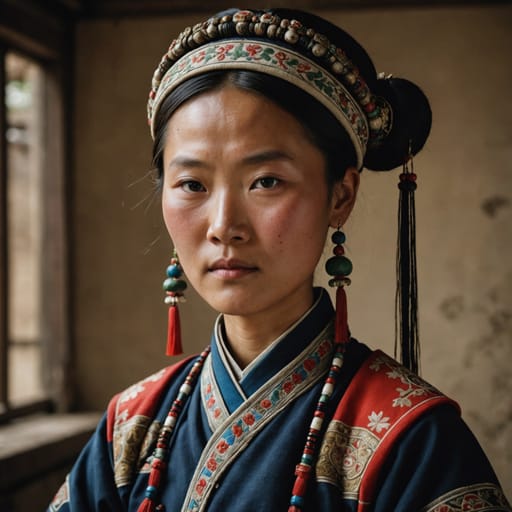
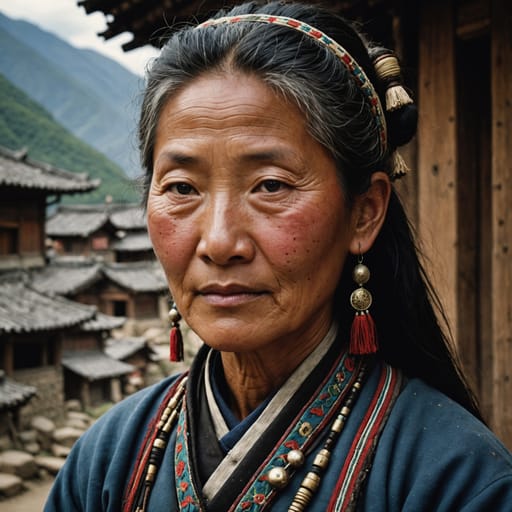
Typical Basay Phenotypes
Reference for AI generation: hair, eyes, skin, facial structure, build
Basay Body & Anatomy Reference
Anatomy by feature, East Asian Sinitic / Mongoloid phenotype
Basay Boobs & Breasts
Basay tits and boobs run small-to-medium cup, modest projection, the classic East Asian Sinitic / Mongoloid bust profile. Basay nipples and areolas show light-pink to medium-brown areolar pigmentation against the light-to-medium skin tone, with areolar diameter typically in the 26-36mm range and forward-set positioning rather than the fuller South Asian or Levantine bust profile. Basay breasts trend firm and modestly projecting; smaller cup size than the South Asian or Western Asian average, a function of the ectomorph-to-mesomorph, lean frame body habitus and the mean adult female BMI 20-23. For anatomically accurate AI-generated Basay nudes the render preserves the small-to-medium cup, modest projection shape, 26-36mm areolas with light-pink to medium-brown pigmentation, and the torso proportions of the East Asian Sinitic / Mongoloid phenotype.
Basay Ass & Hips
Basay hips and butt usually read as small-to-medium, modest projection, narrower hip profile. The skeletal base is narrower iliac crests, less gluteal-femoral fat deposition, the East Asian Sinitic / Mongoloid pattern. Set against the fuller projected glutes of the West African or Polynesian phenotype, the difference is easy to see, and the hip-to-waist ratio is often what identifies Basay women in photos.
Basay Vagina & Pussy
Expect light-pink to medium-brown labial pigmentation, smaller labia minora on Basay women, in keeping with East Asian Sinitic / Mongoloid ancestry. The pubic hair is straight fine texture, sparser distribution than the South Asian norm. Coloring should run evenly from the light to medium skin of the thighs to the labia, and Basay nude imagery should keep the hair's straight fine texture.
Basay Dicks & Penis
Basay dick and penile anatomy in adult AI generation should anchor on the regional reference data: regional mean ~11-12cm erect, moderate girth, and light-brown shaft pigmentation. The Basay cock profile reflects the East Asian Sinitic / Mongoloid population's anthropometric measurements. The shaft pigmentation should track the surrounding light to medium skin tone, and the pubic hair should keep its straight fine texture in the typical inverted-V escutcheon.
Basay Body, Curves & Build
Basay body type: ectomorph-to-mesomorph, lean frame, with mean adult female BMI 20-23. This is the typical East Asian Sinitic / Mongoloid build. Height range, shoulder-to-hip ratio and fat distribution all follow from it, which is what an accurate Basay nude body should show.
Basay Skin Tone & Hair Texture
Basay skin tone falls in the light to medium (Fitzpatrick II-IV) band, the surface signal most often miscalibrated by generic AI nude generators. Basay hair texture is typically straight 1A, fine-to-medium, predominantly black, characteristic of the East Asian Sinitic / Mongoloid phenotype. In Basay nude renders the skin should hold that band consistently across the body.
Explore phenotype categories
Structured taxonomy with peer-reviewed scales · 22 anatomical categories
Erotic Poses & Sex Positions
From the pose catalog: 219 named positions with reference skeletons
Frequently asked questions about Basay people
Where is the Basay homeland?
The Basay homeland is The northern coast of Taiwan, from Tamsui around Keelung to the Yilan plain in East Asia.
What language do Basay people speak?
Basay people primarily speak Basay (Austronesian, East Formosan branch, Basaic group), the trade language of Taiwan's north coast. Extinct by the mid twentieth century, recorded from the last speakers in the 1930s..
What religion do Basay people practice?
The predominant religion among Basay people is Indigenous ritual practice led by female specialists. A brief Dominican Catholic mission under Spanish rule at Keelung and Tamsui, 1626 to 1642. Descendants long since absorbed into Han folk religion, with some Christian affiliation..






Make your own Basay images
Five a day, free, no credits to buy. The studio starts from this group's phenotype data, so you can set body type, pose and style and keep the traits accurate.
Start with Basay