Help us get this right
Does this portrait look right for Luhun?
Nobody has judged this one yet. You would be the first.
Luhun Erotic
Originally Guazhou, placed near Dunhuang in Gansu by tradition but disputed; from 638 BCE the upper Yi River valley southwest of Luoyang, around present-day Song County and Yichuan, Henan, China
Unrecorded Rong speech (unclassified); a Rong chief of the period said Rong speech could not be understood by the Zhou states
Unrecorded; Zhou sources place the Rong outside Zhou ritual custom but preserve no details of their own practice
One of the Rong peoples of the Zhou era; also called the Yun-surnamed Rong; linked with the Jiang Rong, who were also driven from Guazhou
About Luhun People
The Luhun were a Rong people of China's Spring and Autumn period. They stood outside the Zhou order, and in 638 BCE the states of Qin and Jin moved them out of the west and resettled them in the Yi River valley southwest of Luoyang, in present-day Henan. They held that ground for a little over a century. Jin destroyed them in 525 BCE, and the survivors were absorbed into the Chinese population around them. Nearly everything known about them comes from a few sharp scenes in the Zuo Zhuan chronicle.
Zhou writers called them the Luhun Rong or the Yun-surnamed Rong and said they came from Guazhou. Later commentators placed Guazhou near Dunhuang in Gansu. Many modern historians put it much farther east, and the question is still open. No word of their language survives. A chief of the Jiang Rong, another people driven out of Guazhou in the same era, told an assembly of Jin's allies in 559 BCE that the Rong differed from the Chinese states in food, clothing and speech. Luhun beliefs went unrecorded too, though the chronicle treats their arrival as an omen come true: when the Zhou court moved east in 770 BCE, an official passing through Yichuan saw people with loose, unbound hair sacrificing in the open fields and predicted the land would fall to the Rong.
Their valley sat on the road to the Zhou royal domain, which made them a pawn for larger powers. In 606 BCE King Zhuang of Chu marched against them. He carried on to the Luo River, paraded his army at the Zhou border and asked the royal envoy how heavy the Zhou bronze cauldrons were. The question was a thinly veiled claim to supremacy, and wending, asking about the cauldrons, is still Chinese shorthand for reaching for the top. The Luhun later drew close to Chu, and Jin made them pay. In 525 BCE Jin asked Zhou for permission to offer sacrifices at the Luo and at Mount Santu. The Zhou official Chang Hong noticed that the envoy looked far too fierce for a religious errand and guessed the real target. He was right. Jin's army crossed the Yellow River, sent its sacrificial officers ahead as cover, caught the Luhun unprepared and ended their state, charging them with divided loyalty to Chu. Their ruler fled to Chu, and Zhou took large numbers of his scattered people captive.
The name outlived the people. The Han dynasty gave it to a county, and today it names the Luhun Reservoir on the Yi River in Henan's Song County, a place far better known than the people behind it.
Related ethnic groups
Groups that share Luhun's homeland, region, language, or religious tradition. These are likely candidates for comparative phenotype reference.

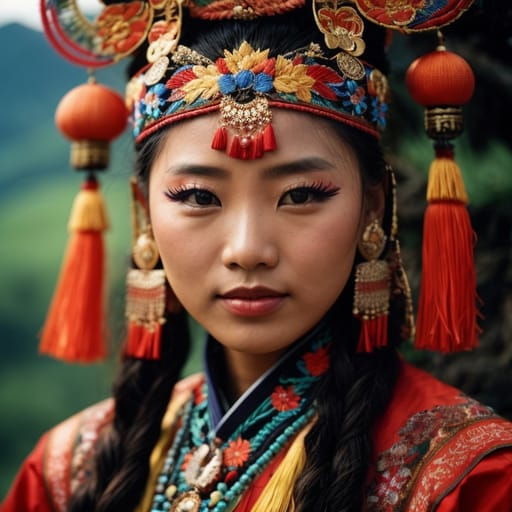
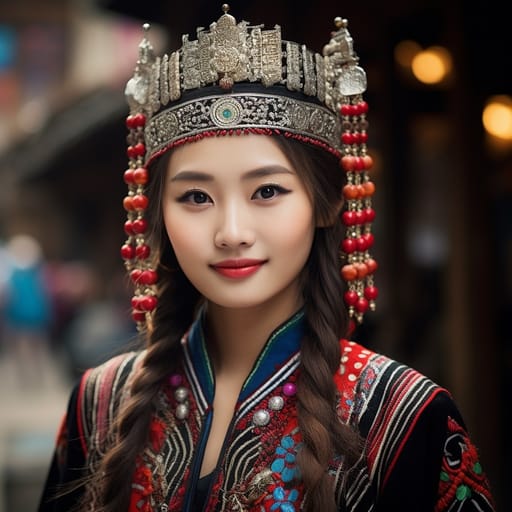

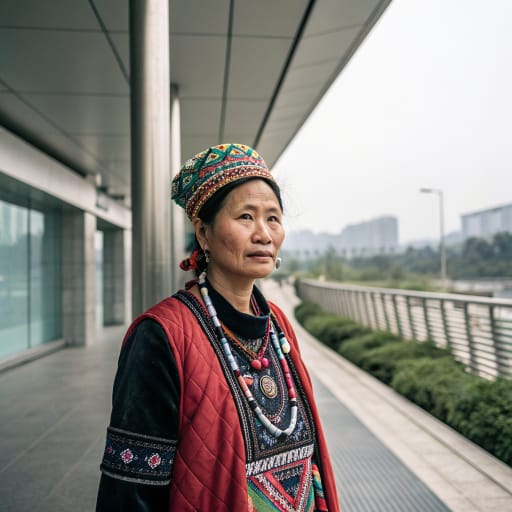
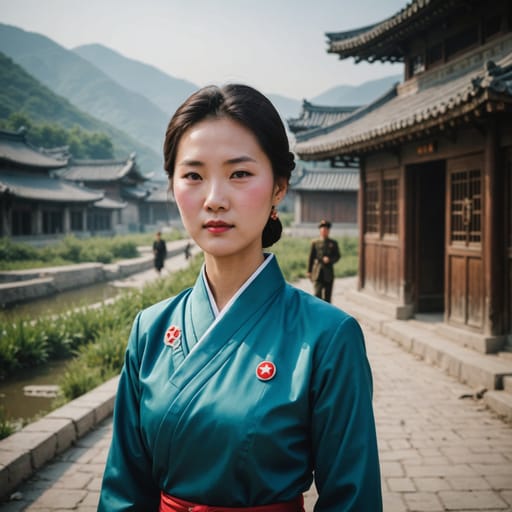
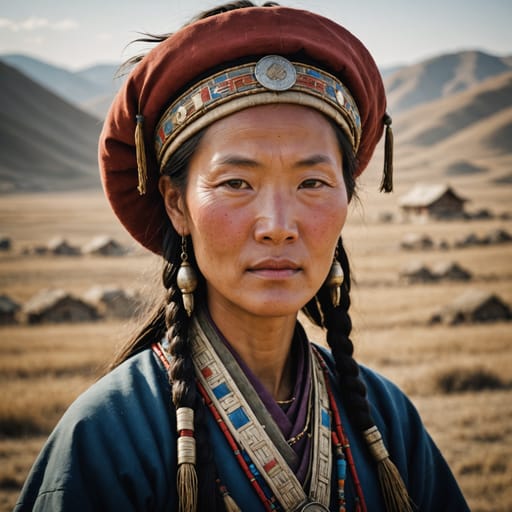
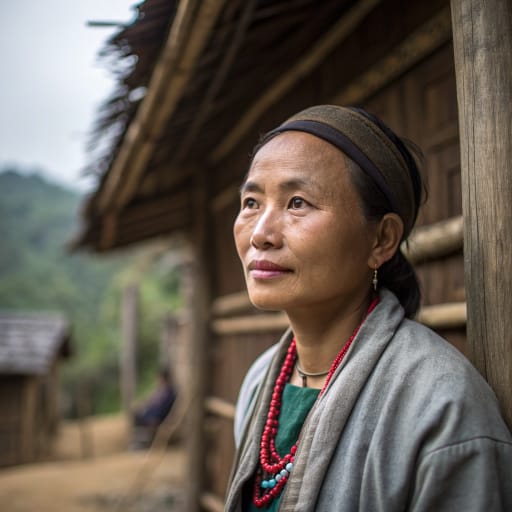
Typical Luhun Phenotypes
Reference for AI generation: hair, eyes, skin, facial structure, build
Luhun Body & Anatomy Reference
Anatomy by feature, East Asian Sinitic / Mongoloid phenotype
Luhun Boobs & Breasts
Luhun boobs follow the East Asian Sinitic / Mongoloid profile: small-to-medium cup, modest projection. Areolar diameter is usually 26-36mm, and the coloring is light-pink to medium-brown areolar pigmentation against the light-to-medium skin tone. Breast shape tracks body composition (ectomorph-to-mesomorph, lean frame, mean adult female BMI 20-23), so Luhun breasts tend to be firm and modestly projecting; smaller cup size than the South Asian or Western Asian average. Expect a forward-set shape, not the fuller South Asian or Levantine bust profile.
Luhun Ass & Hips
Luhun ass and hip morphology presents as small-to-medium, modest projection, narrower hip profile, distinctly different from the fuller projected glutes of the West African or Polynesian phenotype. The Luhun pelvic profile shows narrower iliac crests, less gluteal-femoral fat deposition, anchored in the East Asian Sinitic / Mongoloid skeletal pattern. Luhun butt shots in adult AI imagery should render the small-to-medium, modest projection, narrower hip profile silhouette with the overall build (ectomorph-to-mesomorph, lean frame) and the fat distribution typical of the East Asian Sinitic / Mongoloid phenotype.
Luhun Vagina & Pussy
Luhun pussy anatomy typically shows light-pink to medium-brown labial pigmentation, smaller labia minora. Pubic hair is usually straight fine texture, sparser distribution than the South Asian norm. In AI-generated Luhun nudes, labial color should blend into the light to medium skin with a gradual transition, and the hair should keep its straight fine texture.
Luhun Dicks & Penis
Penis reference for Luhun men: regional mean ~11-12cm erect, moderate girth. Coloring: light-brown shaft pigmentation. An accurate Luhun cock in AI imagery matches the surrounding light to medium skin rather than a generic porn default. Circumcision depends on religion and custom, not ancestry.
Luhun Body, Curves & Build
The Luhun figure is generally ectomorph-to-mesomorph, lean frame, with mean adult female BMI 20-23, characteristic of East Asian Sinitic / Mongoloid ancestry. AI image tools tend to flatten regional body types into a few stock shapes; here the Luhun build is kept as its own reference.
Luhun Skin Tone & Hair Texture
Skin: light to medium (Fitzpatrick II-IV). Hair: straight 1A, fine-to-medium, predominantly black. Both are typical of East Asian Sinitic / Mongoloid ancestry. The most common mistake in AI nudes of Luhun women is a body rendered lighter than the face.
Explore phenotype categories
Structured taxonomy with peer-reviewed scales · 22 anatomical categories
Erotic Poses & Sex Positions
From the pose catalog: 219 named positions with reference skeletons
Frequently asked questions about Luhun people
Where is the Luhun homeland?
The Luhun homeland is Originally Guazhou, placed near Dunhuang in Gansu by tradition but disputed; from 638 BCE the upper Yi River valley southwest of Luoyang, around present-day Song County and Yichuan, Henan, China in East Asia.
What language do Luhun people speak?
Luhun people primarily speak Unrecorded Rong speech (unclassified); a Rong chief of the period said Rong speech could not be understood by the Zhou states.
What religion do Luhun people practice?
The predominant religion among Luhun people is Unrecorded; Zhou sources place the Rong outside Zhou ritual custom but preserve no details of their own practice.






Make your own Luhun images
Five a day, free, no credits to buy. The studio starts from this group's phenotype data, so you can set body type, pose and style and keep the traits accurate.
Start with Luhun