No portrait yet
Olots Erotic
Mongolia and the Ili region of Xinjiang, China; historically Dzungaria, in present-day northern Xinjiang
Oirat (Mongolic); Khalkha Mongolian (Mongolic) widely used in Mongolia; Mandarin Chinese (Sino-Tibetan) and Kazakh (Turkic) as contact languages in Xinjiang
Tibetan Buddhism (Gelug school), blended with older steppe practices such as offerings at ovoo cairns
An Oirat people within the wider Mongols; historically one of the Four Oirats, alongside groups such as the Choros, Dörbets, Torghuts and Khoshuts, whose exact membership shifted over time
About Olots People
Olot is a name that has always traveled farther than the people who carry it. The Olots, who call themselves Ööld, are one of the old core peoples of the Oirats. The Oirats are the western Mongols, who built a political world of their own apart from the Khalkha Mongols to the east. For centuries outsiders used the name as shorthand for all Oirats: Qing officials wrote Ölöd, and European writers wrote Eleuth. Today the Olots are a small community of herders, townspeople and officials in Mongolia and in the Ili region of Xinjiang, China. Lineage and memory hold them together more than any shared territory does.
Their speech is Oirat, the western branch of the Mongolic languages. In Mongolia most Olots now get through the day in standard Khalkha Mongolian, while in Xinjiang Oirat dialects hold on beside Mandarin and Kazakh. In 1648 the Oirat monk Zaya Pandita reworked the Mongolian script into the Clear Script, Todo Bichig, which spelled out sounds the older alphabet left ambiguous. It is still a badge of Oirat identity. Zaya Pandita also helped root the Gelug school of Tibetan Buddhism among the Oirats. Religion here is practical rather than showy. People ask lamas to choose names and lucky days, and families still leave offerings at ovoo, the stone cairns on passes and hilltops that were on the steppe before Buddhism was.
The turning point of their history is the Dzungar Khanate. This Oirat state dominated Inner Asia from the 1630s to the 1750s and fought the Qing for Khalkha Mongolia, Tibet and the western steppe. It ended between 1755 and 1758, when Qing armies, massacre and smallpox destroyed most of the Oirat population of Dzungaria. Survivors were scattered or taken into the Qing military. In Ili, Olot soldiers made up one of the garrison camps posted to hold the new frontier, and their descendants are still part of the Mongol community there.
What survives most vividly is performance. Western Mongol culture lives in the Jangar epic, which specialist singers recite over hours or whole nights. It also lives in the two-stringed tovshuur lute and in biyelgee, a dance done mostly with the shoulders, arms and upper body, suited to the tight space inside a ger. These belong to the whole Oirat world, not to the Olots alone. Still, they are how the Olots, like their Dörbet and Torghut neighbors, go on marking who they are.
Related ethnic groups
Groups that share Olots's homeland, region, language, or religious tradition. These are likely candidates for comparative phenotype reference.
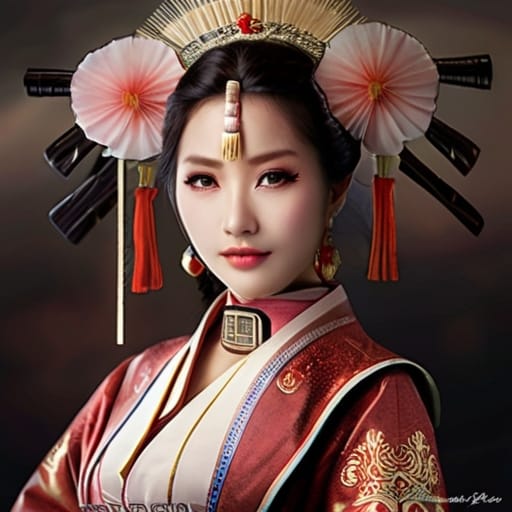
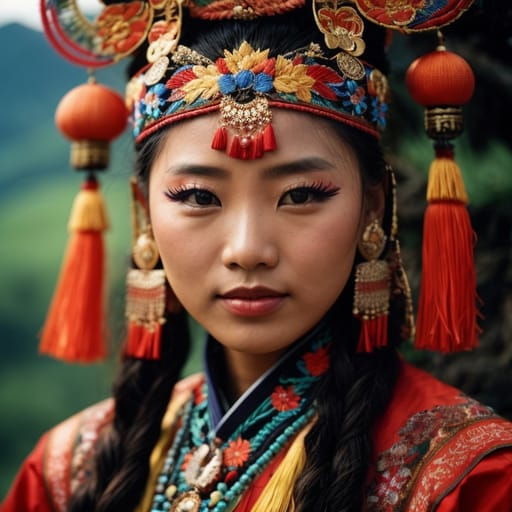
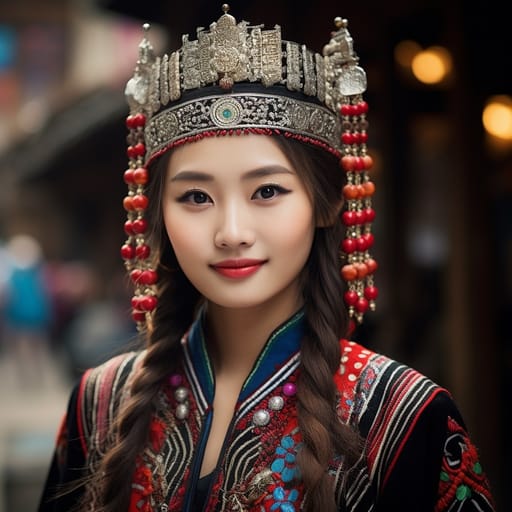
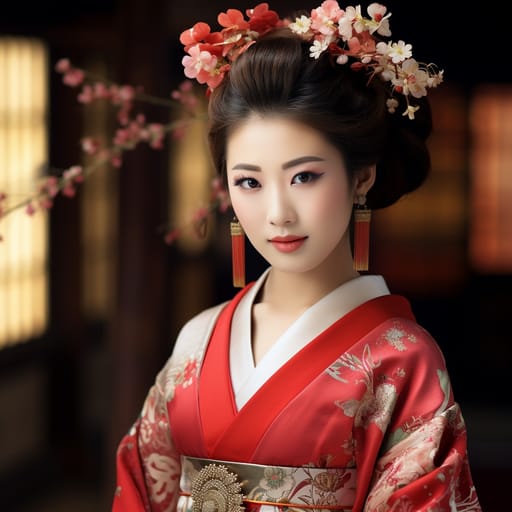
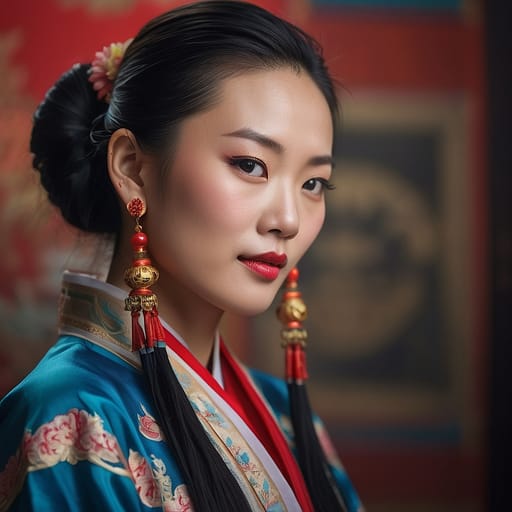
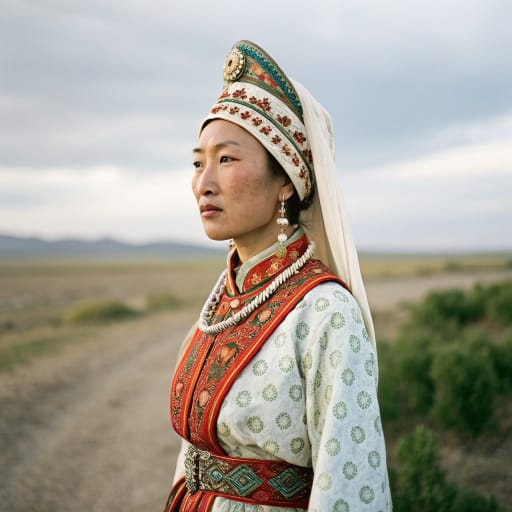
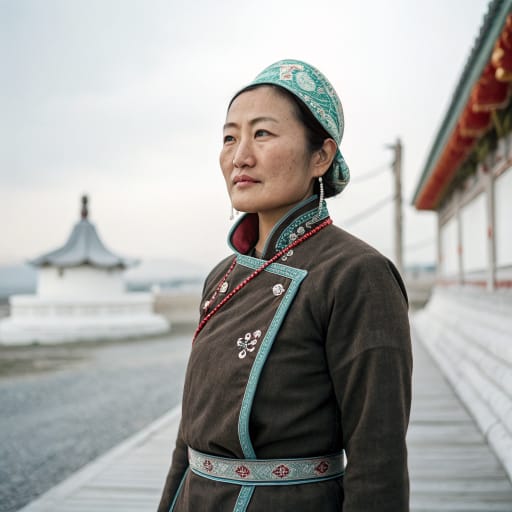
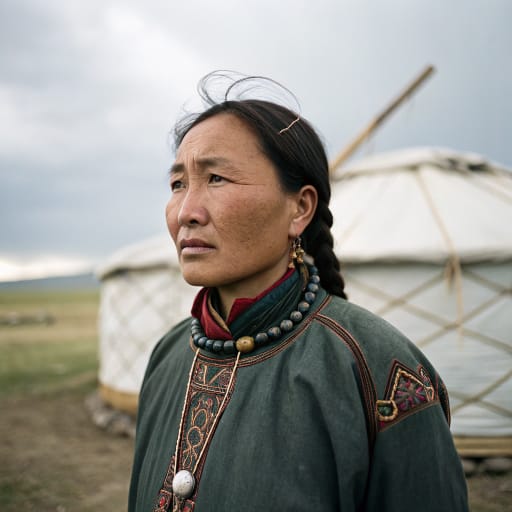
Typical Olots Phenotypes
Reference for AI generation: hair, eyes, skin, facial structure, build
Olots Body & Anatomy Reference
East Asian Sinitic / Mongoloid phenotype: anatomy reference for AI nude generation
Olots Boobs & Breasts
The typical Olots bust is small-to-medium cup, modest projection, in line with the wider East Asian Sinitic / Mongoloid pattern. Areolas usually fall in the 26-36mm range, with light-pink to medium-brown areolar pigmentation against the light-to-medium skin tone. Compared with the fuller South Asian or Levantine bust profile, Olots breasts sit forward and are generally firm and modestly projecting; smaller cup size than the South Asian or Western Asian average. A faithful AI render of Olots tits keeps that shape and areola size.
Olots Ass & Hips
Butt shape among Olots women: small-to-medium, modest projection, narrower hip profile, over narrower iliac crests, less gluteal-femoral fat deposition. This follows East Asian Sinitic / Mongoloid ancestry and looks quite unlike the fuller projected glutes of the West African or Polynesian phenotype. An accurate Olots ass in adult AI imagery keeps both the silhouette and the overall build (ectomorph-to-mesomorph, lean frame) instead of a generic average.
Olots Vagina & Pussy
Vulvar anatomy among Olots women: light-pink to medium-brown labial pigmentation, smaller labia minora. Pubic hair tends to be straight fine texture, sparser distribution than the South Asian norm, in the usual inverted-triangle pattern. Both follow East Asian Sinitic / Mongoloid pigmentation, which is why Olots pussy renders should not fall back on a pale, sparse Western template.
Olots Dicks & Penis
The Olots cock profile, from East Asian Sinitic / Mongoloid anthropometric data: regional mean ~11-12cm erect; moderate girth; light-brown shaft pigmentation. Pubic hair has a straight fine texture and forms the usual inverted-V pattern. Whether Olots men are circumcised follows religious and cultural practice rather than phenotype.
Olots Body, Curves & Build
Build and curves among Olots women follow the East Asian Sinitic / Mongoloid pattern: ectomorph-to-mesomorph, lean frame, mean adult female BMI 20-23. Proportions matter as much as skin tone, so Olots figures should keep their regional height and limb ratios.
Olots Skin Tone & Hair Texture
The Olots skin range is light to medium (Fitzpatrick II-IV), and hair tends to be straight 1A, fine-to-medium, predominantly black. That combination marks the East Asian Sinitic / Mongoloid phenotype, and skin tone is the trait AI generators most often get wrong for Olots women.
Explore phenotype categories
Structured taxonomy with peer-reviewed scales · 22 anatomical categories
Erotic Poses & Sex Positions
From the pose catalog: 219 named positions with reference skeletons
Frequently asked questions about Olots people
Where is the Olots homeland?
The Olots homeland is Mongolia and the Ili region of Xinjiang, China; historically Dzungaria, in present-day northern Xinjiang in East Asia.
What language do Olots people speak?
Olots people primarily speak Oirat (Mongolic); Khalkha Mongolian (Mongolic) widely used in Mongolia; Mandarin Chinese (Sino-Tibetan) and Kazakh (Turkic) as contact languages in Xinjiang.
What religion do Olots people practice?
The predominant religion among Olots people is Tibetan Buddhism (Gelug school), blended with older steppe practices such as offerings at ovoo cairns.






Make your own Olots images
Five a day, free, no credits to buy. The studio starts from this group's phenotype data, so you can set body type, pose and style and keep the traits accurate.
Start with Olots