Help us get this right
Does this portrait look right for Yayoi?
One tap. It takes a second and it is recorded.
1 says it looks right, 0 say it looks off.
Yayoi Erotic
Kyushu, Shikoku and Honshu, Japan, spreading from northwestern Kyushu eastward and never reaching Hokkaido or the Ryukyus; migrant origins traced to the southern Korean Peninsula.
Unrecorded. Usually identified with early Japonic (Japonic), on the argument that the family arrived with wet-rice farming, though the identification is debated.
Animist and shamanic practice with no organized doctrine: bronze bells buried as offerings, divination by scorching deer shoulder blades, rule through spirit mediumship. Antecedent to Shinto.
Continental migrants admixed with resident Jomon populations; regionally, the Wa polities named in Chinese records, among them Na and Yamatai. Ancestral, together with Jomon and later Kofun-period arrivals, to the modern Japanese.
About Yayoi People
The Yayoi were the farming population of the Japanese archipelago from the first millennium BC until about AD 300, formed from migrants crossing out of the Korean Peninsula and the Jomon foragers already in place, and they did not so much disappear as become someone else: their descendants ran the Kofun-period chiefdoms, and most of the modern Japanese population carries their ancestry. Archaeologists named them after a neighborhood in Tokyo, Yayoi in Bunkyo ward, where their pottery was first identified in 1884. The pottery is the giveaway. Jomon vessels are cord-marked and encrusted; Yayoi ware is smooth, thin-walled, fired hotter, and built to store and cook grain.
What they brought was wet rice. Bunded, irrigated paddy fields appear first in northwestern Kyushu and move east up Honshu over centuries, stopping short of Hokkaido, where the older way of life carried on for another thousand years. Bronze and iron arrive at more or less the same moment, along with the loom, and so do the consequences: stored surplus, ranked families, and war. Yayoi settlements are moated and palisaded, some with raised watchtowers, and Yoshinogari in Saga is the one everybody visits. Skeletons turn up with stone arrowheads lodged in the bone and with heads missing, at rates the Jomon record does not show. Important people went into the ground inside enormous paired ceramic jars, or under stone-capped graves of a type well known on the peninsula.
Their ritual life is legible mostly through objects rather than words. Dotaku, bronze bells that began as functional noisemakers and swelled into thin, oversized, unringable things, were buried in caches on hillsides away from the villages. Deer shoulder blades were scorched and read for cracks. Chinese chroniclers describing a country they called Wa wrote about tattooed men diving for fish and shellfish, and about a queen, Himiko, who governed the polity of Yamatai through what they called the way of the spirits and who sent an embassy to the Wei court in 238. Whether the Yayoi spoke an ancestor of Japanese is argued rather than settled, but the case that Japonic came ashore with the paddy fields is the strongest one anyone has made.
Related ethnic groups
Groups that share Yayoi's homeland, region, language, or religious tradition. These are likely candidates for comparative phenotype reference.
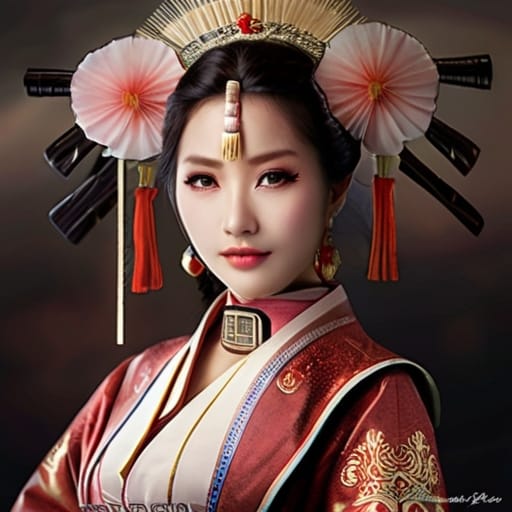
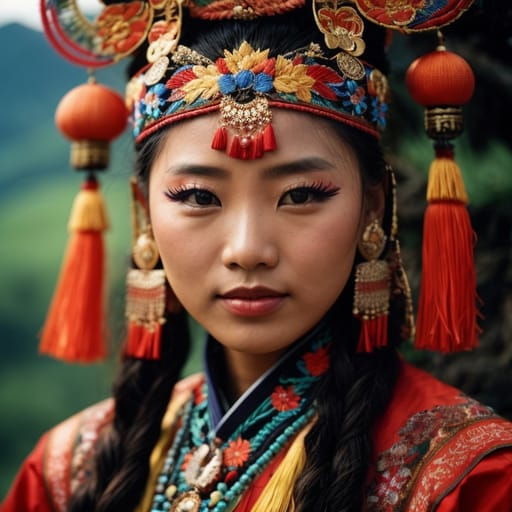
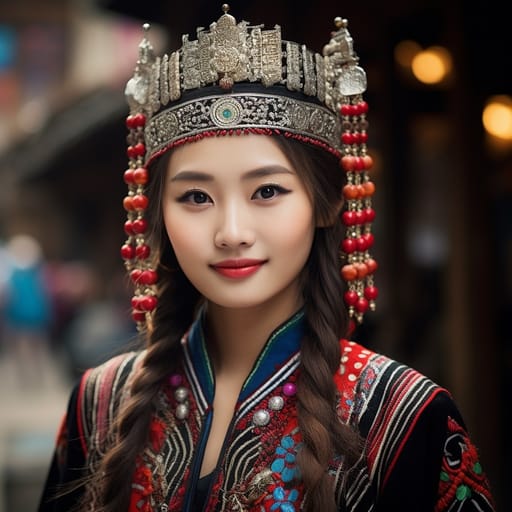
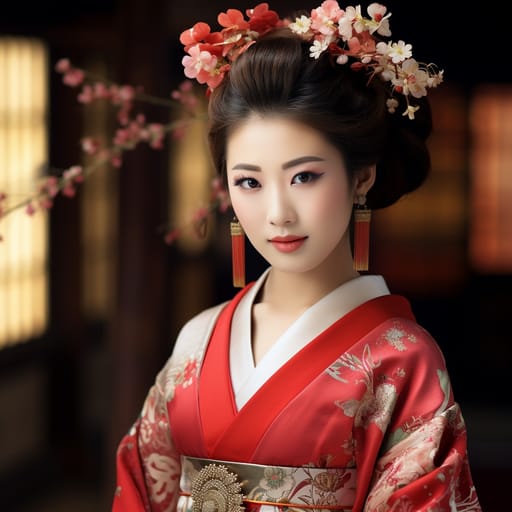
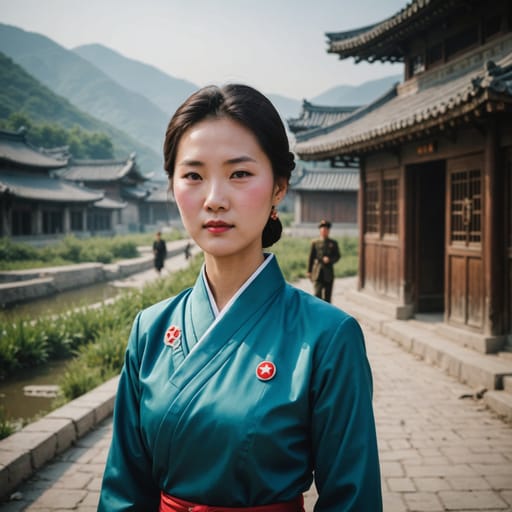
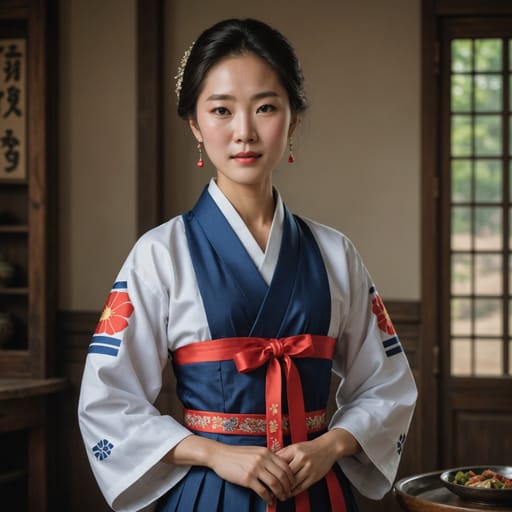
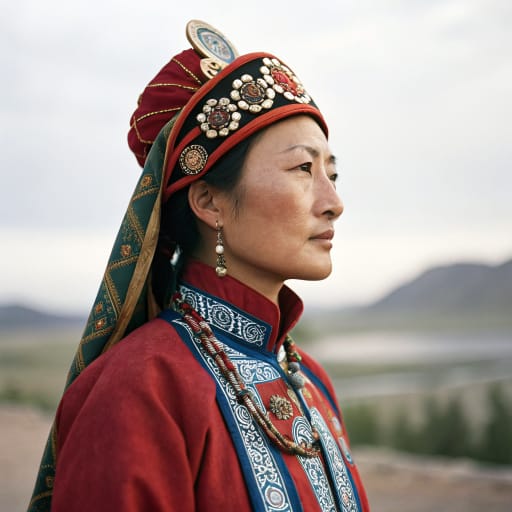
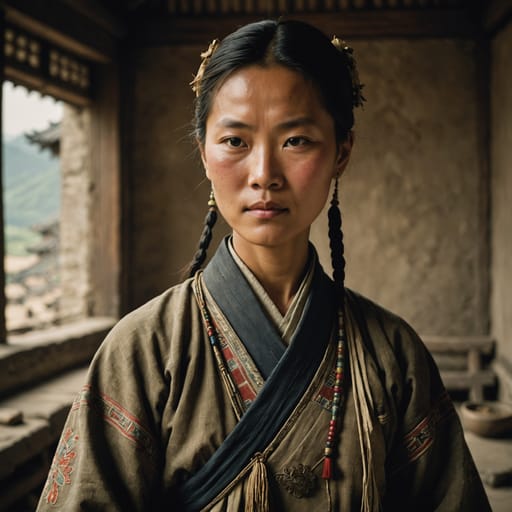
Typical Yayoi Phenotypes
Reference for AI generation: hair, eyes, skin, facial structure, build
Yayoi Body & Anatomy Reference
East Asian Sinitic / Mongoloid phenotype: anatomy reference for AI nude generation
Yayoi Boobs & Breasts
The typical Yayoi bust is small-to-medium cup, modest projection, in line with the wider East Asian Sinitic / Mongoloid pattern. Areolas usually fall in the 26-36mm range, with light-pink to medium-brown areolar pigmentation against the light-to-medium skin tone. Compared with the fuller South Asian or Levantine bust profile, Yayoi breasts sit forward and are generally firm and modestly projecting; smaller cup size than the South Asian or Western Asian average. A faithful AI render of Yayoi tits keeps that shape and areola size.
Yayoi Ass & Hips
Butt shape among Yayoi women: small-to-medium, modest projection, narrower hip profile, over narrower iliac crests, less gluteal-femoral fat deposition. This follows East Asian Sinitic / Mongoloid ancestry and looks quite unlike the fuller projected glutes of the West African or Polynesian phenotype. An accurate Yayoi ass in adult AI imagery keeps both the silhouette and the overall build (ectomorph-to-mesomorph, lean frame) instead of a generic average.
Yayoi Vagina & Pussy
Vulvar anatomy among Yayoi women: light-pink to medium-brown labial pigmentation, smaller labia minora. Pubic hair tends to be straight fine texture, sparser distribution than the South Asian norm, in the usual inverted-triangle pattern. Both follow East Asian Sinitic / Mongoloid pigmentation, which is why Yayoi pussy renders should not fall back on a pale, sparse Western template.
Yayoi Dicks & Penis
The Yayoi cock profile, from East Asian Sinitic / Mongoloid anthropometric data: regional mean ~11-12cm erect; moderate girth; light-brown shaft pigmentation. Pubic hair has a straight fine texture and forms the usual inverted-V pattern. Whether Yayoi men are circumcised follows religious and cultural practice rather than phenotype.
Yayoi Body, Curves & Build
Build and curves among Yayoi women follow the East Asian Sinitic / Mongoloid pattern: ectomorph-to-mesomorph, lean frame, mean adult female BMI 20-23. Proportions matter as much as skin tone, so Yayoi figures should keep their regional height and limb ratios.
Yayoi Skin Tone & Hair Texture
The Yayoi skin range is light to medium (Fitzpatrick II-IV), and hair tends to be straight 1A, fine-to-medium, predominantly black. That combination marks the East Asian Sinitic / Mongoloid phenotype, and skin tone is the trait AI generators most often get wrong for Yayoi women.
Explore phenotype categories
Structured taxonomy with peer-reviewed scales · 22 anatomical categories
Erotic Poses & Sex Positions
From the pose catalog: 219 named positions with reference skeletons
Frequently asked questions about Yayoi people
Where is the Yayoi homeland?
The Yayoi homeland is Kyushu, Shikoku and Honshu, Japan, spreading from northwestern Kyushu eastward and never reaching Hokkaido or the Ryukyus; migrant origins traced to the southern Korean Peninsula. in East Asia.
What language do Yayoi people speak?
Yayoi people primarily speak Unrecorded. Usually identified with early Japonic (Japonic), on the argument that the family arrived with wet-rice farming, though the identification is debated..
What religion do Yayoi people practice?
The predominant religion among Yayoi people is Animist and shamanic practice with no organized doctrine: bronze bells buried as offerings, divination by scorching deer shoulder blades, rule through spirit mediumship. Antecedent to Shinto..






Make your own Yayoi images
Five a day, free, no credits to buy. The studio starts from this group's phenotype data, so you can set body type, pose and style and keep the traits accurate.
Start with Yayoi