Help us get this right
Does this portrait look right for Bo?
Nobody has judged this one yet. You would be the first.
Bo Erotic
The gorges of the Nanguang River and the upper Yangtze basin in southern Sichuan, centered on Gong County near Yibin, extending into northeastern Yunnan, China.
Unrecorded and extinct; generally presumed Tibeto-Burman (Sino-Tibetan), but unclassified.
Not documented beyond mortuary practice: cliff burial in hanging coffins, accompanied by grave goods and red ocher rock painting.
Called the Duzhang Man in Ming records; grouped with the upland peoples of the Sichuan and Yunnan borderlands, with disputed links to the Yi and the Bai.
About Bo People
The Bo were a people of the limestone gorges of southern Sichuan and the northeastern corner of Yunnan, present in Chinese records from the early imperial period and finished as a people in 1573, when a Ming army destroyed their last strongholds and the survivors scattered into the surrounding Han and Yi population. What is left of them hangs on cliff faces above the Nanguang River in Gong County: more than a hundred wooden coffins set on stakes driven into the rock, or wedged onto natural ledges, some of them thirty meters or more above the ground. Each is a single hollowed log. The ones opened held hemp and cotton cloth, wooden combs, bamboo hairpins, iron blades, bronze bracelets and earrings, and coins that place most of the practice between the Song and the Ming. Painted around them in red ocher are riders, dancers, figures with shields and long knives, acrobats, and a scene usually read as a ball game. How the coffins were raised is still argued about: scaffolding, ropes lowered from the clifftop, earthen ramps long since eroded. The people who knew left no explanation.
Everything written about the Bo was written by their enemies. Han-period texts put a Bo population around Bodao, near modern Yibin, on the trade road running south toward Yunnan; by the Ming, officials were calling the upland communities in the same hills the Duzhang Man and filing them under the standing category of southwestern barbarians. Whether those are the same people is an open argument rather than a settled fact, and so is the question of who the Bo were related to, with the Yi and the Bai both proposed. Their language was never written and never recorded by anyone who thought it worth recording; the usual assumption is that it was Tibeto-Burman, and that is where the matter rests. No priesthood, no cosmology, no named gods come down to us. What comes down is the burial: the dead kept high, in the open, in sight of the living, in places that took real labor and real nerve to reach. The Ming court had spent decades on failed pacification before it sent Liu Xian to end the problem, and the fall of the fortress at Jiusi Mountain in the autumn of 1573 is the last time the Bo appear as a people rather than a ruin. Families surnamed He in Gong County still say they descend from them. The coffins are now a protected monument and a ticketed stop, an odd second life for a people whose final entry in the record is a defeat.
Related ethnic groups
Groups that share Bo's homeland, region, language, or religious tradition. These are likely candidates for comparative phenotype reference.
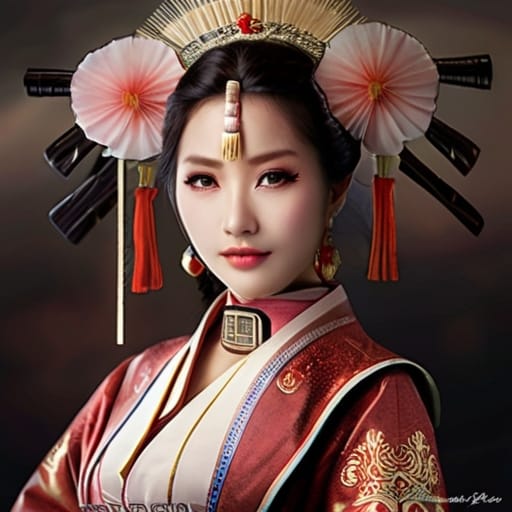
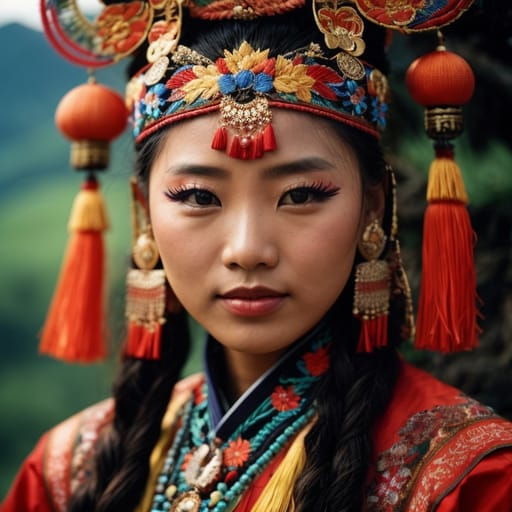
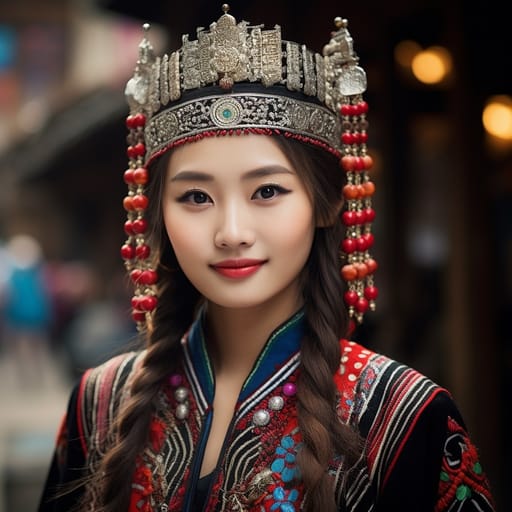
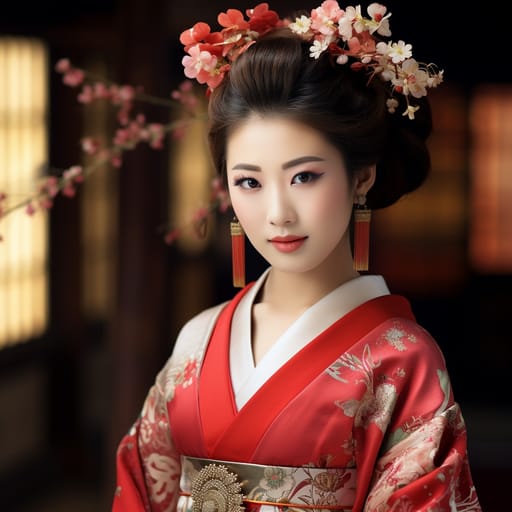
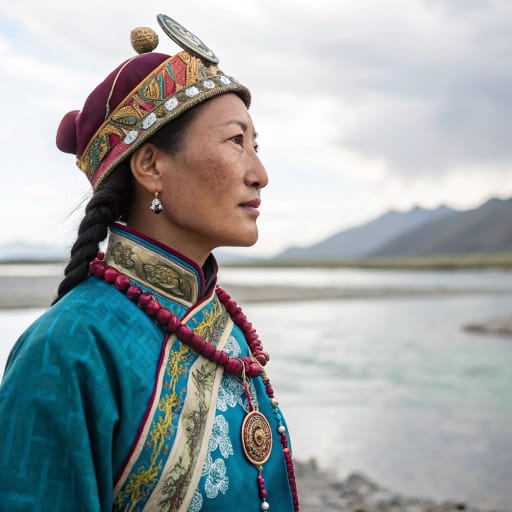
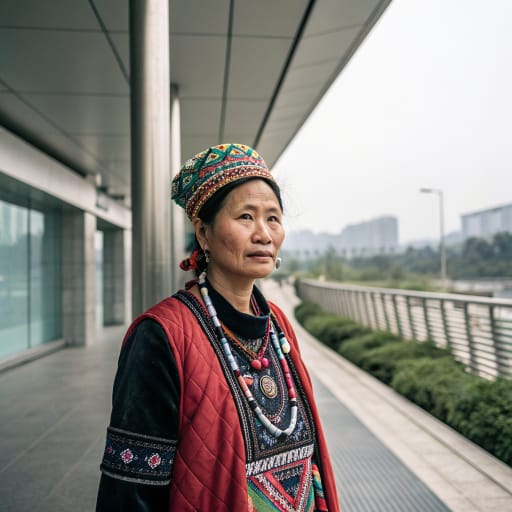
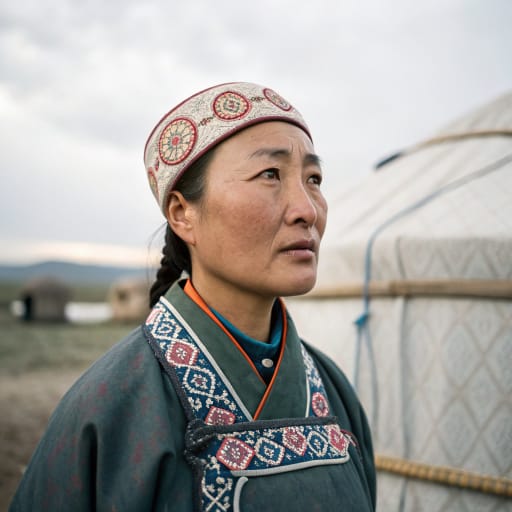
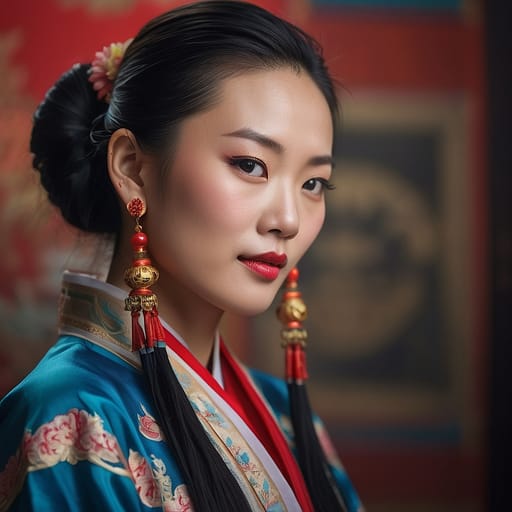
Typical Bo Phenotypes
Reference for AI generation: hair, eyes, skin, facial structure, build
Bo Body & Anatomy Reference
Per-feature anatomical profile for AI nude generation: East Asian Sinitic / Mongoloid phenotype
Bo Boobs & Breasts
The typical Bo bust is small-to-medium cup, modest projection, in line with the wider East Asian Sinitic / Mongoloid pattern. Areolas usually fall in the 26-36mm range, with light-pink to medium-brown areolar pigmentation against the light-to-medium skin tone. Compared with the fuller South Asian or Levantine bust profile, Bo breasts sit forward and are generally firm and modestly projecting; smaller cup size than the South Asian or Western Asian average. A faithful AI render of Bo tits keeps that shape and areola size.
Bo Ass & Hips
Butt shape among Bo women: small-to-medium, modest projection, narrower hip profile, over narrower iliac crests, less gluteal-femoral fat deposition. This follows East Asian Sinitic / Mongoloid ancestry and looks quite unlike the fuller projected glutes of the West African or Polynesian phenotype. An accurate Bo ass in adult AI imagery keeps both the silhouette and the overall build (ectomorph-to-mesomorph, lean frame) instead of a generic average.
Bo Vagina & Pussy
Vulvar anatomy among Bo women: light-pink to medium-brown labial pigmentation, smaller labia minora. Pubic hair tends to be straight fine texture, sparser distribution than the South Asian norm, in the usual inverted-triangle pattern. Both follow East Asian Sinitic / Mongoloid pigmentation, which is why Bo pussy renders should not fall back on a pale, sparse Western template.
Bo Dicks & Penis
The Bo cock profile, from East Asian Sinitic / Mongoloid anthropometric data: regional mean ~11-12cm erect; moderate girth; light-brown shaft pigmentation. Pubic hair has a straight fine texture and forms the usual inverted-V pattern. Whether Bo men are circumcised follows religious and cultural practice rather than phenotype.
Bo Body, Curves & Build
Build and curves among Bo women follow the East Asian Sinitic / Mongoloid pattern: ectomorph-to-mesomorph, lean frame, mean adult female BMI 20-23. Proportions matter as much as skin tone, so Bo figures should keep their regional height and limb ratios.
Bo Skin Tone & Hair Texture
The Bo skin range is light to medium (Fitzpatrick II-IV), and hair tends to be straight 1A, fine-to-medium, predominantly black. That combination marks the East Asian Sinitic / Mongoloid phenotype, and skin tone is the trait AI generators most often get wrong for Bo women.
Explore phenotype categories
Structured taxonomy with peer-reviewed scales · 22 anatomical categories
Erotic Poses & Sex Positions
From the pose catalog: 219 named positions with reference skeletons
Frequently asked questions about Bo people
Where is the Bo homeland?
The Bo homeland is The gorges of the Nanguang River and the upper Yangtze basin in southern Sichuan, centered on Gong County near Yibin, extending into northeastern Yunnan, China. in East Asia.
What language do Bo people speak?
Bo people primarily speak Unrecorded and extinct; generally presumed Tibeto-Burman (Sino-Tibetan), but unclassified..
What religion do Bo people practice?
The predominant religion among Bo people is Not documented beyond mortuary practice: cliff burial in hanging coffins, accompanied by grave goods and red ocher rock painting..






Make your own Bo images
Five a day, free, no credits to buy. The studio starts from this group's phenotype data, so you can set body type, pose and style and keep the traits accurate.
Start with Bo