No portrait yet
Sakizaya Erotic
The Qilai Plain around Hualien City, with villages along the coast and in the East Rift Valley, Hualien County, eastern Taiwan
Sakizaya (Austronesian, Formosan), long classified as a dialect of Amis; Mandarin and Amis in everyday use
Predominantly Christian, Presbyterian and Catholic, alongside revived ancestral ritual centered on the Palamal fire ceremony
One of Taiwan's Formosan Austronesian peoples; counted as a branch of the Amis (Pangcah) until separate recognition in 2007; communities include Sakor, Ciwidian, Karoroan and Maibul
About Sakizaya People
The Sakizaya are the people who decided to disappear, and then came back. Their country is the Qilai Plain, the flat coastal shelf on Taiwan's east side where Hualien City now sits, pinned between the wall of the Central Mountain Range and the Pacific, with outlying communities down the coast and inland in the East Rift Valley. Their principal town, Takobowan, was large, prosperous and fortified, ringed with hedges of thorny bamboo that worked as a living stockade. In 1878 the Sakizaya joined the neighboring Kavalan in resisting Qing forces pushing into the east coast, and they lost badly. The town was destroyed. Komod Pazik, their leader, and his wife Icep Kanasaw were executed in front of the survivors, and the survivors drew the obvious conclusion. They dispersed into Amis villages, spoke Amis, answered to Amis names, and for the next 129 years let every official who asked write Amis on the form.
Recognition came on January 17, 2007, when Taiwan listed them as its thirteenth indigenous people. Just over a thousand are formally registered. Nearly everyone working on this assumes the number of actual descendants is several times higher, still enrolled as Amis, some of them told only recently, by a grandparent, what they are. The language is the hard evidence: Sakizaya is Austronesian, close enough to Amis that linguists filed it as a dialect of it for decades, far enough away that speakers of one do not simply follow the other. It is seriously endangered, carried by a few hundred older speakers and taught in classes that depend on whoever is willing to teach them. The center of the revival is Palamal, the fire ceremony brought back in the mid 2000s, a memorial for the dead of 1878 that doubles as the occasion when the community turns out as itself, in its own colors, and says the name out loud. Most Sakizaya are Christian, Presbyterian or Catholic, which is unremarkable in indigenous eastern Taiwan and sits without much friction beside ancestral observance. The rest is ordinary Taiwanese life: rice, wage work, kids commuting into Hualien, and a slow argument in every family about who is going to keep the language.
Related ethnic groups
Groups that share Sakizaya's homeland, region, language, or religious tradition. These are likely candidates for comparative phenotype reference.

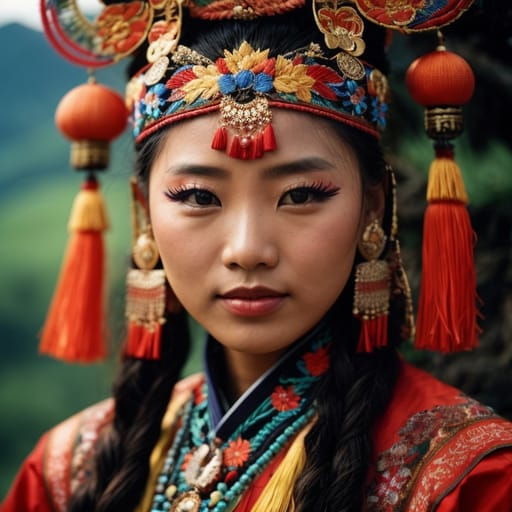



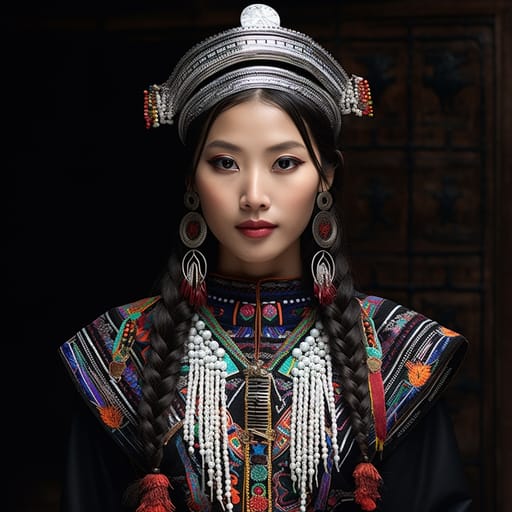


Typical Sakizaya Phenotypes
Reference for AI generation: hair, eyes, skin, facial structure, build
Explore phenotype categories
Structured taxonomy with peer-reviewed scales · 22 anatomical categories
Erotic Poses & Sex Positions
From the pose catalog: 219 named positions with reference skeletons
Frequently asked questions about Sakizaya people
Where is the Sakizaya homeland?
The Sakizaya homeland is The Qilai Plain around Hualien City, with villages along the coast and in the East Rift Valley, Hualien County, eastern Taiwan in East Asia.
What language do Sakizaya people speak?
Sakizaya people primarily speak Sakizaya (Austronesian, Formosan), long classified as a dialect of Amis; Mandarin and Amis in everyday use.
What religion do Sakizaya people practice?
The predominant religion among Sakizaya people is Predominantly Christian, Presbyterian and Catholic, alongside revived ancestral ritual centered on the Palamal fire ceremony.






Make your own Sakizaya images
Five a day, free, no credits to buy. The studio starts from this group's phenotype data, so you can set body type, pose and style and keep the traits accurate.
Start with Sakizaya