No portrait yet
Xiongnu Erotic
Mongolian Plateau and adjoining steppe: Mongolia, Inner Mongolia and the Ordos in China, and Transbaikalia in southern Siberia, Russia
Xiongnu (unclassified; Turkic, Mongolic, Yeniseian and Iranian affiliations have been proposed)
Steppe shamanism centered on Heaven (Tengri), with sun, moon, earth and ancestor sacrifice led by the chanyu
Royal Luandi clan with the Huyan, Lan and Xubu noble clans; divided into Northern and Southern Xiongnu after 48 AD; Southern Xiongnu successor states Han-Zhao and Xia in northern China
About Xiongnu People
The Xiongnu were the first steppe empire, a confederation of mounted nomads who ruled the Mongolian Plateau from the late third century BC until it broke apart in the first century AD. The northern half scattered west. The southern half settled inside China, where its descendants founded short-lived kingdoms before dissolving into the population of Shanxi and Shaanxi. What made them a people was not shared blood or a single language but allegiance to the chanyu, a ruler whose title claimed birth from Heaven, and the army around him: everyone counted off in tens, hundreds, thousands and ten thousands, under Left and Right Wise Kings in the east and west. Modu, who seized the throne in 209 BC by having his father shot down by archers drilled to fire wherever his own arrow flew, crushed the Donghu, broke the Yuezhi, retook the Ordos, and in 200 BC trapped the founding Han emperor at Baideng. The settlement that followed set the pattern for a century: Han princesses sent north as brides, with annual shipments of silk, grain and wine, in exchange for a quiet border that rarely stayed quiet.
Chinese chroniclers wrote the name with characters that read as an insult, and what the Xiongnu called themselves is unknown. So is their language: a few dozen words survive in Chinese transcription, and Turkic, Mongolic, Yeniseian and Iranian have all been proposed without a winner. Ancient DNA shows why: the population blended East Asian and West Eurasian ancestry in nearly every proportion, and some of the richest graves, stone-faced terraces with long ramps, held women. They were not pure nomads: the walled settlement at Ivolga south of Lake Baikal grew millet and worked iron, and the elite tombs at Noin-Ula are full of Han silk and lacquer. Religion ran through the chanyu, who bowed to the rising sun each morning and the moon each evening. The whole confederation gathered in the fifth month to sacrifice to Heaven, earth, ancestors and spirits, and again in autumn to count people and herds. Sima Qian noted that the young ate first and the old got leftovers, that a man married his father's widows, his own mother excepted, and his brothers' widows, and that one chanyu drank from the Yuezhi king's skull. The empire fought Han Wudi's armies to exhaustion after 133 BC, fractured in civil war, split for good in 48 AD, and lost its northern heartland at Ikh Bayan in 89 AD. Its legacy is the template every later steppe power copied, from the Turks to the Mongols, who claim them as ancestors. Whether they were also the ancestors of Attila's Huns, as Sogdian letters calling both by one name suggest, stays open.
Related ethnic groups
Groups that share Xiongnu's homeland, region, language, or religious tradition. These are likely candidates for comparative phenotype reference.
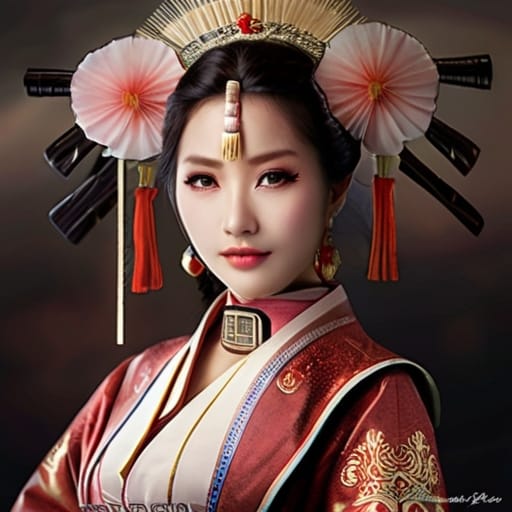
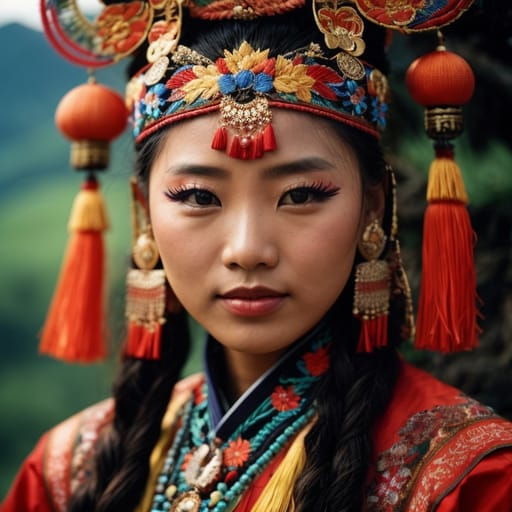
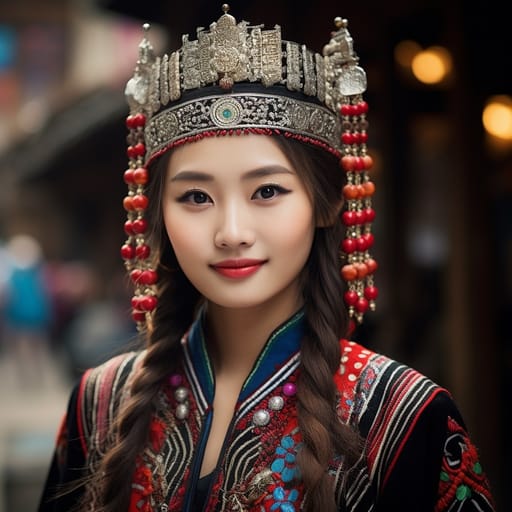
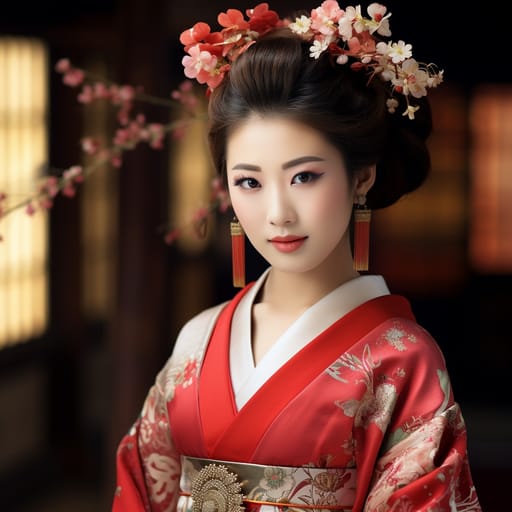
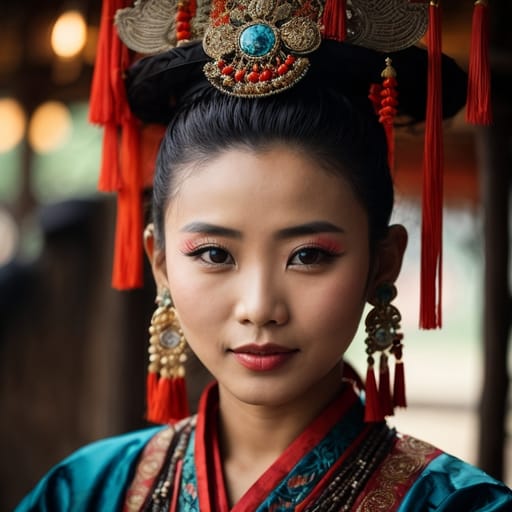
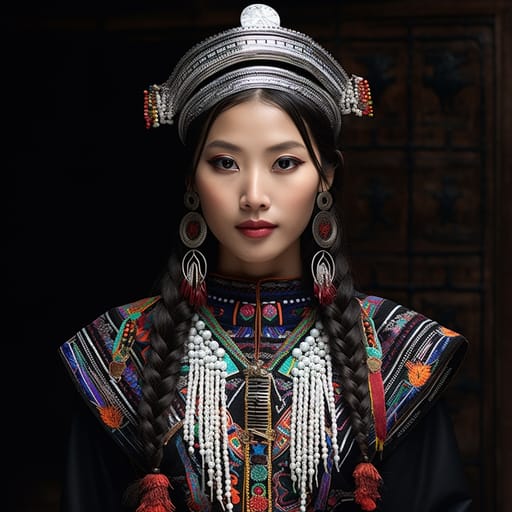
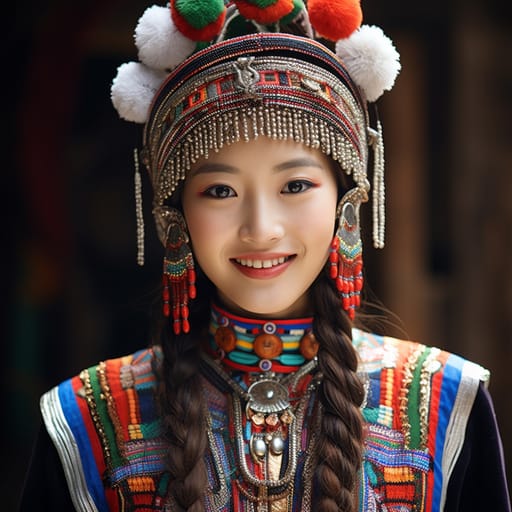
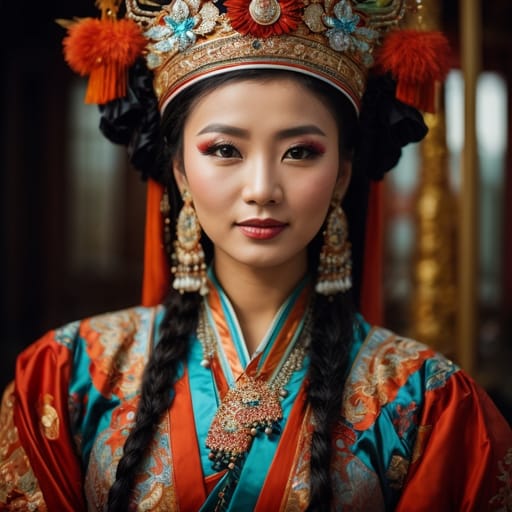
Typical Xiongnu Phenotypes
Reference for AI generation: hair, eyes, skin, facial structure, build
Xiongnu Body & Anatomy Reference
East Asian Sinitic / Mongoloid phenotype: anatomy reference for AI nude generation
Xiongnu Boobs & Breasts
Xiongnu boobs follow the East Asian Sinitic / Mongoloid profile: small-to-medium cup, modest projection. Areolar diameter is usually 26-36mm, and the coloring is light-pink to medium-brown areolar pigmentation against the light-to-medium skin tone. Breast shape tracks body composition (ectomorph-to-mesomorph, lean frame, mean adult female BMI 20-23), so Xiongnu breasts tend to be firm and modestly projecting; smaller cup size than the South Asian or Western Asian average. Expect a forward-set shape, not the fuller South Asian or Levantine bust profile.
Xiongnu Ass & Hips
Xiongnu ass and hip morphology presents as small-to-medium, modest projection, narrower hip profile, distinctly different from the fuller projected glutes of the West African or Polynesian phenotype. The Xiongnu pelvic profile shows narrower iliac crests, less gluteal-femoral fat deposition, anchored in the East Asian Sinitic / Mongoloid skeletal pattern. Xiongnu butt shots in adult AI imagery should render the small-to-medium, modest projection, narrower hip profile silhouette with the overall build (ectomorph-to-mesomorph, lean frame) and the fat distribution typical of the East Asian Sinitic / Mongoloid phenotype.
Xiongnu Vagina & Pussy
Xiongnu pussy anatomy typically shows light-pink to medium-brown labial pigmentation, smaller labia minora. Pubic hair is usually straight fine texture, sparser distribution than the South Asian norm. In AI-generated Xiongnu nudes, labial color should blend into the light to medium skin with a gradual transition, and the hair should keep its straight fine texture.
Xiongnu Dicks & Penis
Penis reference for Xiongnu men: regional mean ~11-12cm erect, moderate girth. Coloring: light-brown shaft pigmentation. An accurate Xiongnu cock in AI imagery matches the surrounding light to medium skin rather than a generic porn default. Circumcision depends on religion and custom, not ancestry.
Xiongnu Body, Curves & Build
The Xiongnu figure is generally ectomorph-to-mesomorph, lean frame, with mean adult female BMI 20-23, characteristic of East Asian Sinitic / Mongoloid ancestry. AI image tools tend to flatten regional body types into a few stock shapes; here the Xiongnu build is kept as its own reference.
Xiongnu Skin Tone & Hair Texture
Skin: light to medium (Fitzpatrick II-IV). Hair: straight 1A, fine-to-medium, predominantly black. Both are typical of East Asian Sinitic / Mongoloid ancestry. The most common mistake in AI nudes of Xiongnu women is a body rendered lighter than the face.
Explore phenotype categories
Structured taxonomy with peer-reviewed scales · 22 anatomical categories
Erotic Poses & Sex Positions
From the pose catalog: 219 named positions with reference skeletons
Frequently asked questions about Xiongnu people
Where is the Xiongnu homeland?
The Xiongnu homeland is Mongolian Plateau and adjoining steppe: Mongolia, Inner Mongolia and the Ordos in China, and Transbaikalia in southern Siberia, Russia in East Asia.
What language do Xiongnu people speak?
Xiongnu people primarily speak Xiongnu (unclassified; Turkic, Mongolic, Yeniseian and Iranian affiliations have been proposed).
What religion do Xiongnu people practice?
The predominant religion among Xiongnu people is Steppe shamanism centered on Heaven (Tengri), with sun, moon, earth and ancestor sacrifice led by the chanyu.






Make your own Xiongnu images
Five a day, free, no credits to buy. The studio starts from this group's phenotype data, so you can set body type, pose and style and keep the traits accurate.
Start with Xiongnu