No portrait yet
Sunud Erotic
Sönid Left and Sönid Right Banners of Xilingol League, Inner Mongolia, China, on the Gobi steppe near the border with Mongolia
Mongolian, Sönid dialect of the Chakhar-Shilingol group (Mongolic); Mandarin Chinese widely spoken as a second language (Sino-Tibetan)
Tibetan Buddhism (Gelug school), alongside ovoo worship and Mongolian folk religious practice
Southern (Inner) Mongols of Xilingol League, alongside the Üjümchin, Abaga and Khuuchit; historically divided into the Left (East) and Right (West) Sönid banners
About Sunud People
The Sunud take their name from an old Mongol clan, and today that name also stands for a place. To be Sunud is to come from the two Sönid banners on the dry northern edge of Inner Mongolia, where the grassland thins toward the Gobi and runs up to the border with the Republic of Mongolia. In language, religion and daily habit they are Mongols. Among Mongols, the name points to a particular homeland and to the princely houses that once ruled it.
This is open, wind-scoured steppe, and herding has always shaped it. Sheep, goats, horses and Bactrian camels are the working stock. The local fat-tailed sheep is well enough known that Sunit lamb is sold by name across China. The railway and highway to the border crossing at Erenhot cross Sunud country, so the region is both remote pasture and one of the busiest trade routes between China and Mongolia.
The Sunud speak a Mongolian dialect of the Chakhar and Shilingol group. It sits close to the Inner Mongolian standard, so local speech carries easily into radio, television and school. Nearly everyone also uses Mandarin, and the 2020 cutbacks to Mongolian-language schooling hit these banners as they hit the rest of the region. Religion follows the wider Mongol pattern: Tibetan Buddhism of the Gelug school, layered over older practice. Families still gather at the ovoo, a stone cairn on high ground. They leave milk and blue silk scarves, walk around it clockwise and ask for rain and healthy herds.
History has given the Sunud a bigger role than their numbers would suggest. In the seventeenth century they were caught between the wars of Ligdan, the last Chakhar khan, and the rising Manchu state. Sunud chiefs submitted to the Qing, which organized them into the Left and Right banners of Shilingol League under their own hereditary princes. That system lasted into the twentieth century and produced Demchugdongrub, prince of the Sönid Right Banner. In the 1930s he led the Inner Mongolian autonomy movement and later headed a Japanese-backed Mongol government. People still argue over his legacy: some call him a nationalist, others a collaborator.
Most Sunud now live between two worlds, and a drive through the banners shows both. There are brick houses, fenced pastures, and motorcycles and trucks for moving herds. A felt ger or a well-cut deel still comes out for Naadam, weddings and Tsagaan Sar. Grassland decline and resettlement programs have pushed many herders into towns such as Saihan Tal and Erenhot. Even so, the banner name still tells another Mongol where a person's family grazed their herds.
Related ethnic groups
Groups that share Sunud's homeland, region, language, or religious tradition. These are likely candidates for comparative phenotype reference.
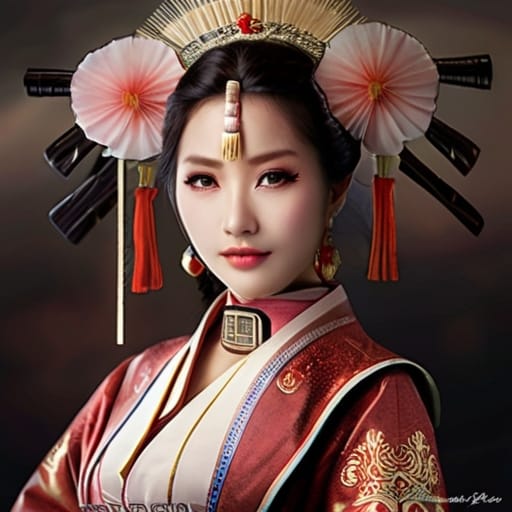
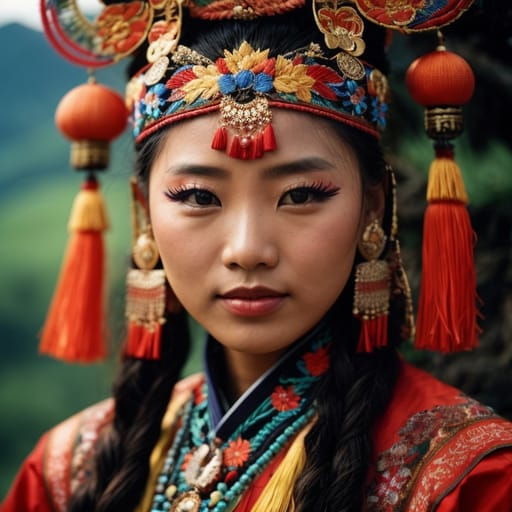
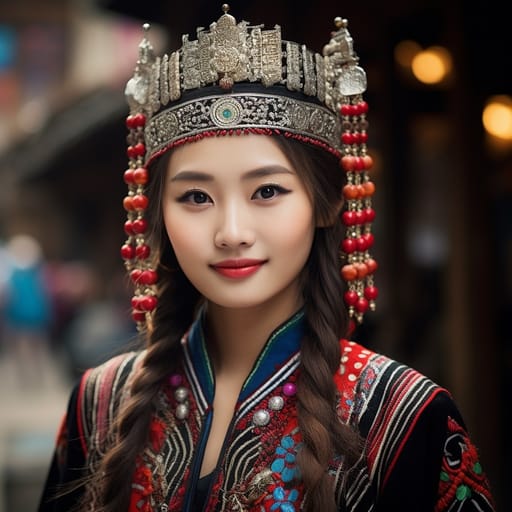
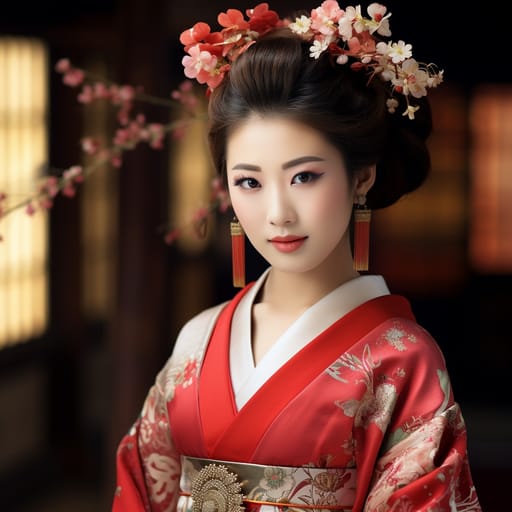
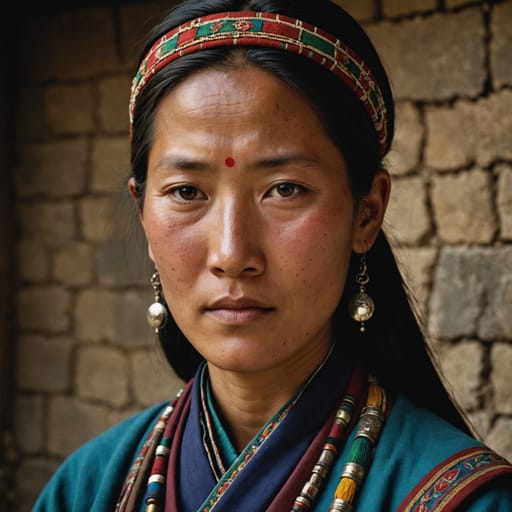
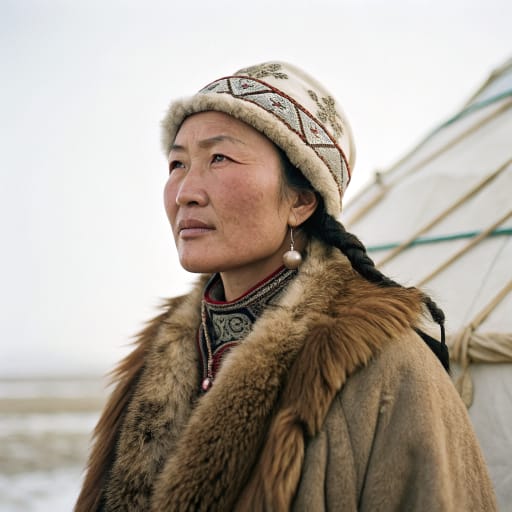
Typical Sunud Phenotypes
Reference for AI generation: hair, eyes, skin, facial structure, build
Sunud Body & Anatomy Reference
Per-feature anatomical profile for AI nude generation: East Asian Sinitic / Mongoloid phenotype
Sunud Boobs & Breasts
Bust reference for Sunud women: small-to-medium cup, modest projection, which is typical of East Asian Sinitic / Mongoloid ancestry. Areolas measure about 26-36mm across, with light-pink to medium-brown pigmentation. Body type (ectomorph-to-mesomorph, lean frame) shapes the bust as well, so Sunud tits are usually firm and modestly projecting; smaller cup size than the South Asian or Western Asian average. In AI imagery, keep the forward-set shape rather than drifting toward the fuller South Asian or Levantine bust profile.
Sunud Ass & Hips
The Sunud ass is typically small-to-medium, modest projection, narrower hip profile, which sets it apart from the fuller projected glutes of the West African or Polynesian phenotype. Underneath, the pelvis shows narrower iliac crests, less gluteal-femoral fat deposition, part of the East Asian Sinitic / Mongoloid skeletal pattern. For Sunud butt pics and AI renders, match that silhouette and the overall build (ectomorph-to-mesomorph, lean frame).
Sunud Vagina & Pussy
Sunud pussy and vulvar anatomy presents light-pink to medium-brown labial pigmentation, smaller labia minora, consistent with the East Asian Sinitic / Mongoloid phenotype's pigmentation pattern. Sunud pubic hair is typically straight fine texture, sparser distribution than the South Asian norm, in the inverted-triangle pattern. For anatomically accurate Sunud pussy renders the labial coloration should match the surrounding light to medium skin tone with a continuous gradient, and the hair should keep its straight fine texture.
Sunud Dicks & Penis
Sunud dicks follow the East Asian Sinitic / Mongoloid reference data: regional mean ~11-12cm erect; moderate girth; light-brown shaft pigmentation. Shaft color should track the light to medium skin tone with a smooth change toward the glans, and Sunud pubic hair keeps its straight fine texture.
Sunud Body, Curves & Build
Sunud body type and overall build presents as ectomorph-to-mesomorph, lean frame, with mean adult female BMI 20-23: the characteristic East Asian Sinitic / Mongoloid habitus. Sunud curves and proportions should keep the regional skeletal frame (height, shoulder-to-hip ratio, limb proportions) rather than a generic mesomorph default.
Sunud Skin Tone & Hair Texture
Sunud skin sits in the light to medium (Fitzpatrick II-IV) band. Hair is typically straight 1A, fine-to-medium, predominantly black, in keeping with the East Asian Sinitic / Mongoloid phenotype. In nude renders the skin should stay one even tone from face to body, and body, pubic and head hair should match.
Explore phenotype categories
Structured taxonomy with peer-reviewed scales · 22 anatomical categories
Erotic Poses & Sex Positions
From the pose catalog: 219 named positions with reference skeletons
Frequently asked questions about Sunud people
Where is the Sunud homeland?
The Sunud homeland is Sönid Left and Sönid Right Banners of Xilingol League, Inner Mongolia, China, on the Gobi steppe near the border with Mongolia in East Asia.
What language do Sunud people speak?
Sunud people primarily speak Mongolian, Sönid dialect of the Chakhar-Shilingol group (Mongolic); Mandarin Chinese widely spoken as a second language (Sino-Tibetan).
What religion do Sunud people practice?
The predominant religion among Sunud people is Tibetan Buddhism (Gelug school), alongside ovoo worship and Mongolian folk religious practice.






Make your own Sunud images
Five a day, free, no credits to buy. The studio starts from this group's phenotype data, so you can set body type, pose and style and keep the traits accurate.
Start with Sunud