Help us get this right
Does this portrait look right for Hadiya?
One tap. It takes a second and it is recorded.
1 says it looks right, 0 say it looks off.
Hadiya Erotic
Hadiya (Ethiopia)
Islam
About Hadiya People
The Hadiya are a Cushitic-speaking people of south-central Ethiopia, concentrated in the highlands west of the Rift Valley around the town of Hosaena. Their language, Hadiyya, belongs to the Highland East Cushitic branch — a tight cluster that also includes Sidamo, Kambaata, and Alaba, all spoken by neighbors with whom the Hadiya have shared centuries of trade, marriage, and the occasional border quarrel. The name "Hadiya" today covers what was once a looser federation of related groups; subdivisions such as the Leemo, Soro, Shashogo, and Badawacho remain meaningful markers of lineage and locality, even as a shared Hadiya identity has hardened over the past century.
Their political memory reaches back to the medieval Sultanate of Hadiya, a Muslim polity that figures prominently in Ethiopian and Arab chronicles from roughly the thirteenth century onward. It was a serious counterweight to the Christian highland kingdoms — wealthy, militarily capable, and a source of slaves and tribute that the Solomonic emperors repeatedly tried to subdue. The sultanate fragmented under the pressures of the sixteenth-century wars and the subsequent Oromo expansion, which scattered Hadiya communities across a much wider area than they occupy today. The relatively compact homeland of the modern Hadiya is the residue of that displacement, not the original footprint.
Islam remains the dominant affiliation and is the older of the two organized faiths in Hadiya country, though Protestant Christianity has made significant inroads since the twentieth century, particularly through Norwegian and American missions; Orthodox Christianity is present but thinner. Religious life sits alongside an indigenous institutional layer that has not been entirely displaced — most notably the fandaano ritual complex, an ensete-centered cycle of observances tied to the harvest of the false banana that anchors the local diet. Ensete cultivation, more than cereal farming, defines the agricultural calendar and the texture of household economy; a Hadiya farmstead is recognizable by the broad-leaved plants ringing the compound.
Socially, the Hadiya are organized through patrilineal clans whose elders mediate disputes through a customary council tradition that operates in parallel with the formal Ethiopian state. Hosaena, the regional capital, has grown into a busy university town and a node of Hadiya political assertion within Ethiopia's federal arrangement, where claims to a distinct administrative status have been a recurring point of friction.
Related ethnic groups
Groups that share Hadiya's homeland, region, language, or religious tradition. These are likely candidates for comparative phenotype reference.
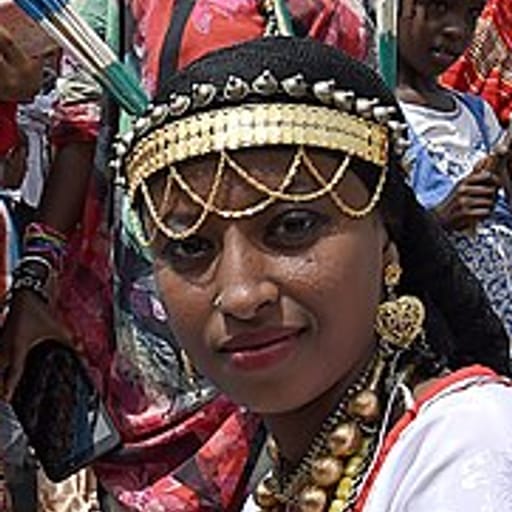
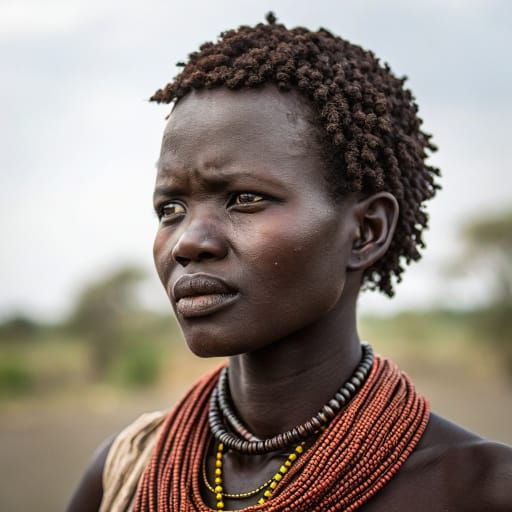
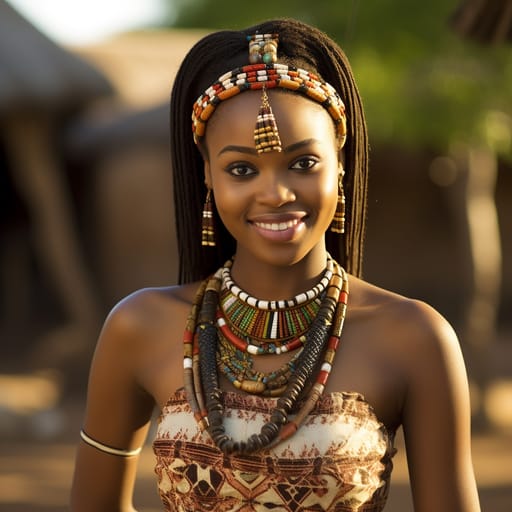
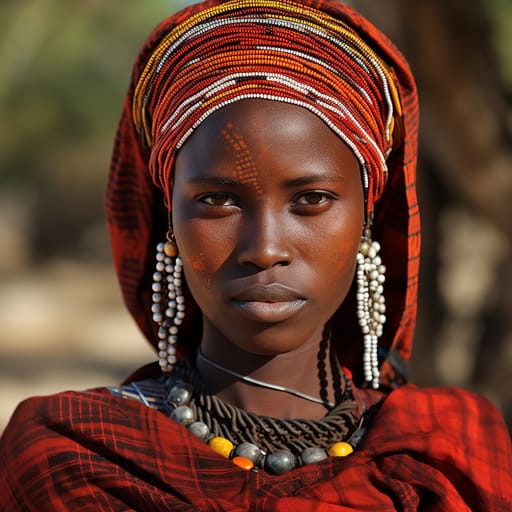
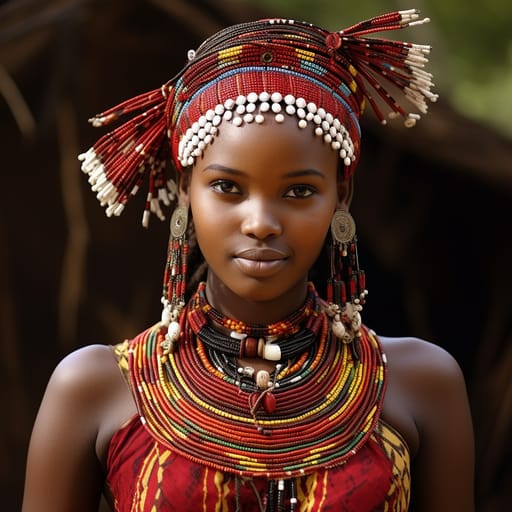
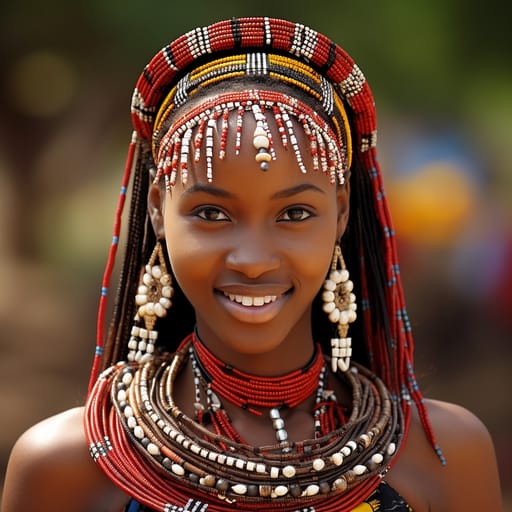
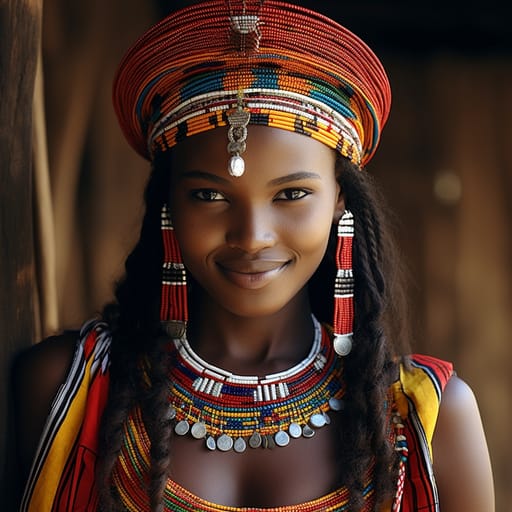
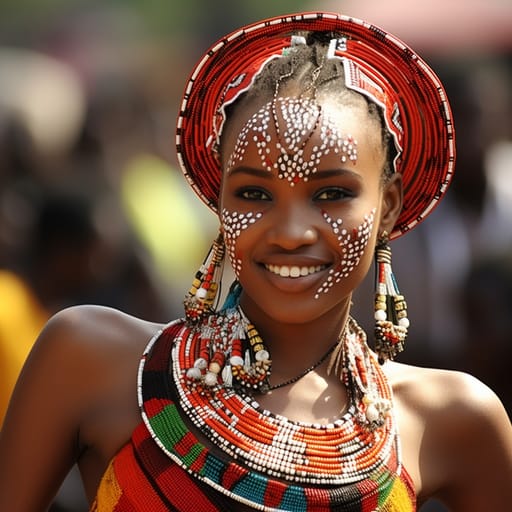
Typical Hadiya Phenotypes
Reference for AI generation: hair, eyes, skin, facial structure, build
The Hadiya are a Cushitic-speaking people of the central Ethiopian highlands, and their phenotype sits within the broader Horn of Africa pattern — a long-standing blend of Sub-Saharan African and ancient Afroasiatic ancestry that reads visually distinct from both West African and North African neighbors. Hair is almost universally dark brown to black, typically Type 4 coily but running noticeably finer and looser than West African textures; loose-curl Type 3 patterns appear with some regularity, especially in mixed lineages around Hosaena. Premature graying is reported anecdotally as common, often beginning at the temples in the thirties.
Eyes are dark brown to near-black, almond-shaped, with a clean upper lid and no epicanthic fold. The eye opening tends to be wide and slightly elongated rather than round. Skin tones cluster in the Fitzpatrick IV–V range — warm brown with red or olive undertones rather than the deep blue-black undertones common further south and west. Highland sun exposure produces a noticeable gradient: lowland Hadiya communities run perceptibly darker than those at higher elevation around Hosaena and Soro.
Facial structure is where Hadiya phenotype reads most distinctly Cushitic. Noses are typically narrow to medium with a defined bridge and moderate alar width — neither the broad platyrrhine form of equatorial West Africa nor the high thin bridge of the Arabian Peninsula. Lips are medium-full, well-defined rather than everted. Cheekbones sit high and the jaw tapers cleanly, giving the face an oval-to-long proportion. Foreheads are often broad.
Build runs tall and lean. Men commonly reach 175–183 cm, women 165–172 cm, with long limbs relative to torso and narrow hip-to-shoulder ratios — the same elongated highland body composition that produces East Africa's distance runners, exemplified locally by Fantu Magiso. Musculature is wiry rather than bulky. Among women, a slim build with modest bust and narrow waist is typical, though broader hip width appears in the southern lowland subgroups bordering Sidama and Kambaata territory.
Hadiya Body & Anatomy Reference
Anatomy by feature, Cushitic / Nilo-Cushitic East African phenotype
Hadiya Boobs & Breasts
Hadiya tits and boobs run small-to-medium-cup, high-set, conical, the classic Cushitic / Nilo-Cushitic East African bust profile. Hadiya nipples and areolas show moderate-to-high areolar pigmentation against the brown-to-deep-brown skin tone, with areolar diameter typically in the 28-38mm range and forward-set positioning rather than the lateral spread of the West African phenotype. Hadiya breasts trend firmer and less projecting than the African-American or West African norm, a function of the lean ectomorph-to-mesomorph body habitus and the mean adult female BMI 19-22. For anatomically accurate AI-generated Hadiya nudes the render preserves the small-to-medium-cup, high-set, conical shape, 28-38mm areolas with moderate-to-high pigmentation, and the torso proportions of the Cushitic / Nilo-Cushitic East African phenotype.
Hadiya Ass & Hips
Hadiya hips and butt usually read as small-to-medium, high-set, rounded. The skeletal base is narrow-to-medium iliac crests, longer torso-to-leg ratio, the Cushitic / Nilo-Cushitic East African pattern. Set against the wide-set heavy-projection West African or African-American norm, the difference is easy to see, and the hip-to-waist ratio is often what identifies Hadiya women in photos.
Hadiya Vagina & Pussy
Expect brown-to-deep-brown labial pigmentation, narrow-to-medium labia minora projection on Hadiya women, in keeping with Cushitic / Nilo-Cushitic East African ancestry. The pubic hair is tightly-coiled coarse texture, densely distributed. Coloring should run evenly from the brown to deep brown skin of the thighs to the labia, and Hadiya nude imagery should keep the hair's tightly-coiled coarse texture.
Hadiya Dicks & Penis
Hadiya dick and penile anatomy in adult AI generation should anchor on the regional reference data: regional mean ~13.5cm erect, moderate girth, ~12cm circumference, and deeper-pigmented than the West African norm. The Hadiya cock profile reflects the Cushitic / Nilo-Cushitic East African population's anthropometric measurements. The shaft pigmentation should track the surrounding brown to deep brown skin tone, and the pubic hair should keep its tightly-coiled coarse texture in the typical inverted-V escutcheon.
Hadiya Body, Curves & Build
Hadiya body type: lean ectomorph-to-mesomorph, with mean adult female BMI 19-22. This is the typical Cushitic / Nilo-Cushitic East African build. Height range, shoulder-to-hip ratio and fat distribution all follow from it, which is what an accurate Hadiya nude body should show.
Hadiya Skin Tone & Hair Texture
Hadiya skin tone falls in the brown to deep brown (Fitzpatrick V-VI) band, the surface signal most often miscalibrated by generic AI nude generators. Hadiya hair texture is typically tight 4A-4C coil, often worn natural or in braided/twisted protective styles, characteristic of the Cushitic / Nilo-Cushitic East African phenotype. In Hadiya nude renders the skin should hold that band consistently across the body.
Data depth
37/100Coverage of image-grounded phenotype observations · drives AI generation diversity
- Sample size
- 10/40· 3 images
- Image quality
- 17/30· 33% high
- Confidence
- 10/20· mean 0.60
- Source diversity
- 0/10· wikipedia
- ·Small sample (n<10)
- ·Wikipedia-only source, not population-representative
Observed Distribution: Image Sample
Empirical observations from analyzed photographs · supplementary signal, not population truth
Sample: 3 images analyzed (3 wikipedia). Quality: 1 high, 1 medium, 1 low, 0 very_low. Avg analyzer confidence: 0.60.
Skin tone (Fitzpatrick): V (67%), unclear (33%)
Hair color: gray/white (33%), black (33%), unclear (33%)
Hair texture: coily (67%), covered (33%)
Eye color: dark brown (67%), unclear (33%)
Epicanthic fold: 0% present, 100% absent, 0% unclear
Caveats: Sample size 3 is small, so the observed distribution should be treated as suggestive, not definitive. Sample is 100% Wikipedia notable people, which skews toward male, public-life, and modern figures, not population-representative.
Last aggregated: May 7, 2026
Explore phenotype categories
Structured taxonomy with peer-reviewed scales · 22 anatomical categories
Notable Hadiya People
10 reference figures, sourced from Wikipedia
- Eleni of Ethiopia, empress of Ethiopia
- Aze, 16th century leader of Hadiya
- Side Mohammed, 17th century leader of Hadiya
- Hassan Enjamo, 19th century leader of Hadiya
- Beyene Petros, Was a professor of biology at Addis Ababa University, former member of the Et…
- Habtamu Wondimu, Professor of Social Psychology in the College of Education of Addis Ababa Uni…
- Fantu Magiso Manedo, an Ethiopian runner specializing in the 400 metres and 800 metres.
- Garad Amano, Famous King of Hadiya in 14th century
- Garad Mehamed, Chief of Hadiya and father of Princess Eleni
- Garad Mahiko, Famous King of Hadiya in 15th century
Erotic Poses & Sex Positions
From the pose catalog: 219 named positions with reference skeletons
Frequently asked questions about Hadiya people
Where is the Hadiya homeland?
The Hadiya homeland is Hadiya (Ethiopia) in Eastern Africa.
What language do Hadiya people speak?
Hadiya people primarily speak Afroasiatic / Cushitic / Hadiyya.
What religion do Hadiya people practice?
The predominant religion among Hadiya people is Islam.






Make your own Hadiya images
Five a day, free, no credits to buy. The studio starts from this group's phenotype data, so you can set body type, pose and style and keep the traits accurate.
Start with Hadiya