Help us get this right
Does this portrait look right for Makonde?
One tap. It takes a second and it is recorded.
0 say it looks right, 1 says it looks off.
Makonde Erotic
About Makonde People
The Makonde are best known by what they carve. Across the Mueda Plateau in northern Mozambique and the lower hill country of southeast Tanzania, the same families have spent generations turning blackwood — mpingo, dense as iron — into masks, ancestor figures, and the tangled vertical pieces called ujamaa or "tree of life," where bodies climb over bodies in a single column of wood. The carvings are not folk craft. They are a visual language, and one the Makonde guard fairly carefully; the deepest pieces are still made for initiation and funerary use, not for the market in Dar es Salaam.
The plateau itself shaped them. It rises sharply out of the surrounding lowlands, the slopes are difficult, and water is scarce on top — for most of the colonial period this geography kept Portuguese and German administrators at arm's length and let the Makonde keep an unusual degree of internal order. That same isolation is why the Mozambican branch of the group became the territorial spine of FRELIMO during the independence war in the 1960s; the plateau was the rear base, and the war is still living memory in the villages there. The Tanzanian Makonde, separated by the Ruvuma River, share the language and the carving tradition but missed that particular history, and the two halves of the people have drifted in noticeable ways since.
Their language belongs to the Bantu branch of Niger–Congo, sitting close to Yao and Makua but mutually unintelligible with either, and it carries a heavy vocabulary for kinship and for the spirits — midimu — that animate the masquerades. Society is matrilineal: descent, inheritance, and residence after marriage have traditionally followed the mother's line, which sets the Makonde apart from most of their patrilineal neighbors. Islam, brought up the Swahili coast and inland by trade, is the dominant religion now and shapes the rhythm of the week and the year, but it sits on top of the older ritual world rather than replacing it. Initiation rites for both sexes, the lip plug once worn by older women, the drum cycles, the masked dances called mapiko — these continue, and they are the part of Makonde life that an outsider almost never sees.
Related ethnic groups
Groups that share Makonde's homeland, region, language, or religious tradition. These are likely candidates for comparative phenotype reference.
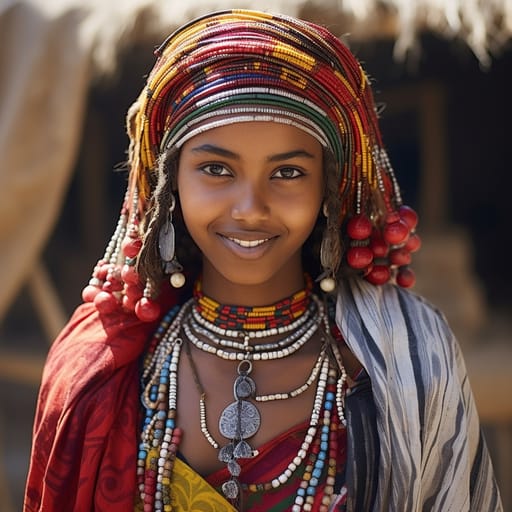
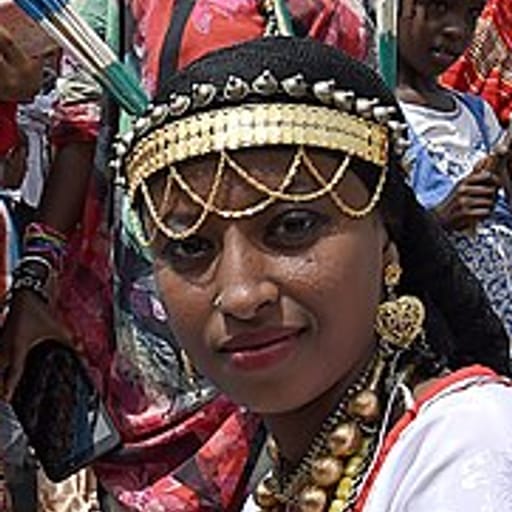
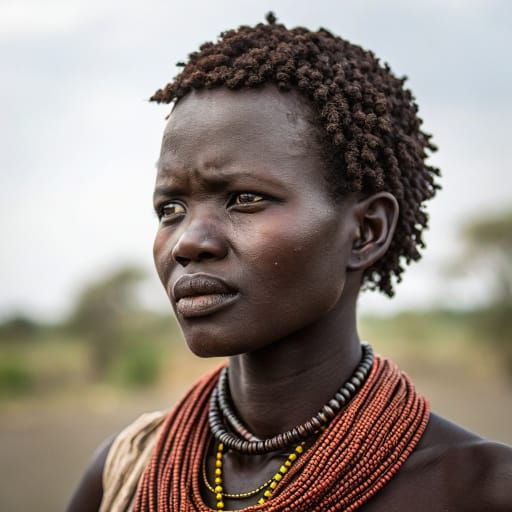
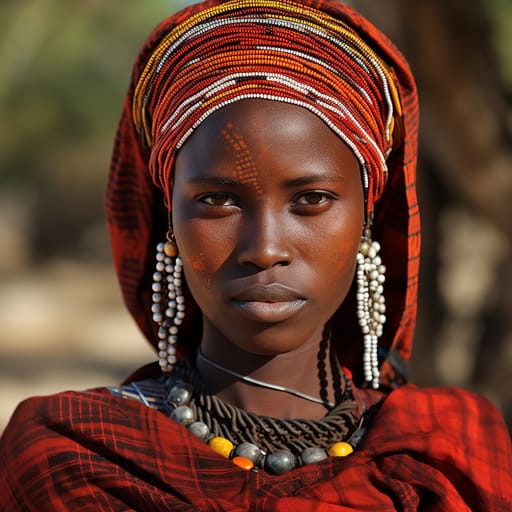
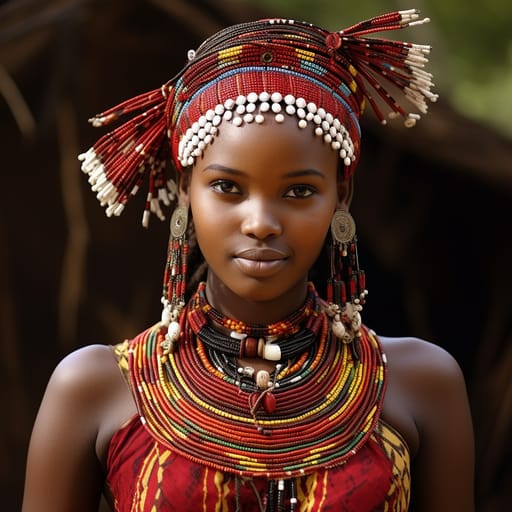
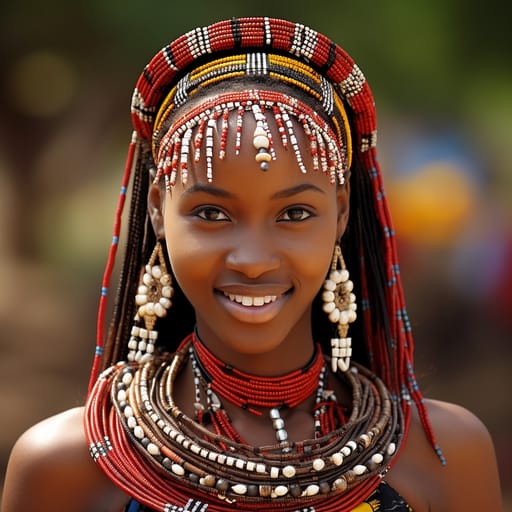
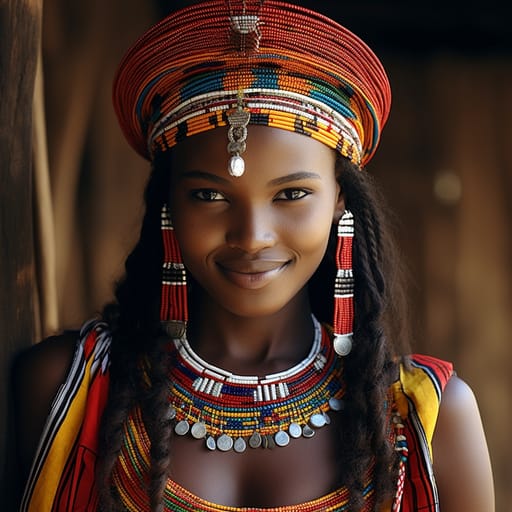
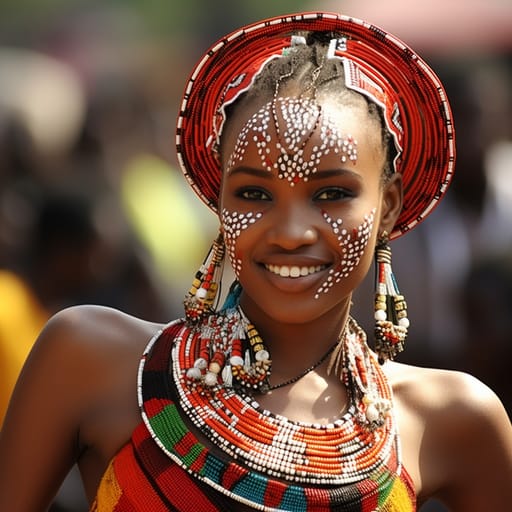
Typical Makonde Phenotypes
Reference for AI generation: hair, eyes, skin, facial structure, build
The Makonde phenotype reads as classic East African Bantu, but with a specific weighting toward dark, matte skin tones and a compact, sinewy build shaped by generations on the elevated Mueda Plateau and the surrounding lowlands of southeastern Tanzania and northern Mozambique. The dominant impression is of strong vertical features — a long facial midline, narrow lower face, and prominent forehead — set against deeply pigmented skin that absorbs rather than reflects light.
Hair is almost universally Type 4 — tightly coiled, dense, and worn close-cropped by men and in short twists, braids, or wraps by women. Natural color is jet black with cool, blue-leaning undertones; graying in older adults like Benjamin Mkapa or Filipe Nyusi tends toward steel rather than yellow. Eyes sit deep-set under a moderately heavy brow, almost always dark brown to near-black, with no epicanthic fold and a slightly almond outer canthus. Sclera frequently shows a warm, faintly yellowed cast — common across the region.
Skin tone clusters at Fitzpatrick V to VI, with VI predominating; undertones lean cool-neutral to slightly red-brown rather than the olive cast seen in some Horn-of-Africa populations. The face shows a moderately broad nose with a low-to-medium bridge and rounded alar base, full but well-defined lips with a clear vermillion border, and high, laterally placed cheekbones. Jawlines are typically angular in men and softer-rounded in women. Traditional facial scarification and lip-plug stretching, while now uncommon, historically shaped the visual identity captured in George Lilanga's and Reinata Sadimba's figurative work.
Build runs lean and wiry — average stature for men sits around 168–172 cm, women around 158–162 cm, with narrow shoulders, long limbs relative to torso, and low body fat even at rest. The Machinga sub-group, concentrated on the Tanzanian side, is visually indistinguishable from the Mozambican Makonde proper; differences are linguistic and territorial rather than phenotypic. The defining signature is dark matte skin paired with a long, narrow, vertically dominant face.
Data depth
0/100Coverage of image-grounded phenotype observations · drives AI generation diversity
- Sample size
- 0/40· 0 images
- Image quality
- 0/30· 0% high
- Confidence
- 0/20
- Source diversity
- 0/10
- ·No image observations yet
Explore phenotype categories
Structured taxonomy with peer-reviewed scales · 22 anatomical categories
Notable Makonde People
4 reference figures, sourced from Wikipedia
- Benjamin Mkapa, third President of Tanzania
- George Lilanga, Tanzanian artist
- Filipe Nyusi, fourth President of Mozambique
- Reinata Sadimba, Mozambican artist
Erotic Poses & Sex Positions
From the pose catalog: 219 named positions with reference skeletons
Frequently asked questions about Makonde people
Where is the Makonde homeland?
The Makonde homeland is Tanzania, Mueda Plateau (Mozambique) in Eastern Africa.
What language do Makonde people speak?
Makonde people primarily speak Niger-Congo / Bantu / Makonde.
What religion do Makonde people practice?
The predominant religion among Makonde people is Islam.






Make your own Makonde images
Five a day, free, no credits to buy. The studio starts from this group's phenotype data, so you can set body type, pose and style and keep the traits accurate.
Start with Makonde