Help us get this right
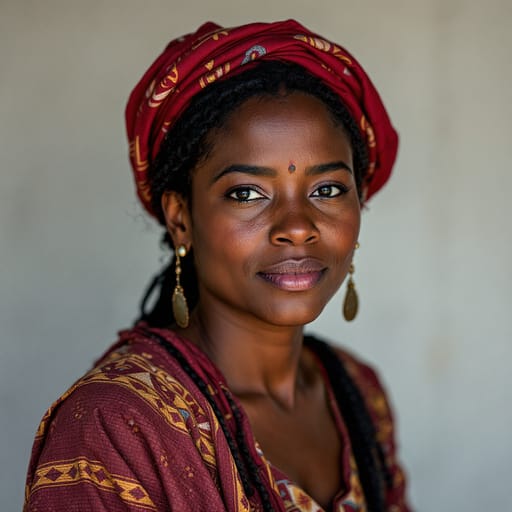
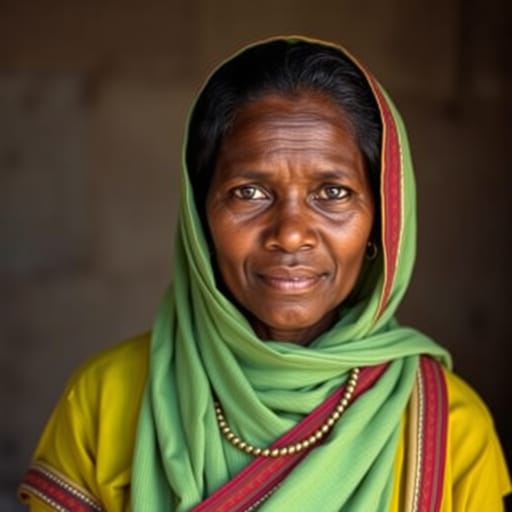
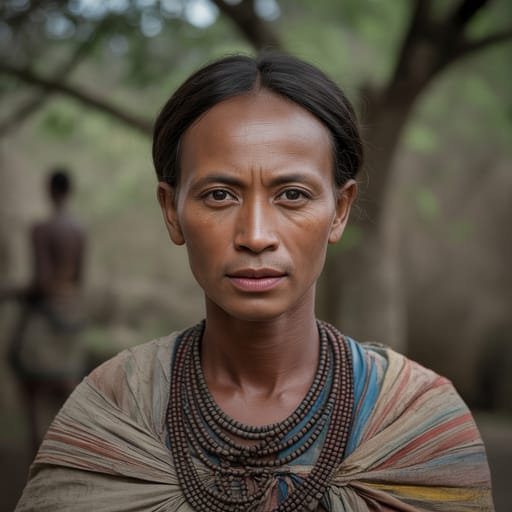
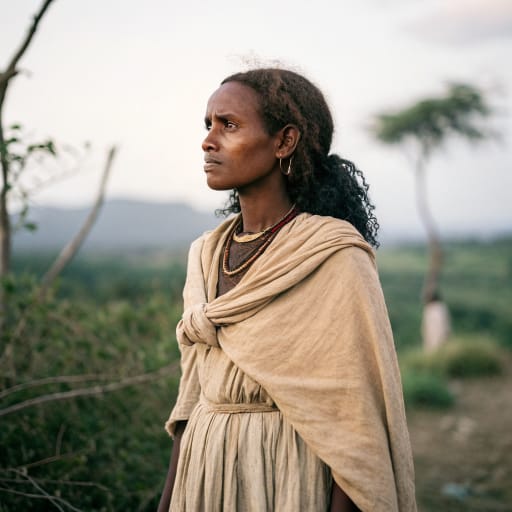
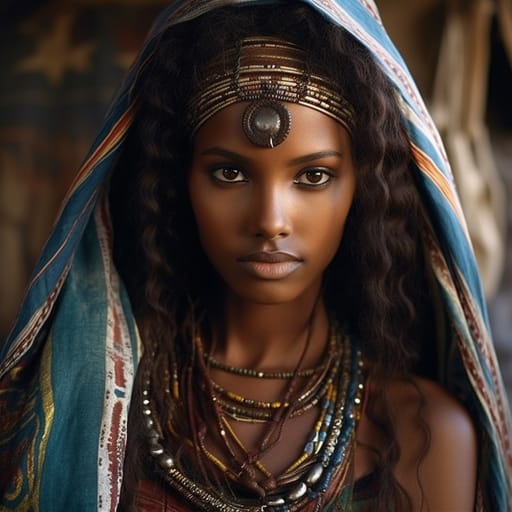
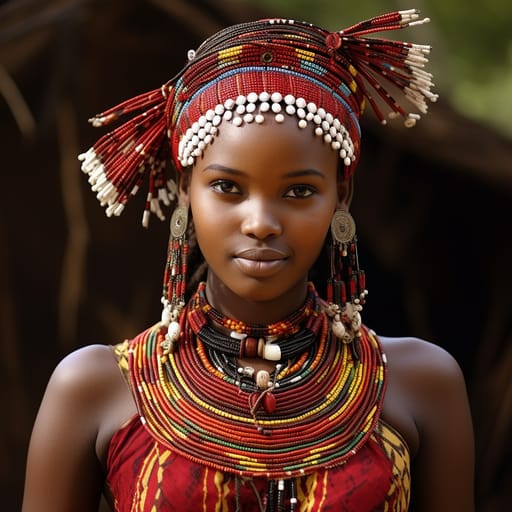
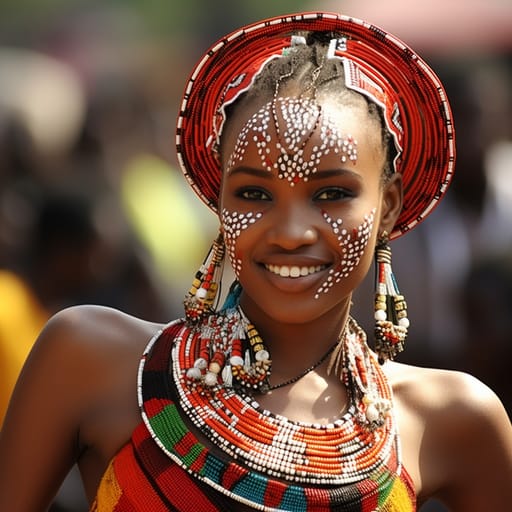
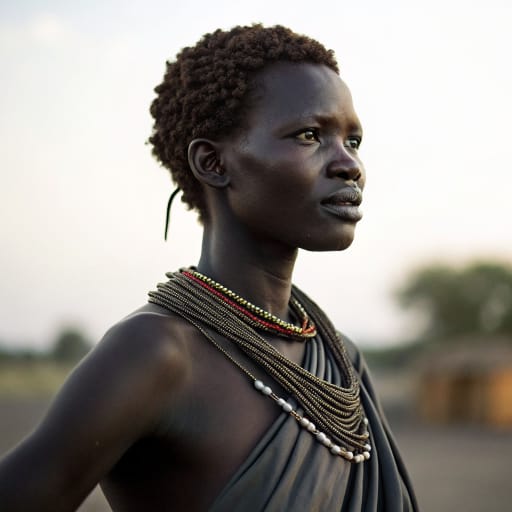
Does this portrait look right for Amhara?
One tap. It takes a second and it is recorded.
2 say it looks right, 1 says it looks off.
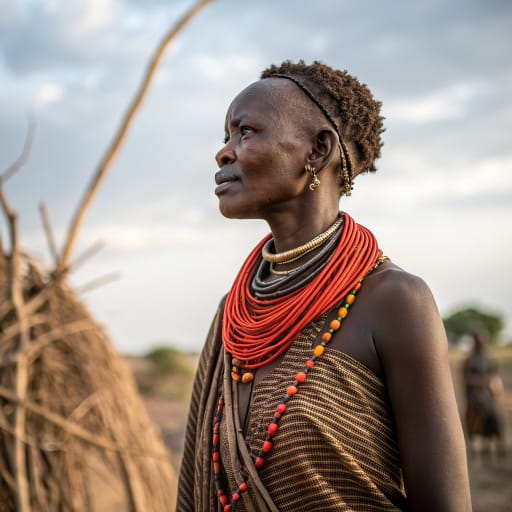
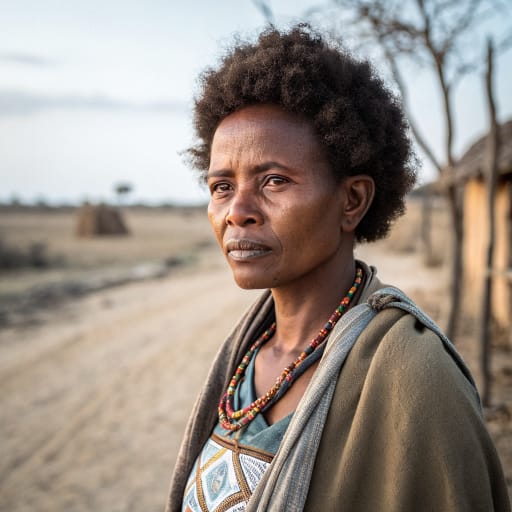
How 6 image generators render Amhara
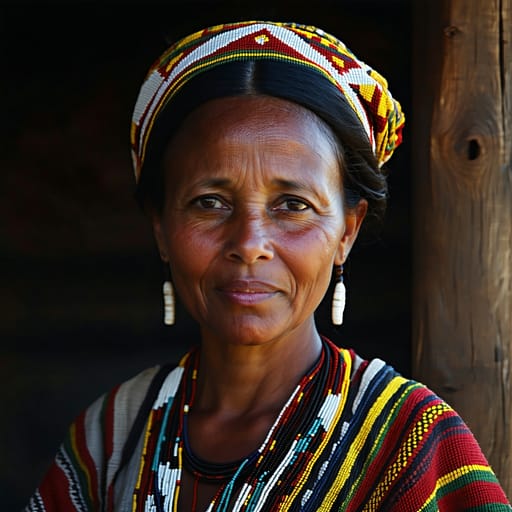
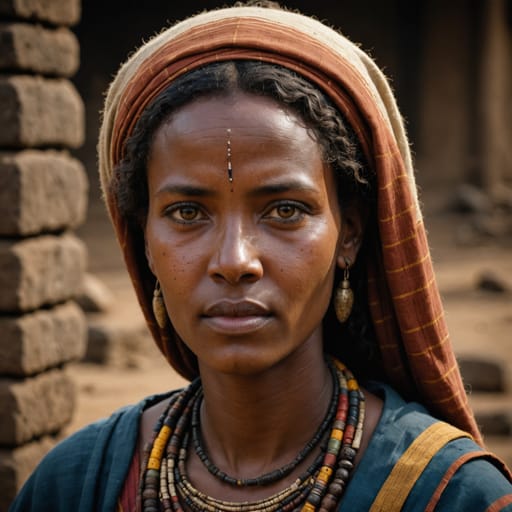
The same documentary prompt sent to each generator; one render each, alphabetical by generator. The comparison page has every render, the match to documented photographs and the reader pairs.
Amhara Erotic
Amharia (Ethiopia)
Christianity / Oriental Orthodoxy
About Amhara People
The Amhara are the people whose language carried an empire. For most of the last seven centuries, when outsiders spoke of "Abyssinia" or "Ethiopia," they were largely describing a state run in Amharic — the working tongue of court, church, and administration — and shaped by the highland Christian culture the Amhara built and maintained. That long political centrality is the single most important thing to understand about them: it explains the reach of their language, the prestige of their script, and also the reason "Amhara" is sometimes a contested label inside Ethiopia today.
Their homeland is the central and northwestern highlands — Gondar, Gojjam, Wollo, Shewa — a country of basalt plateaus split by gorges, with the Blue Nile cutting its way out of Lake Tana on its journey to Sudan. The altitude is the climate. Most Amhara live well above 2,000 meters, in cool, dry uplands where teff grows and where the threshing floor and the round tukul are still part of the rural landscape. Subsistence is built around the ox-plow, an unusual survival in sub-Saharan Africa, and around injera — the sour, fermented teff flatbread that doubles as plate and utensil at almost every meal.
Amharic belongs to the Ethiopic branch of Semitic, which makes it a distant cousin of Arabic and Hebrew but a much closer relative of Tigrinya to the north and of Ge'ez, the liturgical language still chanted in church. It is written in the Ge'ez fidel — a syllabary, not an alphabet — one of the few indigenous African scripts in continuous everyday use. Most Amhara are members of the Ethiopian Orthodox Tewahedo Church, an Oriental Orthodox communion that broke from the rest of Christendom in the fifth century over the nature of Christ. Its calendar is its own, its fasts are long and serious — Wednesdays, Fridays, the fifty-five days of Lent — and the saints' day procession with the tabot, a replica of the Ark, remains the central public expression of village life.
The Amhara also carry a complicated political memory. The imperial dynasty deposed in 1974, the centralizing reforms that came before it, and the Derg years that followed all left their mark. In the federal Ethiopia of recent decades, regional identity has hardened, and being Amhara has become both a household identity and a contested political one — held quietly at home, argued over loudly in the capital.
Related ethnic groups
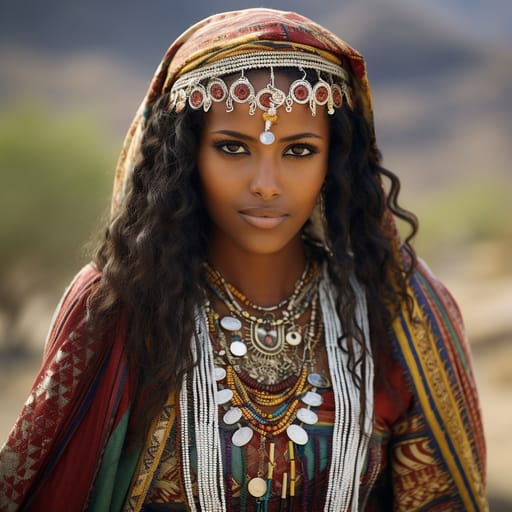
Groups that share Amhara's homeland, region, language, or religious tradition. These are likely candidates for comparative phenotype reference.
Geographic Distribution: Amhara populations across 1 country
Each row is ranked by the group's share of that country's population, with the source citation drawn from published census and demographic surveys. Click through for the full per-country phenotype profile.
| Country | Share | Source |
|---|---|---|
| Ethiopia | 27.0% | Ethiopia 2007 Census; Amhara (~27%, ~36M+); Semitic source population, predominantly Ethiopian Orthodox Christian. Concentrated in Amhara regional state |
Typical Amhara Phenotypes
Reference for AI generation: hair, eyes, skin, facial structure, build
The Amhara phenotype centers on Northeast African Semitic features — narrower facial proportions and finer features than equatorial African groups, with skin tones running deeper than most West Asian populations. The result is a distinctive look anchored in highland Ethiopia: tall, slender frames, sculpted bone structure, and a coloring range that spans warm caramel through deep umber.
Hair is typically dark brown to black, with curl patterns clustering in Type 3B–4A — defined ringlets and tight coils rather than the kinkier Type 4B/4C textures dominant in much of sub-Saharan Africa. Loose curls and even wavy textures appear at meaningful frequency, particularly in highland subgroups. Natural lighter shades are rare. Eyes run dark brown to near-black; lighter hazel and amber occur but are uncommon. Eye shape tends almond and slightly upturned, with no epicanthic fold and a clean, deep-set lid line that gives the gaze a directness often noted in portraiture.
Skin tones cluster in Fitzpatrick IV–V, ranging from warm honey-brown to rich mahogany, with red-bronze undertones rather than the cool blue-black undertones common in Nilotic populations. The structurally distinctive facial signature is a narrow, high-bridged nose with a thin alar base — closer to Arabian or Mediterranean form than to typical sub-Saharan morphology — paired with high cheekbones, a tapered jawline, and lips that are full but more defined than broad. Foreheads are often high; the overall facial geometry reads as elongated and sculpted.
Build skews tall and lean. Anthropometric data on Ethiopian highlanders shows pronounced ectomorphy — long limbs, narrow hips, low body fat carried high — the same physiology that produces world-class distance runners like Haile Gebrselassie. Women tend toward slender frames with subtle curves rather than pronounced gluteofemoral mass. Subgroup variation across Gondar, Gojjam, Shewa, and Wollo is real but modest — Gondari Amhara are sometimes noted for slightly lighter average skin tone, while Wollo populations show more curl variation from historical contact with neighboring groups.
Amhara Body & Anatomy Reference
Cushitic / Nilo-Cushitic East African phenotype: anatomy reference for AI nude generation
Amhara Boobs & Breasts
Amhara boobs follow the Cushitic / Nilo-Cushitic East African profile: small-to-medium-cup, high-set, conical. Areolar diameter is usually 28-38mm, and the coloring is moderate-to-high areolar pigmentation against the brown-to-deep-brown skin tone. Breast shape tracks body composition (lean ectomorph-to-mesomorph, mean adult female BMI 19-22), so Amhara breasts tend to be firmer and less projecting than the African-American or West African norm. Expect a forward-set shape, not the lateral spread of the West African phenotype.
Amhara Ass & Hips
Amhara ass and hip morphology presents as small-to-medium, high-set, rounded, distinctly different from the wide-set heavy-projection West African or African-American norm. The Amhara pelvic profile shows narrow-to-medium iliac crests, longer torso-to-leg ratio, anchored in the Cushitic / Nilo-Cushitic East African skeletal pattern. Amhara butt shots in adult AI imagery should render the small-to-medium, high-set, rounded silhouette with the overall build (lean ectomorph-to-mesomorph) and the fat distribution typical of the Cushitic / Nilo-Cushitic East African phenotype.
Amhara Vagina & Pussy
Amhara pussy anatomy typically shows brown-to-deep-brown labial pigmentation, narrow-to-medium labia minora projection. Pubic hair is usually tightly-coiled coarse texture, densely distributed. In AI-generated Amhara nudes, labial color should blend into the brown to deep brown skin with a gradual transition, and the hair should keep its tightly-coiled coarse texture.
Amhara Dicks & Penis
Penis reference for Amhara men: regional mean ~13.5cm erect, moderate girth, ~12cm circumference. Coloring: deeper-pigmented than the West African norm. An accurate Amhara cock in AI imagery matches the surrounding brown to deep brown skin rather than a generic porn default. Circumcision depends on religion and custom, not ancestry.
Amhara Body, Curves & Build
The Amhara figure is generally lean ectomorph-to-mesomorph, with mean adult female BMI 19-22, characteristic of Cushitic / Nilo-Cushitic East African ancestry. AI image tools tend to flatten regional body types into a few stock shapes; here the Amhara build is kept as its own reference.
Amhara Skin Tone & Hair Texture
Skin: brown to deep brown (Fitzpatrick V-VI). Hair: tight 4A-4C coil, often worn natural or in braided/twisted protective styles. Both are typical of Cushitic / Nilo-Cushitic East African ancestry. The most common mistake in AI nudes of Amhara women is a body rendered lighter than the face.
Data depth
64/100Coverage of image-grounded phenotype observations · drives AI generation diversity
- Sample size
- 40/40· 61 images
- Image quality
- 14/30· 28% high
- Confidence
- 10/20· mean 0.61
- Source diversity
- 0/10· wikipedia
- ·Mostly low-quality source images
- ·Wikipedia-only source, not population-representative
Observed Distribution: Image Sample
Empirical observations from analyzed photographs · supplementary signal, not population truth
Sample: 61 images analyzed (61 wikipedia). Quality: 17 high, 24 medium, 16 low, 4 very_low. Avg analyzer confidence: 0.61.
Skin tone (Fitzpatrick): II (2%), III (3%), IV (8%), V (62%), VI (13%), unclear (11%)
Hair color: black (56%), gray/white (26%), unclear (18%)
Hair texture: straight (8%), wavy (3%), coily (57%), bald (2%), shaved (2%), covered (20%), unclear (8%)
Eye color: dark brown (79%), unclear (21%)
Epicanthic fold: 0% present, 84% absent, 16% unclear
Caveats: Quality skews toward older or low-resolution photos; phenotype detail may be lossy. Sample is 100% Wikipedia notable people, which skews toward male, public-life, and modern figures, not population-representative.
Last aggregated: May 7, 2026
Explore phenotype categories
Structured taxonomy with peer-reviewed scales · 22 anatomical categories
- SkinFitzpatrick I to VI, undertone, pigmentation
- EyesColor, shape, eyelid, epicanthic fold
- Head hairColor, Andre Walker texture, hairline
- Body shapeHeath-Carter somatotype, WHR, frame
- NoseBridge, tip, nostril, alar width
- Lips & mouthVolume, Cupid’s bow, philtrum
Measured in Amhara portraits
Notable Amhara People
96 reference figures, sourced from Wikipedia
- Menelik, Turkana tribe: Who is this Amhara-Menelik to whom we are supposed to submit?A…
- Aba Gorgorios, Catholic priest
- Abebe Aregai, Prime Minister
- Abebe Aleme Bikila, Olympic athlete, gold medalist
- Abel Tesfaye, The Weeknd), Grammy-winning artist, singer, and global pop star
- Abuna Basilios, First Patriarch of the Ethiopian Orthodox Tewahido Church
- Abuna Theophilos, Second Patriarch of the Ethiopian Orthodox Tewahido Church
- Afevork Ghevre Jesus, Ethiopian writer
- Afewerk Tekle, Honorable Laureate Maitre Artiste
- Aklilu Habte-Wold, Former foreign minister and Prime Minister
- Alemayehu Eshete, Ethiopian singer
- Alemu Aga, musician, singer, and master of the Begena
- Amda Seyon I, Emperor of the Ethiopian Empire
- Amha Iyasus, ruler of Shewa
- Andualem Aragie, Vice President and Press Secretary for the Ethiopian-based Unity for Democrac…
- Anestasyos, ruler of Bete Amhara, Damot & Shewa
- Asfaw Wossen, ruler of Shewa
- Asnaketch Worku, Ethiopia's first professional theatre actress and legendary musician, known a…
- Asrat Woldeyes, Ethiopia's first Western-trained surgeon and the leading pioneer of Amhara Na…
- Aster Aweke, Ethiopian singer
- Baeda Maryam I, Emperor of the Ethiopian Empire
- Bakaffa, Emperor of the Ethiopian Empire
- Bashah Aboye, military commander
- Berhaneyesus Demerew Souraphiel, Ethiopian Catholic cardinal, Head of the Ethiopian Catholic Church.
- Dawit I, Emperor of the Ethiopian Empire
- Dawit II, Emperor of the Ethiopian Empire
- Dawit III, Emperor of the Ethiopian Empire
- Demetros of Amhara, ruler of Shewa
- Eden Alene, Ethiopian-Israeli singer, competed at the Eurovision Song Contest
- Ejigayehu Shibabaw, better known as Gigi, Ethiopian singer
- Emahoy Tsegué-Maryam Guèbrou, Ethiopian nun known for her piano playing and compositions
- Eskender, Emperor of the Ethiopian Empire
- Fasilides, Emperor of the Ethiopian Empire
- Gebre Hanna, dabtara renowned in Amharic oral tradition
- Gebre Tasfa, 18th-19th century lord of Semien
- Gelawdewos, Emperor of the Ethiopian Empire
- Gelila Bekele, International model
- Getatchew Haile, philologist
- Getatchew Mekurya, Legendary Ethiopian Jazz Saxophonist
- Haddis Alemayehu, Foreign Minister and Novelist
- Haile Gebrselassie, renowned world Athlete
- Haile Gerima, Award-winning writer, producer & director.
- Haile Maryam Gebre, lord of Semien and Welkait
- Haile Selassie, Emperor of the Ethiopian Empire
- Heruy Wolde Selassie, Foreign Minister
- Iyasu I, Emperor of the Ethiopian Empire
- Iyasu II, Emperor of the Ethiopian Empire
- Najahid dynasty, Kaid Abu Muhammad Amhara Surur al-Fatiki, Ruler of Najahid dynasty
- Kebede Michael, Ethiopian writer
- Kidane Kale, Meridazmach of Shewa
- Leul Sagad, military commander & noblemen
- Liya Kebede, International supermodel
- Makonnen Wolde Mikael, Military officer, diplomat, court official
- Marcus Samuelsson, acclaimed chef and restaurateur
- Makonnen Endelkachew, Prime Minister
- Melaku Worede, agronomist and geneticist, Right Livelihood Award-winning scientist
- Menas of Ethiopia, Emperor of the Ethiopian Empire
- Menelik II, Emperor of the Ethiopian Empire
- Mesfin Woldemariam, author, Sakharov prize winning human rights activist and politician.
- Menen Asfaw, Empress of Ethiopia, reign between 2 November 1930 to 15 February 1962
- Mulatu Astatke, Musician and Father of Ethio-Jazz
- Muluken Melesse, Music Artist Mohammed Hussein Al Amoudi- Entrepreneur
- Na'od, Emperor of the Ethiopian Empire
- Nagasi Krestos, ruler of Shewa
- Newaya Krestos, Emperor of the Ethiopian Empire
- Newaya Maryam, Emperor of the Ethiopian Empire
- Pnina Tamano-Shata, First Israeli Government Minister of Amahara descent
- Sahle Selassie, Negus of Shewa
- Sara Nuru, fashion model & entrepreneur
- Sarsa Dengel, Emperor of the Ethiopian Empire
- Sebestyanos, Meridazmach of Shewa
- Seifu Makonnen, two-time olympic bokser
- Seifu Mikael, diplomat, governor
- Simegnew Bekele, Chief Project Manager of the GERD
- Susenyos I, Emperor of the Ethiopian Empire
- Taytu Betul, Empress of Ethiopia from 1889 to 1913
- Teddy Afro, Ethiopian singer-songwriter
- Tekle Hawariat Tekle Mariyam, pioneer of Ethiopian and African theater, also military commander and politic…
- Temesgen Tiruneh, Director general of National Intelligence and Security Service
- Tessema Nadew, regent of Ethiopia
- Tewodros II, Emperor of the Ethiopian Empire
- The Weeknd, Ethiopian-Canadian R&B artist
- Welde Giyorgis Aboye, Ethiopian general and noble
- Wolde Giorgis Wolde Yohannes, Minister of the pen
- Hakim Workneh Eshete, first Western-education doctor and diplomat
- Wossen Seged, ruler of Shewa
- Wube Haile Maryam, ruler of Semien & Tigray
- Yaqob, Emperor of the Ethiopian Empire
- Yekuno Amlak, founder of the Solomonic Dynasty
- Yeshaq I, Emperor of the Ethiopian Empire
- Yetnebersh Nigussie, renowned lawyer and disability rights activist
- Yidnekatchew Tessema, 4th president of Confederation of African Football (CAF)
- Zara Yaqob, Emperor of the Ethiopian Empire between 1434 - 1468
- Zewditu, Empress of Ethiopia between 1916 - 1930
- Wolf Leslau, and Thomas L. Kane (collected and edited), Amharic Cultural Reader. Wiesbaden…
- ISBN, Donald N. Levine, Wax & Gold: Tradition and Innovation in Ethiopian Culture (…
Erotic Poses & Sex Positions
From the pose catalog: 219 named positions with reference skeletons
Frequently asked questions about Amhara people
Where is the Amhara homeland?
The Amhara homeland is Amharia (Ethiopia) in Eastern Africa.
What countries do Amhara people live in?
Amhara populations are documented across 1 country: Ethiopia.
What language do Amhara people speak?
Amhara people primarily speak Afroasiatic / Semitic / Ethiopic / Amharic.
What religion do Amhara people practice?
The predominant religion among Amhara people is Christianity / Oriental Orthodoxy.






Make your own Amhara images
Five a day, free, no credits to buy. The studio starts from this group's phenotype data, so you can set body type, pose and style and keep the traits accurate.
Start with Amhara