Help us get this right
Does this portrait look right for Akiek?
Nobody has judged this one yet. You would be the first.
Akiek Erotic
Highland forests of Kenya's Mau Escarpment and Mount Elgon, with a smaller southern branch (the Akie) on the Maasai Steppe of northern Tanzania, mainly Kiteto District in Manyara Region.
Okiek, also written Ogiek or Akiek (Nilo-Saharan, Southern Nilotic, Kalenjin cluster); many communities have shifted to Maasai, Kipsigis, Nandi or Swahili.
Mostly Christian today, alongside traditional belief in a creator (Tororet) and ancestral spirits.
Some two dozen local groups, including the Kaplelach, Kipchornwonek, Marishionik and the Chepkitale Ogiek of Mount Elgon; the Akie of Tanzania form a southern branch. Linguistically part of the wider Kalenjin family.
About Akiek People
The Akiek are the honey people of East Africa's highland forests. The name is one spelling of a word also written Okiek or Ogiek, and it covers some two dozen small local groups scattered across the Mau Escarpment and Mount Elgon in Kenya, plus a southern branch, usually called Akie, on the Maasai Steppe of northern Tanzania. What ties them together is not a single territory but a way of living: hunting, and above all beekeeping, in forests that their cattle-keeping and farming neighbors mostly stayed out of. Those neighbors lumped them together as Dorobo, from a Maasai word for people without cattle, which is to say the poor. The Akiek consider it an insult.
Honey is the center of gravity. Hives are hollowed log cylinders hoisted into tree forks, and lineages traditionally held strips of forest running up the escarpment, so each family could follow the flowering seasons from one altitude to the next. Honey was food, trade good and bridewealth, and fermented into beer it still opens ceremonies and carries blessings. For generations it moved downhill to the Maasai in exchange for livestock, a partnership that was close but never equal. The Akiek language belongs to the Kalenjin cluster of Southern Nilotic, which makes them linguistic cousins of the Nandi and Kipsigis, yet many communities shifted long ago to Maa or to a neighboring Kalenjin tongue. In Tanzania the old language survives mainly among the elderly.
Initiation into adulthood, for both boys and girls, remains the ceremony that matters most in many communities, with a long seclusion and teachings that outsiders are not meant to hear. Most Akiek today are Christian, often layered over an older belief in a creator, Tororet, and in ancestral spirits who take an interest in how the living behave.
The defining fight of the past century has been over the forest itself. Colonial administrators refused to recognize the Akiek as a tribe entitled to a reserve, then gazetted their land as state forest or handed it to settlers, and independent Kenya kept evicting them in the name of conservation. In 2017 the African Court on Human and Peoples' Rights ruled that Kenya had violated their rights to the Mau, a landmark for indigenous land claims across the continent, and in 2022 it ordered reparations and collective title. Enforcement has been slow, and evictions have continued. Kenya's 2019 census counted about 52,000 Ogiek, most of whom now farm and keep livestock alongside their hives.
Related ethnic groups
Groups that share Akiek's homeland, region, language, or religious tradition. These are likely candidates for comparative phenotype reference.
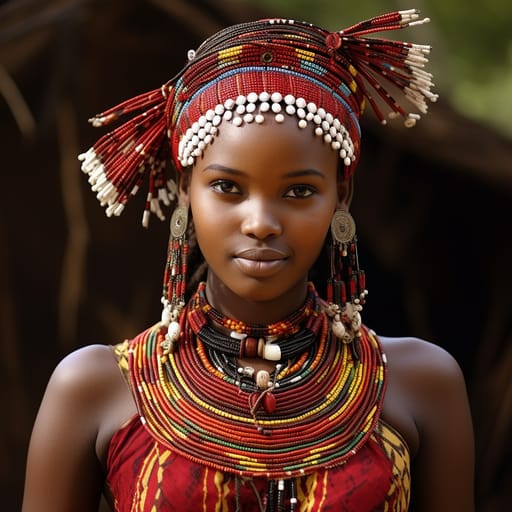
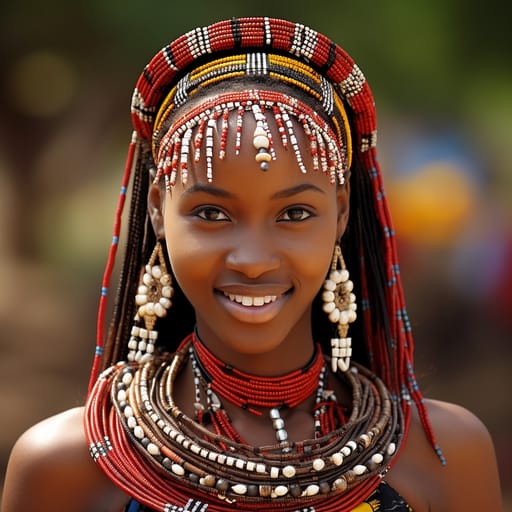
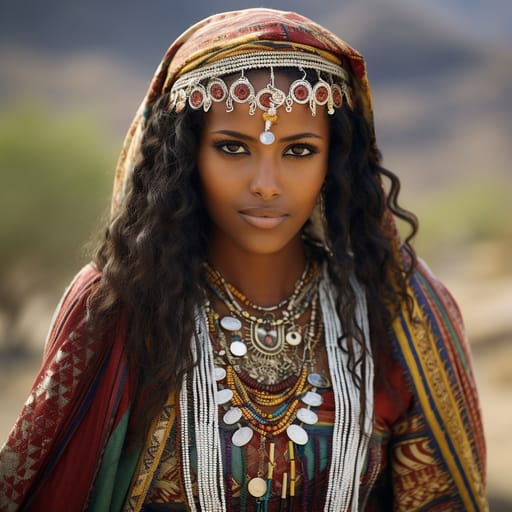
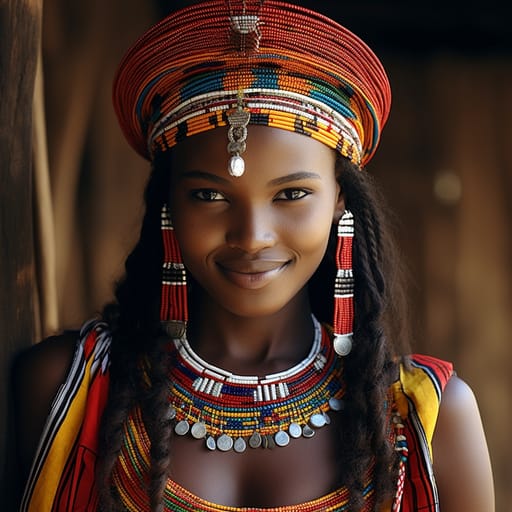
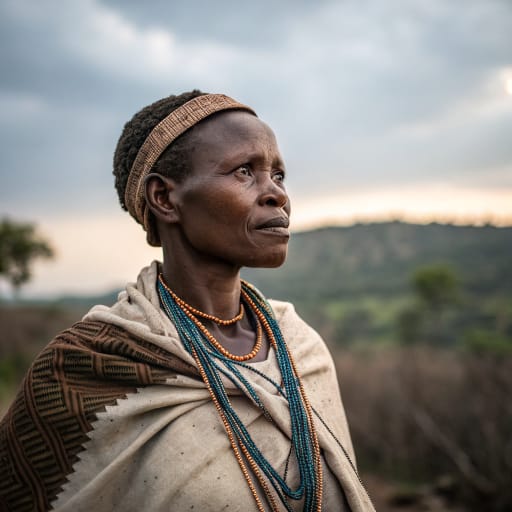
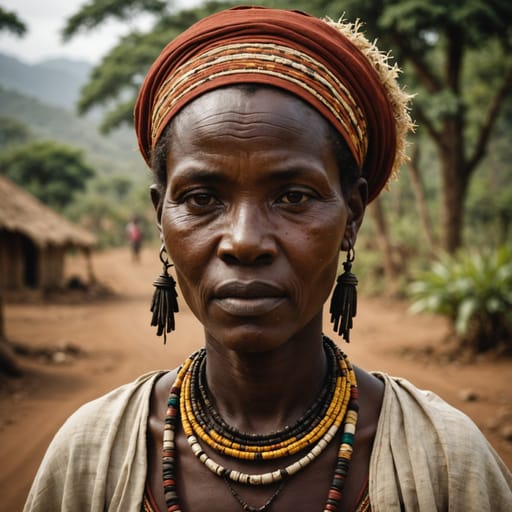
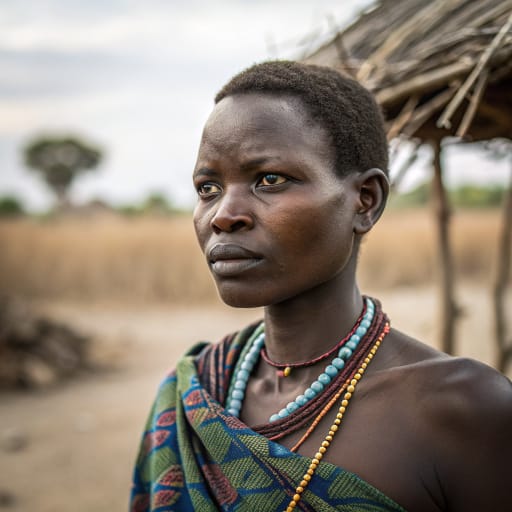
Typical Akiek Phenotypes
Reference for AI generation: hair, eyes, skin, facial structure, build
Akiek Body & Anatomy Reference
Cushitic / Nilo-Cushitic East African phenotype: anatomy reference for AI nude generation
Akiek Boobs & Breasts
Bust reference for Akiek women: small-to-medium-cup, high-set, conical, which is typical of Cushitic / Nilo-Cushitic East African ancestry. Areolas measure about 28-38mm across, with moderate-to-high pigmentation. Body type (lean ectomorph-to-mesomorph) shapes the bust as well, so Akiek tits are usually firmer and less projecting than the African-American or West African norm. In AI imagery, keep the forward-set shape rather than drifting toward the lateral spread of the West African phenotype.
Akiek Ass & Hips
The Akiek ass is typically small-to-medium, high-set, rounded, which sets it apart from the wide-set heavy-projection West African or African-American norm. Underneath, the pelvis shows narrow-to-medium iliac crests, longer torso-to-leg ratio, part of the Cushitic / Nilo-Cushitic East African skeletal pattern. For Akiek butt pics and AI renders, match that silhouette and the overall build (lean ectomorph-to-mesomorph).
Akiek Vagina & Pussy
Akiek pussy and vulvar anatomy presents brown-to-deep-brown labial pigmentation, narrow-to-medium labia minora projection, consistent with the Cushitic / Nilo-Cushitic East African phenotype's pigmentation pattern. Akiek pubic hair is typically tightly-coiled coarse texture, densely distributed, in the inverted-triangle pattern. For anatomically accurate Akiek pussy renders the labial coloration should match the surrounding brown to deep brown skin tone with a continuous gradient, and the hair should keep its tightly-coiled coarse texture.
Akiek Dicks & Penis
Akiek dicks follow the Cushitic / Nilo-Cushitic East African reference data: regional mean ~13.5cm erect; moderate girth, ~12cm circumference; deeper-pigmented than the West African norm. Shaft color should track the brown to deep brown skin tone with a smooth change toward the glans, and Akiek pubic hair keeps its tightly-coiled coarse texture.
Akiek Body, Curves & Build
Akiek body type and overall build presents as lean ectomorph-to-mesomorph, with mean adult female BMI 19-22: the characteristic Cushitic / Nilo-Cushitic East African habitus. Akiek curves and proportions should keep the regional skeletal frame (height, shoulder-to-hip ratio, limb proportions) rather than a generic mesomorph default.
Akiek Skin Tone & Hair Texture
Akiek skin sits in the brown to deep brown (Fitzpatrick V-VI) band. Hair is typically tight 4A-4C coil, often worn natural or in braided/twisted protective styles, in keeping with the Cushitic / Nilo-Cushitic East African phenotype. In nude renders the skin should stay one even tone from face to body, and body, pubic and head hair should match.
Explore phenotype categories
Structured taxonomy with peer-reviewed scales · 22 anatomical categories
Erotic Poses & Sex Positions
From the pose catalog: 219 named positions with reference skeletons
Frequently asked questions about Akiek people
Where is the Akiek homeland?
The Akiek homeland is Highland forests of Kenya's Mau Escarpment and Mount Elgon, with a smaller southern branch (the Akie) on the Maasai Steppe of northern Tanzania, mainly Kiteto District in Manyara Region. in Eastern Africa.
What language do Akiek people speak?
Akiek people primarily speak Okiek, also written Ogiek or Akiek (Nilo-Saharan, Southern Nilotic, Kalenjin cluster); many communities have shifted to Maasai, Kipsigis, Nandi or Swahili..
What religion do Akiek people practice?
The predominant religion among Akiek people is Mostly Christian today, alongside traditional belief in a creator (Tororet) and ancestral spirits..






Make your own Akiek images
Five a day, free, no credits to buy. The studio starts from this group's phenotype data, so you can set body type, pose and style and keep the traits accurate.
Start with Akiek