Help us get this right
Does this portrait look right for Banna?
Nobody has judged this one yet. You would be the first.
Banna Erotic
Hills and valleys around Key Afer in the Bena-Tsemay district, South Omo Zone, southern Ethiopia
Hamer-Banna (Omotic, South Omotic branch); Amharic used in schools and trade
Mostly traditional local belief, with a growing Christian minority
Closely related to the Hamar and Bashada, with whom they share a language and initiation customs; one of the agro-pastoral peoples of the Lower Omo Valley
About Banna People
The Banna are defined as much by their neighbors as by themselves. They speak the same language as the Hamar, share their initiation rites and marry into their families, yet they keep their own name and their own home: the hills and valleys around the market town of Key Afer in southern Ethiopia's South Omo Zone. Ari farmers live to the north toward Jinka and Hamar herders live to the south. To the east, along the Weyto valley, are the Tsemay, who speak a Cushitic language. The speech the Banna share with the Hamar belongs to the South Omotic branch, a small group of languages found nowhere outside southwestern Ethiopia.
Cattle, goats and sorghum hold daily life together. Fields are planted with the rains, herds follow water and grass through the dry months, and livestock is still the real measure of wealth, the currency of marriage payments and the cause of most disputes. Religion is mostly local belief, tied to the authority of elders and to the rites that carry a person from one stage of life to the next. Christian churches have gained ground, especially near roads and towns.
The best known of those rites is the bull jump, which the Banna share with the Hamar. A young man becomes eligible to marry by running across the backs of a row of cattle held side by side. Before the jump, his female relatives dance and ask to be whipped by the maza, young men who have already jumped. The women carry the scars as public proof of loyalty and as a claim on his help in later years. Visitors tend to fixate on the whipping. For the families involved, the day is about kinship, obligation and a household gaining a new adult.
Like the rest of South Omo, Banna country was absorbed into the Ethiopian empire as it pushed south at the end of the nineteenth century, though schools, clinics and all-weather roads came much later. The roads brought the most visible change. Key Afer's weekly market still gathers Banna, Hamar and Ari traders, but tour vehicles now park among them, and posing for photographs has become a small source of income alongside selling grain and goats. The camera is part of Banna life now, which is not the same as Banna life being staged for it.
Related ethnic groups
Groups that share Banna's homeland, region, language, or religious tradition. These are likely candidates for comparative phenotype reference.
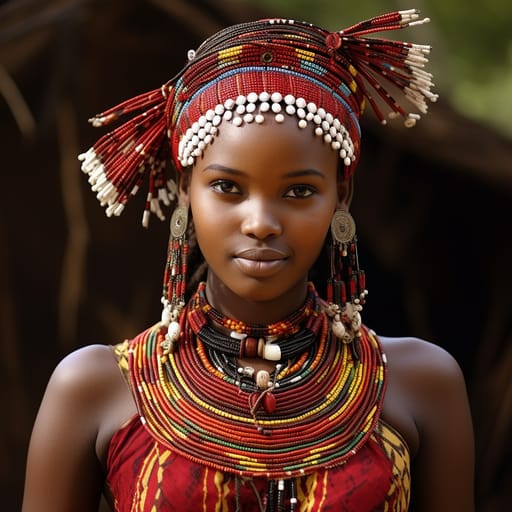
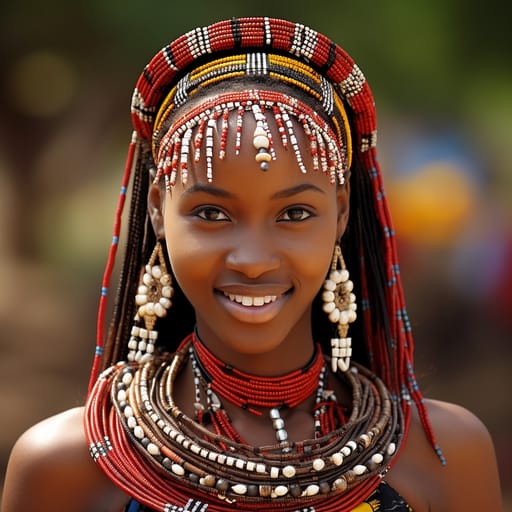
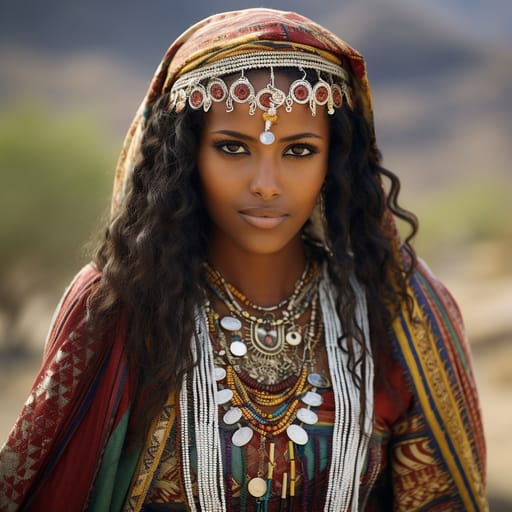
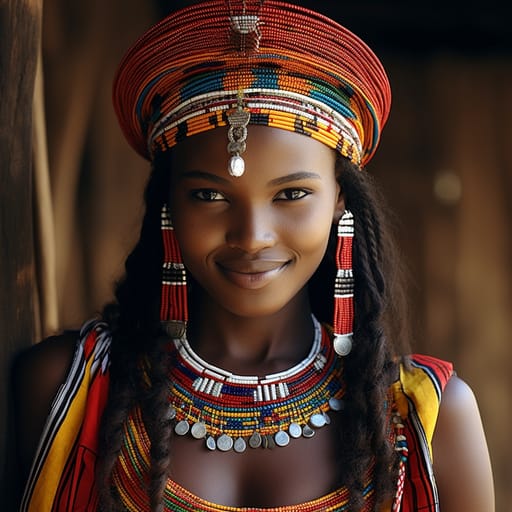
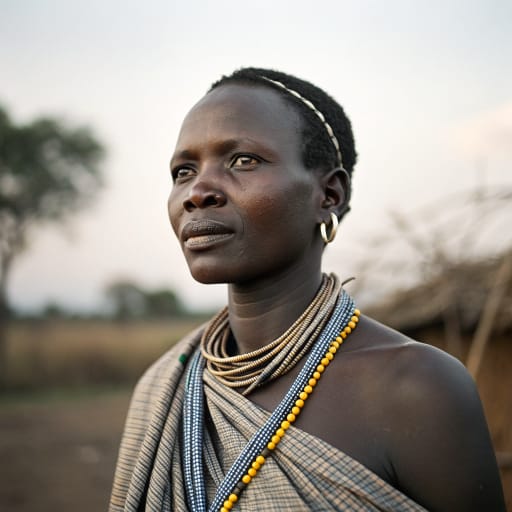
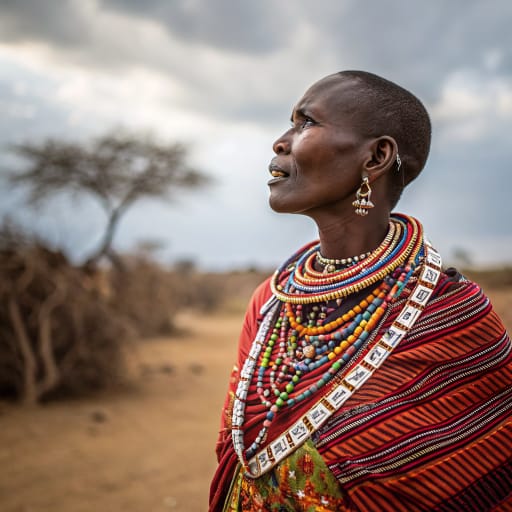
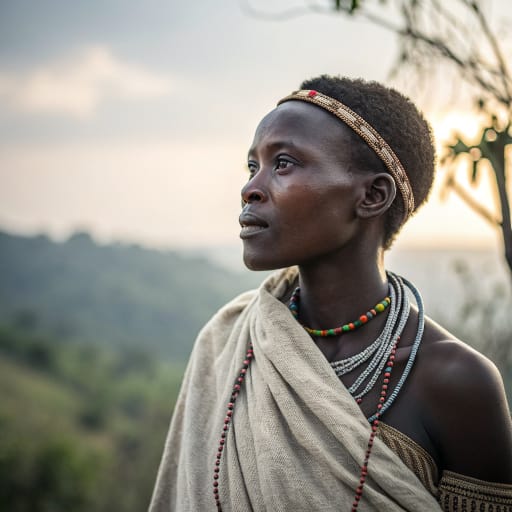
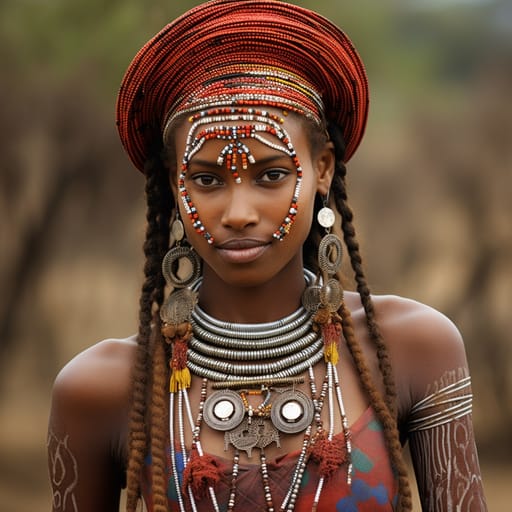
Typical Banna Phenotypes
Reference for AI generation: hair, eyes, skin, facial structure, build
Banna Body & Anatomy Reference
Per-feature anatomical profile for AI nude generation: Cushitic / Nilo-Cushitic East African phenotype
Banna Boobs & Breasts
Banna tits and boobs run small-to-medium-cup, high-set, conical, the classic Cushitic / Nilo-Cushitic East African bust profile. Banna nipples and areolas show moderate-to-high areolar pigmentation against the brown-to-deep-brown skin tone, with areolar diameter typically in the 28-38mm range and forward-set positioning rather than the lateral spread of the West African phenotype. Banna breasts trend firmer and less projecting than the African-American or West African norm, a function of the lean ectomorph-to-mesomorph body habitus and the mean adult female BMI 19-22. For anatomically accurate AI-generated Banna nudes the render preserves the small-to-medium-cup, high-set, conical shape, 28-38mm areolas with moderate-to-high pigmentation, and the torso proportions of the Cushitic / Nilo-Cushitic East African phenotype.
Banna Ass & Hips
Banna hips and butt usually read as small-to-medium, high-set, rounded. The skeletal base is narrow-to-medium iliac crests, longer torso-to-leg ratio, the Cushitic / Nilo-Cushitic East African pattern. Set against the wide-set heavy-projection West African or African-American norm, the difference is easy to see, and the hip-to-waist ratio is often what identifies Banna women in photos.
Banna Vagina & Pussy
Expect brown-to-deep-brown labial pigmentation, narrow-to-medium labia minora projection on Banna women, in keeping with Cushitic / Nilo-Cushitic East African ancestry. The pubic hair is tightly-coiled coarse texture, densely distributed. Coloring should run evenly from the brown to deep brown skin of the thighs to the labia, and Banna nude imagery should keep the hair's tightly-coiled coarse texture.
Banna Dicks & Penis
Banna dick and penile anatomy in adult AI generation should anchor on the regional reference data: regional mean ~13.5cm erect, moderate girth, ~12cm circumference, and deeper-pigmented than the West African norm. The Banna cock profile reflects the Cushitic / Nilo-Cushitic East African population's anthropometric measurements. The shaft pigmentation should track the surrounding brown to deep brown skin tone, and the pubic hair should keep its tightly-coiled coarse texture in the typical inverted-V escutcheon.
Banna Body, Curves & Build
Banna body type: lean ectomorph-to-mesomorph, with mean adult female BMI 19-22. This is the typical Cushitic / Nilo-Cushitic East African build. Height range, shoulder-to-hip ratio and fat distribution all follow from it, which is what an accurate Banna nude body should show.
Banna Skin Tone & Hair Texture
Banna skin tone falls in the brown to deep brown (Fitzpatrick V-VI) band, the surface signal most often miscalibrated by generic AI nude generators. Banna hair texture is typically tight 4A-4C coil, often worn natural or in braided/twisted protective styles, characteristic of the Cushitic / Nilo-Cushitic East African phenotype. In Banna nude renders the skin should hold that band consistently across the body.
Explore phenotype categories
Structured taxonomy with peer-reviewed scales · 22 anatomical categories
Erotic Poses & Sex Positions
From the pose catalog: 219 named positions with reference skeletons
Frequently asked questions about Banna people
Where is the Banna homeland?
The Banna homeland is Hills and valleys around Key Afer in the Bena-Tsemay district, South Omo Zone, southern Ethiopia in Eastern Africa.
What language do Banna people speak?
Banna people primarily speak Hamer-Banna (Omotic, South Omotic branch); Amharic used in schools and trade.
What religion do Banna people practice?
The predominant religion among Banna people is Mostly traditional local belief, with a growing Christian minority.






Make your own Banna images
Five a day, free, no credits to buy. The studio starts from this group's phenotype data, so you can set body type, pose and style and keep the traits accurate.
Start with Banna