Help us get this right
Does this portrait look right for Afro-Arabs?
Nobody has judged this one yet. You would be the first.
Afro-Arabs Erotic
The Swahili coast and islands of Kenya, Tanzania and the Comoros; Sudan; and the Arab lands around the Red Sea and Persian Gulf, including Oman, Yemen, Saudi Arabia, Iraq and the United Arab Emirates.
Arabic dialects, chiefly Sudanese, Gulf and Iraqi (Semitic, Afroasiatic), and Swahili (Bantu, Niger-Congo) with heavy Arabic borrowing
Overwhelmingly Muslim: Shafi'i Sunni on the Swahili coast, Maliki in Sudan, Ibadi among Omani-descended families, Shia among many Black Iraqis. Small Christian minorities.
Swahili coastal Muslims and Zanzibaris, Sudanese Arab groups such as the Ja'alin and the Baggara, Black Iraqis of Basra and Zubair, Afro-Omani and Gulf families of East African descent
About Afro-Arabs People
Afro-Arabs are a people of two shores, produced by a thousand years of monsoon traffic across the Indian Ocean and by the long overlap of Arabic and African life along its edges. The category is broad and genuinely contested. It covers the Swahili coast from Lamu down through Mombasa, Zanzibar and Kilwa to the Comoros, where Omani and Hadhrami merchants married into Bantu-speaking communities and built a coastal society that was Muslim, mercantile and entirely its own. It covers the riverain and Baggara Arabs of Sudan, whose genealogies run to Arabia while their ancestry is overwhelmingly local. And it covers the Black communities of Basra, the Gulf ports, Yemen and the Hejaz, most descended from East Africans carried north by a slave trade the Gulf states did not formally abolish until the middle of the twentieth century. Few of these people use the term in daily life. They call themselves Zanzibari, Basrawi, Sudanese, Omani.
Language tracks geography. In Africa the coastal language is Swahili, a Bantu language carrying a heavy load of Arabic vocabulary and written for centuries in Arabic script before the Latin alphabet arrived; elsewhere it is Arabic, in its Sudanese, Gulf and Iraqi forms. Islam is close to universal and comes in local flavors: Shafi'i Sunni on the coast, Maliki in Sudan, Ibadi among families with Omani roots, Shia among many Black Iraqis. Two moments sit at the center of the story. In 869 the Zanj, East African laborers draining the salt marshes around Basra, rose against the Abbasid caliphate and held the region for fourteen years. In 1964 the Zanzibar Revolution tore down the Omani sultanate that had ruled the island since Said bin Sultan moved his capital there in 1840, and thousands of Arab and mixed families fled to Oman, where their Swahili-speaking descendants are still known as Zanzibaris. What travels best is music and medicine. The tanbura lyre, the leiwah dance performed in Omani and Emirati courtyards with lyrics half in Swahili, and the zar, a women's spirit-possession ceremony that moved from the Horn into Sudan, Egypt, Iran and the Gulf, are all African imports that became ordinary parts of Arab life. Colorism remains real across much of the region, and the word abd still gets used as an insult.
Related ethnic groups
Groups that share Afro-Arabs's homeland, region, language, or religious tradition. These are likely candidates for comparative phenotype reference.
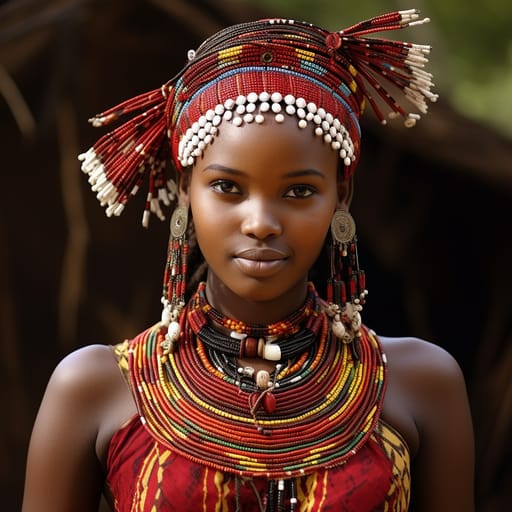
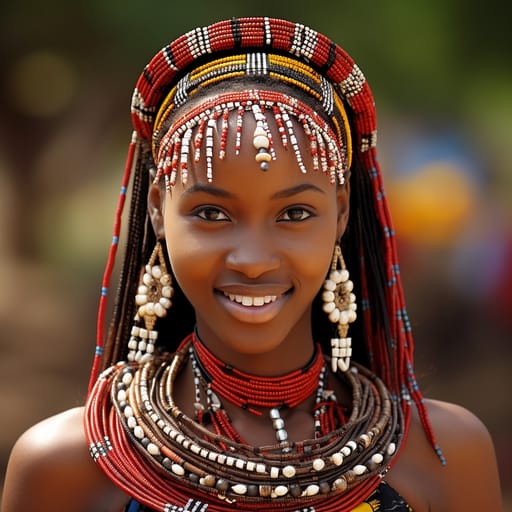
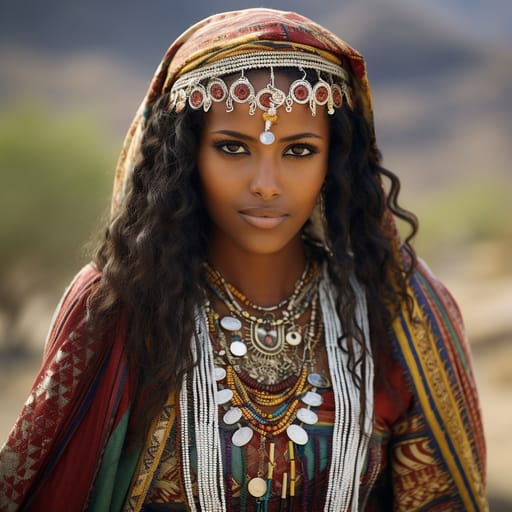
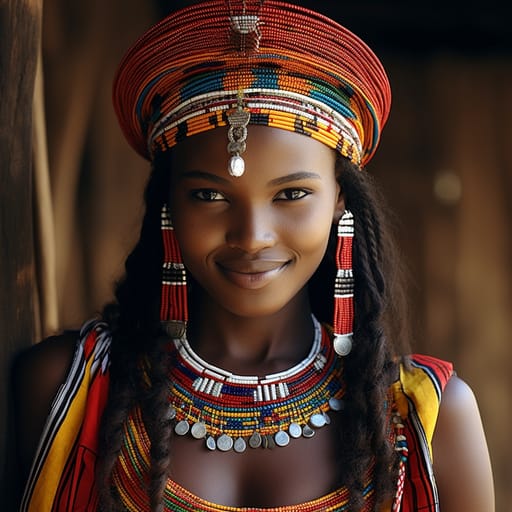
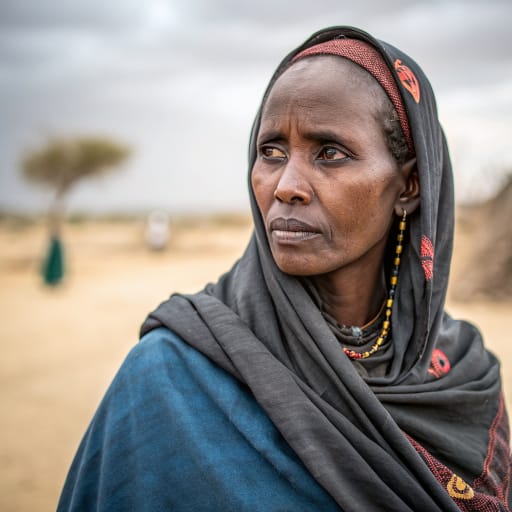
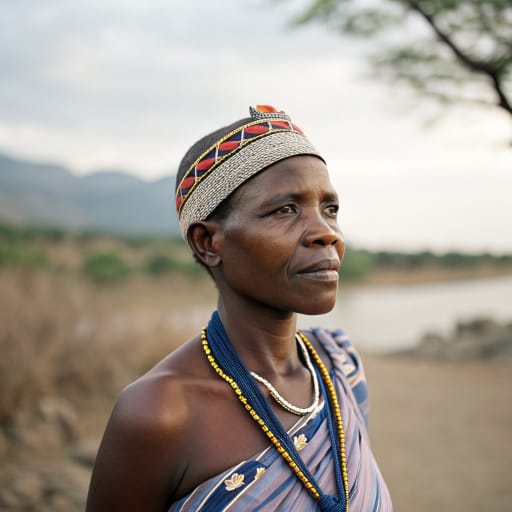
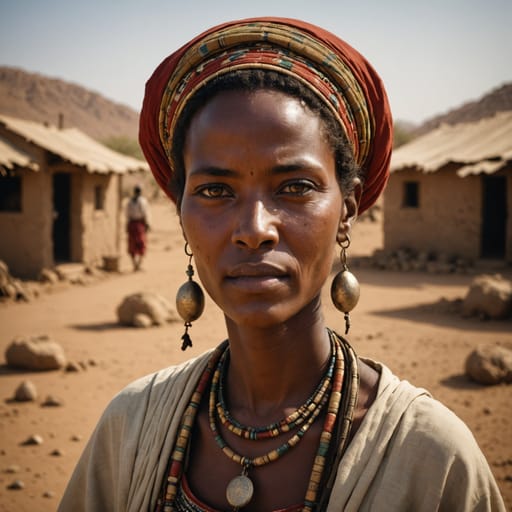
Typical Afro-Arabs Phenotypes
Reference for AI generation: hair, eyes, skin, facial structure, build
Afro-Arabs Body & Anatomy Reference
Anatomy by feature, Cushitic / Nilo-Cushitic East African phenotype
Afro-Arabs Boobs & Breasts
Afro-Arabs boobs follow the Cushitic / Nilo-Cushitic East African profile: small-to-medium-cup, high-set, conical. Areolar diameter is usually 28-38mm, and the coloring is moderate-to-high areolar pigmentation against the brown-to-deep-brown skin tone. Breast shape tracks body composition (lean ectomorph-to-mesomorph, mean adult female BMI 19-22), so Afro-Arabs breasts tend to be firmer and less projecting than the African-American or West African norm. Expect a forward-set shape, not the lateral spread of the West African phenotype.
Afro-Arabs Ass & Hips
Afro-Arabs ass and hip morphology presents as small-to-medium, high-set, rounded, distinctly different from the wide-set heavy-projection West African or African-American norm. The Afro-Arabs pelvic profile shows narrow-to-medium iliac crests, longer torso-to-leg ratio, anchored in the Cushitic / Nilo-Cushitic East African skeletal pattern. Afro-Arabs butt shots in adult AI imagery should render the small-to-medium, high-set, rounded silhouette with the overall build (lean ectomorph-to-mesomorph) and the fat distribution typical of the Cushitic / Nilo-Cushitic East African phenotype.
Afro-Arabs Vagina & Pussy
Afro-Arabs pussy anatomy typically shows brown-to-deep-brown labial pigmentation, narrow-to-medium labia minora projection. Pubic hair is usually tightly-coiled coarse texture, densely distributed. In AI-generated Afro-Arabs nudes, labial color should blend into the brown to deep brown skin with a gradual transition, and the hair should keep its tightly-coiled coarse texture.
Afro-Arabs Dicks & Penis
Penis reference for Afro-Arabs men: regional mean ~13.5cm erect, moderate girth, ~12cm circumference. Coloring: deeper-pigmented than the West African norm. An accurate Afro-Arabs cock in AI imagery matches the surrounding brown to deep brown skin rather than a generic porn default. Circumcision depends on religion and custom, not ancestry.
Afro-Arabs Body, Curves & Build
The Afro-Arabs figure is generally lean ectomorph-to-mesomorph, with mean adult female BMI 19-22, characteristic of Cushitic / Nilo-Cushitic East African ancestry. AI image tools tend to flatten regional body types into a few stock shapes; here the Afro-Arabs build is kept as its own reference.
Afro-Arabs Skin Tone & Hair Texture
Skin: brown to deep brown (Fitzpatrick V-VI). Hair: tight 4A-4C coil, often worn natural or in braided/twisted protective styles. Both are typical of Cushitic / Nilo-Cushitic East African ancestry. The most common mistake in AI nudes of Afro-Arabs women is a body rendered lighter than the face.
Explore phenotype categories
Structured taxonomy with peer-reviewed scales · 22 anatomical categories
Erotic Poses & Sex Positions
From the pose catalog: 219 named positions with reference skeletons
Frequently asked questions about Afro-Arabs people
Where is the Afro-Arabs homeland?
The Afro-Arabs homeland is The Swahili coast and islands of Kenya, Tanzania and the Comoros; Sudan; and the Arab lands around the Red Sea and Persian Gulf, including Oman, Yemen, Saudi Arabia, Iraq and the United Arab Emirates. in Eastern Africa.
What language do Afro-Arabs people speak?
Afro-Arabs people primarily speak Arabic dialects, chiefly Sudanese, Gulf and Iraqi (Semitic, Afroasiatic), and Swahili (Bantu, Niger-Congo) with heavy Arabic borrowing.
What religion do Afro-Arabs people practice?
The predominant religion among Afro-Arabs people is Overwhelmingly Muslim: Shafi'i Sunni on the Swahili coast, Maliki in Sudan, Ibadi among Omani-descended families, Shia among many Black Iraqis. Small Christian minorities..






Make your own Afro-Arabs images
Five a day, free, no credits to buy. The studio starts from this group's phenotype data, so you can set body type, pose and style and keep the traits accurate.
Start with Afro-Arabs