Help us get this right
Does this portrait look right for Kikuyu?
One tap. It takes a second and it is recorded.
6 say it looks right, 3 say it looks off.
Kikuyu Erotic
Christianity
About Kikuyu People
The Kikuyu are Kenya's largest single ethnic group, concentrated on the fertile southern and eastern slopes of Mount Kenya — the mountain they call Kĩrĩnyaga and traditionally regarded as the dwelling place of Ngai, the supreme god. Their homeland is the central highlands: cool, well-watered country between roughly 1,500 and 2,500 metres, historically suited to mixed smallholder farming of maize, beans, bananas, and from the colonial era onward, coffee and tea. This agricultural base — and the dense population it supports — has shaped almost everything else about Kikuyu society, from inheritance disputes over land to the political weight the community carries in modern Kenya.
Linguistically, Kikuyu (Gĩkũyũ) belongs to the Bantu branch of Niger–Congo and sits in a tight cluster with Embu, Meru, and Kamba — neighbours with whom Kikuyu speakers can often half-follow a conversation without formally learning the other tongue. The language is tonal and noun-class heavy in the standard Bantu pattern, and it has a rich oral tradition of proverbs (thimo) that older speakers still deploy to settle arguments or land a point sideways. Society is traditionally organised through nine clans tracing descent from the daughters of Mũmbi and the founding ancestor Gĩkũyũ, and through an age-set system (mariika) that historically governed everything from warriorhood to the handover of political authority between generations.
Christianity — predominantly Protestant, with a strong Catholic minority and a long presence of African Independent Churches — arrived through mission stations in the late nineteenth and early twentieth centuries and is now the dominant religious affiliation. It coexists, in practice, with older ideas: Mount Kenya remains a sacred direction in which many older Kikuyu still orient prayer, and ritual elements around birth, marriage, and burial often blend church liturgy with customary observance. The twentieth century's defining inflection was the Mau Mau uprising of the 1950s, an anti-colonial insurgency rooted heavily in Kikuyu grievance over alienated land in the so-called White Highlands; the British counter-insurgency that followed reshaped the community through detention camps, forced villagisation, and a generational rupture whose memory is still political. Jomo Kenyatta, independent Kenya's first president, was Kikuyu, and the community has remained central — and often contested — in national politics ever since.
Related ethnic groups
Groups that share Kikuyu's homeland, region, language, or religious tradition. These are likely candidates for comparative phenotype reference.
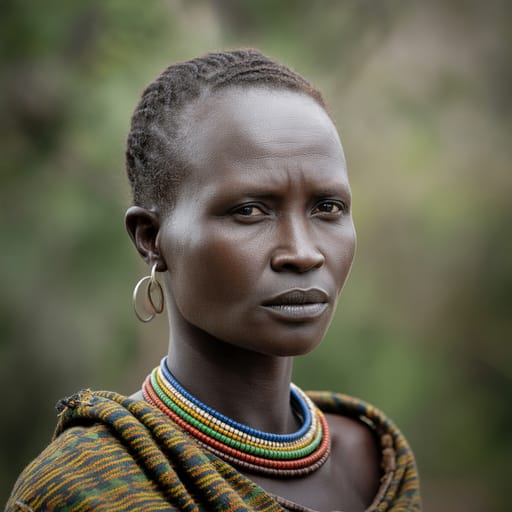
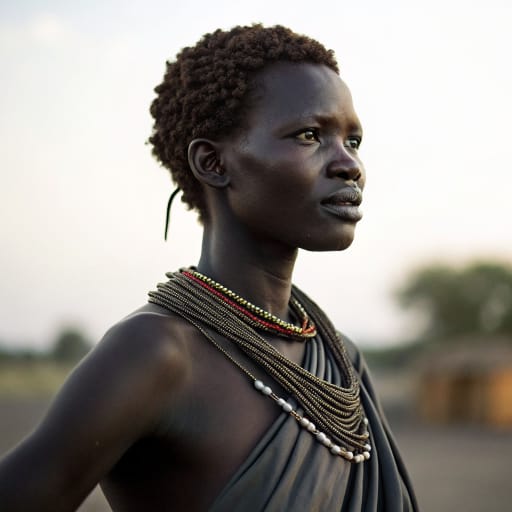
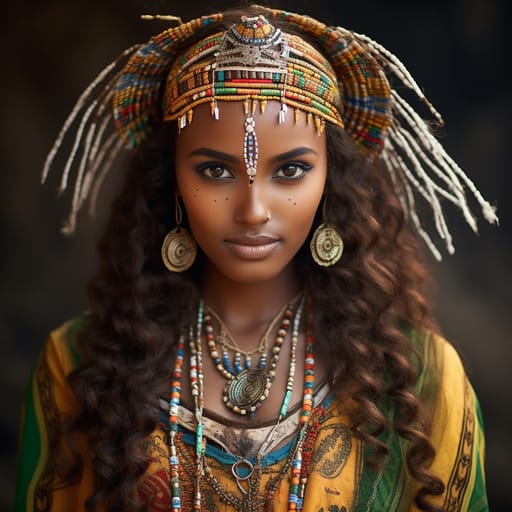
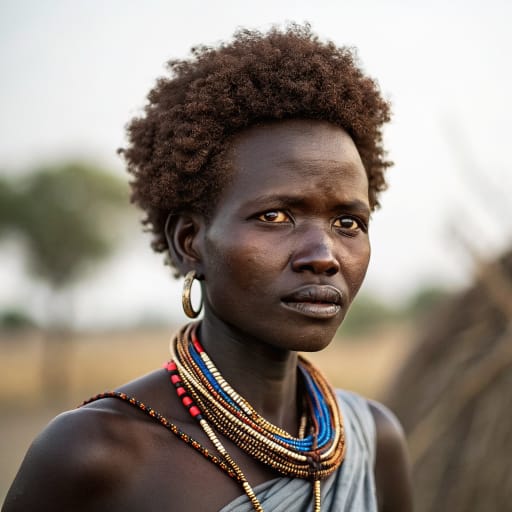
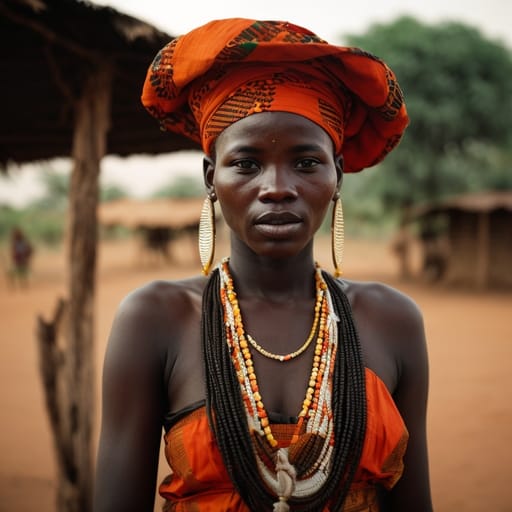
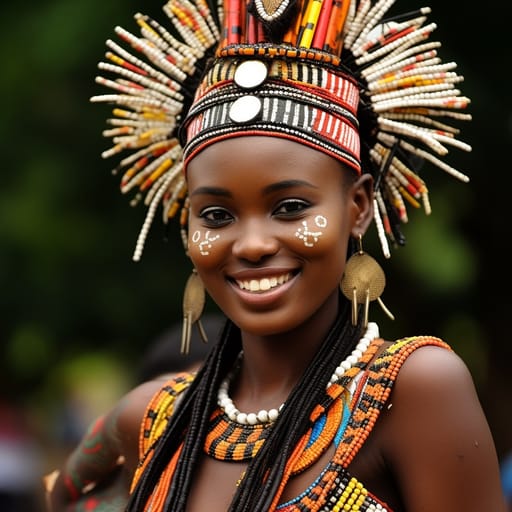
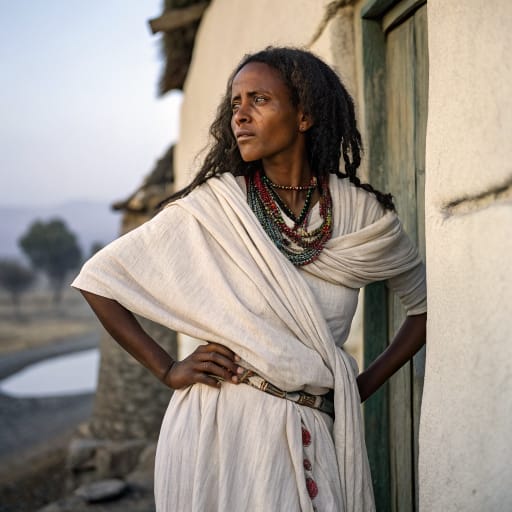
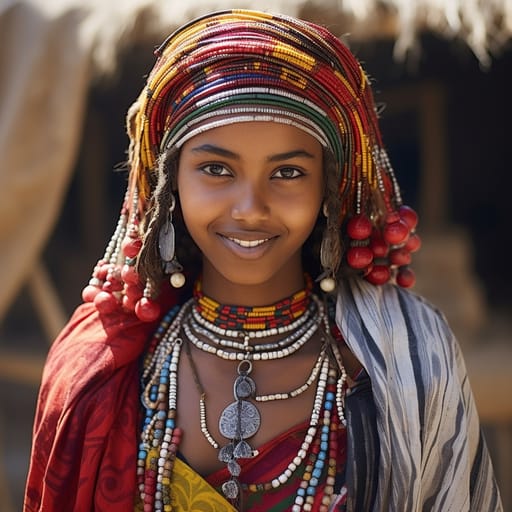
Geographic Distribution: Kikuyu populations across 1 country
Each row is ranked by the group's share of that country's population, with the source citation drawn from published census and demographic surveys. Click through for the full per-country phenotype profile.
| Country | Share | Source |
|---|---|---|
| Kenya | 17.1% | Kenya 2019 Census; Kikuyu (~17.1%, ~8.1M+ of ~47M+ total). Bantu source population, the largest single ethnic group, predominantly Central Kenya |
Typical Kikuyu Phenotypes
Reference for AI generation: hair, eyes, skin, facial structure, build
The Kikuyu are a Bantu-speaking highland people from the slopes of Mount Kenya and the central Kenyan plateau, and their phenotype reflects that geography — they sit visibly apart from both the taller Nilotic groups to their west (Luo, Maasai) and the coastal Swahili-Arab admixed populations to their east. Hair is overwhelmingly Type 4 — tightly coiled to kinky, with the dense Z-pattern coil typical of East African Bantu populations. Natural color is uniformly black-brown; lighter shades and looser textures are essentially absent outside of mixed heritage. Eyes are dark brown to near-black, almond-shaped, with no epicanthic fold and a relatively wide-set placement above well-defined orbital ridges.
Skin tone clusters in the Fitzpatrick V to VI range — a deep, warm brown that reads cooler and less reddish than West African Bantu tones, often with a faint olive or yellow undertone characteristic of highland East Africans. The full near-black phenotype seen in some Nilotic neighbors is uncommon; most Kikuyu sit in a medium-to-deep brown band. Sun exposure tends to even rather than darken the complexion further, given the equatorial highland climate.
Facial structure is moderately broad through the cheekbones with a softer, more rounded jawline than the angular Nilotic profile. The nose is medium in bridge height — neither flat nor sharply projected — with moderate alar width; lips are full but not as everted as in many Sahelian or West African groups. Wangari Maathai's features are a useful anchor: rounded face, broad smile, moderately full lips, soft jaw.
Build is medium — Kikuyu are noticeably shorter and stockier than their Nilotic neighbors, with adult males averaging around 170 cm and women around 160 cm. Frames tend toward mesomorphic, with proportionally shorter limbs, broader hips and shoulders in women, and a tendency toward solid muscular build rather than the elongated linear physique of Maasai or Luo populations. Sub-group variation across the Kiambu, Murang'a, and Nyeri branches is minimal at the phenotype level.
Kikuyu Body & Anatomy Reference
Anatomy by feature, Cushitic / Nilo-Cushitic East African phenotype
Kikuyu Boobs & Breasts
Kikuyu tits and boobs run small-to-medium-cup, high-set, conical, the classic Cushitic / Nilo-Cushitic East African bust profile. Kikuyu nipples and areolas show moderate-to-high areolar pigmentation against the brown-to-deep-brown skin tone, with areolar diameter typically in the 28-38mm range and forward-set positioning rather than the lateral spread of the West African phenotype. Kikuyu breasts trend firmer and less projecting than the African-American or West African norm, a function of the lean ectomorph-to-mesomorph body habitus and the mean adult female BMI 19-22. For anatomically accurate AI-generated Kikuyu nudes the render preserves the small-to-medium-cup, high-set, conical shape, 28-38mm areolas with moderate-to-high pigmentation, and the torso proportions of the Cushitic / Nilo-Cushitic East African phenotype.
Kikuyu Ass & Hips
Kikuyu hips and butt usually read as small-to-medium, high-set, rounded. The skeletal base is narrow-to-medium iliac crests, longer torso-to-leg ratio, the Cushitic / Nilo-Cushitic East African pattern. Set against the wide-set heavy-projection West African or African-American norm, the difference is easy to see, and the hip-to-waist ratio is often what identifies Kikuyu women in photos.
Kikuyu Vagina & Pussy
Expect brown-to-deep-brown labial pigmentation, narrow-to-medium labia minora projection on Kikuyu women, in keeping with Cushitic / Nilo-Cushitic East African ancestry. The pubic hair is tightly-coiled coarse texture, densely distributed. Coloring should run evenly from the brown to deep brown skin of the thighs to the labia, and Kikuyu nude imagery should keep the hair's tightly-coiled coarse texture.
Kikuyu Dicks & Penis
Kikuyu dick and penile anatomy in adult AI generation should anchor on the regional reference data: regional mean ~13.5cm erect, moderate girth, ~12cm circumference, and deeper-pigmented than the West African norm. The Kikuyu cock profile reflects the Cushitic / Nilo-Cushitic East African population's anthropometric measurements. The shaft pigmentation should track the surrounding brown to deep brown skin tone, and the pubic hair should keep its tightly-coiled coarse texture in the typical inverted-V escutcheon.
Kikuyu Body, Curves & Build
Kikuyu body type: lean ectomorph-to-mesomorph, with mean adult female BMI 19-22. This is the typical Cushitic / Nilo-Cushitic East African build. Height range, shoulder-to-hip ratio and fat distribution all follow from it, which is what an accurate Kikuyu nude body should show.
Kikuyu Skin Tone & Hair Texture
Kikuyu skin tone falls in the brown to deep brown (Fitzpatrick V-VI) band, the surface signal most often miscalibrated by generic AI nude generators. Kikuyu hair texture is typically tight 4A-4C coil, often worn natural or in braided/twisted protective styles, characteristic of the Cushitic / Nilo-Cushitic East African phenotype. In Kikuyu nude renders the skin should hold that band consistently across the body.
Data depth
78/100Coverage of image-grounded phenotype observations · drives AI generation diversity
- Sample size
- 33/40· 34 images
- Image quality
- 30/30· 74% high
- Confidence
- 15/20· mean 0.84
- Source diversity
- 0/10· wikipedia
- ·Wikipedia-only source, not population-representative
Observed Distribution: Image Sample
Empirical observations from analyzed photographs · supplementary signal, not population truth
Sample: 34 images analyzed (34 wikipedia). Quality: 25 high, 6 medium, 2 low, 1 very_low. Avg analyzer confidence: 0.84.
Skin tone (Fitzpatrick): IV (6%), V (21%), VI (74%)
Hair color: black (71%), gray/white (21%), blonde (3%), light/medium brown (3%), brown (3%)
Hair texture: straight (6%), wavy (6%), curly (6%), coily (68%), bald (3%), shaved (6%), covered (6%)
Eye color: dark brown (100%)
Epicanthic fold: 0% present, 100% absent, 0% unclear
Caveats: Sample is 100% Wikipedia notable people, which skews toward male, public-life, and modern figures, not population-representative.
Last aggregated: May 7, 2026
Explore phenotype categories
Structured taxonomy with peer-reviewed scales · 22 anatomical categories
- SkinFitzpatrick I to VI, undertone, pigmentation
- EyesColor, shape, eyelid, epicanthic fold
- Head hairColor, Andre Walker texture, hairline
- Body shapeHeath-Carter somatotype, WHR, frame
- NoseBridge, tip, nostril, alar width
- Lips & mouthVolume, Cupid’s bow, philtrum
Measured in Kikuyu portraits
Notable Kikuyu People
100 reference figures, sourced from Wikipedia
- Wangari Maathai, Nobel Laureate, first African woman and first environmentalist to receive the…
- Stephen Kiama, Professor Stephen Kiama University of Nairobi Vice Chancellor 2020 - to date
- Ngũgĩ wa Thiong'o, Gikuyu-language author, father of author and professor Mũkoma wa Ngũgĩ
- Wanjiku Kabira, literature professor and gender rights activist
- Maina wa Kinyatti, historian and one of the foremost researchers on the Mau Mau
- Micere Githae Mugo, author, activist, literary critic and professor of literature at Syracuse Uni…
- Wanjiru Kihoro, economist, feminist and political activist
- Njoki Wainaina, founder and first executive director of the African Women's Development and C…
- Wangui wa Goro, academic and social critic
- Joseph Maina Mungai, pioneer medical researcher in East Africa
- Ng'endo Mwangi, Kenya's first woman physician. The Mwangi Cultural Center at the Smith Colleg…
- Carole Wamuyu Wainaina, Assistant Secretary-General for Human Resources Management at the United Nations
- Helen Gichohi, ecologist and President of the African Wildlife Foundation
- Olive Mugenda, first woman to head a public university in the African Great Lakes region
- Florence Wambugu, plant pathologist and virologist
- Thumbi Ndung'u, HIV/AIDS researcher and the first to clone HIV subtype C. Recipient of the Ho…
- Dorothy Wanja Nyingi, ichthyologist and recipient of the Ordre des Palmes académiques (Order of Aca…
- Kimani Maruge, oldest person in the world to start primary school after enrolling in first g…
- David Muchoki Kanja, the first Assistant Secretary-General for the Office of Internal Oversight Se…
- Muthoni Wanyeki, political scientist and human rights activist
- Simon Gikandi, English professor at Princeton University
- Gibson Kamau Kuria, lawyer and recipient of the Robert F. Kennedy Human Rights Award
- Paul Muite, lawyer, politician, multiparty activist and former presidential candidate
- Judy Thongori, lawyer and women's rights activist
- Maina Kiai, lawyer, human rights activist and United Nations Special Rapporteur on the ri…
- Michael Ndurumo, deaf educator and the third deaf person from Africa to obtain a Ph.D.
- Ngugi wa Mirii, playwright
- Koigi wa Wamwere, author, politician and human rights activist
- Rebeka Njau, author and playwright. Her one-act play The Scar (1965), which condemns femal…
- Boniface Mwangi, photojournalist and sociopolitical activist
- Ann Njogu, human rights and constitutional reform activist
- John Githongo, anti-corruption activist
- Gitura Mwaura, author, poet
- Wangechi Mutu, artist and sculptor
- Ingrid Mwangi, Kenyan-German artist
- Wanuri Kahiu, film director
- Wahome Mutahi, humorist popularly known as Whispers after satirical column he wrote
- Jeff Koinange, Emmy Award-winning journalist
- Julie Gichuru, news anchor and entrepreneur
- Liza Mũcherũ-Wisner, a semi-finalist in The Apprentice Season 10
- Edi Gathegi, stage, film and television actor
- Tom Morello, Grammy Award-winning guitarist, son of Ngethe Njoroge
- Eric Wainana, musician
- Janet Mbugua, news anchor
- David Mathenge, musician popularly known as "Nameless"
- Stella Mwangi, Kenyan-Norwegian musician known by the stage name STL. Represented Norway in …
- Wahu, musician
- Avril, musician and actress
- Amani, musician
- Jaguar, musician
- Joseph Kamaru, musician
- Daniel Kamau Mwai "DK", musician
- Queen Jane, musician
- Abbas Kubaff, hip hop artist
- Victoria Kimani, musician and actress
- Patricia Kihoro, musician, actress and radio personality
- Size 8, musician and actress (mother: Esther Njeri Munyali (Kikuyu), father: Samuel K…
- Mustafa Olpak, Writer, Turkish Human rights activist descended from Kikuyu slaves in Crete
- Patrick Njoroge, the ninth Governor of the Central Bank of Kenya and has been in office since …
- Peter Ndegwa, current CEO of Safaricom PLC. the largest network service provider in East Af…
- Njuguna Ndung'u, economics professor and former Governor of the Central Bank of Kenya
- Samuel Kamau Macharia, founder and chairman of Royal Media Services, the largest private radio and t…
- Philip Ndegwa, entrepreneur, internationally respected economist and former Governor of the …
- Peter Munga, founder and chairman of Equity Group Holdings Limited, Eastern Africa's secon…
- James Mwangi, group CEO and largest individual shareholder at Equity Group Holdings Limited
- Eunice Njambi Mathu, founder and editor-in-chief of Parents Africa Magazine
- Nelson Muguku Njoroge, entrepreneur
- Pius Ngugi Mbugua, entrepreneur and owner of the Kenya Nut Company, one of the world's largest m…
- Chris Kirubi, industrialist and largest individual shareholder at Centum Investment Company…
- Jane Wanjiru Michuki, lawyer and investor
- Duncan Nderitu Ndegwa, former Governor of the Central Bank of Kenya
- Betty Muthoni Gikonyo, co-founder and group CEO at Karen Hospital
- Simon Gicharu, founder of Mount Kenya University, East and Central Africa's largest private …
- Tabitha Karanja, Current Nakuru Senator, founder and CEO of Keroche Breweries, Kenya's second-…
- Gerishon Kamau Kirima, real estate magnate
- Eddah Waceke Gachukia, educationist, entrepreneur and co-founder of Riara Group of Schools
- Esther Muthoni Passaris, businesswoman and politician
- Wanjiku Mugane, businesswoman and investment banker. Co-founder of First Africa Group which w…
- Dorcas Muthoni, an inductee to the Internet Hall of Fame
- Benson Wairegi, group CEO at Britam Holdings plc
- John Gachora, group CEO at NIC Bank Group
- Wilfred Kiboro, chairman of the board of directors at Nation Media Group, East Africa's large…
- Mugo Kibati, group CEO of Sanlam Kenya Plc and chairman of Lake Turkana Wind Power
- Joseph Mucheru, former Google Sub-Saharan Africa Lead and current Cabinet Secretary for ICT i…
- Rigathi Gachagua, former deputy President of Kenya
- Ndindi Nyoro, Current Kiharu MP
- John Kiarie Waweru, Current Dagoretti South MP.
- Alice Wahome, Current CS for Water, Sanitation and irrigation.
- Irungu Kang'ata, Current Murang'a Governor.
- Susan Kihika, Current Nakuru County Governor.
- Johnson Gicheru, former Chief Justice of Kenya
- Stanley Munga Githunguri, politician and businessman
- Waiyaki wa Hinga, 19th century leader
- Waruhiu Itote, also known as General China. Mau Mau resistance leader
- Bildad Kaggia, freedom-fighter and politician. Member of the Mau Mau Central Committee and t…
- Mutahi Kagwe, politician
- Julius Waweru Karangi, retired General and former Chief of the Kenya Defence Forces
- Josephat Karanja, former Vice-president
- Godfrey Gitahi Kariuki, politician
- Josiah Mwangi Kariuki, businessman and socialist politician
Erotic Poses & Sex Positions
From the pose catalog: 219 named positions with reference skeletons
Frequently asked questions about Kikuyu people
Where is the Kikuyu homeland?
The Kikuyu homeland is Kenya in Eastern Africa.
What countries do Kikuyu people live in?
Kikuyu populations are documented across 1 country: Kenya.
What language do Kikuyu people speak?
Kikuyu people primarily speak Niger-Congo / Bantu / Kikuyu.
What religion do Kikuyu people practice?
The predominant religion among Kikuyu people is Christianity.






Make your own Kikuyu images
Five a day, free, no credits to buy. The studio starts from this group's phenotype data, so you can set body type, pose and style and keep the traits accurate.
Start with Kikuyu