Help us get this right
Does this portrait look right for Dinka?
One tap. It takes a second and it is recorded.
4 say it looks right, 0 say it looks off.
Dinka Erotic
Christianity
About Dinka People
The Dinka call themselves Jieng, and they are among the tallest peoples on earth — a fact that has been measured, remarked upon, and folded into their own self-image for as long as outsiders have been writing about them. They live across the floodplains and savanna of South Sudan, especially along the Bahr el Ghazal, the Bahr el Jebel, and the wetland country where the White Nile and the Sudd shape every season. Their world is tied to cattle in a way that goes beyond economics. A Dinka man's social standing, his marriage prospects, his poetry, and the praise-name he carries through life are all bound up with the herd. Cattle camps shift with the floods: dry season down to the toich grasslands by the river, wet season back to the higher villages. This rhythm is the country's calendar.
The Dinka language belongs to the Western Nilotic branch of Nilo-Saharan, closely related to Nuer and more distantly to Luo and Shilluk. It is heavily tonal and has an unusual vowel system that linguists keep returning to. The people are not a single block but a federation of around twenty-five sections — Agar, Bor, Rek, Malual, Ngok, Twic, and others — each with its own territory, dialect inflections, and clan alliances. There is no traditional centralized kingship; authority sits with spiritual leaders, the beny bith or "masters of the fishing spear," and with the elders of the cattle camp.
Christianity, mostly Catholic and Anglican, took hold during the long civil wars of the late twentieth century and is now the dominant religious identification, but it sits alongside an older cosmology centered on Nhialic, the sky divinity, and a layer of ancestral and clan spirits that still inform birth, death, and cattle ritual. The two systems coexist more than they compete. The wars themselves — the second Sudanese civil war especially, ending in 2005, and the independence of South Sudan in 2011 — displaced millions of Dinka and produced a global diaspora, including the well-known group of young men resettled abroad in the early 2000s. Distinctive practices persist: scarification across the forehead in horizontal lines, the giving of ox-names that a young man composes about his favorite bull, and praise songs that can run for hours and serve as a kind of oral archive for the section.
Related ethnic groups
Groups that share Dinka's homeland, region, language, or religious tradition. These are likely candidates for comparative phenotype reference.
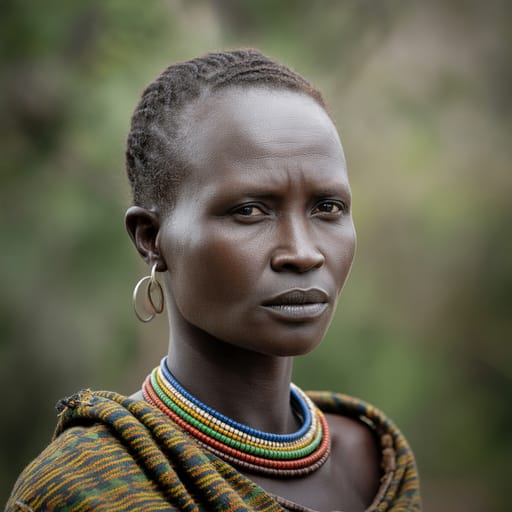
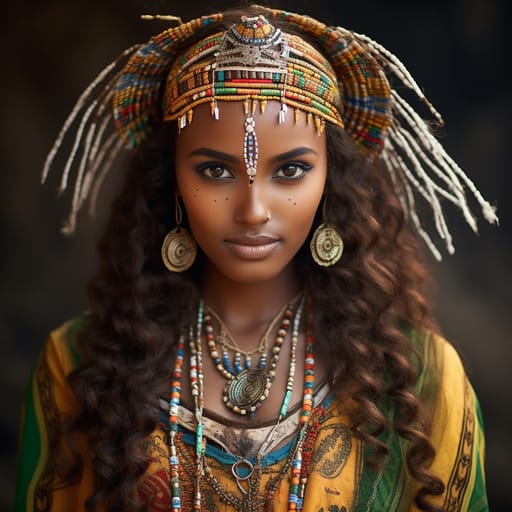
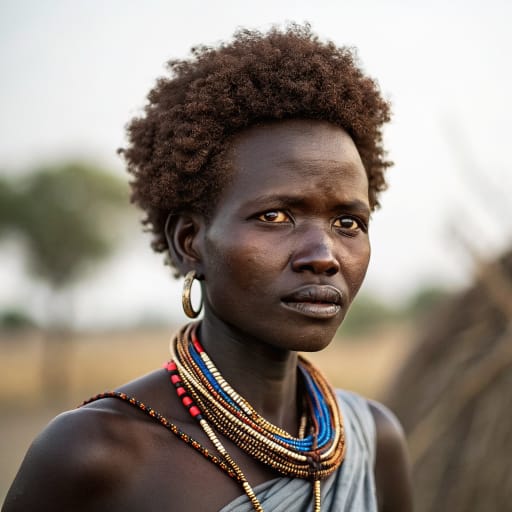
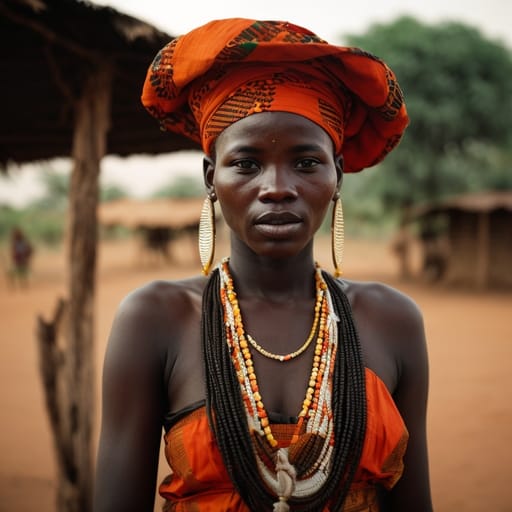
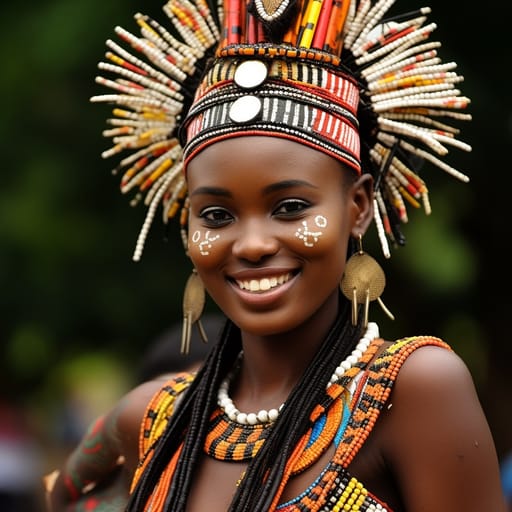
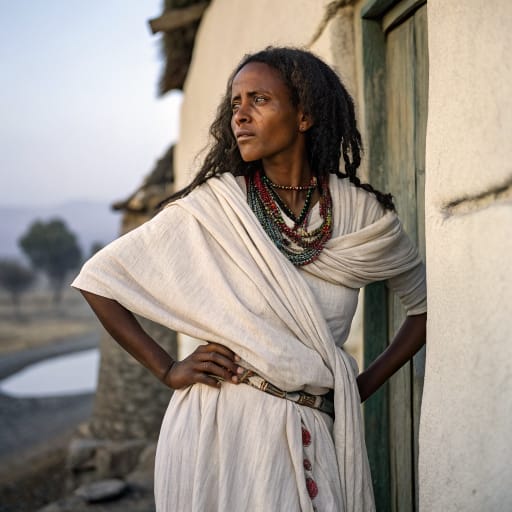
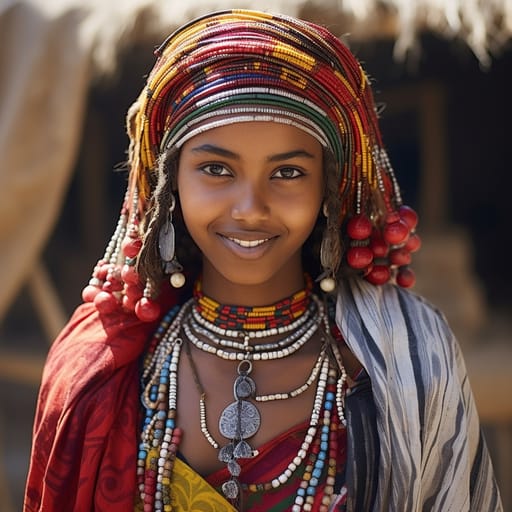
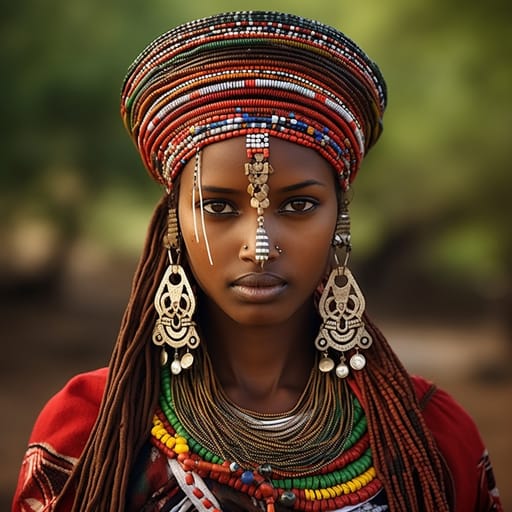
Geographic Distribution: Dinka populations across 1 country
Each row is ranked by the group's share of that country's population, with the source citation drawn from published census and demographic surveys. Click through for the full per-country phenotype profile.
| Country | Share | Source |
|---|---|---|
| South Sudan | 35.8% | Estimated from 2008 Sudan Census (the last pre-independence census) plus subsequent estimates; Dinka (Jieng) (~35.8%); the largest ethnic group, concentrated in the Bahr el Ghazal, Upper Nile, and Jonglei states. Nilotic / Western Nilotic source population. The Dinka are politically dominant in post-independence South Sudan — President Salva Kiir Mayardit is Dinka |
Typical Dinka Phenotypes
Reference for AI generation: hair, eyes, skin, facial structure, build
The Dinka phenotype is defined first by build. This is one of the tallest populations ever measured: adult male mean height sits around 6'0" (183 cm), with a substantial fraction of men clearing 6'4" and a documented cluster above 6'8" — Manute Bol stood 7'7", his son Bol Bol stands 7'2", and the NBA/WNBA pipeline (Luol Deng, Thon Maker, Wenyen Gabriel, Khaman Maluach, Adut Bulgak) reflects a real anthropometric pattern, not selection bias alone. Build is markedly linear: long limbs, narrow hips, slender torsos, low body fat, with limb-to-trunk ratios among the highest recorded in any human population. This is the classic Nilotic body plan, evolved for heat dissipation in the Sudd floodplain.
Skin sits at the deep end of the Fitzpatrick scale — type VI, often a near-blue-black with cool, almost violet undertones rather than the warmer red-browns common in West Africa. The fashion industry has fixated on this specifically: Alek Wek, Anok Yai, and Ataui Deng all built careers on skin that reads as genuinely black rather than brown under studio light.
Hair is tightly coiled, type 4B–4C, typically worn close-cropped by men; natural color is uniformly black-black, with no auburn or brown variation. Eyes are dark brown to near-black, with no epicanthic fold and generally a wide, almond-shaped opening under a high brow.
Facial structure runs long and narrow rather than broad. Foreheads are tall, cheekbones high but not flared, jaws relatively narrow, chins often slightly pointed. Noses are typically straight with a moderate bridge and narrow-to-moderate alar width — distinctly less broad than the West African average. Lips are full but proportionate to the long face, not the heavily everted form seen in some equatorial groups.
Sub-group variation among the Agar, Rek, Malual, Twic, Ngok, and other branches is largely cultural and dialectal; phenotype is remarkably consistent across the cluster, with the elongated linear build holding from Bahr el Ghazal through Jonglei.
Dinka Body & Anatomy Reference
Anatomy by feature, Cushitic / Nilo-Cushitic East African phenotype
Dinka Boobs & Breasts
Bust reference for Dinka women: small-to-medium-cup, high-set, conical, which is typical of Cushitic / Nilo-Cushitic East African ancestry. Areolas measure about 28-38mm across, with moderate-to-high pigmentation. Body type (lean ectomorph-to-mesomorph) shapes the bust as well, so Dinka tits are usually firmer and less projecting than the African-American or West African norm. In AI imagery, keep the forward-set shape rather than drifting toward the lateral spread of the West African phenotype.
Dinka Ass & Hips
The Dinka ass is typically small-to-medium, high-set, rounded, which sets it apart from the wide-set heavy-projection West African or African-American norm. Underneath, the pelvis shows narrow-to-medium iliac crests, longer torso-to-leg ratio, part of the Cushitic / Nilo-Cushitic East African skeletal pattern. For Dinka butt pics and AI renders, match that silhouette and the overall build (lean ectomorph-to-mesomorph).
Dinka Vagina & Pussy
Dinka pussy and vulvar anatomy presents brown-to-deep-brown labial pigmentation, narrow-to-medium labia minora projection, consistent with the Cushitic / Nilo-Cushitic East African phenotype's pigmentation pattern. Dinka pubic hair is typically tightly-coiled coarse texture, densely distributed, in the inverted-triangle pattern. For anatomically accurate Dinka pussy renders the labial coloration should match the surrounding brown to deep brown skin tone with a continuous gradient, and the hair should keep its tightly-coiled coarse texture.
Dinka Dicks & Penis
Dinka dicks follow the Cushitic / Nilo-Cushitic East African reference data: regional mean ~13.5cm erect; moderate girth, ~12cm circumference; deeper-pigmented than the West African norm. Shaft color should track the brown to deep brown skin tone with a smooth change toward the glans, and Dinka pubic hair keeps its tightly-coiled coarse texture.
Dinka Body, Curves & Build
Dinka body type and overall build presents as lean ectomorph-to-mesomorph, with mean adult female BMI 19-22: the characteristic Cushitic / Nilo-Cushitic East African habitus. Dinka curves and proportions should keep the regional skeletal frame (height, shoulder-to-hip ratio, limb proportions) rather than a generic mesomorph default.
Dinka Skin Tone & Hair Texture
Dinka skin sits in the brown to deep brown (Fitzpatrick V-VI) band. Hair is typically tight 4A-4C coil, often worn natural or in braided/twisted protective styles, in keeping with the Cushitic / Nilo-Cushitic East African phenotype. In nude renders the skin should stay one even tone from face to body, and body, pubic and head hair should match.
Data depth
56/100Coverage of image-grounded phenotype observations · drives AI generation diversity
- Sample size
- 28/40· 23 images
- Image quality
- 13/30· 26% high
- Confidence
- 15/20· mean 0.81
- Source diversity
- 0/10· wikipedia
- ·Modest sample (n<25)
- ·Mostly low-quality source images
- ·Wikipedia-only source, not population-representative
Observed Distribution: Image Sample
Empirical observations from analyzed photographs · supplementary signal, not population truth
Sample: 23 images analyzed (23 wikipedia). Quality: 6 high, 15 medium, 1 low, 0 very_low. Avg analyzer confidence: 0.81.
Skin tone (Fitzpatrick): VI (96%), unclear (4%)
Hair color: black (61%), gray/white (35%), unclear (4%)
Hair texture: coily (87%), shaved (9%), unclear (4%)
Eye color: dark brown (91%), unclear (9%)
Epicanthic fold: 0% present, 91% absent, 9% unclear
Caveats: Sample size 23 is modest, so secondary patterns may not be reliable. Quality skews toward older or low-resolution photos; phenotype detail may be lossy. Sample is 100% Wikipedia notable people, which skews toward male, public-life, and modern figures, not population-representative.
Last aggregated: May 7, 2026
Explore phenotype categories
Structured taxonomy with peer-reviewed scales · 22 anatomical categories
Notable Dinka People
55 reference figures, sourced from Wikipedia
- Highlands, higher than the surrounding plains by a few centimetres; there host permanent…
- acacia, Intermediate Lands: slightly below the highlands, commonly subject to floodin…
- Sudd, permanent swampland below the level of the toic; covers a substantial part of…
- Hussein Abdelbagi, Vice President of the Republic of South Sudan.
- Deng Adut, defence lawyer and former child soldier
- Elijah Malok Aleng, former Central Bank Governor
- Abel Alier, known as "Abel Alier Kwai", the first southerner to serve as president of the…
- Aliir Aliir, Australian rules footballer
- Mathiang Yak Anek, 19th-century female chief and escaped slave
- George Athor, Sudan People's Liberation Army lieutenant general and an SPLA dissident
- Bol Bol, NBA player, son of Manute Bol
- Manute Bol, deceased former NBA player, one of the two tallest players in league history
- Daniel Deng Bul, former South Sudanese episcopalian archbishop and primate of the episcopal ch…
- Adut Bulgak, first South Sudanese WNBA player, 2016 draft
- Chok Dau, football player
- John Dau, one of the "Lost Boys of Sudan", author of God Grew Tired of Us, and the subj…
- Stephen Dhieu Dau, former Minister of Finance and Planning of the Republic of South Sudan and SP…
- Majak Daw, Australian Rules Footballer
- Aldo Deng, former Sudanese cabinet member and South Sudanese statesman; father of Luol Deng
- Ataui Deng, model and niece of Alek Wek
- Dominic Dim Deng, Lt. General Dominic Dim Deng, South Sudan's first political officer of SPLA, …
- Francis Deng, author and SAIS research professor
- Luol Deng, former NBA player
- Thomas Deng, football player
- Wenyen Gabriel, NBA Player
- John Garang, former First Vice President of Sudan, Commander in Chief of Sudan People's Li…
- Kuol Manyang Juuk, former Commander of the SPLA Forces, Minister in the Government of National U…
- Michael Makuei Lueth, lawyer, spokesman and current minister of Information and Postal Service for …
- Awer Mabil, football player
- Rebecca Nyandeng De Mabior, Vice President of South Sudan
- Ater Majok, former NBA player
- Thon Maker, former NBA player
- Bona Malwal, journalist and politician
- Guor Marial, marathon runner
- Majak Mawith, Soccer player
- Salva Kiir Mayardit, first President of the Republic of South Sudan, Commander in Chief of Sudan P…
- Tokmac Nguen, footballer
- William Deng Nhial, political leader of Sudan African National Union, SANU and co-founder of Anya…
- Marial Shayok, NBA player
- Anok Yai, Fashion Model and 2025 Model of the Year.
- Gout Gout, Sprinter
- Khaman Maluach, South Sudanese basketball player and 2025 top-10 NBA Draft pick.
- Dinka Agar, Lakes State), Bahr El Ghazal
- Dinka Gok, Lakes State Bahr El Ghazal
- Dinka Aliab, Lakes State), Bahr El Ghazal
- Dinka Twic, Warrap State), Barh El Ghazal
- Dinka Rek, Warrap State, and parts of NBG and Western Barh El Ghazal), Bahr El Ghazal
- Warrap State, Dinka Luanyjang - Warrap State Bahr El Ghazal
- Dinka Malual, NBG), Bahr El Ghazal
- Abyei, Malakal, Dinka Ngok (Abyei, Malakal), Bahr El Ghazal
- Unity State, Dinka Padang (Unity State), Upper Nile
- Dinka Bor, Upper Nile Region]), Jonglei
- Ruweng, Unity State), Upper Nile
- Dongjol Malakal, Upper Nile
- ISBN, Garang de Mabior, John (June 2011). The Undiscovered Stories About Man Behind…
Erotic Poses & Sex Positions
From the pose catalog: 219 named positions with reference skeletons
Frequently asked questions about Dinka people
Where is the Dinka homeland?
The Dinka homeland is South Sudan in Eastern Africa.
What countries do Dinka people live in?
Dinka populations are documented across 1 country: South Sudan.
What language do Dinka people speak?
Dinka people primarily speak Nilo-Saharan / Nilotic / Dinka.
What religion do Dinka people practice?
The predominant religion among Dinka people is Christianity.






Make your own Dinka images
Five a day, free, no credits to buy. The studio starts from this group's phenotype data, so you can set body type, pose and style and keep the traits accurate.
Start with Dinka