Help us get this right
Does this portrait look right for Alur?
One tap. It takes a second and it is recorded.
0 say it looks right, 1 says it looks off.
Alur Erotic
West Nile sub-region (Uganda), Ituri (Democratic Republic of the Congo)
Nilo-Saharan / Nilotic / Luo / Alur
Christianity
About Alur People
The Alur straddle one of Africa's quieter borders. Their territory sits where the Nile begins its long northward run out of Lake Albert, the people split between Uganda's West Nile sub-region and the Ituri district of the Democratic Republic of the Congo — an accident of the 1885 Berlin partition that drew a line through a single chiefdom and left it living in two states. They speak Alur, a Western Nilotic language in the Luo cluster, mutually intelligible in patches with Acholi and Lango to the east and clearly related to Dholuo spoken further south around the Kenyan lakeshore. Among Luo speakers, the Alur are the westernmost branch, the ones who stopped at the escarpment instead of continuing to the lake basins.
What sets the Alur apart historically is the institution of the rwoth — the chief — and the export of chiefship itself as a kind of political technology. Neighboring non-Luo groups, including some Lendu and Okebu communities, repeatedly invited Alur royal lineages to send sons to rule over them, a practice anthropologists later wrote up as "the Alur theory of the drum." The chief was understood to bring rain and order; lacking one was a problem you could solve by importing one. This left the Alur polity unusually layered, with a core of Luo-speaking villages and a periphery of incorporated communities that retained their own languages while accepting Alur ritual authority.
Daily life today is mostly cultivation — millet, sorghum, cassava, groundnuts — on the hills above the lake, with fishing communities along the shore at Panyimur and Mahagi. Christianity, mostly Catholic on the Congolese side and a mix of Catholic and Anglican on the Ugandan side, arrived with the White Fathers and the Church Missionary Society in the early twentieth century and is now the dominant religious frame, though older practices around the chief's regalia, rainmaking, and the propitiation of ancestral spirits (jok) have not disappeared so much as folded into the calendar around the new faith. The two halves of Alur country have had sharply different twentieth centuries: the Ugandan side weathered the Amin and Obote years and the long shadow of the Lord's Resistance Army to the east; the Congolese side was caught in the Ituri conflict of 1999–2007, which displaced large numbers of Alur households and left a generation grown up across the border in Arua and Nebbi.
Related ethnic groups
Groups that share Alur's homeland, region, language, or religious tradition. These are likely candidates for comparative phenotype reference.
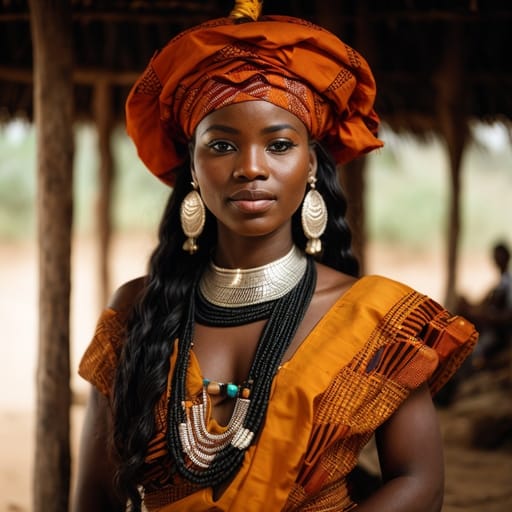
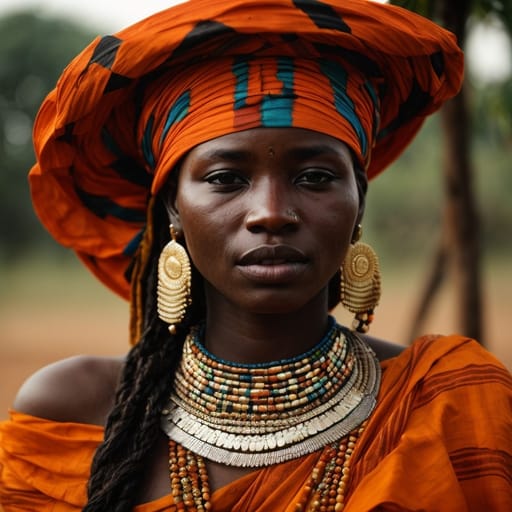
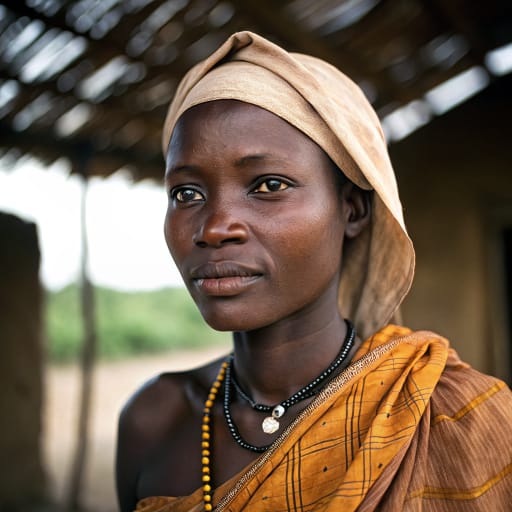
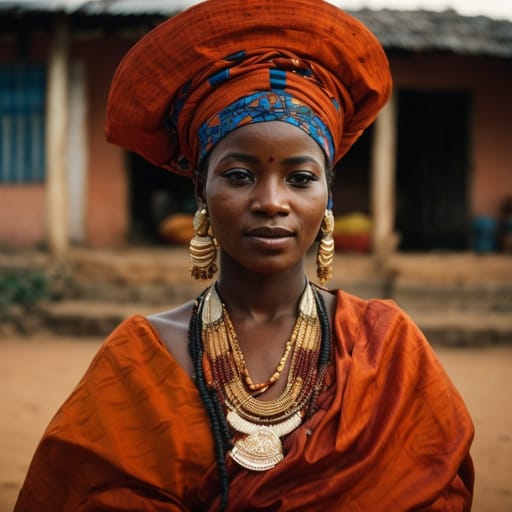
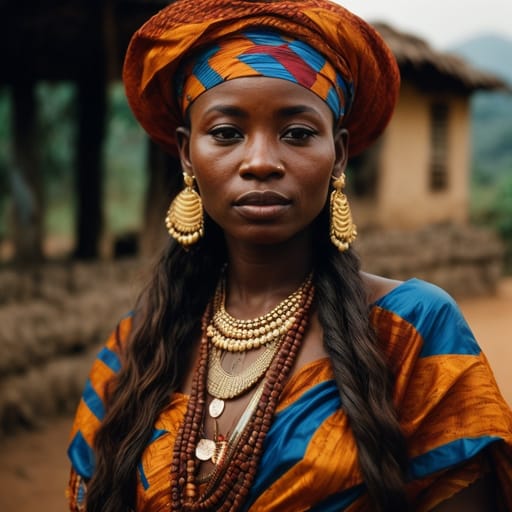
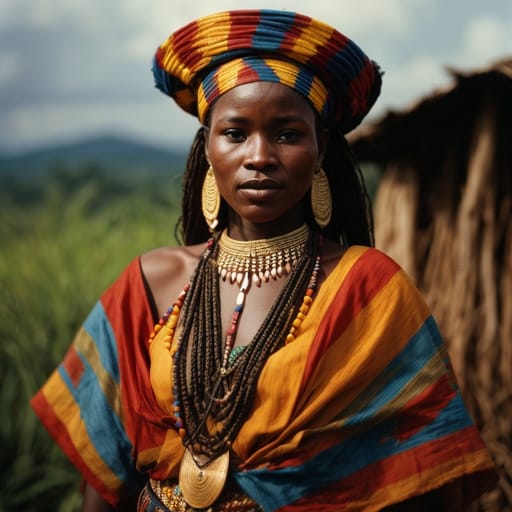
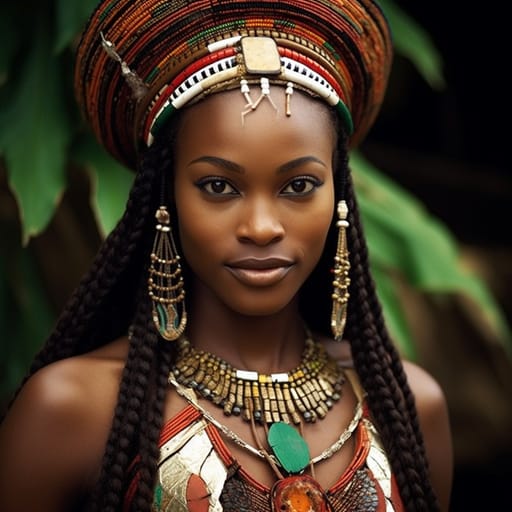
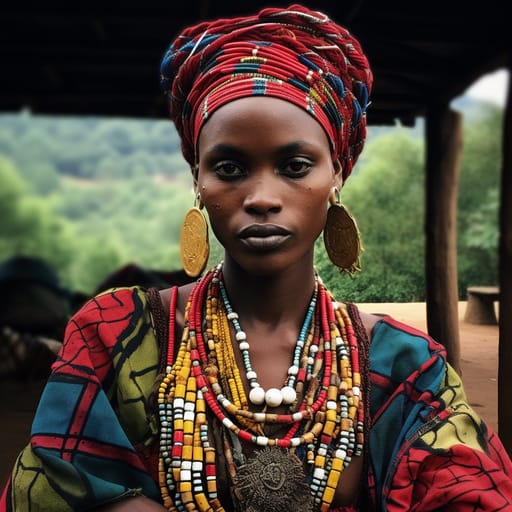
Typical Alur Phenotypes
Reference for AI generation: hair, eyes, skin, facial structure, build
The Alur sit at a phenotypic seam between the tall, narrow-built Nilotic peoples of South Sudan and the broader-featured Bantu populations of the Congo Basin. Centuries of intermarriage along the Lake Albert corridor have softened the extremes of either parent stock, producing a population that reads as Nilotic in proportion but Central African in facial mass.
Hair is uniformly Type 4 — tightly coiled, dense, jet black, with the springy 4B/4C pattern dominant. Greying tends to come late and stays salt-and-pepper rather than going white. Eyes are deep brown to near-black, almond-shaped with a clean upper lid; epicanthic folds are absent. The sclera in older sun-exposed adults often carries a faint yellow-brown cast typical of equatorial East African populations.
Skin tone is consistently dark — Fitzpatrick V to VI — with cool, slightly blue-black undertones rather than the warmer red-brown undertones common to West African groups. The Ugandan-side Alur of West Nile tend a half-shade lighter than their Congolese-side cousins in Ituri, who live under denser forest canopy but retain the deeper pigmentation of the broader Mangbetu-adjacent zone.
Facial structure carries the Luo signature: high, well-defined cheekbones, a relatively narrow face for a Central African population, and a nose that is medium-bridged with moderate alar flare — narrower than typical Bantu, broader than typical Dinka or Nuer. Lips are full but proportionate, less everted than in many West African phenotypes. Jawlines are clean and angular in men, softer and oval in women.
Build is the most distinctive trait. Alur men commonly stand 175–185 cm with long limbs, narrow hips, and lean musculature — the Nilotic tall-and-rangy template, though shorter on average than Dinka or Acholi. Women carry the same long-limbed proportions with a noticeably narrow waist-to-hip line and modest natural muscle tone. Body fat distribution skews lower-body, and obesity is uncommon outside urbanised Arua and Bunia populations.
Alur Body & Anatomy Reference
Bantu / Central African Niger-Congo phenotype: anatomy reference for AI nude generation
Alur Boobs & Breasts
Alur tits and boobs run medium-to-large cup, full, projecting, the classic Bantu / Central African Niger-Congo bust profile. Alur nipples and areolas show deep-brown areolar pigmentation against the deep-brown skin tone, with areolar diameter typically in the 32-48mm range and forward-set positioning rather than the smaller East African conical profile. Alur breasts trend fuller projection than East African; comparable to West African norm, a function of the mesomorph with strong gluteal-femoral fat deposition body habitus and the mean adult female BMI 23-26. For anatomically accurate AI-generated Alur nudes the render preserves the medium-to-large cup, full, projecting shape, 32-48mm areolas with deep-brown pigmentation, and the torso proportions of the Bantu / Central African Niger-Congo phenotype.
Alur Ass & Hips
Alur hips and butt usually read as full, projected, wide-set glutes. The skeletal base is broad iliac crests, gynoid pelvic pattern, the Bantu / Central African Niger-Congo pattern. Set against the slim narrow-hip Cushitic East African profile, the difference is easy to see, and the hip-to-waist ratio is often what identifies Alur women in photos.
Alur Vagina & Pussy
Expect deep-brown labial pigmentation, fuller labia minora on Alur women, in keeping with Bantu / Central African Niger-Congo ancestry. The pubic hair is tightly-coiled coarse texture, dense distribution. Coloring should run evenly from the deep-brown skin of the thighs to the labia, and Alur nude imagery should keep the hair's tightly-coiled coarse texture.
Alur Dicks & Penis
Alur dick and penile anatomy in adult AI generation should anchor on the regional reference data: regional mean ~14cm erect, above-average girth, and deep-brown shaft pigmentation. The Alur cock profile reflects the Bantu / Central African Niger-Congo population's anthropometric measurements. The shaft pigmentation should track the surrounding deep-brown skin tone, and the pubic hair should keep its tightly-coiled coarse texture in the typical inverted-V escutcheon.
Alur Body, Curves & Build
Alur body type: mesomorph with strong gluteal-femoral fat deposition, with mean adult female BMI 23-26. This is the typical Bantu / Central African Niger-Congo build. Height range, shoulder-to-hip ratio and fat distribution all follow from it, which is what an accurate Alur nude body should show.
Alur Skin Tone & Hair Texture
Alur skin tone falls in the deep-brown (Fitzpatrick VI) band, the surface signal most often miscalibrated by generic AI nude generators. Alur hair texture is typically tight 4A-4C coil, characteristic of the Bantu / Central African Niger-Congo phenotype. In Alur nude renders the skin should hold that band consistently across the body.
Data depth
0/100Coverage of image-grounded phenotype observations · drives AI generation diversity
- Sample size
- 0/40· 0 images
- Image quality
- 0/30· 0% high
- Confidence
- 0/20
- Source diversity
- 0/10
- ·No image observations yet
Explore phenotype categories
Structured taxonomy with peer-reviewed scales · 22 anatomical categories
Erotic Poses & Sex Positions
From the pose catalog: 219 named positions with reference skeletons
Frequently asked questions about Alur people
Where is the Alur homeland?
The Alur homeland is West Nile sub-region (Uganda), Ituri (Democratic Republic of the Congo) in Central Africa.
What language do Alur people speak?
Alur people primarily speak Nilo-Saharan / Nilotic / Luo / Alur.
What religion do Alur people practice?
The predominant religion among Alur people is Christianity.






Make your own Alur images
Five a day, free, no credits to buy. The studio starts from this group's phenotype data, so you can set body type, pose and style and keep the traits accurate.
Start with Alur