Help us get this right
Does this portrait look right for Baka?
Nobody has judged this one yet. You would be the first.
Baka Erotic
Rainforests of southeastern Cameroon and northern Gabon, with smaller communities in the northern Republic of the Congo and the southwestern Central African Republic
Baka (Ubangian); many also speak neighboring Bantu languages and French
Indigenous beliefs centered on the creator Komba and the forest spirit Jengi, alongside Christianity introduced by Catholic and Protestant missions
One of the Central African forest foraging peoples historically grouped as Pygmies, alongside the Aka, Mbuti and Bakola; distinct from the Baka of South Sudan and DR Congo
About Baka People
The Baka are people of the forest in the most literal sense. For generations they have moved through the rainforest of southeastern Cameroon and northern Gabon, with smaller communities across the borders in the Republic of the Congo and the Central African Republic. They live by hunting, trapping, fishing and gathering wild yams, nuts and honey. Outsiders have long grouped them with other Central African forest foragers under the label Pygmy, a word many Baka and their advocates reject. What actually defines them is harder to map: a working knowledge of the forest, its seasons and its spirits, that their farming neighbors rely on and rarely match.
Their language is a small puzzle. Baka belongs to the Ubangian family, whose heartland lies farther east in the Central African Republic and the Congo basin, while most of the villages around them speak Bantu languages. Many Baka switch easily into a neighbor's language or French for trade, school and dealings with the state. Their ties to farming peoples are old and run both ways: Baka clear fields and bring out forest goods in exchange for cash, salt, cloth and cultivated food. The terms have often been lopsided, and the prejudice against Baka is real.
Belief is part of ordinary life, not something set apart from it. Komba is the creator, distant but acknowledged. Jengi, the great spirit of the forest, is closer at hand: it appears in ceremony as a shaggy figure draped in raffia, and becoming a man means being initiated into its society. Christian missions have made converts, and plenty of Baka hold both beliefs at once. Music carries as much weight. Polyphonic singing laced with yodeled lines fills camps after dark, and women play the river itself, striking the surface of the water with cupped hands to raise deep, rhythmic thumps.
The sharpest turn came in the mid-twentieth century, when colonial and then Cameroonian authorities pressed Baka bands to leave the deep forest for permanent roadside settlements. Mud-walled houses now stand where dome-shaped mongulu huts of bent saplings and leaves once did, though women still build the leaf huts on the long forest stays called molongo. Logging concessions and protected areas such as Lobéké and Boumba Bek national parks and the Dja reserve have since closed off much of the land Baka rely on. Reports of abuse by anti-poaching guards have turned their situation into an international human rights case. The knowledge endures, but the room to use it keeps shrinking.
Related ethnic groups
Groups that share Baka's homeland, region, language, or religious tradition. These are likely candidates for comparative phenotype reference.
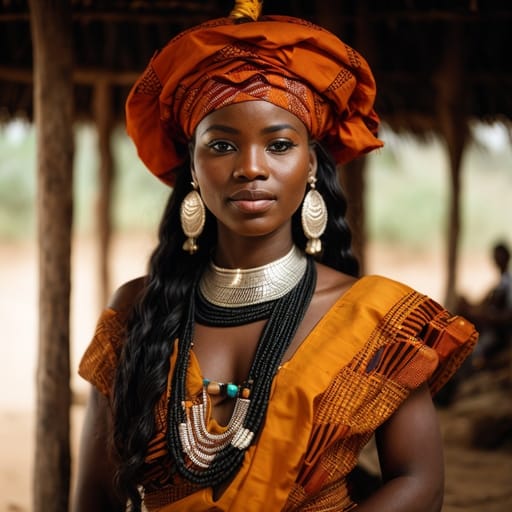
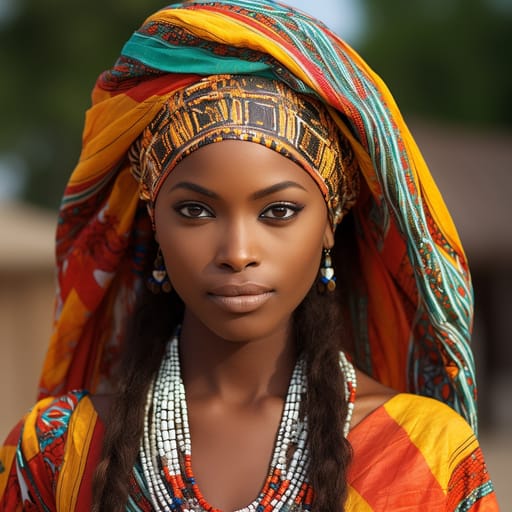
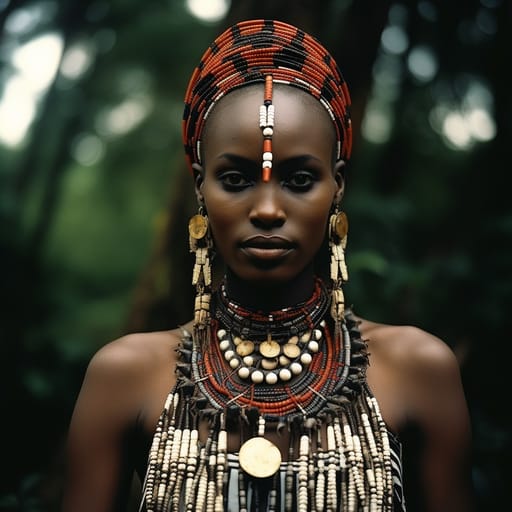
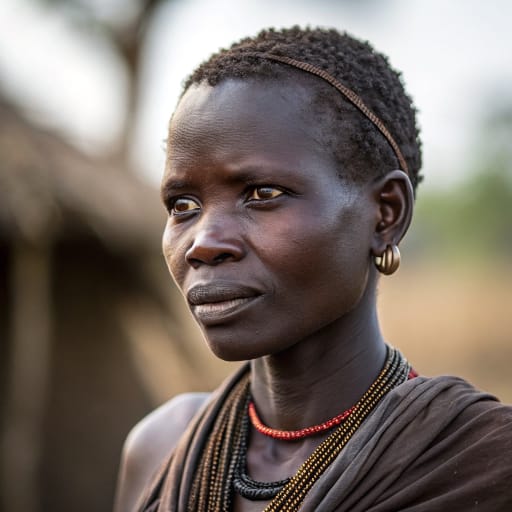
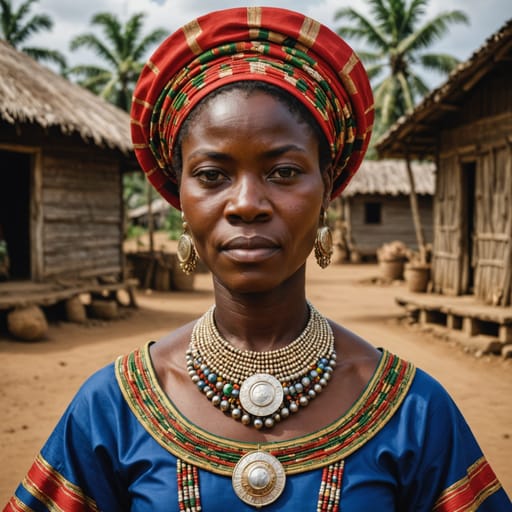
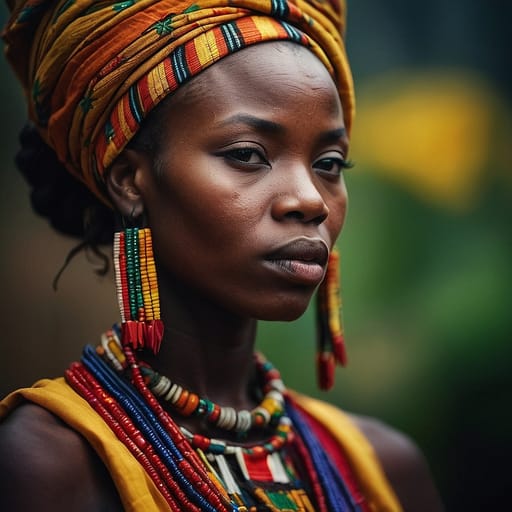
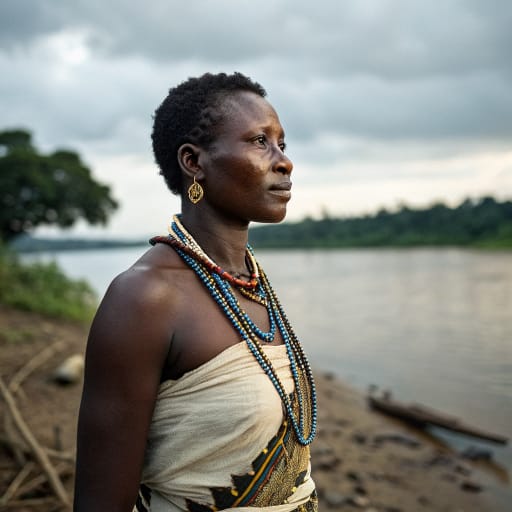
Typical Baka Phenotypes
Reference for AI generation: hair, eyes, skin, facial structure, build
Baka Body & Anatomy Reference
Anatomy by feature, Bantu / Central African Niger-Congo phenotype
Baka Boobs & Breasts
Bust reference for Baka women: medium-to-large cup, full, projecting, which is typical of Bantu / Central African Niger-Congo ancestry. Areolas measure about 32-48mm across, with deep-brown pigmentation. Body type (mesomorph with strong gluteal-femoral fat deposition) shapes the bust as well, so Baka tits are usually fuller projection than East African; comparable to West African norm. In AI imagery, keep the forward-set shape rather than drifting toward the smaller East African conical profile.
Baka Ass & Hips
The Baka ass is typically full, projected, wide-set glutes, which sets it apart from the slim narrow-hip Cushitic East African profile. Underneath, the pelvis shows broad iliac crests, gynoid pelvic pattern, part of the Bantu / Central African Niger-Congo skeletal pattern. For Baka butt pics and AI renders, match that silhouette and the overall build (mesomorph with strong gluteal-femoral fat deposition).
Baka Vagina & Pussy
Baka pussy and vulvar anatomy presents deep-brown labial pigmentation, fuller labia minora, consistent with the Bantu / Central African Niger-Congo phenotype's pigmentation pattern. Baka pubic hair is typically tightly-coiled coarse texture, dense distribution, in the inverted-triangle pattern. For anatomically accurate Baka pussy renders the labial coloration should match the surrounding deep-brown skin tone with a continuous gradient, and the hair should keep its tightly-coiled coarse texture.
Baka Dicks & Penis
Baka dicks follow the Bantu / Central African Niger-Congo reference data: regional mean ~14cm erect; above-average girth; deep-brown shaft pigmentation. Shaft color should track the deep-brown skin tone with a smooth change toward the glans, and Baka pubic hair keeps its tightly-coiled coarse texture.
Baka Body, Curves & Build
Baka body type and overall build presents as mesomorph with strong gluteal-femoral fat deposition, with mean adult female BMI 23-26: the characteristic Bantu / Central African Niger-Congo habitus. Baka curves and proportions should keep the regional skeletal frame (height, shoulder-to-hip ratio, limb proportions) rather than a generic mesomorph default.
Baka Skin Tone & Hair Texture
Baka skin sits in the deep-brown (Fitzpatrick VI) band. Hair is typically tight 4A-4C coil, in keeping with the Bantu / Central African Niger-Congo phenotype. In nude renders the skin should stay one even tone from face to body, and body, pubic and head hair should match.
Explore phenotype categories
Structured taxonomy with peer-reviewed scales · 22 anatomical categories
Erotic Poses & Sex Positions
From the pose catalog: 219 named positions with reference skeletons
Frequently asked questions about Baka people
Where is the Baka homeland?
The Baka homeland is Rainforests of southeastern Cameroon and northern Gabon, with smaller communities in the northern Republic of the Congo and the southwestern Central African Republic in Central Africa.
What language do Baka people speak?
Baka people primarily speak Baka (Ubangian); many also speak neighboring Bantu languages and French.
What religion do Baka people practice?
The predominant religion among Baka people is Indigenous beliefs centered on the creator Komba and the forest spirit Jengi, alongside Christianity introduced by Catholic and Protestant missions.






Make your own Baka images
Five a day, free, no credits to buy. The studio starts from this group's phenotype data, so you can set body type, pose and style and keep the traits accurate.
Start with Baka