Help us get this right
Does this portrait look right for Kele?
Nobody has judged this one yet. You would be the first.
Kele Erotic
Scattered villages across central and western Gabon, from the hinterland of the Gabon estuary through the middle Ogooué River valley
Kele, also called Bakele (Bantu, Niger-Congo; Kele-Kota group); French widely spoken
Mostly Christian, Catholic and Protestant, with older beliefs about ancestors and healing persisting alongside
Bantu people whose language belongs to the Kele-Kota cluster, related to the Kota and other peoples of northeastern Gabon
About Kele People
The Kele are hard to pin to a map, and that is the first thing to understand about them. They don't hold one compact territory. Their villages are scattered across central and western Gabon, from the forests behind the Gabon estuary down through the middle Ogooué valley, often with Fang, Myene and other neighbors on every side. That pattern comes from movement. Across the eighteenth and nineteenth centuries, Kele communities pushed out of the northeast, following rivers, game and trade. They kept moving long enough that European visitors came to see mobility as their defining trait. Paul Du Chaillu, who traveled among them in the 1850s and wrote about them as the Bakalai, described a people who readily left a village site and built again somewhere else.
Their language tells the same story. Kele is a Bantu language, but it sits apart from the Fang and Myene spoken around many Kele villages today. Linguists group it with Kota and several smaller languages of northeastern Gabon and the nearby Congo borderlands, which points back toward where the migrations began. Outsiders noticed the language early: American missionaries working from the Gabon estuary published a Bakele grammar in the 1850s.
For much of the nineteenth century the Kele were hunters and traders first. They moved ivory, rubber and other forest goods toward the coastal middlemen, and their skill in the forest made them both useful partners and serious rivals. The great Fang expansion toward the coast pressed hard on them. French colonial rule then did what migration had not. Concession companies, forced labor, epidemics and the policy of moving villages onto roads fixed many Kele communities in place and badly thinned others.
Today most Kele are Christian, Catholic or Protestant. They live the ordinary life of rural and small-town Gabon: farming cassava and plantains, fishing, hunting where the forest allows, and sending their children to Libreville and the provincial towns for school and work. Older ideas about ancestors, healing and the dead have not disappeared; as in much of Gabon, they persist alongside church life. Kele identity now rests less on a shared territory than on language, family lines and the memory of a people who once seemed to be everywhere in the Gabonese interior at once.
Related ethnic groups
Groups that share Kele's homeland, region, language, or religious tradition. These are likely candidates for comparative phenotype reference.
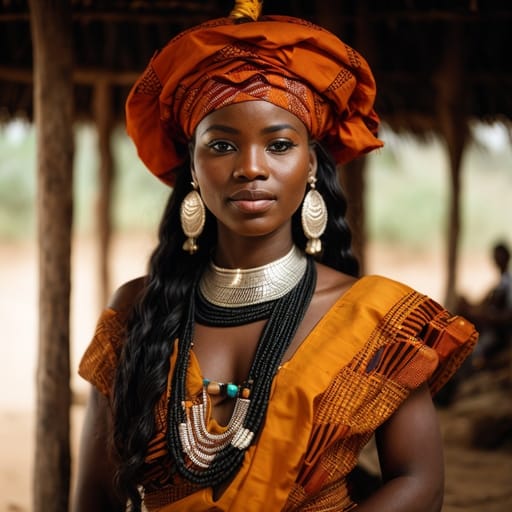
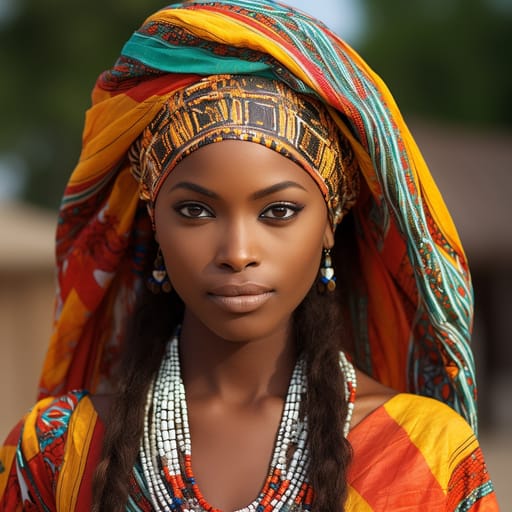
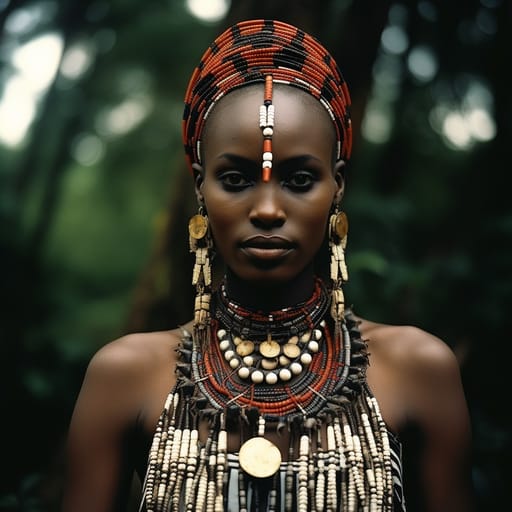
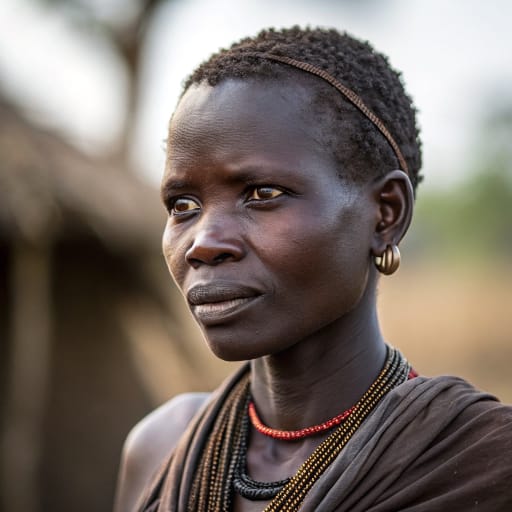
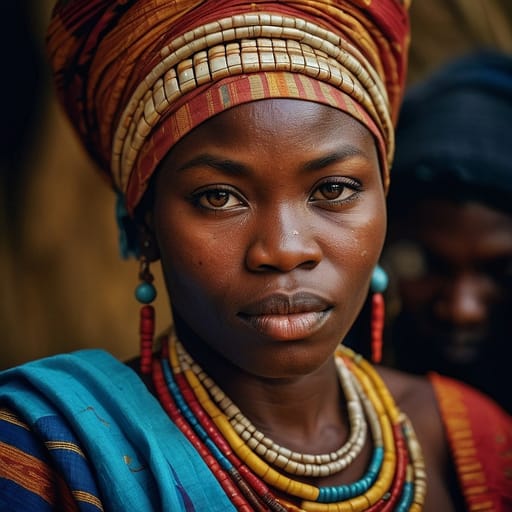
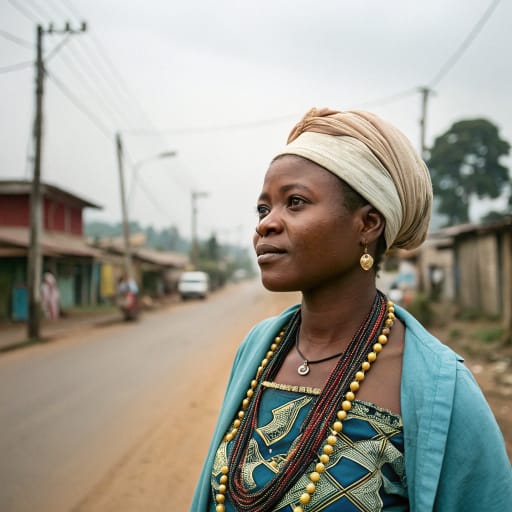
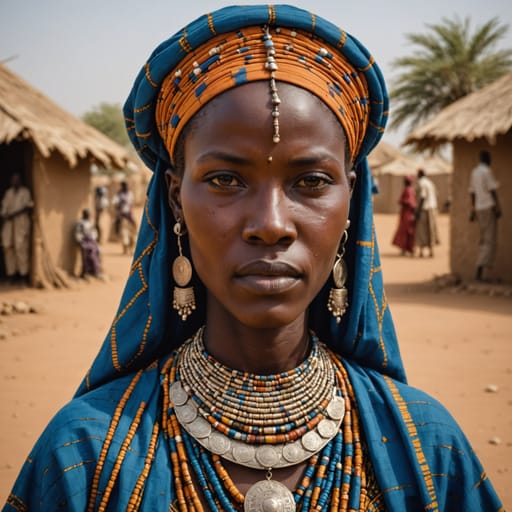
Typical Kele Phenotypes
Reference for AI generation: hair, eyes, skin, facial structure, build
Kele Body & Anatomy Reference
Anatomy by feature, Bantu / Central African Niger-Congo phenotype
Kele Boobs & Breasts
The typical Kele bust is medium-to-large cup, full, projecting, in line with the wider Bantu / Central African Niger-Congo pattern. Areolas usually fall in the 32-48mm range, with deep-brown areolar pigmentation against the deep-brown skin tone. Compared with the smaller East African conical profile, Kele breasts sit forward and are generally fuller projection than East African; comparable to West African norm. A faithful AI render of Kele tits keeps that shape and areola size.
Kele Ass & Hips
Butt shape among Kele women: full, projected, wide-set glutes, over broad iliac crests, gynoid pelvic pattern. This follows Bantu / Central African Niger-Congo ancestry and looks quite unlike the slim narrow-hip Cushitic East African profile. An accurate Kele ass in adult AI imagery keeps both the silhouette and the overall build (mesomorph with strong gluteal-femoral fat deposition) instead of a generic average.
Kele Vagina & Pussy
Vulvar anatomy among Kele women: deep-brown labial pigmentation, fuller labia minora. Pubic hair tends to be tightly-coiled coarse texture, dense distribution, in the usual inverted-triangle pattern. Both follow Bantu / Central African Niger-Congo pigmentation, which is why Kele pussy renders should not fall back on a pale, sparse Western template.
Kele Dicks & Penis
The Kele cock profile, from Bantu / Central African Niger-Congo anthropometric data: regional mean ~14cm erect; above-average girth; deep-brown shaft pigmentation. Pubic hair has a tightly-coiled coarse texture and forms the usual inverted-V pattern. Whether Kele men are circumcised follows religious and cultural practice rather than phenotype.
Kele Body, Curves & Build
Build and curves among Kele women follow the Bantu / Central African Niger-Congo pattern: mesomorph with strong gluteal-femoral fat deposition, mean adult female BMI 23-26. Proportions matter as much as skin tone, so Kele figures should keep their regional height and limb ratios.
Kele Skin Tone & Hair Texture
The Kele skin range is deep-brown (Fitzpatrick VI), and hair tends to be tight 4A-4C coil. That combination marks the Bantu / Central African Niger-Congo phenotype, and skin tone is the trait AI generators most often get wrong for Kele women.
Explore phenotype categories
Structured taxonomy with peer-reviewed scales · 22 anatomical categories
Erotic Poses & Sex Positions
From the pose catalog: 219 named positions with reference skeletons
Frequently asked questions about Kele people
Where is the Kele homeland?
The Kele homeland is Scattered villages across central and western Gabon, from the hinterland of the Gabon estuary through the middle Ogooué River valley in Central Africa.
What language do Kele people speak?
Kele people primarily speak Kele, also called Bakele (Bantu, Niger-Congo; Kele-Kota group); French widely spoken.
What religion do Kele people practice?
The predominant religion among Kele people is Mostly Christian, Catholic and Protestant, with older beliefs about ancestors and healing persisting alongside.






Make your own Kele images
Five a day, free, no credits to buy. The studio starts from this group's phenotype data, so you can set body type, pose and style and keep the traits accurate.
Start with Kele