Help us get this right
Does this portrait look right for Bakoko?
Nobody has judged this one yet. You would be the first.
Bakoko Erotic
Lower Sanaga River area of the Littoral Region, Cameroon, around Edéa and Dizangué in Sanaga-Maritime department, with many also living in Douala
Bakoko (Bantu, Niger-Congo), closely related to Basaa; French widely spoken
Christianity, mainly Catholic and Protestant, alongside inherited lineage and funeral practices
Closely related to, and often classed with, the Basaa; one of the Bantu peoples of coastal Cameroon
About Bakoko People
The Bakoko are a river people of coastal Cameroon, and the best way into who they are is a question they have been answering for a long time: how are they different from the Basaa? Outsiders, colonial administrators and linguists have often lumped the two together, and a Basaa speaker can follow Bakoko speech without much trouble. Yet the Bakoko keep their own name, their own lineages and traditional chieftaincies, and their own claim to the land along the lower Sanaga River. Many also use the name Elog Mpoo for themselves. They are close kin to the Basaa but a separate people, and that tension defines them.
Their country lies in the Sanaga-Maritime department of the Littoral Region, around Edéa and Dizangué, where the Sanaga slows toward the Atlantic and breaks into creeks, swamp forest and the waters of Lake Ossa. Fishing, canoe travel and farming cassava, plantain and oil palm shaped village life for generations, and in the smaller settlements they still do. The same land is also heavily industrialized. Edéa has one of Cameroon's major hydroelectric dams and an aluminum smelter, and large rubber and palm plantations spread across the land around Dizangué. For Bakoko families, who owns ancestral land and who profits from it are practical questions, not abstract ones.
The language is Bantu and sits inside the Basaa cluster. Its northern and southern varieties sometimes appear in reference works under the name Kogo. French is the language of school, work and government, and plenty of Bakoko people move between their home speech, Basaa, Duala and French in the course of an ordinary week.
Christianity came early. German Catholic missionaries founded Marienberg on the lower Sanaga near Edéa in 1890, one of the first Catholic missions in the colony, and both Catholic and Protestant churches remain central to community life. Funerals show how much older practice survives inside that Christian frame. They are long, crowded and costly gatherings where family ties are reaffirmed in public and people who have moved to the city are expected to come home.
The twentieth century hit this region hard. In the 1950s and 1960s Sanaga-Maritime was the heartland of the armed nationalist movement of the Union of the Peoples of Cameroon, and villages across the department lived through counterinsurgency, forced regrouping of settlements and years of violence that official history was slow to acknowledge. Today many Bakoko live in Edéa and Douala but go back to the villages for funerals, land matters and chieftaincy business, and they still insist on a distinct identity.
Related ethnic groups
Groups that share Bakoko's homeland, region, language, or religious tradition. These are likely candidates for comparative phenotype reference.
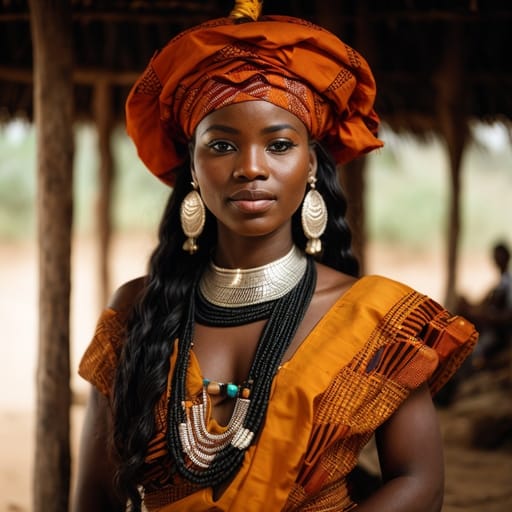
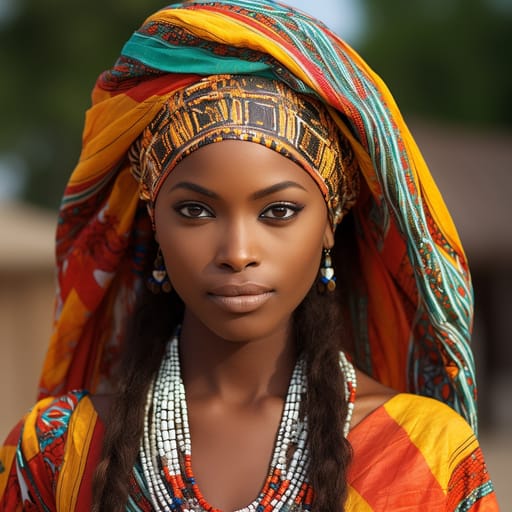
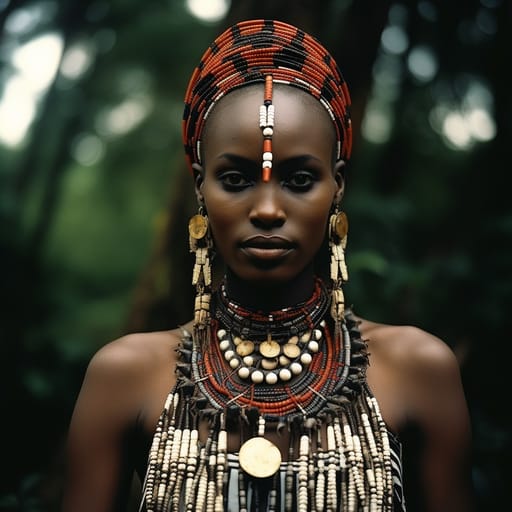
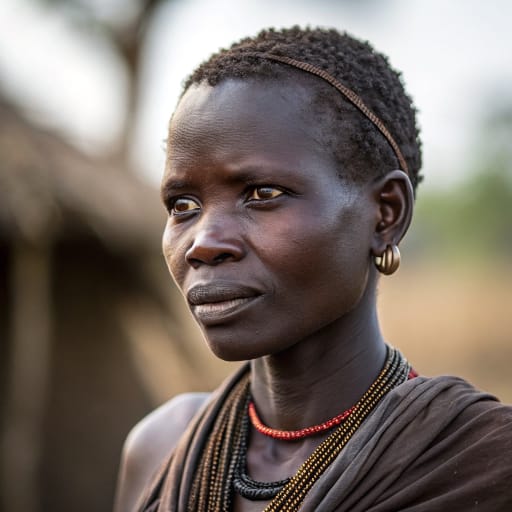
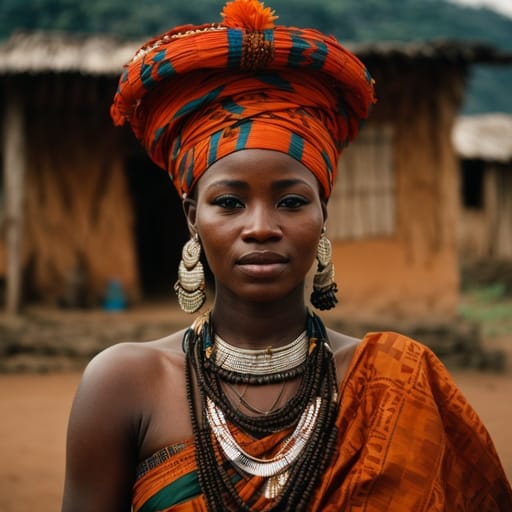
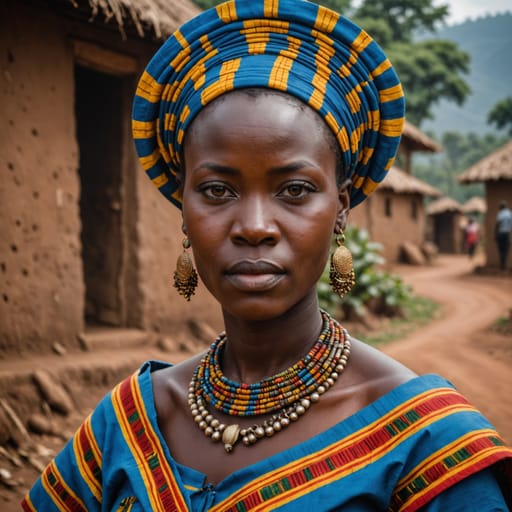
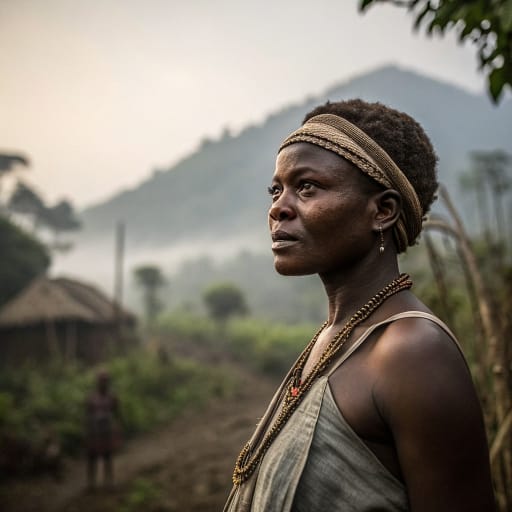
Typical Bakoko Phenotypes
Reference for AI generation: hair, eyes, skin, facial structure, build
Bakoko Body & Anatomy Reference
Anatomy by feature, Bantu / Central African Niger-Congo phenotype
Bakoko Boobs & Breasts
Bust reference for Bakoko women: medium-to-large cup, full, projecting, which is typical of Bantu / Central African Niger-Congo ancestry. Areolas measure about 32-48mm across, with deep-brown pigmentation. Body type (mesomorph with strong gluteal-femoral fat deposition) shapes the bust as well, so Bakoko tits are usually fuller projection than East African; comparable to West African norm. In AI imagery, keep the forward-set shape rather than drifting toward the smaller East African conical profile.
Bakoko Ass & Hips
The Bakoko ass is typically full, projected, wide-set glutes, which sets it apart from the slim narrow-hip Cushitic East African profile. Underneath, the pelvis shows broad iliac crests, gynoid pelvic pattern, part of the Bantu / Central African Niger-Congo skeletal pattern. For Bakoko butt pics and AI renders, match that silhouette and the overall build (mesomorph with strong gluteal-femoral fat deposition).
Bakoko Vagina & Pussy
Bakoko pussy and vulvar anatomy presents deep-brown labial pigmentation, fuller labia minora, consistent with the Bantu / Central African Niger-Congo phenotype's pigmentation pattern. Bakoko pubic hair is typically tightly-coiled coarse texture, dense distribution, in the inverted-triangle pattern. For anatomically accurate Bakoko pussy renders the labial coloration should match the surrounding deep-brown skin tone with a continuous gradient, and the hair should keep its tightly-coiled coarse texture.
Bakoko Dicks & Penis
Bakoko dicks follow the Bantu / Central African Niger-Congo reference data: regional mean ~14cm erect; above-average girth; deep-brown shaft pigmentation. Shaft color should track the deep-brown skin tone with a smooth change toward the glans, and Bakoko pubic hair keeps its tightly-coiled coarse texture.
Bakoko Body, Curves & Build
Bakoko body type and overall build presents as mesomorph with strong gluteal-femoral fat deposition, with mean adult female BMI 23-26: the characteristic Bantu / Central African Niger-Congo habitus. Bakoko curves and proportions should keep the regional skeletal frame (height, shoulder-to-hip ratio, limb proportions) rather than a generic mesomorph default.
Bakoko Skin Tone & Hair Texture
Bakoko skin sits in the deep-brown (Fitzpatrick VI) band. Hair is typically tight 4A-4C coil, in keeping with the Bantu / Central African Niger-Congo phenotype. In nude renders the skin should stay one even tone from face to body, and body, pubic and head hair should match.
Explore phenotype categories
Structured taxonomy with peer-reviewed scales · 22 anatomical categories
Erotic Poses & Sex Positions
From the pose catalog: 219 named positions with reference skeletons
Frequently asked questions about Bakoko people
Where is the Bakoko homeland?
The Bakoko homeland is Lower Sanaga River area of the Littoral Region, Cameroon, around Edéa and Dizangué in Sanaga-Maritime department, with many also living in Douala in Central Africa.
What language do Bakoko people speak?
Bakoko people primarily speak Bakoko (Bantu, Niger-Congo), closely related to Basaa; French widely spoken.
What religion do Bakoko people practice?
The predominant religion among Bakoko people is Christianity, mainly Catholic and Protestant, alongside inherited lineage and funeral practices.






Make your own Bakoko images
Five a day, free, no credits to buy. The studio starts from this group's phenotype data, so you can set body type, pose and style and keep the traits accurate.
Start with Bakoko