Help us get this right
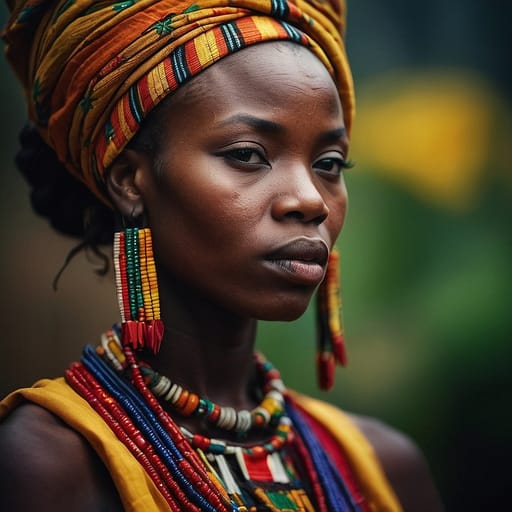
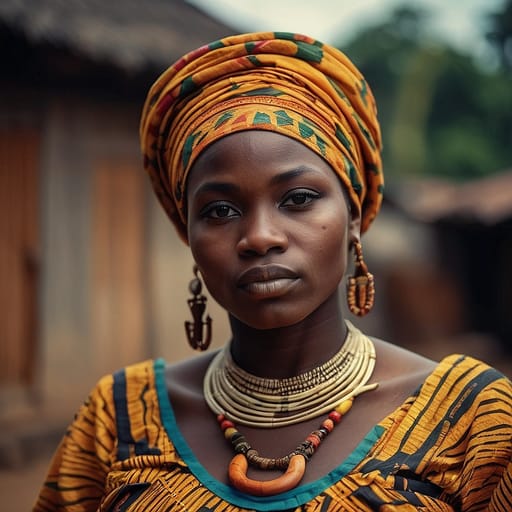
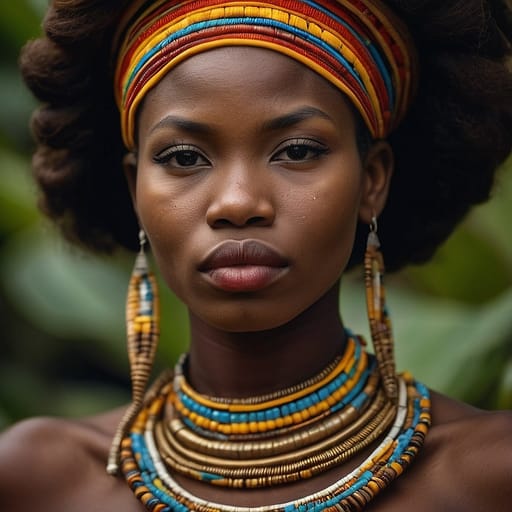
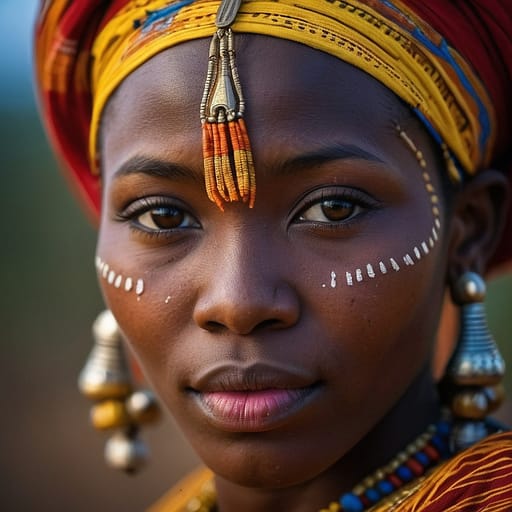
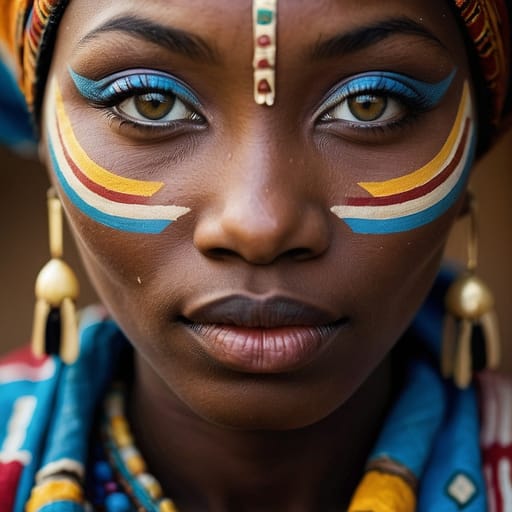
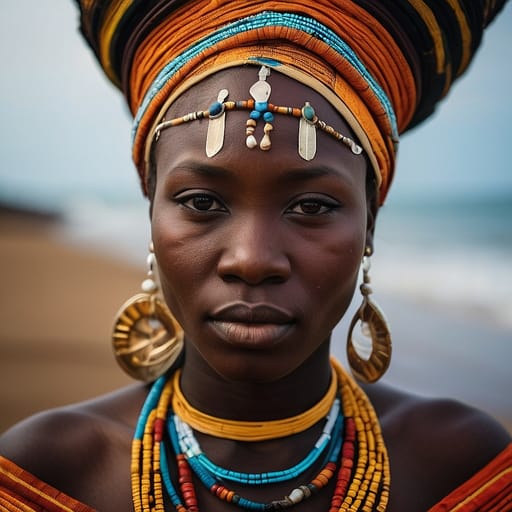
Does this portrait look right for Cameroon Highlanders?
Nobody has judged this one yet. You would be the first.
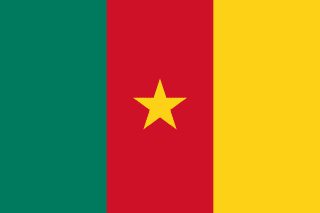

Cameroon
CMCentral Africa
Cameroon is home to 6 documented ethnic groups in Central Africa, led by Cameroon Highlanders (~31%), Cameroon Other (~21%), Cameroon Equatorial Bantu (~19%), Kirdi (~11%). This page blends their phenotype and demographic data into one weighted reference: skin tone, facial features, hair texture and build, drawn from published census and ancestry sources.
Demographic Composition
Composition weights are derived from self-identification in published census and demographic surveys. Each row links to the source ethnic-group atlas page.
| Ethnic group | Weight | Source |
|---|---|---|
 Cameroon Highlanders Cameroon Highlanders | 31.0% | Cameroon 2005 Census plus subsequent demographic estimates; Cameroon Highlanders / 'Grassfielders' (~31%, ~8M+ of ~28M+ total). Includes Bamileke, Bamoun, Tikar, plus other Western Cameroon Niger-Congo groups |
 Cameroon Other Cameroon Other | 21.0% | Cameroon 2005 Census residual; includes Eastern Nigritic, Pygmy / Baka (~30,000+), plus other groups across Cameroon's approximately 250+ ethnic groups |
 Cameroon Equatorial Bantu Cameroon Equatorial Bantu | 19.0% | Cameroon 2005 Census; Equatorial Bantu (~19%); Bantu source populations of southern and central Cameroon. Includes Beti-Pahuin (Beti, Bulu, Fang), Maka, plus other groups |
 Kirdi Kirdi | 11.0% | Cameroon 2005 Census; Kirdi (~11%); the historic non-Muslim northern-Cameroon highland populations including Mafa, Mofu, Kapsiki, plus other groups |
 Fulani Cameroon Fulani Cameroon | 10.0% | Cameroon 2005 Census; Fulani / Peulh (~10%); pastoral nomadic populations of northern Cameroon, cross-border |
 Northwestern Bantu Northwestern Bantu | 8.0% | Cameroon 2005 Census; Northwestern Bantu (~8%); coastal Bantu populations including Duala, Bakweri, plus other groups |
Cameroon Phenotype Profile
Cameroon has a remarkably heterogeneous demographic structure with no single ethnic group reaching 35% — the country's 250+ ethnic groups reflect Cameroon's position at the crossroads of Niger-Congo source populations, Bantu source populations, plus pastoral Fulani populations of the West African Sahel.
Cameroon Body & Anatomy Reference
Per-feature anatomical profile for AI nude generation: Bantu / Central African Niger-Congo phenotype dominant in Cameroon
Cameroon Women: Boobs & Breasts
Cameroon women's tits and boobs reflect the medium-to-large cup, full, projecting Bantu / Central African Niger-Congo bust profile dominant in the Cameroon demographic composition. Cameroon nipples and areolas show deep-brown areolar pigmentation against the deep-brown skin tone, with areolar diameter typically in the 32-48mm range, distinct from the smaller East African conical profile. Cameroon breast morphology trends fuller projection than East African; comparable to West African norm, a function of the mesomorph with strong gluteal-femoral fat deposition body habitus and mean adult female BMI 23-26. For anatomically-accurate AI-generated Cameroon nude women the render should preserve: medium-to-large cup, full, projecting shape, 32-48mm areolas with regional pigmentation, and the torso proportions of the Bantu / Central African Niger-Congo phenotype.
Cameroon Women: Ass & Hips
Cameroon women's ass and hip morphology presents as full, projected, wide-set glutes, distinctly different from the slim narrow-hip Cushitic East African profile. Cameroon pelvic profile shows broad iliac crests, gynoid pelvic pattern, anchored in the Bantu / Central African Niger-Congo skeletal pattern that dominates the Cameroon ethnic composition. Cameroon butt shots in adult AI imagery should render the full, projected, wide-set glutes silhouette with the mesomorph with strong gluteal-femoral fat deposition build and the gluteal-femoral fat distribution typical of the Bantu / Central African Niger-Congo phenotype rather than defaulting to a globally-averaged shape that generic AI generators produce.
Cameroon Women: Vagina & Pussy
Cameroon women's pussy and vulvar anatomy presents deep-brown labial pigmentation, fuller labia minora, consistent with the Bantu / Central African Niger-Congo phenotype's pigmentation pattern dominant in Cameroon. Cameroon pubic hair is typically tightly-coiled coarse texture, dense distribution, distributed in the inverted-triangle pattern with regional-typical density. AI-generated Cameroon nude imagery should preserve the deep-brown labial pigmentation and the tightly-coiled coarse texture hair texture rather than defaulting to a Western-European pink-and-sparse template. For anatomically-accurate Cameroon pussy renders the labial pigmentation should match the surrounding deep-brown skin tone of the Bantu / Central African Niger-Congo phenotype.
Cameroon Men: Dicks & Penis
Cameroon men's dick and penile anatomy in adult AI generation should anchor on the regional reference data: regional mean ~14cm erect, above-average girth, and deep-brown shaft pigmentation. Cameroon cock profile reflects the Bantu / Central African Niger-Congo ancestral population's anthropometric measurements rather than a globally-averaged Western-pornography default. For anatomically-accurate Cameroon nude male imagery the shaft pigmentation should track the surrounding deep-brown skin tone, with continuous glans-to-shaft pigmentation transition and the tightly-coiled coarse texture pubic-hair texture distributed in the typical inverted-V escutcheon. Circumcision status across Cameroon men varies by religious and cultural tradition rather than ancestral phenotype.
Cameroon People: Body, Curves & Build
Cameroon body type and overall build presents as mesomorph with strong gluteal-femoral fat deposition, with mean adult female BMI 23-26: the characteristic Bantu / Central African Niger-Congo habitus dominant in the Cameroon demographic composition. Cameroon curves and proportions in adult AI imagery should preserve the regional skeletal frame (height, shoulder-to-hip ratio, limb proportions) rather than scaling to a Western-European mesomorph default. The Cameroon nude female form, when rendered with anatomical fidelity, shows the height range, frame width, and adipose distribution pattern typical of the Bantu / Central African Niger-Congo phenotype. Generic AI image generators tend to collapse regional body types into a few default shapes; the Ethnic Erotic phenotype-anchored approach preserves the Cameroon build as its own reference category.
Cameroon People: Skin Tone & Hair Texture
Cameroon skin tone falls in the deep-brown (Fitzpatrick VI) band, the surface signal most often miscalibrated by generic AI nude generators trained on Western-photographic datasets. Cameroon hair texture is typically tight 4A-4C coil, characteristic of the Bantu / Central African Niger-Congo phenotype. For anatomically-accurate Cameroon nude renders the skin should hold the Fitzpatrick band consistently across body surface rather than showing the lighter-than-face body shading that AI generators default to. Cameroon hair pigmentation and texture on body, pubic, and head should match across the figure rather than mixing textures (a common AI artefact).
A descriptive view, not a claim about individuals
This page shows a weighted aggregate of phenotype observations across the Cameroon population, based on demographic composition from published census and ancestry sources. Phenotypes within any country are far more varied than the aggregate suggests; this is a descriptive reference, not a deterministic claim about any individual. For source-level detail on individual ethnic groups, see the constituent atlas pages linked below.
Methodology Notes
Composition weights derived from Cameroon 2005 Census plus subsequent estimates. The 2024 census has been delayed.
Primary Sources
- 1.Bureau Central des Recensements et des Études de Population Cameroon. RGPH3 2005. Yaoundé: BUCREP; 2010.
- 2.DeLancey MW, Mbuh RN, DeLancey MD. Historical Dictionary of the Republic of Cameroon. 4th ed. Scarecrow; 2010.
- 3.Geschiere P. The Modernity of Witchcraft: Politics and the Occult in Postcolonial Africa. University of Virginia Press; 1997.
- 4.Tishkoff SA, Reed FA, Friedlaender FR, et al. The genetic structure and history of Africans and African Americans. Science. 2009;324(5930):1035-1044.
- 5.Bahuchet S. Changing Language, Remaining Pygmy. Hum Biol. 2012;84(1):11-43.
Other countries in Central Africa
Aggregate phenotype references for neighbouring Central Africa nations, weighted by demographic composition.