Help us get this right
Does this portrait look right for Mijikenda?
Nobody has judged this one yet. You would be the first.
Mijikenda Erotic
Coast Province (Kenya)
Christianity
Chonyi, Giriama, Digo, Segeju
About Mijikenda People
The Mijikenda are nine related Bantu-speaking peoples of the Kenyan coast — the name itself means "the nine homesteads" in their own languages. They occupy the strip of country running inland from the Indian Ocean between the Tanzanian border and the Tana River: Mombasa, Malindi, Kilifi, Kwale. The branches usually counted are the Giriama, Digo, Duruma, Rabai, Ribe, Kambe, Kauma, Chonyi and Jibana, though the Segeju, who straddle the Kenya–Tanzania frontier, are often grouped with them by language and history. Each branch keeps its own dialect, but the dialects are mutually intelligible enough that "Mijikenda" functions as a working language as well as an ethnic label.
The defining institution of Mijikenda history is the kaya — fortified hilltop forest settlements established, by oral tradition, after the group migrated south from a place called Shungwaya sometime around the sixteenth century. Each branch had its own kaya, ringed by sacred forest and governed by councils of elders. The villages eventually moved down to lower ground, but the forests were left standing as shrines, and the elders' councils continued to meet inside them. Several of the surviving kaya forests are now UNESCO-listed, and they remain active ritual sites — burial grounds, oath-taking places, repositories of the wooden memorial posts known as vigango that mark the deaths of senior men.
Christianity is now the majority affiliation, the result of long missionary contact on the coast, but the older Mijikenda religion — focused on ancestor veneration and the authority of the kaya elders — has not been displaced so much as layered underneath. The Digo, the southernmost branch, are an exception: centuries of trade contact with Swahili and Arab merchants made Islam the dominant faith among them, and Digo culture sits closer to the Swahili coast than to the inland Mijikenda. The Giriama, the largest branch, are remembered politically for the 1913–1914 uprising led by the prophetess Mekatilili wa Menza against British attempts to conscript Giriama labor and tax their palm wine — one of the more sustained early resistances to colonial rule in East Africa.
Economically the coastal Mijikenda still farm coconut, cashew, and maize, tap palm wine, and fish; many work in Mombasa and the tourist towns. The relationship with the Swahili of the coastal strip is old and ambivalent — traders, neighbors, sometimes rivals — and much of what outsiders read as "Swahili coast" culture is in fact a long collaboration between the two.
Related ethnic groups
Groups that share Mijikenda's homeland, region, language, or religious tradition. These are likely candidates for comparative phenotype reference.
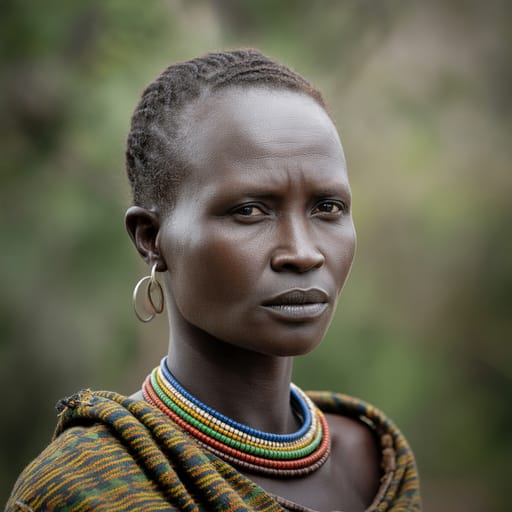
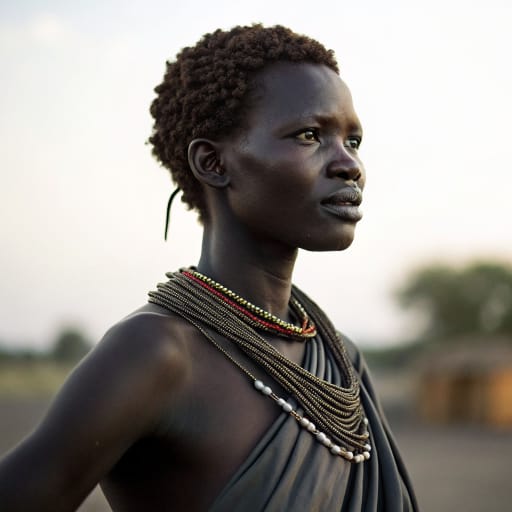
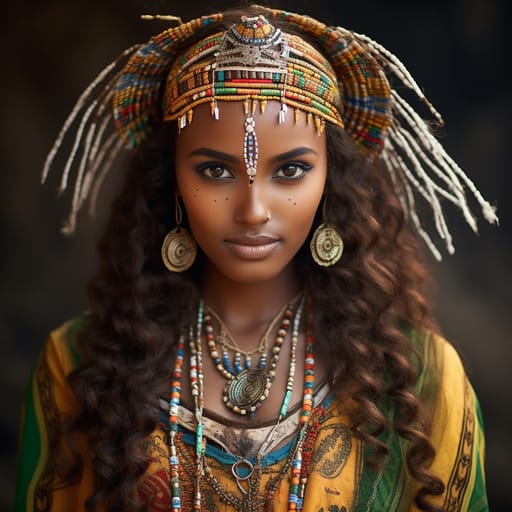
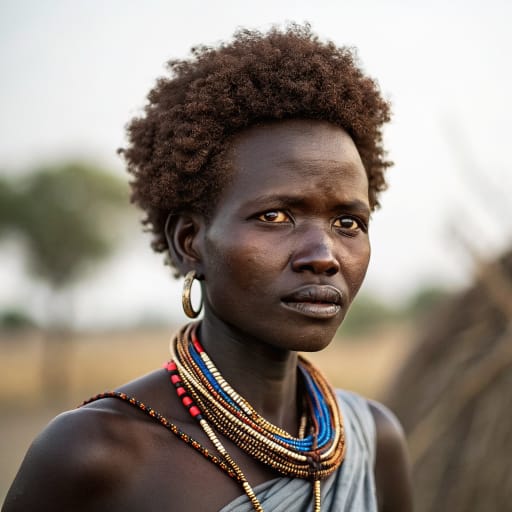
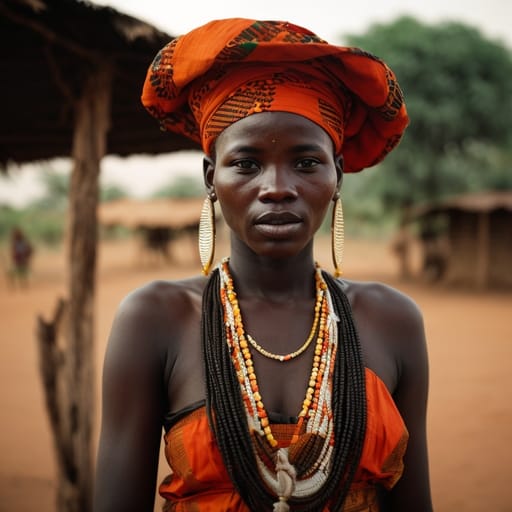
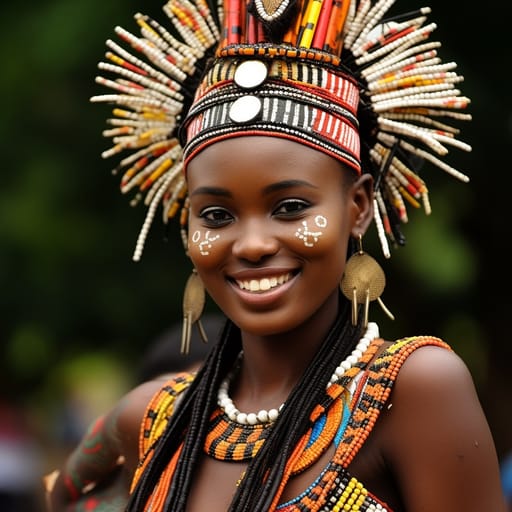
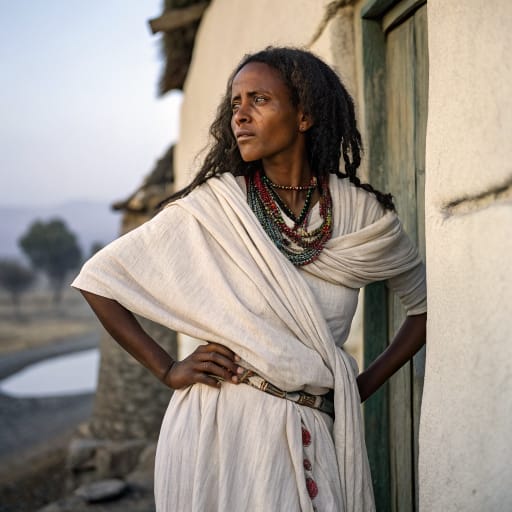
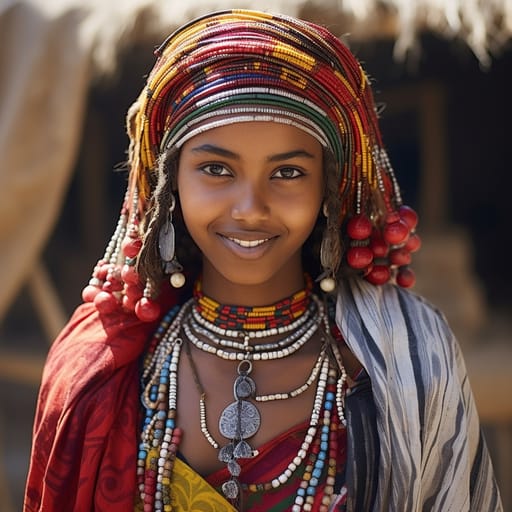
Geographic Distribution: Mijikenda populations across 1 country
Each row is ranked by the group's share of that country's population, with the source citation drawn from published census and demographic surveys. Click through for the full per-country phenotype profile.
| Country | Share | Source |
|---|---|---|
| Kenya | 5.3% | Kenya 2019 Census; Mijikenda (~5.3%); Bantu source population, predominantly coastal Kenya |
Typical Mijikenda Phenotypes
Reference for AI generation: hair, eyes, skin, facial structure, build
The Mijikenda — nine closely related Bantu-speaking communities of Kenya's coastal hinterland — present a phenotype shaped by long settlement in the humid coastal belt and centuries of low-level admixture with Cushitic, Swahili, and Arab-trading populations along the Indian Ocean littoral. The result is a profile recognizably East African Bantu, but visibly distinct from the highland Kikuyu or Kalenjin further inland.
Hair is overwhelmingly Type 4 — tight coils, often 4B to 4C — and uniformly black or near-black. Mature greying tends to come late and stays salt-and-pepper rather than full white. Texture is dense and high-density across the scalp, with the close-cropped or short-braided styles common along the coast.
Eyes run dark brown to near-black, with a clean, slightly almond shape and no epicanthic fold. Brows are full and straight-set. Skin tone falls in a relatively narrow band — roughly Fitzpatrick V to VI — with warm reddish-brown to deep umber undertones rather than the cooler blue-black tones seen in some Nilotic populations. Sun exposure on the coast tends to deepen rather than redden, and lifelong outdoor work produces visible weathering on the hands and forearms more than the face.
Facial structure is moderate by African standards: nasal bridges are low to medium, alar width broad but not extreme, and the philtrum often pronounced. Lips are full and well-defined, jawlines are squared in men and softer-rounded in women, and cheekbones sit moderately high without the sharp prominence seen in Maasai phenotypes.
Build is medium — neither the tall, lean narrow-hipped frame of Nilotic groups nor the stockier highland Bantu pattern. Adult male stature typically lands in the 170–178 cm range, with women proportionally lower. Shoulders are moderate, hips fuller in women, and overall body composition tends mesomorphic.
Among the sub-groups, the southern Digo show the most visible Swahili-Arab influence — slightly lighter skin and finer features in some lineages — while the Giriama of the central coast and the inland Chonyi retain the most uniformly Bantu phenotype. The Segeju, smallest and most southerly, show occasional traces of older Cushitic admixture in narrower nose form.
Mijikenda Body & Anatomy Reference
Anatomy by feature, Cushitic / Nilo-Cushitic East African phenotype
Mijikenda Boobs & Breasts
Mijikenda tits and boobs run small-to-medium-cup, high-set, conical, the classic Cushitic / Nilo-Cushitic East African bust profile. Mijikenda nipples and areolas show moderate-to-high areolar pigmentation against the brown-to-deep-brown skin tone, with areolar diameter typically in the 28-38mm range and forward-set positioning rather than the lateral spread of the West African phenotype. Mijikenda breasts trend firmer and less projecting than the African-American or West African norm, a function of the lean ectomorph-to-mesomorph body habitus and the mean adult female BMI 19-22. For anatomically accurate AI-generated Mijikenda nudes the render preserves the small-to-medium-cup, high-set, conical shape, 28-38mm areolas with moderate-to-high pigmentation, and the torso proportions of the Cushitic / Nilo-Cushitic East African phenotype.
Mijikenda Ass & Hips
Mijikenda hips and butt usually read as small-to-medium, high-set, rounded. The skeletal base is narrow-to-medium iliac crests, longer torso-to-leg ratio, the Cushitic / Nilo-Cushitic East African pattern. Set against the wide-set heavy-projection West African or African-American norm, the difference is easy to see, and the hip-to-waist ratio is often what identifies Mijikenda women in photos.
Mijikenda Vagina & Pussy
Expect brown-to-deep-brown labial pigmentation, narrow-to-medium labia minora projection on Mijikenda women, in keeping with Cushitic / Nilo-Cushitic East African ancestry. The pubic hair is tightly-coiled coarse texture, densely distributed. Coloring should run evenly from the brown to deep brown skin of the thighs to the labia, and Mijikenda nude imagery should keep the hair's tightly-coiled coarse texture.
Mijikenda Dicks & Penis
Mijikenda dick and penile anatomy in adult AI generation should anchor on the regional reference data: regional mean ~13.5cm erect, moderate girth, ~12cm circumference, and deeper-pigmented than the West African norm. The Mijikenda cock profile reflects the Cushitic / Nilo-Cushitic East African population's anthropometric measurements. The shaft pigmentation should track the surrounding brown to deep brown skin tone, and the pubic hair should keep its tightly-coiled coarse texture in the typical inverted-V escutcheon.
Mijikenda Body, Curves & Build
Mijikenda body type: lean ectomorph-to-mesomorph, with mean adult female BMI 19-22. This is the typical Cushitic / Nilo-Cushitic East African build. Height range, shoulder-to-hip ratio and fat distribution all follow from it, which is what an accurate Mijikenda nude body should show.
Mijikenda Skin Tone & Hair Texture
Mijikenda skin tone falls in the brown to deep brown (Fitzpatrick V-VI) band, the surface signal most often miscalibrated by generic AI nude generators. Mijikenda hair texture is typically tight 4A-4C coil, often worn natural or in braided/twisted protective styles, characteristic of the Cushitic / Nilo-Cushitic East African phenotype. In Mijikenda nude renders the skin should hold that band consistently across the body.
Data depth
0/100Coverage of image-grounded phenotype observations · drives AI generation diversity
- Sample size
- 0/40· 0 images
- Image quality
- 0/30· 0% high
- Confidence
- 0/20
- Source diversity
- 0/10
- ·No image observations yet
Explore phenotype categories
Structured taxonomy with peer-reviewed scales · 22 anatomical categories
Erotic Poses & Sex Positions
From the pose catalog: 219 named positions with reference skeletons
Frequently asked questions about Mijikenda people
Where is the Mijikenda homeland?
The Mijikenda homeland is Coast Province (Kenya) in Eastern Africa.
What countries do Mijikenda people live in?
Mijikenda populations are documented across 1 country: Kenya.
What language do Mijikenda people speak?
Mijikenda people primarily speak Niger-Congo / Bantu / Mijikenda.
What religion do Mijikenda people practice?
The predominant religion among Mijikenda people is Christianity.






Make your own Mijikenda images
Five a day, free, no credits to buy. The studio starts from this group's phenotype data, so you can set body type, pose and style and keep the traits accurate.
Start with Mijikenda