No portrait yet
Turu Erotic
The Singida plateau of central Tanzania, chiefly Singida Region.
Kinyaturu, also called Kirimi or Nyaturu (Bantu, Niger-Congo)
Predominantly Christian, mainly Catholic and Lutheran, with a Muslim minority and continuing ancestral practice.
A Bantu people of central Tanzania; sections include the Wahi, and they are closely related to the neighboring Nilamba (Iramba).
About Turu People
The Turu call themselves Arimi, a name usually read as "the cultivators," and it fits. They work the Singida plateau in central Tanzania, roughly 1,500 meters up, dry country of thornbush and granite outcrops with two shallow lakes sitting beside Singida town. Rain comes in a single season and cannot be counted on. The answer has been sorghum and bulrush millet rather than maize alone, goats and cattle kept against the year the fields fail, and a settled preference for spreading risk instead of betting everything on one harvest. Cattle carry more than food value here: they move at marriage, they settle obligations between families, and they say plainly where a household stands. The older house form is the tembe, low and rectangular, flat-roofed under a thick load of packed earth, built around an enclosure where stock is brought in at night. From any distance a homestead reads as part of the ground rather than something set on top of it.
Kinyaturu, also called Kirimi, is a Bantu language, close enough to Nilamba to the north that linguists often handle the two as one cluster. What makes the neighborhood remarkable is everything else inside a few hours' drive: the Iraqw speak a Cushitic language, the Datooga a Nilotic one, and the Sandawe and Hadza use clicks. Central Tanzania is one of the few places on earth where all four of Africa's major language families meet, and the Turu are the Bantu piece of that map. Much mid-century ethnography concentrated on the Wahi section, so outside accounts of Turu marriage and cattle wealth often describe Wahi practice in particular. Most Turu today are Christian, Catholic and Lutheran mission work having arrived under German and then British administration, with a Muslim minority and an older religious life organized around ancestors and the authority of lineage elders that folded itself into the calendar rather than vanishing. The sharpest recent break was the villagization drive of the 1970s, which pulled scattered homesteads into planned settlements and rearranged where people farmed and who they lived beside. Singida is now known nationally for its onions and sunflower oil, and young Turu leave regularly for work in Dodoma, Arusha and Dar es Salaam, then come back for the ceremonies that still require everyone present.
Related ethnic groups
Groups that share Turu's homeland, region, language, or religious tradition. These are likely candidates for comparative phenotype reference.
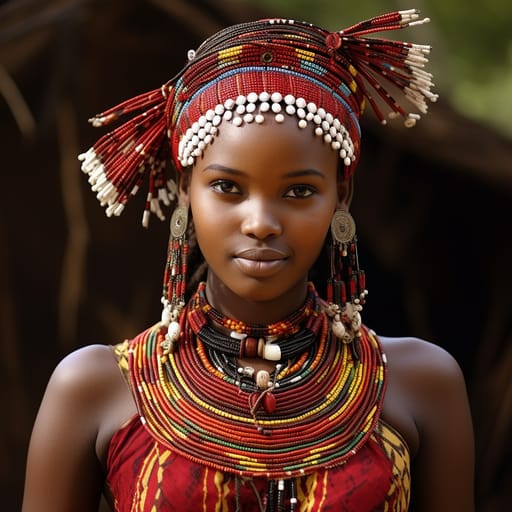
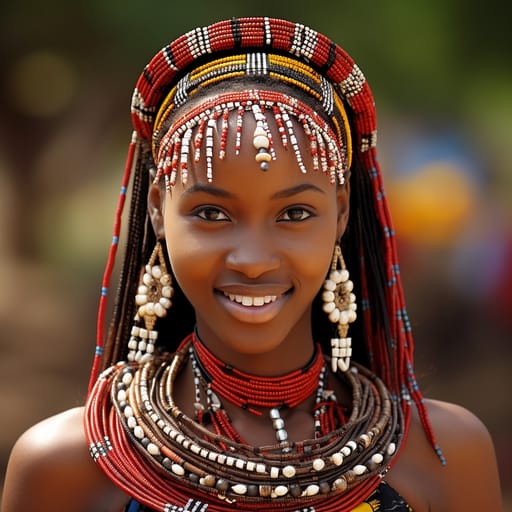
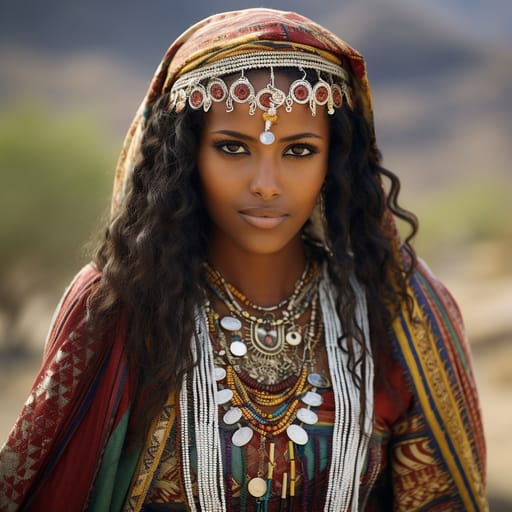
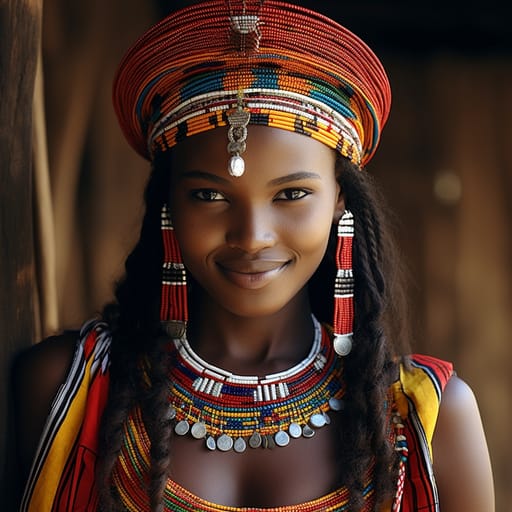
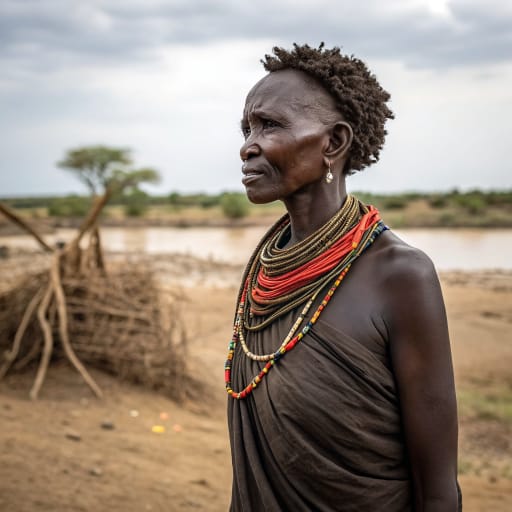
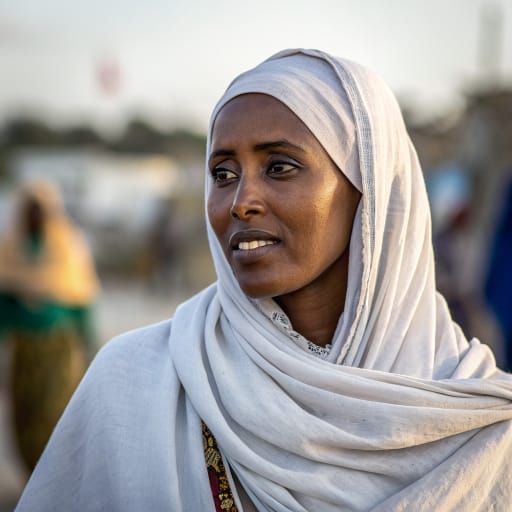
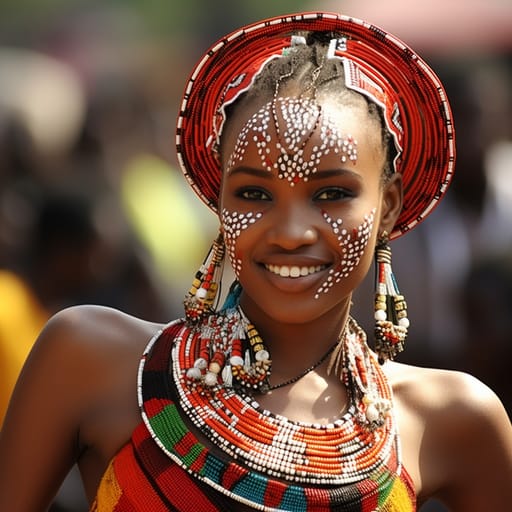
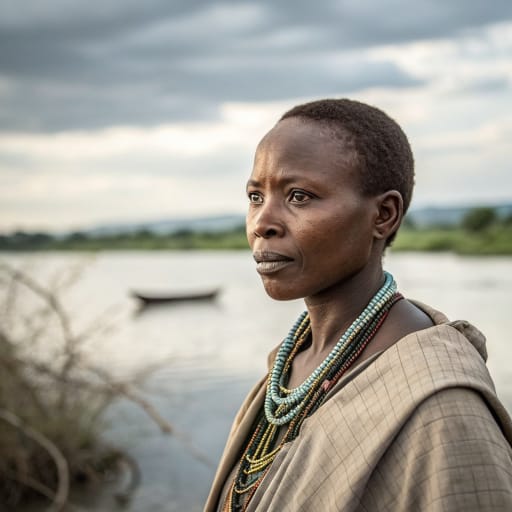
Typical Turu Phenotypes
Reference for AI generation: hair, eyes, skin, facial structure, build
Turu Body & Anatomy Reference
Cushitic / Nilo-Cushitic East African phenotype: anatomy reference for AI nude generation
Turu Boobs & Breasts
Turu tits and boobs run small-to-medium-cup, high-set, conical, the classic Cushitic / Nilo-Cushitic East African bust profile. Turu nipples and areolas show moderate-to-high areolar pigmentation against the brown-to-deep-brown skin tone, with areolar diameter typically in the 28-38mm range and forward-set positioning rather than the lateral spread of the West African phenotype. Turu breasts trend firmer and less projecting than the African-American or West African norm, a function of the lean ectomorph-to-mesomorph body habitus and the mean adult female BMI 19-22. For anatomically accurate AI-generated Turu nudes the render preserves the small-to-medium-cup, high-set, conical shape, 28-38mm areolas with moderate-to-high pigmentation, and the torso proportions of the Cushitic / Nilo-Cushitic East African phenotype.
Turu Ass & Hips
Turu hips and butt usually read as small-to-medium, high-set, rounded. The skeletal base is narrow-to-medium iliac crests, longer torso-to-leg ratio, the Cushitic / Nilo-Cushitic East African pattern. Set against the wide-set heavy-projection West African or African-American norm, the difference is easy to see, and the hip-to-waist ratio is often what identifies Turu women in photos.
Turu Vagina & Pussy
Expect brown-to-deep-brown labial pigmentation, narrow-to-medium labia minora projection on Turu women, in keeping with Cushitic / Nilo-Cushitic East African ancestry. The pubic hair is tightly-coiled coarse texture, densely distributed. Coloring should run evenly from the brown to deep brown skin of the thighs to the labia, and Turu nude imagery should keep the hair's tightly-coiled coarse texture.
Turu Dicks & Penis
Turu dick and penile anatomy in adult AI generation should anchor on the regional reference data: regional mean ~13.5cm erect, moderate girth, ~12cm circumference, and deeper-pigmented than the West African norm. The Turu cock profile reflects the Cushitic / Nilo-Cushitic East African population's anthropometric measurements. The shaft pigmentation should track the surrounding brown to deep brown skin tone, and the pubic hair should keep its tightly-coiled coarse texture in the typical inverted-V escutcheon.
Turu Body, Curves & Build
Turu body type: lean ectomorph-to-mesomorph, with mean adult female BMI 19-22. This is the typical Cushitic / Nilo-Cushitic East African build. Height range, shoulder-to-hip ratio and fat distribution all follow from it, which is what an accurate Turu nude body should show.
Turu Skin Tone & Hair Texture
Turu skin tone falls in the brown to deep brown (Fitzpatrick V-VI) band, the surface signal most often miscalibrated by generic AI nude generators. Turu hair texture is typically tight 4A-4C coil, often worn natural or in braided/twisted protective styles, characteristic of the Cushitic / Nilo-Cushitic East African phenotype. In Turu nude renders the skin should hold that band consistently across the body.
Explore phenotype categories
Structured taxonomy with peer-reviewed scales · 22 anatomical categories
Erotic Poses & Sex Positions
From the pose catalog: 219 named positions with reference skeletons
Frequently asked questions about Turu people
Where is the Turu homeland?
The Turu homeland is The Singida plateau of central Tanzania, chiefly Singida Region. in Eastern Africa.
What language do Turu people speak?
Turu people primarily speak Kinyaturu, also called Kirimi or Nyaturu (Bantu, Niger-Congo).
What religion do Turu people practice?
The predominant religion among Turu people is Predominantly Christian, mainly Catholic and Lutheran, with a Muslim minority and continuing ancestral practice..






Make your own Turu images
Five a day, free, no credits to buy. The studio starts from this group's phenotype data, so you can set body type, pose and style and keep the traits accurate.
Start with Turu