No portrait yet
Zanaki Erotic
Butiama District and nearby areas inland from Musoma, Mara Region, northern Tanzania, east of Lake Victoria
Zanaki, or Kizanaki (Bantu, East Nyanza group, Niger-Congo); Swahili widely spoken
Mostly Christian with a strong Roman Catholic presence, alongside older ancestral and rain-related beliefs
East Nyanza Bantu of Mara Region, closely related to the Kuria, Ikizu, Ngoreme, Ikoma and Nata; part of the wider Great Lakes Bantu family
About Zanaki People
The Zanaki are a small Bantu-speaking people from the hilly country inland from Musoma, on the Tanzanian side of Lake Victoria. Few people outside Mara Region could name them. Yet one Zanaki changed East Africa: Julius Kambarage Nyerere, the schoolteacher who led Tanganyika to independence and became Tanzania's first president, was born at Butiama and is buried there. To many Tanzanians the Zanaki are, first of all, Mwalimu's people.
For generations, life here has meant keeping cattle and farming millet, sorghum, cassava and maize, and bridewealth was traditionally counted in cattle. The Zanaki language belongs to the East Nyanza cluster of Great Lakes Bantu and is close to the languages of the neighboring Kuria, Ikizu and Ngoreme. To the north people speak Luo, a Nilotic language from a different family, and farther south they speak Sukuma. Nyerere pushed Swahili as the language of a single nation, and today it is used alongside Zanaki in schools, markets and churches.
Before colonial rule the Zanaki had no kingdom. Clan elders held authority, not a ruling dynasty. German and then British administrators divided the area into chiefdoms under recognized chiefs. Nyerere's father, Nyerere Burito, was one of them: a chief at Butiama with many wives and a large household. Family names carry local memory. Nyerere is usually explained as the name of a caterpillar that swarmed around the time the father was born, and the son was named Kambarage after a rain spirit.
Christian missions, especially Catholic ones, reshaped religious life in the twentieth century, and Nyerere himself was baptized as a young man. Most Zanaki today are Christian, though older ideas about ancestors and rain have not fully faded. When Nyerere built his policy of ujamaa, or familyhood, he pointed to the shared duties of rural communities like the one he grew up in. After leaving office he went home to farm. Visitors now come to Butiama for his family compound at Mwitongo, his grave and the museum that bears his name, and the Catholic Church has opened a cause for his beatification. Few peoples so small have left such a mark on a country.
Related ethnic groups
Groups that share Zanaki's homeland, region, language, or religious tradition. These are likely candidates for comparative phenotype reference.
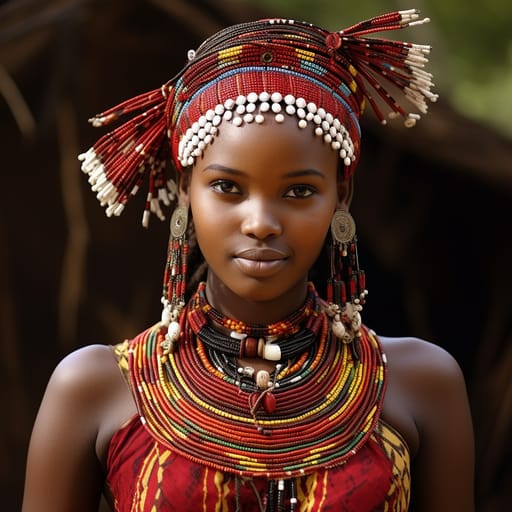
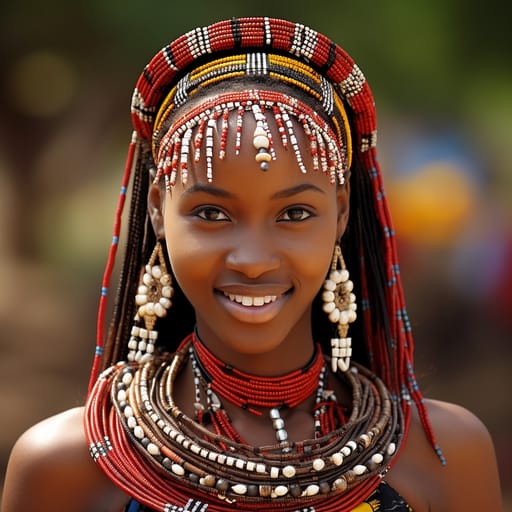
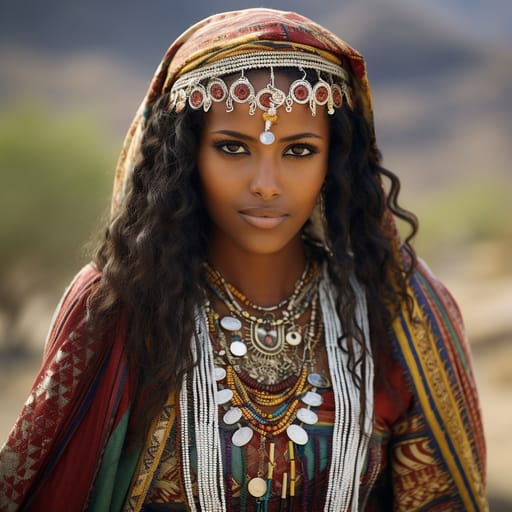
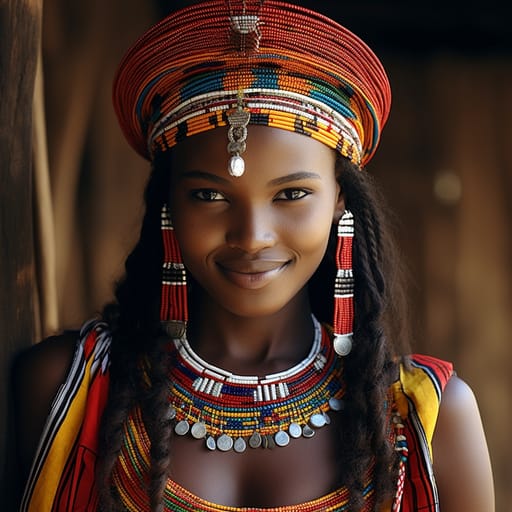
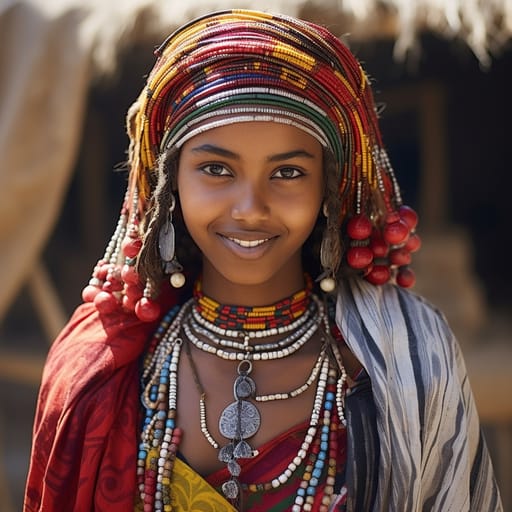
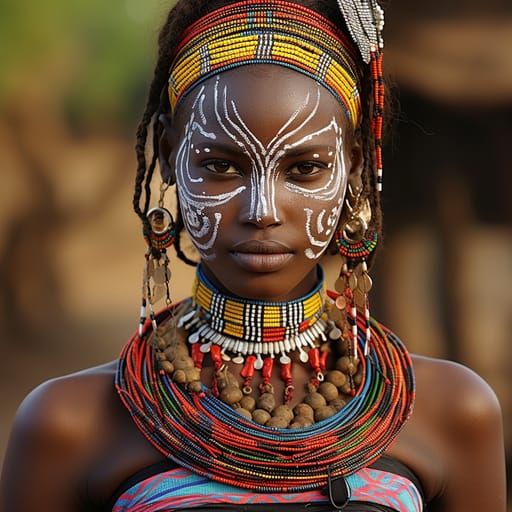
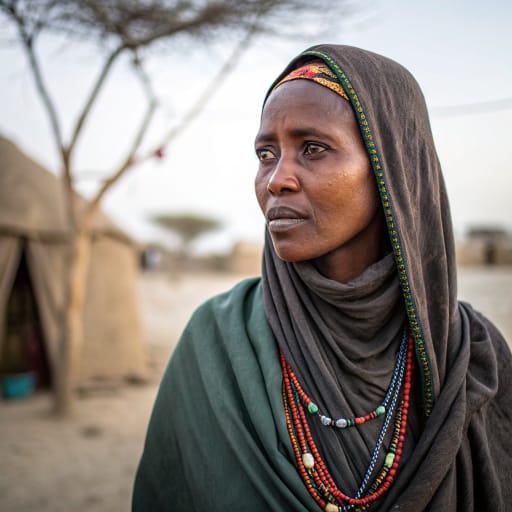
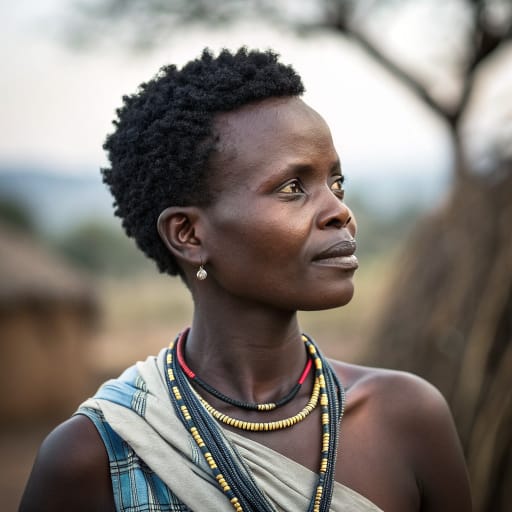
Typical Zanaki Phenotypes
Reference for AI generation: hair, eyes, skin, facial structure, build
Zanaki Body & Anatomy Reference
Per-feature anatomical profile for AI nude generation: Cushitic / Nilo-Cushitic East African phenotype
Zanaki Boobs & Breasts
Zanaki boobs follow the Cushitic / Nilo-Cushitic East African profile: small-to-medium-cup, high-set, conical. Areolar diameter is usually 28-38mm, and the coloring is moderate-to-high areolar pigmentation against the brown-to-deep-brown skin tone. Breast shape tracks body composition (lean ectomorph-to-mesomorph, mean adult female BMI 19-22), so Zanaki breasts tend to be firmer and less projecting than the African-American or West African norm. Expect a forward-set shape, not the lateral spread of the West African phenotype.
Zanaki Ass & Hips
Zanaki ass and hip morphology presents as small-to-medium, high-set, rounded, distinctly different from the wide-set heavy-projection West African or African-American norm. The Zanaki pelvic profile shows narrow-to-medium iliac crests, longer torso-to-leg ratio, anchored in the Cushitic / Nilo-Cushitic East African skeletal pattern. Zanaki butt shots in adult AI imagery should render the small-to-medium, high-set, rounded silhouette with the overall build (lean ectomorph-to-mesomorph) and the fat distribution typical of the Cushitic / Nilo-Cushitic East African phenotype.
Zanaki Vagina & Pussy
Zanaki pussy anatomy typically shows brown-to-deep-brown labial pigmentation, narrow-to-medium labia minora projection. Pubic hair is usually tightly-coiled coarse texture, densely distributed. In AI-generated Zanaki nudes, labial color should blend into the brown to deep brown skin with a gradual transition, and the hair should keep its tightly-coiled coarse texture.
Zanaki Dicks & Penis
Penis reference for Zanaki men: regional mean ~13.5cm erect, moderate girth, ~12cm circumference. Coloring: deeper-pigmented than the West African norm. An accurate Zanaki cock in AI imagery matches the surrounding brown to deep brown skin rather than a generic porn default. Circumcision depends on religion and custom, not ancestry.
Zanaki Body, Curves & Build
The Zanaki figure is generally lean ectomorph-to-mesomorph, with mean adult female BMI 19-22, characteristic of Cushitic / Nilo-Cushitic East African ancestry. AI image tools tend to flatten regional body types into a few stock shapes; here the Zanaki build is kept as its own reference.
Zanaki Skin Tone & Hair Texture
Skin: brown to deep brown (Fitzpatrick V-VI). Hair: tight 4A-4C coil, often worn natural or in braided/twisted protective styles. Both are typical of Cushitic / Nilo-Cushitic East African ancestry. The most common mistake in AI nudes of Zanaki women is a body rendered lighter than the face.
Explore phenotype categories
Structured taxonomy with peer-reviewed scales · 22 anatomical categories
Erotic Poses & Sex Positions
From the pose catalog: 219 named positions with reference skeletons
Frequently asked questions about Zanaki people
Where is the Zanaki homeland?
The Zanaki homeland is Butiama District and nearby areas inland from Musoma, Mara Region, northern Tanzania, east of Lake Victoria in Eastern Africa.
What language do Zanaki people speak?
Zanaki people primarily speak Zanaki, or Kizanaki (Bantu, East Nyanza group, Niger-Congo); Swahili widely spoken.
What religion do Zanaki people practice?
The predominant religion among Zanaki people is Mostly Christian with a strong Roman Catholic presence, alongside older ancestral and rain-related beliefs.






Make your own Zanaki images
Five a day, free, no credits to buy. The studio starts from this group's phenotype data, so you can set body type, pose and style and keep the traits accurate.
Start with Zanaki