Help us get this right
Does this portrait look right for Dhulbahante?
Nobody has judged this one yet. You would be the first.
Dhulbahante Erotic
The Sool and Nugaal regions and the Cayn district around Buuhoodle in northern Somalia, extending into the Somali Region of Ethiopia.
Somali, northern dialect group (Cushitic, Afroasiatic); Arabic for religious use.
Sunni Islam, Shafi'i school, with a long Sufi presence.
Harti confederation of the Darod clan family; main branches Mahamuud Garaad and Faarax Garaad, with Barkad, Naleeye Ahmed and others.
About Dhulbahante People
The Dhulbahante are a Somali clan of the Harti Darod, and the people whose grazing lands cover the Nugaal valley and the Sool plateau: dry, open country of thorn scrub and seasonal watercourses in northern Somalia, running west into the Cayn district around Buuhoodle and over the border into Ethiopia's Somali Region. Laascaanood is the town everyone means when they talk about Dhulbahante politics. Descent is the organizing fact of daily life. The clan divides into two large branches, Mahamuud Garaad and Faarax Garaad, with smaller lineages such as the Barkad and Naleeye Ahmed alongside them, and each of those lineages is also a legal unit: under xeer, Somali customary law, the lineage is the body that collects and pays mag, the compensation owed for injury or death. A genealogy that looks to outsiders like family trivia works in practice as insurance policy and court at once. Camels, sheep and goats are the wealth behind it, and seasonal movement between wet and dry grazing still decides where many families are in a given month. Dhulbahante leadership runs through the Garaad, a titled elder with real convening power; when the Garaads agree on something, people move.
The clan's defining episode is the Dervish war. From 1899 to 1920, Sayyid Maxamed Cabdille Xasan, a Salihiyya sheikh and poet, Ogaden through his father and Dhulbahante through his mother, held off the British, the Italians and the Ethiopians from stone fortresses at Taleex, and the Dhulbahante supplied the movement's core. It ended in 1920 under British aerial bombardment, one of the earliest air campaigns of its kind in Africa. The Sayyid's gabays outlasted the state he built and are still recited; his verse on the death of the British officer Richard Corfield at Dul Madoba in 1913 is a set piece of Somali literature. Islam here is Sunni and Shafi'i, with Sufi orders long threaded through it, and it registers less as institution than as the working grammar of oaths, mediation and marriage. Dhulbahante country has been contested ground for a generation, claimed by Somaliland and Puntland at the same time, and in 2023 it was the site of heavy fighting in Laascaanood after clan elders declared their own administration, SSC-Khaatumo. Verse remains the medium in which the arguments get made and remembered.
Related ethnic groups
Groups that share Dhulbahante's homeland, region, language, or religious tradition. These are likely candidates for comparative phenotype reference.
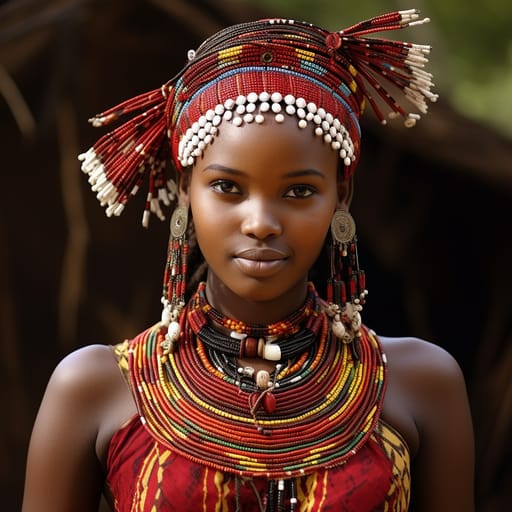
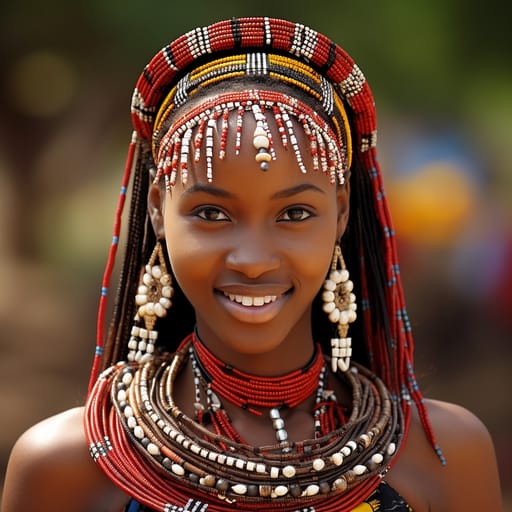
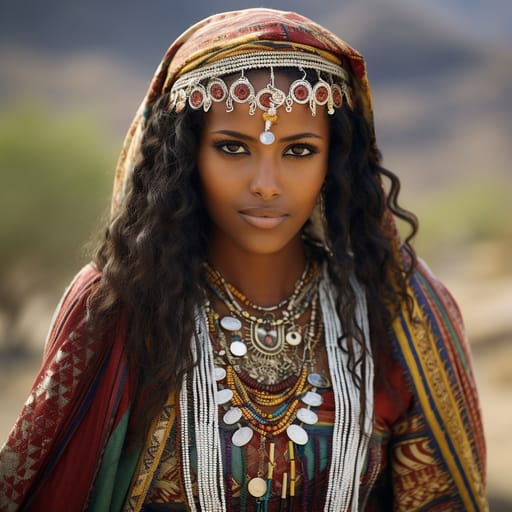
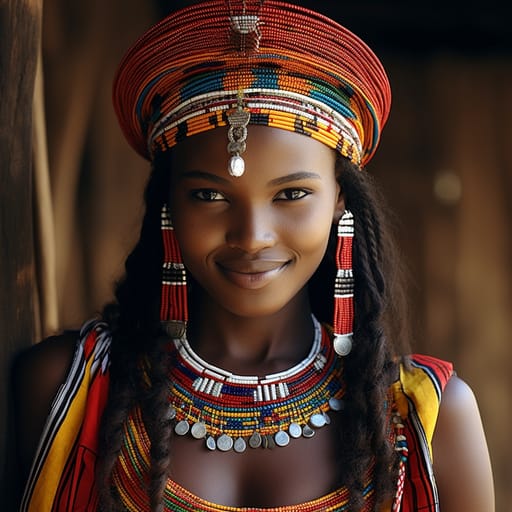
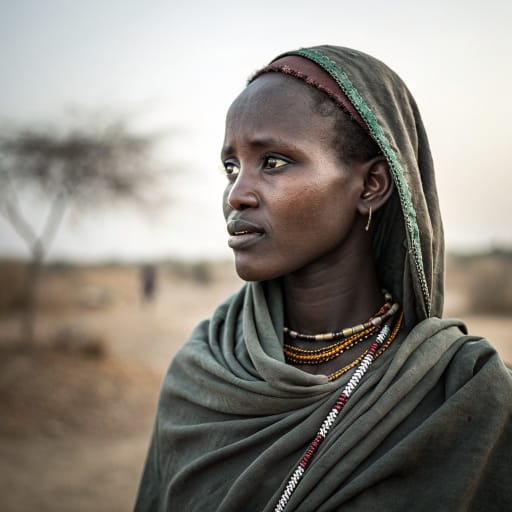
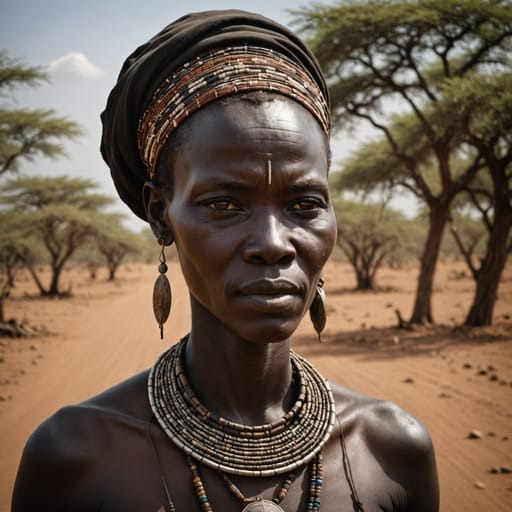
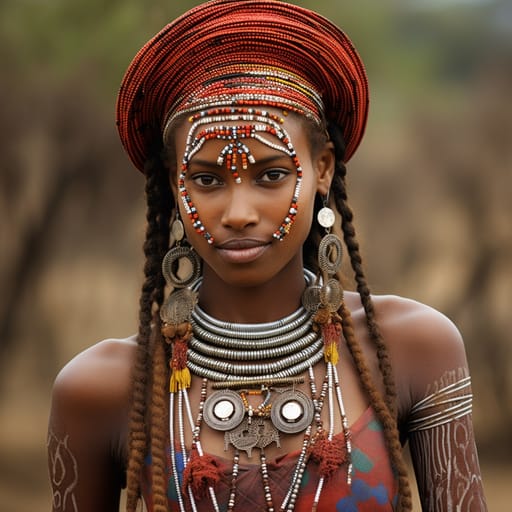
Typical Dhulbahante Phenotypes
Reference for AI generation: hair, eyes, skin, facial structure, build
Dhulbahante Body & Anatomy Reference
Anatomy by feature, Cushitic / Nilo-Cushitic East African phenotype
Dhulbahante Boobs & Breasts
Dhulbahante tits and boobs run small-to-medium-cup, high-set, conical, the classic Cushitic / Nilo-Cushitic East African bust profile. Dhulbahante nipples and areolas show moderate-to-high areolar pigmentation against the brown-to-deep-brown skin tone, with areolar diameter typically in the 28-38mm range and forward-set positioning rather than the lateral spread of the West African phenotype. Dhulbahante breasts trend firmer and less projecting than the African-American or West African norm, a function of the lean ectomorph-to-mesomorph body habitus and the mean adult female BMI 19-22. For anatomically accurate AI-generated Dhulbahante nudes the render preserves the small-to-medium-cup, high-set, conical shape, 28-38mm areolas with moderate-to-high pigmentation, and the torso proportions of the Cushitic / Nilo-Cushitic East African phenotype.
Dhulbahante Ass & Hips
Dhulbahante hips and butt usually read as small-to-medium, high-set, rounded. The skeletal base is narrow-to-medium iliac crests, longer torso-to-leg ratio, the Cushitic / Nilo-Cushitic East African pattern. Set against the wide-set heavy-projection West African or African-American norm, the difference is easy to see, and the hip-to-waist ratio is often what identifies Dhulbahante women in photos.
Dhulbahante Vagina & Pussy
Expect brown-to-deep-brown labial pigmentation, narrow-to-medium labia minora projection on Dhulbahante women, in keeping with Cushitic / Nilo-Cushitic East African ancestry. The pubic hair is tightly-coiled coarse texture, densely distributed. Coloring should run evenly from the brown to deep brown skin of the thighs to the labia, and Dhulbahante nude imagery should keep the hair's tightly-coiled coarse texture.
Dhulbahante Dicks & Penis
Dhulbahante dick and penile anatomy in adult AI generation should anchor on the regional reference data: regional mean ~13.5cm erect, moderate girth, ~12cm circumference, and deeper-pigmented than the West African norm. The Dhulbahante cock profile reflects the Cushitic / Nilo-Cushitic East African population's anthropometric measurements. The shaft pigmentation should track the surrounding brown to deep brown skin tone, and the pubic hair should keep its tightly-coiled coarse texture in the typical inverted-V escutcheon.
Dhulbahante Body, Curves & Build
Dhulbahante body type: lean ectomorph-to-mesomorph, with mean adult female BMI 19-22. This is the typical Cushitic / Nilo-Cushitic East African build. Height range, shoulder-to-hip ratio and fat distribution all follow from it, which is what an accurate Dhulbahante nude body should show.
Dhulbahante Skin Tone & Hair Texture
Dhulbahante skin tone falls in the brown to deep brown (Fitzpatrick V-VI) band, the surface signal most often miscalibrated by generic AI nude generators. Dhulbahante hair texture is typically tight 4A-4C coil, often worn natural or in braided/twisted protective styles, characteristic of the Cushitic / Nilo-Cushitic East African phenotype. In Dhulbahante nude renders the skin should hold that band consistently across the body.
Explore phenotype categories
Structured taxonomy with peer-reviewed scales · 22 anatomical categories
Erotic Poses & Sex Positions
From the pose catalog: 219 named positions with reference skeletons
Frequently asked questions about Dhulbahante people
Where is the Dhulbahante homeland?
The Dhulbahante homeland is The Sool and Nugaal regions and the Cayn district around Buuhoodle in northern Somalia, extending into the Somali Region of Ethiopia. in Eastern Africa.
What language do Dhulbahante people speak?
Dhulbahante people primarily speak Somali, northern dialect group (Cushitic, Afroasiatic); Arabic for religious use..
What religion do Dhulbahante people practice?
The predominant religion among Dhulbahante people is Sunni Islam, Shafi'i school, with a long Sufi presence..






Make your own Dhulbahante images
Five a day, free, no credits to buy. The studio starts from this group's phenotype data, so you can set body type, pose and style and keep the traits accurate.
Start with Dhulbahante