Help us get this right
Does this portrait look right for Ndogo?
One tap. It takes a second and it is recorded.
1 says it looks right, 0 say it looks off.
Ndogo Erotic
Western Bahr el Ghazal, South Sudan: around Wau and west along the road toward Deim Zubeir and Raga, on the ironstone plateau.
Ndogo (Ubangian, Sere branch of Sere-Ngbaka-Mba); Arabic widely used as a second language.
Mostly Roman Catholic, with older beliefs about ancestors and misfortune still present.
One of the Sere-cluster peoples (with Sere, Bai, Bviri, Tagbu); commonly grouped with other small Western Bahr el Ghazal peoples under the regional label Fertit.
About Ndogo People
The Ndogo are one of the small farming peoples of Western Bahr el Ghazal in South Sudan, settled around the town of Wau and westward along the road that runs toward Deim Zubeir and Raga. What marks them out is less their size, a few tens of thousands, than their position: they are a Ubangian-speaking people at the far northeastern edge of that language family, living beside the much larger Nilotic world of the Dinka and Luo. Their language, also called Ndogo, belongs to the Sere cluster along with Sere, Bai, Bviri and Tagbu, and most of the rest of the family lies south and west, in the Central African Republic and the Congo basin. Inside the region it carries more weight than the head count suggests. Neighbors such as the Golo and Bai commonly use it as a second language, and Catholic missionaries adopted it early for schooling and church use, which gave it a written form and a body of printed material.
The country is ironstone plateau and wooded savanna, tsetse territory, so the Ndogo are cultivators rather than cattle keepers: sorghum, cassava, groundnuts and sesame, with hunting, fishing and wild honey filling out the year. That difference from the herding Dinka is economic, but it has also been political. Outsiders have long lumped the Ndogo together with the Balanda, Kresh, Golo, Banda and others under the label Fertit, a term that began as a slight and has since been partly reclaimed as a regional identity. In the nineteenth century Zande expansion pressed from the south while slave and ivory traders ran fortified camps across the plateau. Deim Zubeir still carries the name of the most notorious of them. Whole communities were scattered or absorbed, and the Ndogo of today are in part a regrouping of survivors. Colonial administrators later pulled villages onto the roads, partly to control sleeping sickness, which is why settlement still strings along them.
Most Ndogo are Roman Catholic, the legacy of the Verona Fathers who set up around Wau in the early 1900s, and the church remains a real institution in daily life: school, clinic, meeting place and, more than once, refuge. Older beliefs about ancestors and the causes of misfortune have not vanished; they sit underneath, consulted when illness or bad luck needs explaining. In the 1980s Wau was split by killings between government-armed Fertit militias and the town's Dinka, and fighting in 2016 drove tens of thousands of townspeople, many Ndogo among them, into church compounds and a UN protection site. Arabic is the language of the Wau market, but Ndogo remains the language of home and village.
Related ethnic groups
Groups that share Ndogo's homeland, region, language, or religious tradition. These are likely candidates for comparative phenotype reference.
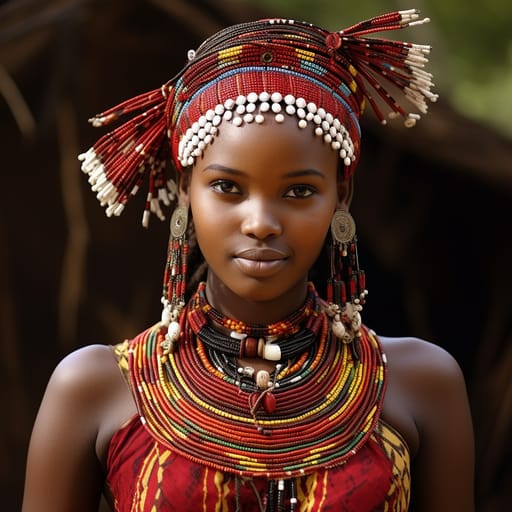
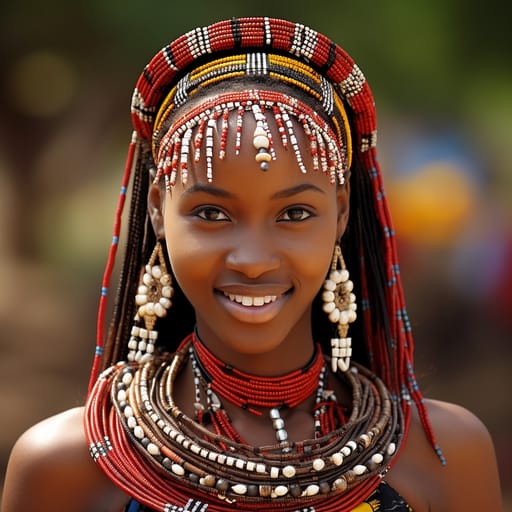
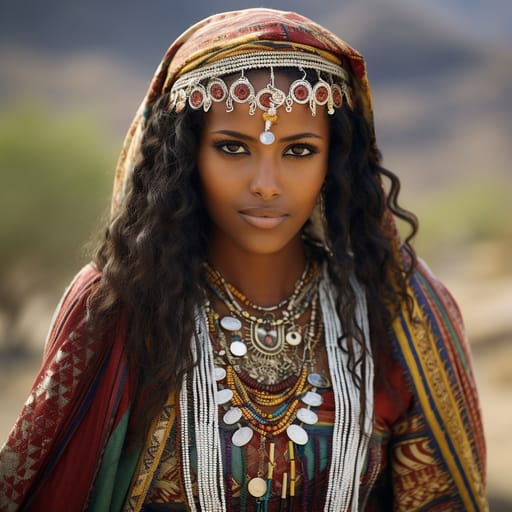
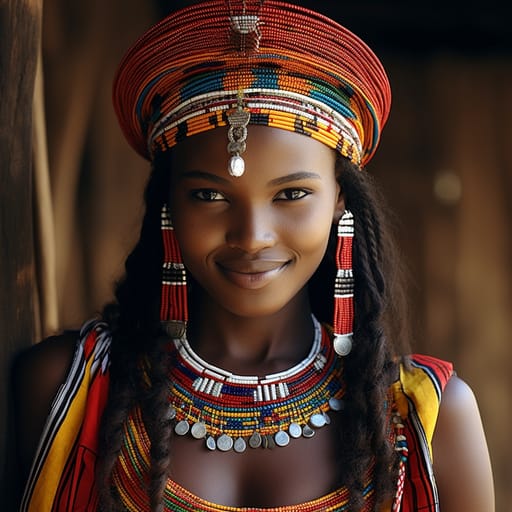
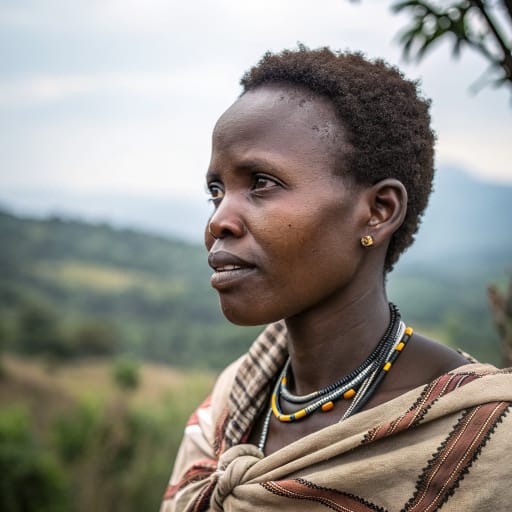
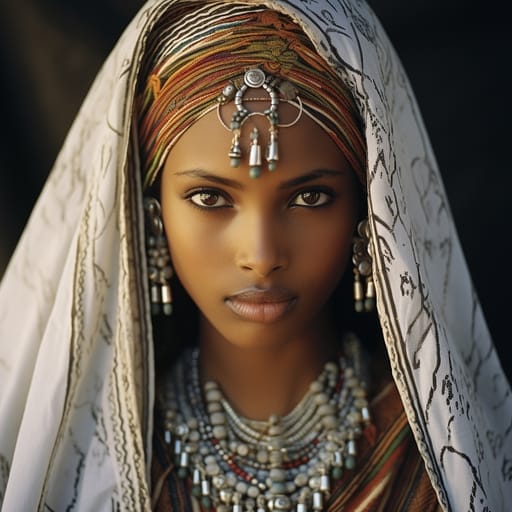
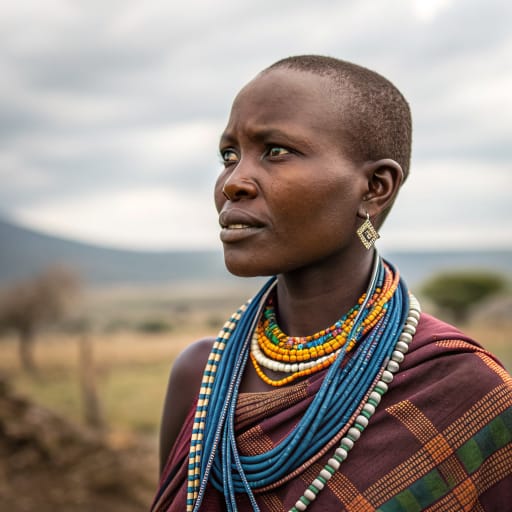
Typical Ndogo Phenotypes
Reference for AI generation: hair, eyes, skin, facial structure, build
Ndogo Body & Anatomy Reference
Anatomy by feature, Cushitic / Nilo-Cushitic East African phenotype
Ndogo Boobs & Breasts
The typical Ndogo bust is small-to-medium-cup, high-set, conical, in line with the wider Cushitic / Nilo-Cushitic East African pattern. Areolas usually fall in the 28-38mm range, with moderate-to-high areolar pigmentation against the brown-to-deep-brown skin tone. Compared with the lateral spread of the West African phenotype, Ndogo breasts sit forward and are generally firmer and less projecting than the African-American or West African norm. A faithful AI render of Ndogo tits keeps that shape and areola size.
Ndogo Ass & Hips
Butt shape among Ndogo women: small-to-medium, high-set, rounded, over narrow-to-medium iliac crests, longer torso-to-leg ratio. This follows Cushitic / Nilo-Cushitic East African ancestry and looks quite unlike the wide-set heavy-projection West African or African-American norm. An accurate Ndogo ass in adult AI imagery keeps both the silhouette and the overall build (lean ectomorph-to-mesomorph) instead of a generic average.
Ndogo Vagina & Pussy
Vulvar anatomy among Ndogo women: brown-to-deep-brown labial pigmentation, narrow-to-medium labia minora projection. Pubic hair tends to be tightly-coiled coarse texture, densely distributed, in the usual inverted-triangle pattern. Both follow Cushitic / Nilo-Cushitic East African pigmentation, which is why Ndogo pussy renders should not fall back on a pale, sparse Western template.
Ndogo Dicks & Penis
The Ndogo cock profile, from Cushitic / Nilo-Cushitic East African anthropometric data: regional mean ~13.5cm erect; moderate girth, ~12cm circumference; deeper-pigmented than the West African norm. Pubic hair has a tightly-coiled coarse texture and forms the usual inverted-V pattern. Whether Ndogo men are circumcised follows religious and cultural practice rather than phenotype.
Ndogo Body, Curves & Build
Build and curves among Ndogo women follow the Cushitic / Nilo-Cushitic East African pattern: lean ectomorph-to-mesomorph, mean adult female BMI 19-22. Proportions matter as much as skin tone, so Ndogo figures should keep their regional height and limb ratios.
Ndogo Skin Tone & Hair Texture
The Ndogo skin range is brown to deep brown (Fitzpatrick V-VI), and hair tends to be tight 4A-4C coil, often worn natural or in braided/twisted protective styles. That combination marks the Cushitic / Nilo-Cushitic East African phenotype, and skin tone is the trait AI generators most often get wrong for Ndogo women.
Explore phenotype categories
Structured taxonomy with peer-reviewed scales · 22 anatomical categories
Erotic Poses & Sex Positions
From the pose catalog: 219 named positions with reference skeletons
Frequently asked questions about Ndogo people
Where is the Ndogo homeland?
The Ndogo homeland is Western Bahr el Ghazal, South Sudan: around Wau and west along the road toward Deim Zubeir and Raga, on the ironstone plateau. in Eastern Africa.
What language do Ndogo people speak?
Ndogo people primarily speak Ndogo (Ubangian, Sere branch of Sere-Ngbaka-Mba); Arabic widely used as a second language..
What religion do Ndogo people practice?
The predominant religion among Ndogo people is Mostly Roman Catholic, with older beliefs about ancestors and misfortune still present..






Make your own Ndogo images
Five a day, free, no credits to buy. The studio starts from this group's phenotype data, so you can set body type, pose and style and keep the traits accurate.
Start with Ndogo