Help us get this right
Does this portrait look right for Bembe?
Nobody has judged this one yet. You would be the first.
Bembe Erotic
Christianity
About Bembe People
The Bembe live along the western shore of Lake Tanganyika and across the forested highlands of South Kivu, with a smaller population spilling east into Tanzania. The lake is the through-line of Bembe life — the steep escarpment that drops into it shapes how villages sit, how fish move through the household economy, and how news travels up and down the coast. Inland, the country folds into hills cut by fast rivers; this is rougher terrain than the savanna farther west, and it has historically given the Bembe a measure of insulation from the larger kingdoms and trading networks of the Congo basin.
Their language, Ibembe, belongs to the eastern Bantu cluster and shares clear ground with Bembe-of-Boma, Lega, and Buyu, but the two main Bembe communities — the lake-shore people and the highland forest people — speak noticeably different registers, and older speakers are usually quick to point out which one a stranger comes from. There is no single Bembe polity in the historical sense; authority traditionally sat with clan heads and ritual specialists rather than chiefs in the centralized West African mold, which is part of why colonial administrators struggled to map them and why writers often understate how internally varied the group is.
Most Bembe today identify as Christian, predominantly Catholic in the older mission zones and Protestant or Pentecostal in newer congregations, though the texture of belief is layered. Ancestral observance, divination practices, and the ritual significance of certain places in the forest haven't disappeared so much as moved around inside the calendar — they sit alongside Sunday rather than against it. The Bembe are particularly known among collectors for their wood sculpture, especially small standing figures associated with lineage and healing, and for the elanda and bwami-adjacent associations that govern initiation into adult standing in some communities.
The last three decades have been brutal on the region. The wars that flowed through eastern Congo from the mid-1990s onward displaced large numbers of Bembe and disrupted the lake-and-hill economy that had held for generations. Many families now live partly in Uvira, Baraka, or across the border, sending money and instructions home. The culture is doing what cultures under that kind of pressure do — adapting hard, holding what it can, and arguing internally about what counts as the real thing.
Related ethnic groups
Groups that share Bembe's homeland, region, language, or religious tradition. These are likely candidates for comparative phenotype reference.
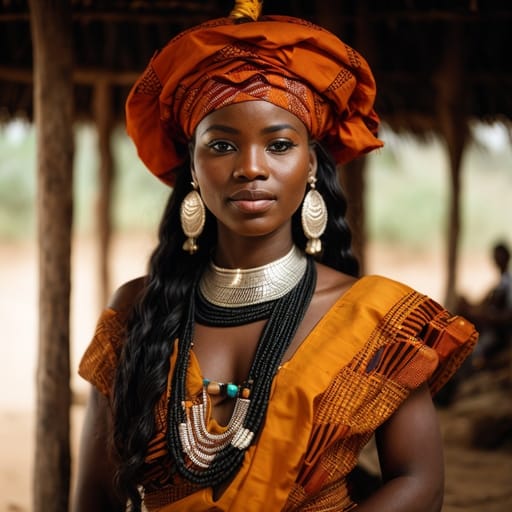
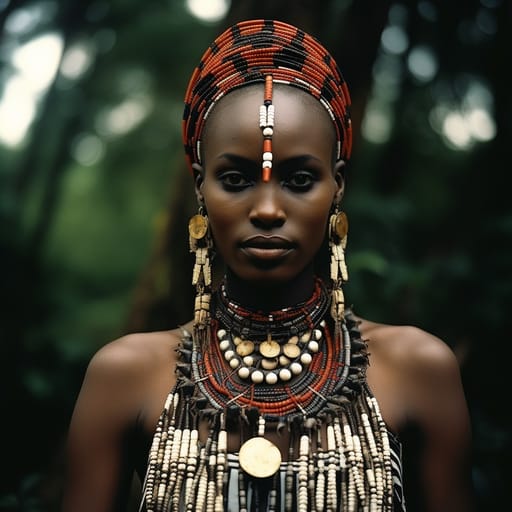
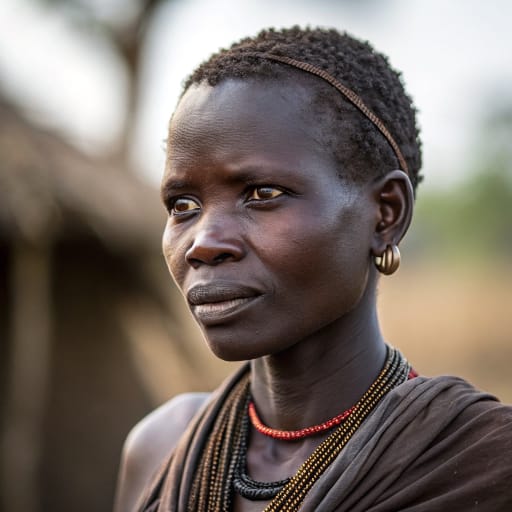
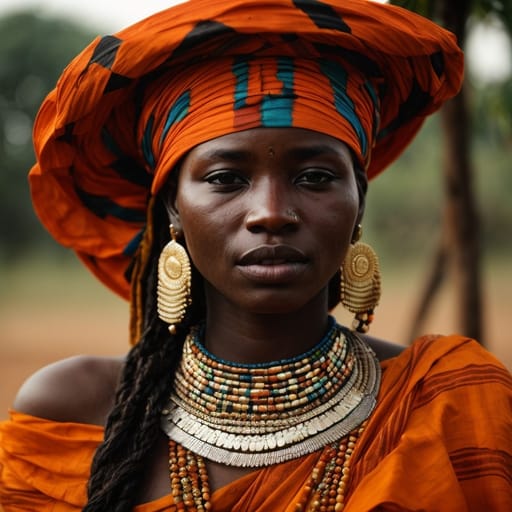
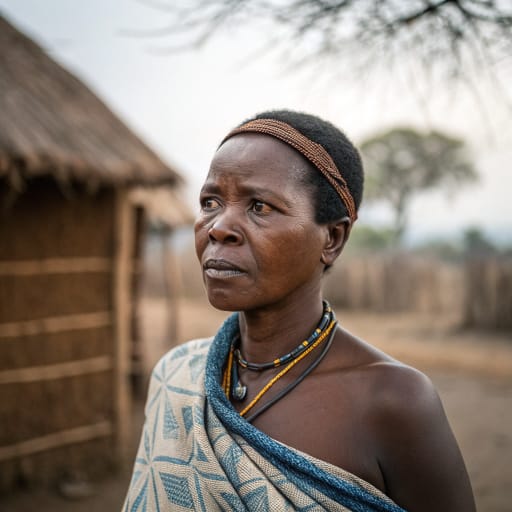
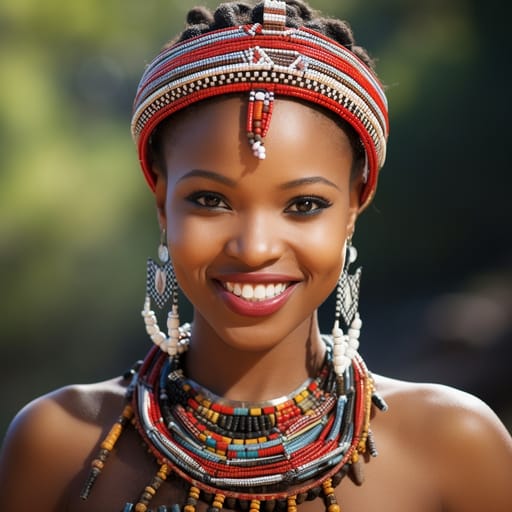
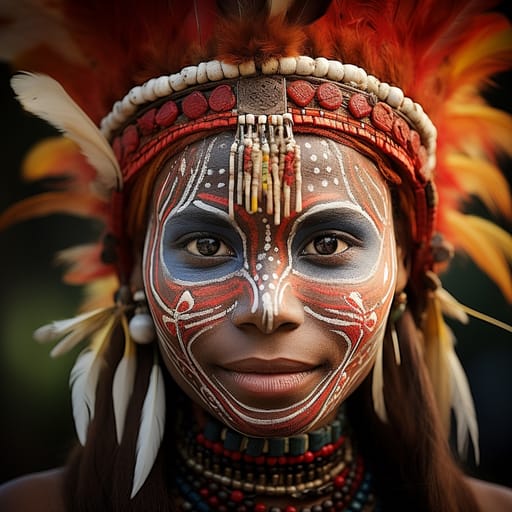
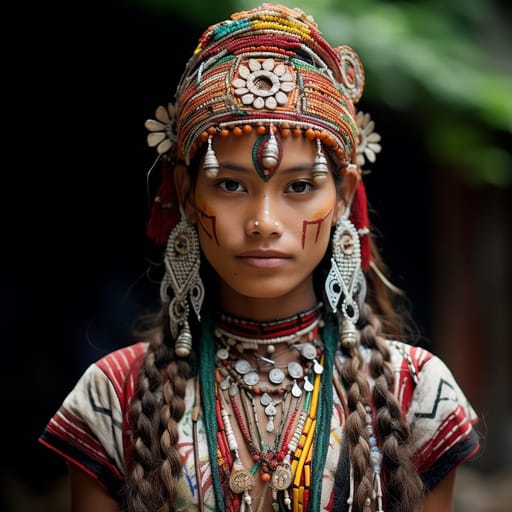
Typical Bembe Phenotypes
Reference for AI generation: hair, eyes, skin, facial structure, build
The Bembe sit within the broader Central African Bantu cluster, and their phenotype reflects that lineage: deep skin tone, tightly coiled hair, and the broader-featured facial morphology common to forest-edge populations on either side of Lake Tanganyika. Hair is almost universally Type 4 — tight coils ranging from springy 4A through dense 4B to compact 4C — and color sits in the natural black to very dark brown range. Premature greying at the temples is a fairly common feature in older men. Hair worn natural is the norm; cropped low cuts dominate among men, while women span everything from short naturals to braided and threaded styles.
Eyes are dark brown, often appearing nearly black under low light, with a small minority showing a warmer reddish-brown. The lid is open and almond-shaped — no epicanthic fold — set under a moderately prominent brow. Sclera tend to read slightly warm rather than bright white, a common trait across equatorial African populations.
Skin is uniformly deep, sitting in Fitzpatrick V–VI with most individuals at the darker end. Undertones lean cool to neutral, with a slight reddish or olive cast in some lineages from the Kivu highlands. Sun-driven variation is minimal given the consistent equatorial UV exposure across the homeland.
Facial structure tends toward a wide, low nasal bridge with broader alar wings, full and well-defined lips with a pronounced vermilion border, and rounded rather than sharply angular cheekbones. Jaws are moderate — neither especially square nor tapered — and prognathism is mild when present.
Build is medium-height by African standards, with men typically falling in the 168–178 cm range and women 158–168 cm. Body composition trends athletic-lean in rural lake and forest communities, with broader shoulders and well-developed lower bodies; urban Kinshasa and Dar es Salaam Bembe show more variation. Bembe of the Tanzanian side (around Mpanda and the Lake Tanganyika shore) sometimes show slightly lighter average skin tone and finer features than the DRC Kivu-region branches, reflecting longer contact with neighboring Ha and Fipo populations.
Bembe Body & Anatomy Reference
Per-feature anatomical profile for AI nude generation: Bantu / Central African Niger-Congo phenotype
Bembe Boobs & Breasts
The typical Bembe bust is medium-to-large cup, full, projecting, in line with the wider Bantu / Central African Niger-Congo pattern. Areolas usually fall in the 32-48mm range, with deep-brown areolar pigmentation against the deep-brown skin tone. Compared with the smaller East African conical profile, Bembe breasts sit forward and are generally fuller projection than East African; comparable to West African norm. A faithful AI render of Bembe tits keeps that shape and areola size.
Bembe Ass & Hips
Butt shape among Bembe women: full, projected, wide-set glutes, over broad iliac crests, gynoid pelvic pattern. This follows Bantu / Central African Niger-Congo ancestry and looks quite unlike the slim narrow-hip Cushitic East African profile. An accurate Bembe ass in adult AI imagery keeps both the silhouette and the overall build (mesomorph with strong gluteal-femoral fat deposition) instead of a generic average.
Bembe Vagina & Pussy
Vulvar anatomy among Bembe women: deep-brown labial pigmentation, fuller labia minora. Pubic hair tends to be tightly-coiled coarse texture, dense distribution, in the usual inverted-triangle pattern. Both follow Bantu / Central African Niger-Congo pigmentation, which is why Bembe pussy renders should not fall back on a pale, sparse Western template.
Bembe Dicks & Penis
The Bembe cock profile, from Bantu / Central African Niger-Congo anthropometric data: regional mean ~14cm erect; above-average girth; deep-brown shaft pigmentation. Pubic hair has a tightly-coiled coarse texture and forms the usual inverted-V pattern. Whether Bembe men are circumcised follows religious and cultural practice rather than phenotype.
Bembe Body, Curves & Build
Build and curves among Bembe women follow the Bantu / Central African Niger-Congo pattern: mesomorph with strong gluteal-femoral fat deposition, mean adult female BMI 23-26. Proportions matter as much as skin tone, so Bembe figures should keep their regional height and limb ratios.
Bembe Skin Tone & Hair Texture
The Bembe skin range is deep-brown (Fitzpatrick VI), and hair tends to be tight 4A-4C coil. That combination marks the Bantu / Central African Niger-Congo phenotype, and skin tone is the trait AI generators most often get wrong for Bembe women.
Data depth
0/100Coverage of image-grounded phenotype observations · drives AI generation diversity
- Sample size
- 0/40· 0 images
- Image quality
- 0/30· 0% high
- Confidence
- 0/20
- Source diversity
- 0/10
- ·No image observations yet
Explore phenotype categories
Structured taxonomy with peer-reviewed scales · 22 anatomical categories
Erotic Poses & Sex Positions
From the pose catalog: 219 named positions with reference skeletons
Frequently asked questions about Bembe people
Where is the Bembe homeland?
The Bembe homeland is Democratic Republic of the Congo, Tanzania in Central Africa.
What language do Bembe people speak?
Bembe people primarily speak Niger-Congo / Bantu / Bembe.
What religion do Bembe people practice?
The predominant religion among Bembe people is Christianity.






Make your own Bembe images
Five a day, free, no credits to buy. The studio starts from this group's phenotype data, so you can set body type, pose and style and keep the traits accurate.
Start with Bembe