Help us get this right
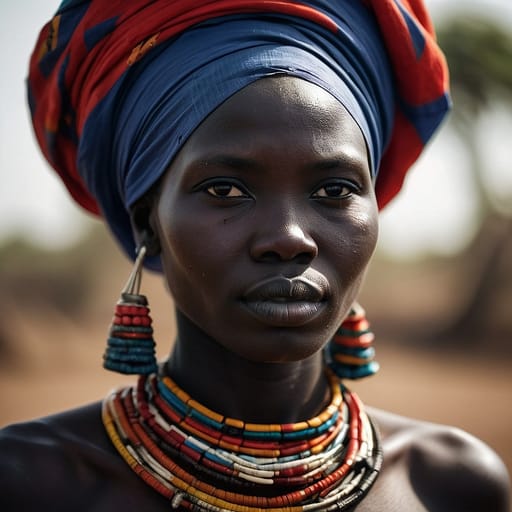
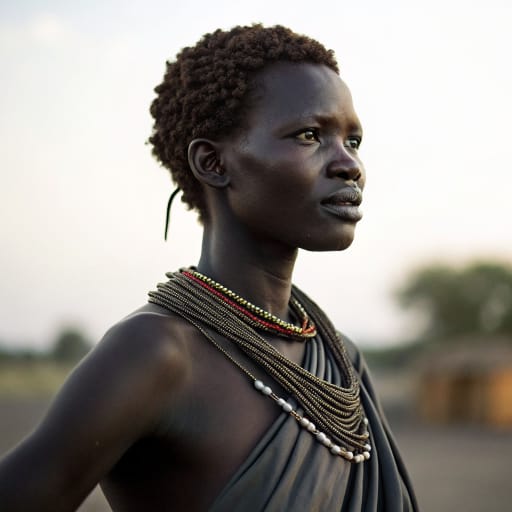
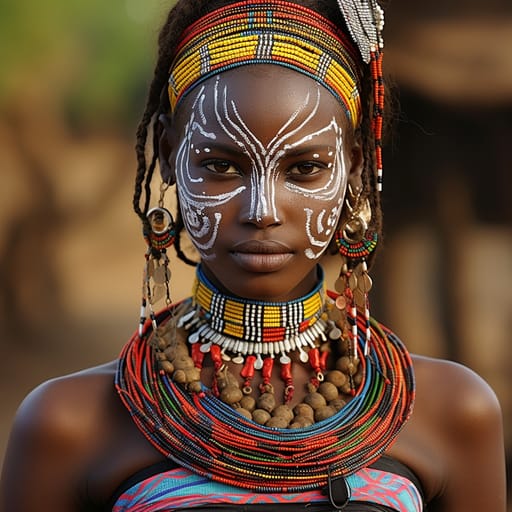
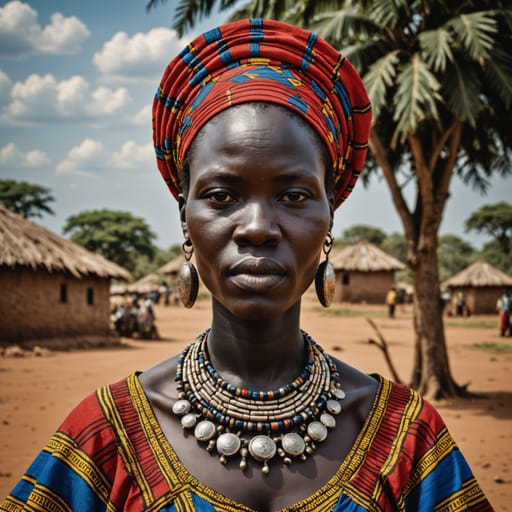
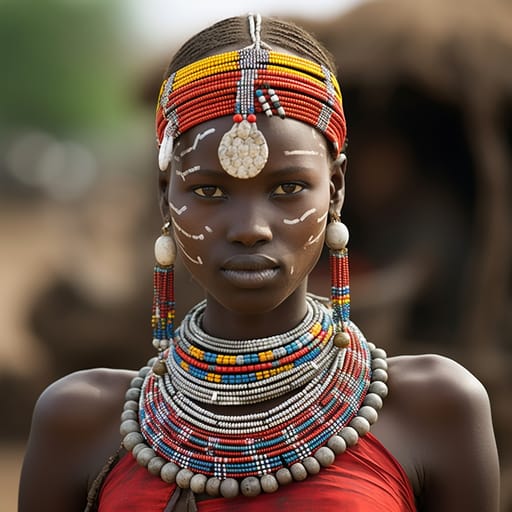
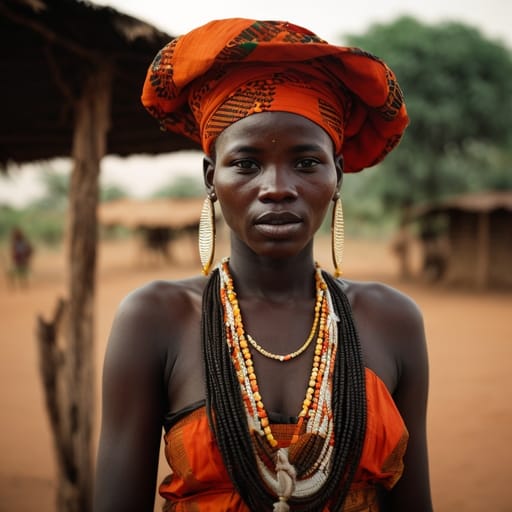
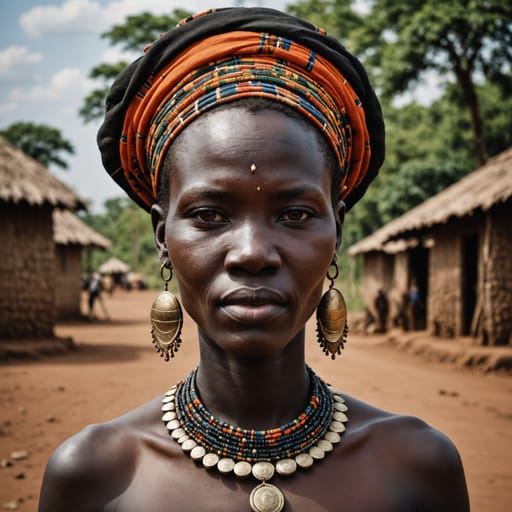
Does this portrait look right for South Sudan Other?
One tap. It takes a second and it is recorded.
21 say it looks right, 11 say it looks off.
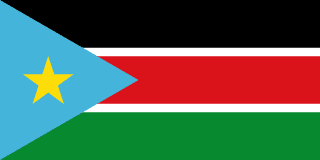

South Sudan
SSNorth Africa
South Sudan is home to 7 documented ethnic groups in North Africa, led by South Sudan Other (~37%), Dinka (~36%), Nuer (~16%), Azande (~4%). This page blends their phenotype and demographic data into one weighted reference: skin tone, facial features, hair texture and build, drawn from published census and ancestry sources.
Demographic Composition
Composition weights are derived from self-identification in published census and demographic surveys. Each row links to the source ethnic-group atlas page.
| Ethnic group | Weight | Source |
|---|---|---|
 South Sudan Other South Sudan Other | 37.4% | Estimates residual including the Murle (~150,000+, Surma source-population, distinct from broader Nilotic populations and historically tense relations with Dinka and Nuer), Toposa (~100,000+, Eastern Nilotic), Acholi (~150,000+, cross-border with Uganda), Madi, Kakwa, Pojulu, Lugbara, Avukaya, Anuak, Murle, Kuku, plus dozens of smaller ethnic groups across South Sudan's approximately 60+ recognized ethnic groups |
 Dinka Dinka | 35.8% | Estimated from 2008 Sudan Census (the last pre-independence census) plus subsequent estimates; Dinka (Jieng) (~35.8%); the largest ethnic group, concentrated in the Bahr el Ghazal, Upper Nile, and Jonglei states. Nilotic / Western Nilotic source population. The Dinka are politically dominant in post-independence South Sudan — President Salva Kiir Mayardit is Dinka |
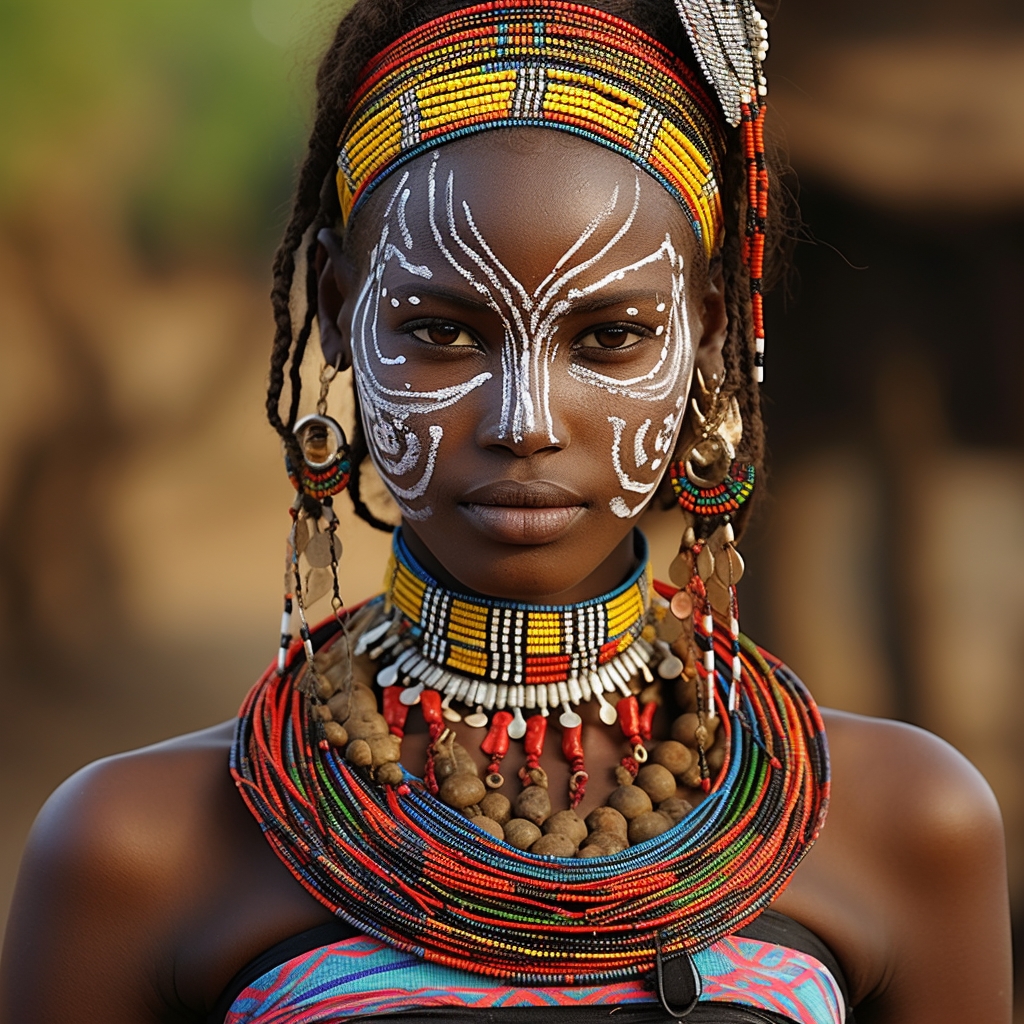 Nuer Nuer | 15.8% | Estimates; Nuer (Naath) (~15.8%); concentrated in Upper Nile, Unity, and Jonglei states. Nilotic / Western Nilotic source population. Closely related to Dinka linguistically and culturally; Riek Machar (former Vice President) is Nuer. The post-2013 South Sudanese Civil War was substantially structured around Dinka-Nuer political-military rivalry |
 Azande Azande | 4.0% | Estimates; Zande / Azande (~4%); concentrated in Western Equatoria. Niger-Congo / Adamawa-Ubangi language family. Cross-border population shared with the Democratic Republic of the Congo and the Central African Republic |
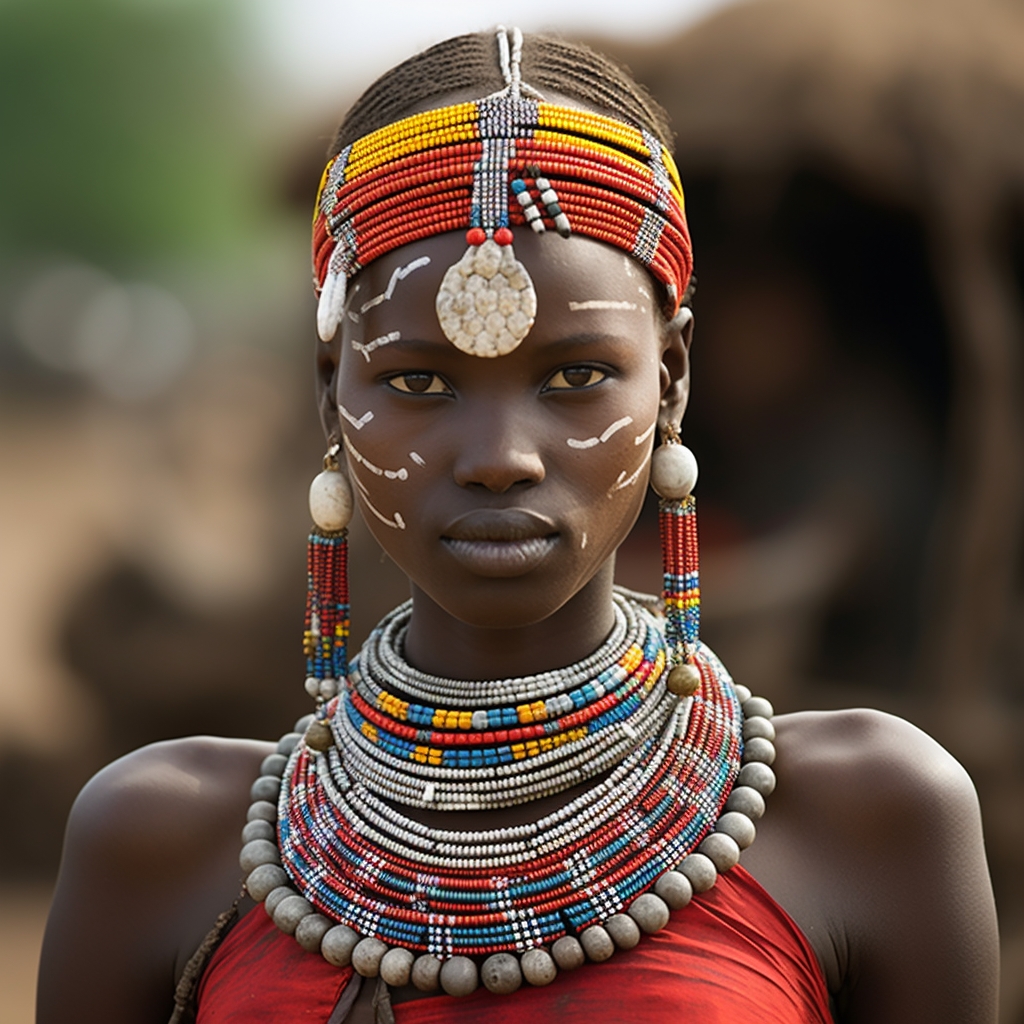 Shilluk Shilluk | 3.0% | Estimates; Shilluk (Chollo) (~3%); concentrated in Upper Nile State. Nilotic / Western Nilotic source population, distinct from Dinka and Nuer. Maintains the historic Shilluk Kingdom (the Reth / King institution traces approximately 600 years) |
 Bari Bari | 2.5% | Estimates; Bari (~2.5%); concentrated in Central Equatoria around Juba (the South Sudanese capital). Nilotic / Eastern Nilotic source population, distinct from Western Nilotic Dinka-Nuer-Shilluk |
 Lotuko Lotuko | 1.5% | Estimates; Lotuko / Otuho (~1.5%); concentrated in Eastern Equatoria. Nilotic / Eastern Nilotic source population |
South Sudan Phenotype Profile
South Sudan is among the most ethnolinguistically diverse African countries — approximately 60+ recognized ethnic groups across multiple language families (predominantly Nilo-Saharan / Nilotic with Niger-Congo, Surma, and other source populations). The major umbrellas: Dinka (~36%, the largest), Nuer (~16%), Azande (~4%), Shilluk (~3%), Bari (~2.5%), Lotuko (~1.5%), plus the residual ~37% across approximately 50+ smaller ethnic groups. The country gained independence from Sudan in 2011 following the Comprehensive Peace Agreement that concluded the Second Sudanese Civil War (1983-2005). The post-2013 South Sudanese Civil War (the world's youngest national civil war) was substantially structured around Dinka-Nuer political-military rivalry plus broader inter-ethnic tensions, with documented mass killings, displacement, and humanitarian catastrophe.
Genome-wide studies place South Sudanese populations as showing characteristic East African / Nilotic source-population ancestry — the Western Nilotic populations (Dinka, Nuer, Shilluk) cluster genetically with broader Nilotic populations of East Africa. Skin tone across the population spans Fitzpatrick V-VI with VI the modal value nationally — among the darkest national modal skin tone distributions globally. Hair texture is predominantly Andre Walker 4A-4C (coily). Hair color is uniformly black to very dark brown. Eye color is uniformly brown to dark brown. Facial features track Nilotic / East African source populations across the broader population, with characteristic Niger-Congo source-population features in the Azande and other Bantu-related populations. Build is typically robust and very tall — adult South Sudanese (particularly Dinka and Nuer) male mean stature is documented at approximately 180-185 cm, among the tallest mean statures of any major national population globally.
South Sudan Body & Anatomy Reference
Per-feature anatomical profile for AI nude generation: Berber / Mediterranean-Saharan phenotype dominant in South Sudan
South Sudan Women: Boobs & Breasts
South Sudan women's tits and boobs reflect the medium-to-large cup, full, moderate projection Berber / Mediterranean-Saharan bust profile dominant in the South Sudan demographic composition. South Sudan nipples and areolas show medium-brown to dark-brown areolar pigmentation against the olive-to-light-brown skin tone, with areolar diameter typically in the 30-44mm range, distinct from the the smaller East Asian bust profile. South Sudan breast morphology trends fuller and softer than the Cushitic East African norm, a function of the mesomorph with fuller hip-and-bust deposition body habitus and mean adult female BMI 24-28. For anatomically-accurate AI-generated South Sudan nude women the render should preserve: medium-to-large cup, full, moderate projection shape, 30-44mm areolas with regional pigmentation, and the torso proportions of the Berber / Mediterranean-Saharan phenotype.
South Sudan Women: Ass & Hips
South Sudan women's ass and hip morphology presents as medium-to-full, moderate projection, broader hip profile, distinctly different from the slim narrow-hip Cushitic East African profile. South Sudan pelvic profile shows medium-to-wide iliac crests, fuller gluteal-femoral fat distribution, anchored in the Berber / Mediterranean-Saharan skeletal pattern that dominates the South Sudan ethnic composition. South Sudan butt shots in adult AI imagery should render the medium-to-full, moderate projection, broader hip profile silhouette with the mesomorph with fuller hip-and-bust deposition build and the gluteal-femoral fat distribution typical of the Berber / Mediterranean-Saharan phenotype rather than defaulting to a globally-averaged shape that generic AI generators produce.
South Sudan Women: Vagina & Pussy
South Sudan women's pussy and vulvar anatomy presents medium-brown to dark-brown labial pigmentation, fuller labia minora, consistent with the Berber / Mediterranean-Saharan phenotype's pigmentation pattern dominant in South Sudan. South Sudan pubic hair is typically wavy-to-coiled medium-coarse texture, dense distribution, distributed in the inverted-triangle pattern with regional-typical density. AI-generated South Sudan nude imagery should preserve the medium-brown to dark-brown labial pigmentation and the wavy-to-coiled medium-coarse texture hair texture rather than defaulting to a Western-European pink-and-sparse template. For anatomically-accurate South Sudan pussy renders the labial pigmentation should match the surrounding olive to medium-brown skin tone of the Berber / Mediterranean-Saharan phenotype.
South Sudan Men: Dicks & Penis
South Sudan men's dick and penile anatomy in adult AI generation should anchor on the regional reference data: regional mean ~13-14cm erect, moderate girth, and medium-brown shaft pigmentation. South Sudan cock profile reflects the Berber / Mediterranean-Saharan ancestral population's anthropometric measurements rather than a globally-averaged Western-pornography default. For anatomically-accurate South Sudan nude male imagery the shaft pigmentation should track the surrounding olive to medium-brown skin tone, with continuous glans-to-shaft pigmentation transition and the wavy-to-coiled medium-coarse texture pubic-hair texture distributed in the typical inverted-V escutcheon. Circumcision status across South Sudan men varies by religious and cultural tradition rather than ancestral phenotype.
South Sudan People: Body, Curves & Build
South Sudan body type and overall build presents as mesomorph with fuller hip-and-bust deposition, with mean adult female BMI 24-28: the characteristic Berber / Mediterranean-Saharan habitus dominant in the South Sudan demographic composition. South Sudan curves and proportions in adult AI imagery should preserve the regional skeletal frame (height, shoulder-to-hip ratio, limb proportions) rather than scaling to a Western-European mesomorph default. The South Sudan nude female form, when rendered with anatomical fidelity, shows the height range, frame width, and adipose distribution pattern typical of the Berber / Mediterranean-Saharan phenotype. Generic AI image generators tend to collapse regional body types into a few default shapes; the Ethnic Erotic phenotype-anchored approach preserves the South Sudan build as its own reference category.
South Sudan People: Skin Tone & Hair Texture
South Sudan skin tone falls in the olive to medium-brown (Fitzpatrick III-V) band, the surface signal most often miscalibrated by generic AI nude generators trained on Western-photographic datasets. South Sudan hair texture is typically wavy-to-curly 2B-3C, often dark-brown to black, characteristic of the Berber / Mediterranean-Saharan phenotype. For anatomically-accurate South Sudan nude renders the skin should hold the Fitzpatrick band consistently across body surface rather than showing the lighter-than-face body shading that AI generators default to. South Sudan hair pigmentation and texture on body, pubic, and head should match across the figure rather than mixing textures (a common AI artefact).
A descriptive view, not a claim about individuals
This page shows a weighted aggregate of phenotype observations across the South Sudan population, based on demographic composition from published census and ancestry sources. Phenotypes within any country are far more varied than the aggregate suggests; this is a descriptive reference, not a deterministic claim about any individual. For source-level detail on individual ethnic groups, see the constituent atlas pages linked below.
Methodology Notes
Composition weights are estimated based on the 2008 Sudan Census (the last pre-independence census that included South Sudanese populations) plus subsequent academic estimates and ethnographic studies. South Sudan has not conducted a comprehensive census since 2008. Caveats: (1) the post-2013 civil war has produced massive displacement (estimated 4M+ displaced or refugee outside South Sudan as of 2024) that has substantially altered demographic distribution; (2) the various ethnic-tribal-confederation distinctions have meaningful political-cultural significance but the boundaries are sometimes contested; (3) the substantial South Sudanese refugee diaspora globally (~2.5M+ predominantly in Uganda, Ethiopia, Sudan, Kenya, the United States, Australia) is not captured in source-country composition; (4) the Dinka-Nuer political-military rivalry has been a central feature of post-2013 South Sudanese politics and has produced inter-ethnic tensions affecting demographic distribution.
Primary Sources
- 1.Central Bureau of Statistics Sudan. 5th Sudan Population and Housing Census 2008. Khartoum: CBS; 2009 (last pre-independence census including South Sudan).
- 2.Johnson DH. The Root Causes of Sudan's Civil Wars (rev ed). James Currey; 2016.
- 3.Hutchinson SE. Nuer Dilemmas: Coping with Money, War, and the State. University of California Press; 1996.
- 4.Deng FM. The Dinka of the Sudan. Holt, Rinehart and Winston; 1972.
- 5.Pagani L, Schiffels S, Gurdasani D, et al. Tracing the route of modern humans out of Africa by using 225 human genome sequences from Ethiopians and Egyptians. Am J Hum Genet. 2015;96(6):986-991.
Other countries in North Africa
Aggregate phenotype references for neighbouring North Africa nations, weighted by demographic composition.