Help us get this right
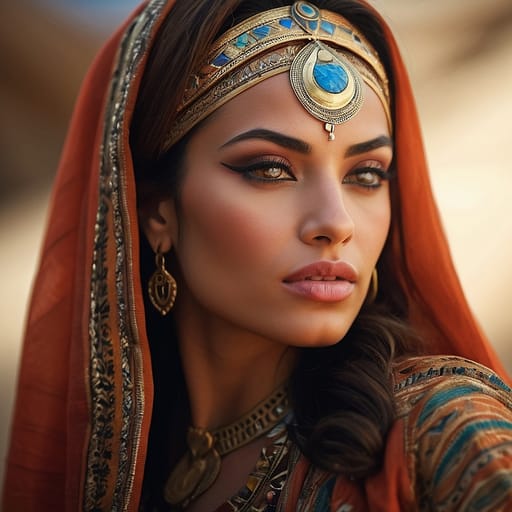
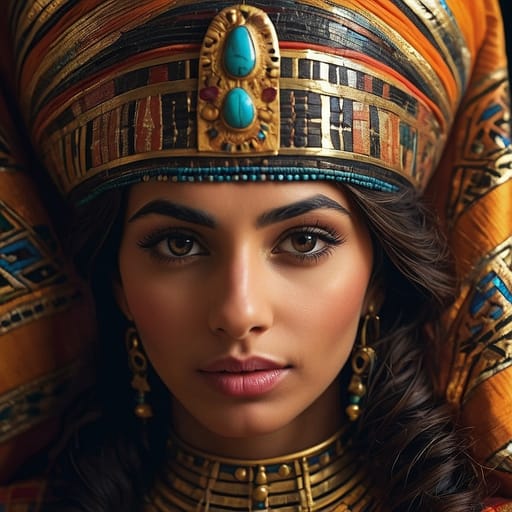
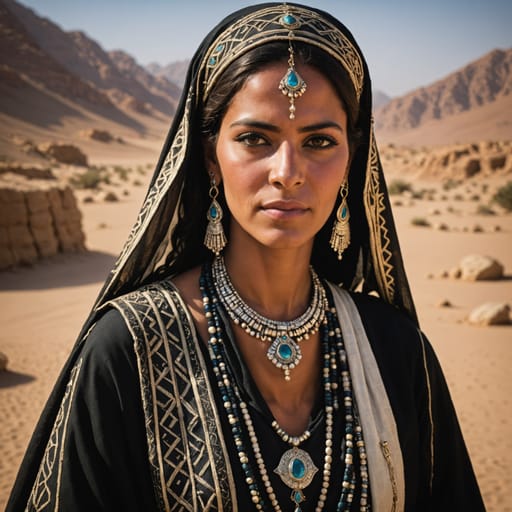
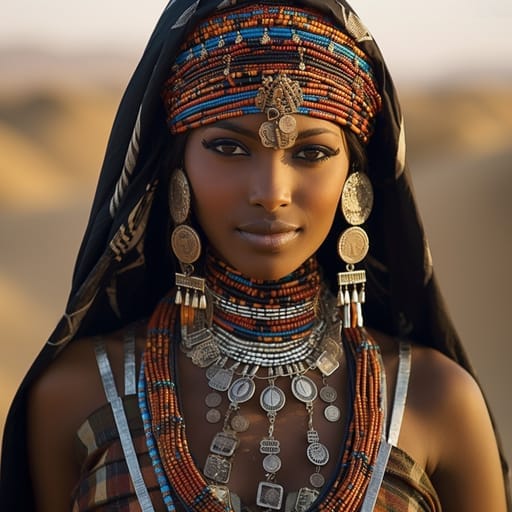
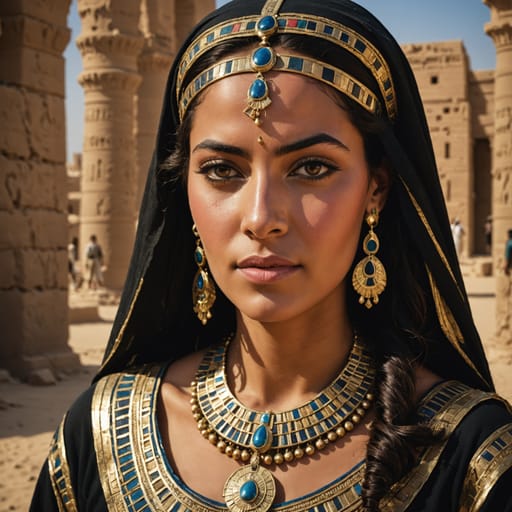
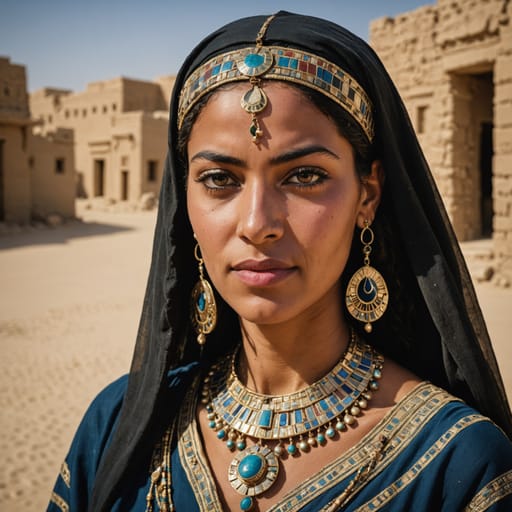
Does this portrait look right for Arab Egyptian?
One tap. It takes a second and it is recorded.
2 say it looks right, 0 say it looks off.
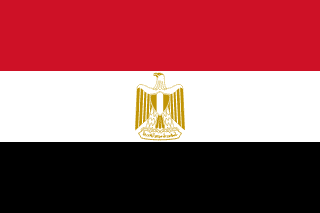

Egypt
EGNorth Africa
Egypt is home to 6 documented ethnic groups in North Africa, led by Arab Egyptian (~89%), Coptic (~9%), Bedouin Egyptian (~1%), Nubian (~1%). This page blends their phenotype and demographic data into one weighted reference: skin tone, facial features, hair texture and build, drawn from published census and ancestry sources.
Demographic Composition
Composition weights are derived from self-identification in published census and demographic surveys. Each row links to the source ethnic-group atlas page.
| Ethnic group | Weight | Source |
|---|---|---|
 Arab Egyptian Arab Egyptian | 89.0% | Central Agency for Public Mobilization and Statistics (CAPMAS) Egypt 2017 Census plus subsequent demographic estimates; Egypt does not enumerate ethnicity in census instruments — composition derived from international demographic estimates plus religious-community statistics (Coptic Christian community is distinct from but shares broad Egyptian-Indigenous ancestry with Sunni Muslim Egyptian majority). Arab-Egyptian (~89%) is the dominant ethno-linguistic self-identification reflecting the post-7th-c. Arab Islamic conquest and Arabic-language adoption. The Arab-Egyptian population is genealogically substantially Egyptian-Indigenous-descended (the broader pre-Arab Egyptian / Coptic / Pharaonic substrate) |
 Coptic Coptic | 9.0% | CAPMAS plus Coptic Orthodox Church estimates; Coptic Christian Egyptians (~9-10%, ~10-12M+); the historic Christian Egyptian population, descendants of the pre-Arab-conquest Egyptian-Christian population that maintained continuous Christian religious identity through the 7th-c. Arab Islamic conquest and subsequent centuries. The Coptic community speaks Arabic as the primary first language with the Coptic language preserved in liturgical use only (descended directly from ancient Egyptian) |
 Bedouin Egyptian Bedouin Egyptian | 1.3% | Estimates; Bedouin Egyptians (~1.3%, ~1.4M+); concentrated in the Sinai Peninsula and the Eastern and Western Deserts. Distinct from the broader Egyptian Arab population through tribal-pastoral cultural-political identity |
 Nubian Nubian | 0.5% | Egyptian Ministry of Local Development plus academic estimates; Nubian Egyptians (~0.5%, ~500,000+); concentrated in southern Egypt (the historic Nubian territory along the Nile, with substantial post-1960s relocation following the Aswan High Dam construction that flooded most of historic Lower Nubia in Egypt). Cross-border population shared with Sudan (~1M+ Sudanese Nubians, separately enumerated under SD) |
 Egypt Other Egypt Other | 0.1% | Estimates; includes the very small remaining Egyptian-Greek and Egyptian-Italian communities (most emigrated post-1952), Armenian-Egyptian (the substantial Cairo Armenian community has been culturally and economically prominent), Sudanese-Egyptian refugees plus broader Sub-Saharan African migrant communities, plus Western expatriates |
 Siwi Egyptian Siwi Egyptian | 0.1% | Estimates; the small Siwi Berber community (~25,000); concentrated in Siwa Oasis in the Western Desert. Speaks Siwi (Eastern Berber), the easternmost extant Berber language |
Egypt Phenotype Profile
Egypt's population reflects approximately 7,000+ years of population processes anchored on the Egyptian-Indigenous / Pharaonic-period demographic substrate — one of the longest continuously-documented national-population histories globally. The contemporary self-identification distribution is approximately 89% Arab-Egyptian, 9-10% Coptic Christian (genealogically substantially identical to Arab-Egyptian populations, distinct primarily by religious tradition), 1.3% Bedouin, 0.5% Nubian, 0.03% Siwi Berber, plus smaller communities. Importantly, the Arab-Egyptian / Coptic populations are both genealogically descended from the broader pre-Arab-conquest Egyptian-Indigenous substrate — the Arab-Egyptian self-identification reflects Arabic-language adoption and Sunni Muslim cultural-religious identification rather than substantial Arabian-Peninsula descent.
Genome-wide studies (Henn et al. 2012, Pagani et al. 2015) place average Egyptian ancestry as predominantly North African / Egyptian-Indigenous with substantial Sub-Saharan African admixture in southern Egyptian populations and Levantine / broader West Asian admixture from continuous historical exchange. Skin tone across the population spans Fitzpatrick III-VI with IV the modal value nationally — substantial regional variation from Fitzpatrick III in Lower Egyptian Delta populations to V-VI in Upper Egyptian Nile Valley populations and Nubian populations of southern Egypt. Hair texture is predominantly straight to wavy across the broader population with curly to coily textures concentrated in Nubian and southern Egyptian populations. Hair color is uniformly black to very dark brown. Eye color is predominantly brown to dark brown nationally with elevated frequencies of hazel and rarely lighter variants in some sub-populations. Facial features track North African / Egyptian-Indigenous source populations across the broader population, with characteristic Sub-Saharan African source-population features in Nubian populations. Build is intermediate; adult Egyptian male mean stature is approximately 170-173 cm in 2010s-2020s urban cohorts.
Egypt Body & Anatomy Reference
Per-feature anatomical profile for AI nude generation: Berber / Mediterranean-Saharan phenotype dominant in Egypt
Egypt Women: Boobs & Breasts
Egypt women's tits and boobs reflect the medium-to-large cup, full, moderate projection Berber / Mediterranean-Saharan bust profile dominant in the Egypt demographic composition. Egypt nipples and areolas show medium-brown to dark-brown areolar pigmentation against the olive-to-light-brown skin tone, with areolar diameter typically in the 30-44mm range, distinct from the the smaller East Asian bust profile. Egypt breast morphology trends fuller and softer than the Cushitic East African norm, a function of the mesomorph with fuller hip-and-bust deposition body habitus and mean adult female BMI 24-28. For anatomically-accurate AI-generated Egypt nude women the render should preserve: medium-to-large cup, full, moderate projection shape, 30-44mm areolas with regional pigmentation, and the torso proportions of the Berber / Mediterranean-Saharan phenotype.
Egypt Women: Ass & Hips
Egypt women's ass and hip morphology presents as medium-to-full, moderate projection, broader hip profile, distinctly different from the slim narrow-hip Cushitic East African profile. Egypt pelvic profile shows medium-to-wide iliac crests, fuller gluteal-femoral fat distribution, anchored in the Berber / Mediterranean-Saharan skeletal pattern that dominates the Egypt ethnic composition. Egypt butt shots in adult AI imagery should render the medium-to-full, moderate projection, broader hip profile silhouette with the mesomorph with fuller hip-and-bust deposition build and the gluteal-femoral fat distribution typical of the Berber / Mediterranean-Saharan phenotype rather than defaulting to a globally-averaged shape that generic AI generators produce.
Egypt Women: Vagina & Pussy
Egypt women's pussy and vulvar anatomy presents medium-brown to dark-brown labial pigmentation, fuller labia minora, consistent with the Berber / Mediterranean-Saharan phenotype's pigmentation pattern dominant in Egypt. Egypt pubic hair is typically wavy-to-coiled medium-coarse texture, dense distribution, distributed in the inverted-triangle pattern with regional-typical density. AI-generated Egypt nude imagery should preserve the medium-brown to dark-brown labial pigmentation and the wavy-to-coiled medium-coarse texture hair texture rather than defaulting to a Western-European pink-and-sparse template. For anatomically-accurate Egypt pussy renders the labial pigmentation should match the surrounding olive to medium-brown skin tone of the Berber / Mediterranean-Saharan phenotype.
Egypt Men: Dicks & Penis
Egypt men's dick and penile anatomy in adult AI generation should anchor on the regional reference data: regional mean ~13-14cm erect, moderate girth, and medium-brown shaft pigmentation. Egypt cock profile reflects the Berber / Mediterranean-Saharan ancestral population's anthropometric measurements rather than a globally-averaged Western-pornography default. For anatomically-accurate Egypt nude male imagery the shaft pigmentation should track the surrounding olive to medium-brown skin tone, with continuous glans-to-shaft pigmentation transition and the wavy-to-coiled medium-coarse texture pubic-hair texture distributed in the typical inverted-V escutcheon. Circumcision status across Egypt men varies by religious and cultural tradition rather than ancestral phenotype.
Egypt People: Body, Curves & Build
Egypt body type and overall build presents as mesomorph with fuller hip-and-bust deposition, with mean adult female BMI 24-28: the characteristic Berber / Mediterranean-Saharan habitus dominant in the Egypt demographic composition. Egypt curves and proportions in adult AI imagery should preserve the regional skeletal frame (height, shoulder-to-hip ratio, limb proportions) rather than scaling to a Western-European mesomorph default. The Egypt nude female form, when rendered with anatomical fidelity, shows the height range, frame width, and adipose distribution pattern typical of the Berber / Mediterranean-Saharan phenotype. Generic AI image generators tend to collapse regional body types into a few default shapes; the Ethnic Erotic phenotype-anchored approach preserves the Egypt build as its own reference category.
Egypt People: Skin Tone & Hair Texture
Egypt skin tone falls in the olive to medium-brown (Fitzpatrick III-V) band, the surface signal most often miscalibrated by generic AI nude generators trained on Western-photographic datasets. Egypt hair texture is typically wavy-to-curly 2B-3C, often dark-brown to black, characteristic of the Berber / Mediterranean-Saharan phenotype. For anatomically-accurate Egypt nude renders the skin should hold the Fitzpatrick band consistently across body surface rather than showing the lighter-than-face body shading that AI generators default to. Egypt hair pigmentation and texture on body, pubic, and head should match across the figure rather than mixing textures (a common AI artefact).
A descriptive view, not a claim about individuals
This page shows a weighted aggregate of phenotype observations across the Egypt population, based on demographic composition from published census and ancestry sources. Phenotypes within any country are far more varied than the aggregate suggests; this is a descriptive reference, not a deterministic claim about any individual. For source-level detail on individual ethnic groups, see the constituent atlas pages linked below.
Egypt in the History of Erotic Depiction
Manuals, literature & art traditions of this country · full timeline →
Turin Erotic Papyrus
artEgyptian (New Kingdom) · c. 1150 BCE
The best-known erotic artefact of ancient Egypt: a satirical scroll of twelve vignettes showing exaggerated, acrobatic congress — bent-over and standing entries, a lifted-partner carry — millennia before the modern position catalogue.
Methodology Notes
Composition weights are derived from estimates based on the CAPMAS 2017 Census plus international demographic estimates. Egypt does not enumerate ethnicity in census instruments — Egyptian census data covers nationality, religion, and demographic characteristics but not ethnic-group affiliation. Caveats: (1) the 89% Arab-Egyptian / 9-10% Coptic distribution reflects the Sunni-Muslim / Coptic-Christian religious distinction rather than substantial population-genetic differentiation — both populations share the broader Egyptian-Indigenous demographic substrate; (2) the Coptic share of population is contested, with Coptic Orthodox Church claims of 15-20% of population vs Egyptian state estimates of 5-10% — the academic-consensus estimate is 9-12% with substantial uncertainty; (3) the Nubian community has been substantially affected by post-1960s Aswan High Dam relocation; (4) the Bedouin Egyptian community in Sinai has experienced substantial post-2011 political-economic disruption; (5) the substantial post-2011 emigration of Coptic Egyptians to Western countries has shifted demographic balances; (6) the substantial Sudanese, Eritrean, Ethiopian, and South Sudanese refugee population (~5M+ across all source countries by 2024 estimates) creates demographic complexity for citizen-vs-resident enumeration.
Primary Sources
- 1.Central Agency for Public Mobilization and Statistics (CAPMAS). Population Census of Egypt 2017. Cairo: CAPMAS; 2018.
- 2.Henn BM, Botigué LR, Gravel S, et al. Genomic ancestry of North Africans supports back-to-Africa migrations. PLoS Genet. 2012;8(1):e1002397.
- 3.Pagani L, Schiffels S, Gurdasani D, et al. Tracing the route of modern humans out of Africa by using 225 human genome sequences from Ethiopians and Egyptians. Am J Hum Genet. 2015;96(6):986-991.
- 4.Mikhail M. From Christian Egypt to Islamic Egypt: Religion, Identity and Politics after the Arab Conquest. IB Tauris; 2014.
- 5.Reid DM. Whose Pharaohs? Archaeology, Museums, and Egyptian National Identity from Napoleon to World War I. University of California Press; 2002.
Other countries in North Africa
Aggregate phenotype references for neighbouring North Africa nations, weighted by demographic composition.