Help us get this right
Does this portrait look right for Gurage?
One tap. It takes a second and it is recorded.
2 say it looks right, 1 says it looks off.
Gurage Erotic
Guragia (Ethiopia)
Christianity
Kistane, Zay, Inor, Mesqan, Sebat Bet (including Chaha and Muher)
About Gurage People
The Gurage live in a cluster of fertile highlands south-southwest of Addis Ababa, in a region known as Guragia — a landscape of ridges, ensete groves, and dispersed homesteads that has shaped almost everything about how they organize daily life. They are not a single people in the tight sense, but a federation of related communities — Kistane, Mesqan, Inor, Zay, and the Sebat Bet group that includes Chaha and Muher — bound by overlapping languages, kinship structures, and a shared reputation across Ethiopia for industriousness and long-distance trade.
Their languages belong to the Ethiopic branch of Semitic, but they sit at the southwestern edge of that family and have drifted far enough from Amharic and Tigrinya that mutual intelligibility within the Gurage cluster itself is uneven; a Chaha speaker and a Kistane speaker may need a third language to settle a long conversation. The Zay are a particular outlier, historically settled on islands in Lake Ziway, where they preserved an Ethiopic Christian tradition in relative isolation while the surrounding lowlands shifted around them.
Christianity reaches deep here, mostly Ethiopian Orthodox in the northern Gurage zones, though Catholic and Protestant communities have grown over the last century, and pockets of Islam are long-established in the south and east. What is more distinctive than the denominational mix is how religion sits inside an older social architecture: customary law, age-grade obligations, and councils of elders still mediate disputes, regulate land, and enforce sanctions in ways that operate alongside, rather than under, formal church or state authority. The institution known as the yejoka among the Sebat Bet — a body of customary judges — is one of the more striking examples of indigenous Ethiopian jurisprudence still in working use.
The cultural anchor of Gurage life is ensete, the false banana, whose starchy pulp is fermented into kocho and stored for years; a household's ensete grove is wealth, food security, and inheritance at once. Out of this base economy grew the Gurage's other reputation — as migrants and merchants. For more than a century they have been disproportionately present in Ethiopia's urban commerce, running everything from small shops in Addis to wholesale networks across the Horn, sending remittances home and returning to build, marry, and be buried in Guragia. The pattern is so well established it has become a quiet model for how a rural homeland and an urban diaspora can sustain each other rather than hollow each other out.
Related ethnic groups
Groups that share Gurage's homeland, region, language, or religious tradition. These are likely candidates for comparative phenotype reference.
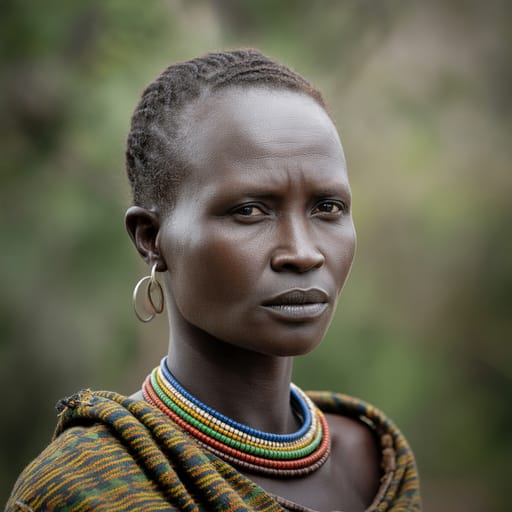
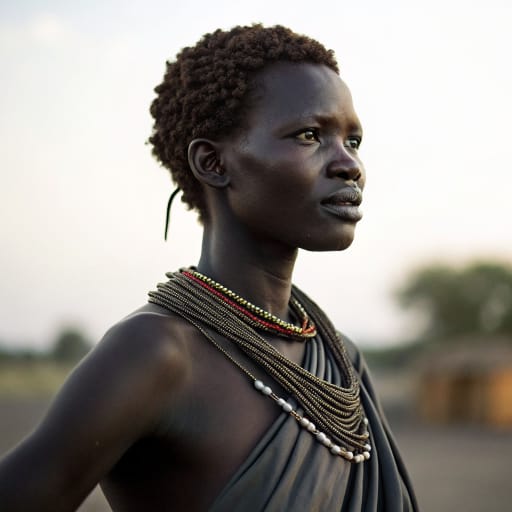
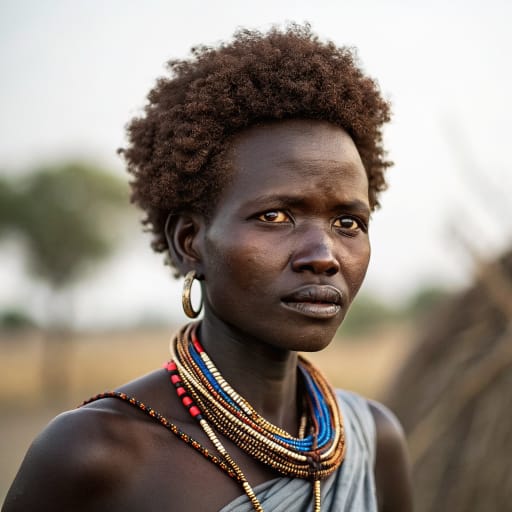
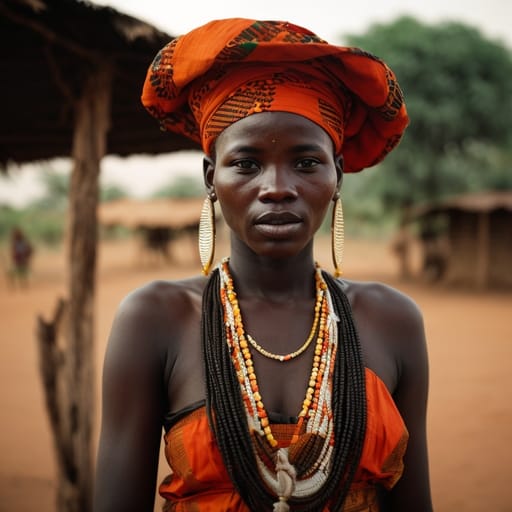
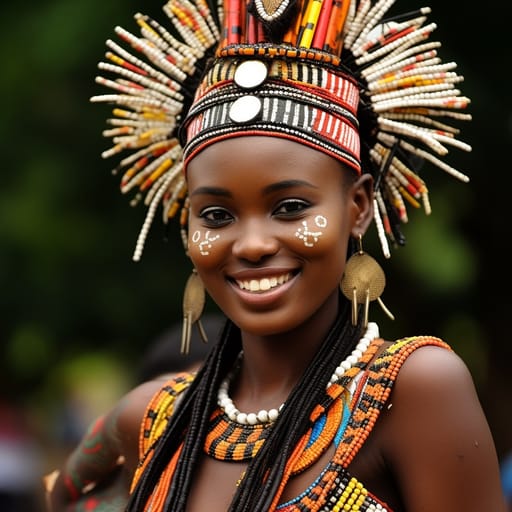
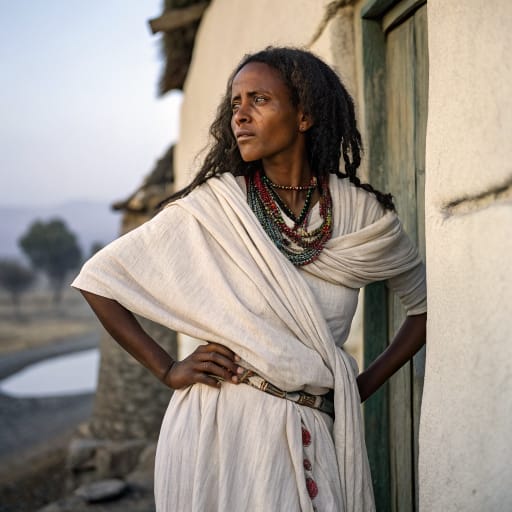
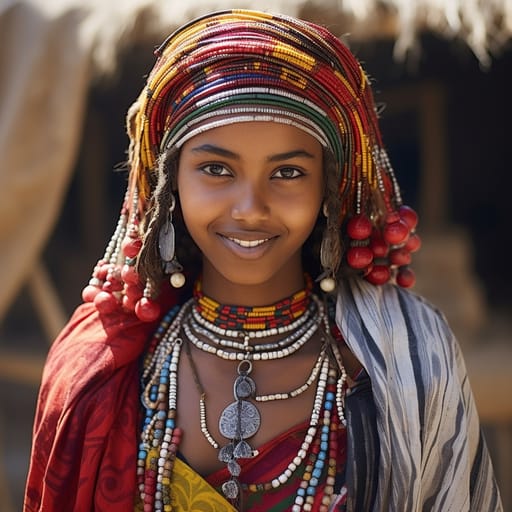
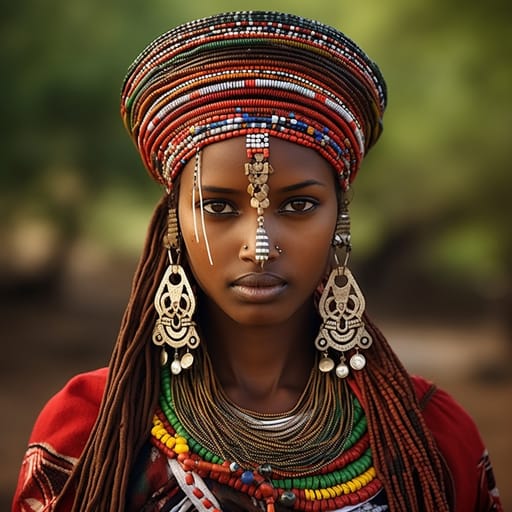
Geographic Distribution: Gurage populations across 1 country
Each row is ranked by the group's share of that country's population, with the source citation drawn from published census and demographic surveys. Click through for the full per-country phenotype profile.
| Country | Share | Source |
|---|---|---|
| Ethiopia | 2.5% | Ethiopia 2007 Census; Gurage (~2.5%); Semitic source population |
Typical Gurage Phenotypes
Reference for AI generation: hair, eyes, skin, facial structure, build
The Gurage are a Semitic-speaking highland people of south-central Ethiopia, and their phenotype sits squarely in the Northeast African cluster — closer to Amhara and Tigrayan neighbors than to Cushitic Oromo to the south or Nilotic groups farther west. Skin tone runs predominantly Fitzpatrick IV through V, a warm medium-to-deep brown with reddish or olive undertones rather than the blue-black register seen in Nilotic populations. Highland sun at 2,000–3,000 meters keeps tone consistent year-round; truly light or truly very dark complexions are uncommon.
Hair is almost uniformly black or very dark brown, with a curl pattern that tends to read Type 3C to Type 4A — looser and more defined than the tight coils typical of West and Central Africans, and often described as "jheri" or springy ringlets when worn natural. Premature graying at the temples is a frequently noted family trait. Eyes are dark brown to near-black, almond-shaped, with a clean upper-lid crease and no epicanthic fold; lashes are dense and the brow ridge is moderate.
Facial structure is the giveaway. Noses are typically narrow with a high, straight bridge and restrained alar width — closer to Horn-of-Africa and Arabian profiles than to Sub-Saharan averages. Lips are medium-full, well-defined, rarely the very full eversion common further south. Cheekbones sit high and angular, jaws are narrow to oval, and the overall face shape tilts long rather than round. The combination produces the fine-featured look characteristic of highland Ethiopians broadly.
Build is lean and wiry. Men average roughly 168–172 cm, women 156–160 cm, with low body fat, narrow shoulders relative to hips, and long limbs typical of East African highlanders. Among the sub-branches — Sebat Bet (Chaha, Muher, Inor), Kistane, Mesqan, and the Lake Zway-dwelling Zay — phenotype variation is minor; Zay, isolated on islands and historically intermarried with surrounding groups, can present slightly broader features, but the core Gurage look holds across branches.
Data depth
31/100Coverage of image-grounded phenotype observations · drives AI generation diversity
- Sample size
- 6/40· 2 images
- Image quality
- 25/30· 50% high
- Confidence
- 0/20· mean 0.36
- Source diversity
- 0/10· wikipedia
- ·No image observations yet
- ·Low overall confidence
- ·Wikipedia-only source, not population-representative
Explore phenotype categories
Structured taxonomy with peer-reviewed scales · 22 anatomical categories
Notable Gurage People
6 reference figures, sourced from Wikipedia
- Sebat Bet, The Western Gurage languages are Sebat Bet, consisting of the dialects Inor, …
- Soddo, Northern Gurage consists of the dialects of the Soddo language. It might be c…
- Silte, The Eastern Gurage languages are Silte, Wolane (also considered a dialect of …
- doi, G. W. E. Huntingford, 1966. Review article, Bulletin of the School of Orienta…
- Encyclopaedia Aethiopica, Worku Nida 2005: "Guraghe ethno-historical survey". In: Siegbert Uhlig (ed.):…
- Leslau, Wolf, 1982). Gurage folklore: Ethiopian folktales, proverbs, beliefs, and riddles. …
Erotic Poses & Sex Positions
From the pose catalog: 219 named positions with reference skeletons
Frequently asked questions about Gurage people
Where is the Gurage homeland?
The Gurage homeland is Guragia (Ethiopia) in Eastern Africa.
What countries do Gurage people live in?
Gurage populations are documented across 1 country: Ethiopia.
What language do Gurage people speak?
Gurage people primarily speak Afroasiatic / Semitic / Ethiopic / Gurage.
What religion do Gurage people practice?
The predominant religion among Gurage people is Christianity.






Make your own Gurage images
Five a day, free, no credits to buy. The studio starts from this group's phenotype data, so you can set body type, pose and style and keep the traits accurate.
Start with Gurage