No portrait yet
Waata Erotic
Southern Ethiopia among the Borana, and northern and eastern Kenya, including Marsabit, Isiolo, the Tana River and the coastal hinterland around Tsavo and Kilifi
Oromo, locally the Waata variety close to Orma (Cushitic, Afroasiatic); Swahili and Giriama also spoken near the coast (Bantu, Niger-Congo)
Islam, especially in Kenya; some Christians and followers of traditional Oromo Waaqa belief
Waata living among the Borana in Ethiopia and northern Kenya, Waata of the Tana River among the Orma, and coastal Waata (Waliangulu, Sanye) of Tsavo and the Kilifi hinterland; linked to the wider Oromo world
About Waata People
What sets the Waata apart is a way of life their neighbors defined them by. They live in scattered communities across southern Ethiopia and eastern Kenya, and for generations they hunted and gathered among Oromo cattle herders such as the Borana and Orma, and beside Mijikenda farmers in the Kenyan coastal hinterland. Herders who measured wealth in livestock tended to treat people without herds as a lesser caste. That shared outsider status, as much as common descent, is what links Waata communities that sit hundreds of miles apart.
They speak Oromo, a Cushitic language, and the Kenyan Waata variety is close to the speech of the Orma. Near the coast, Swahili and Giriama are part of daily life too. What they are called depends on who is talking: coastal Bantu speakers knew them as Sanye, and colonial writers in the Tsavo country called the elephant hunters there the Waliangulu.
That hunting reputation is the part of their history outsiders remember. Waata men hunted elephant with longbows so heavy that few other men could draw them, and they tipped their arrows with poison cooked from the wood of the Acokanthera tree. Their ivory fed the trade that ran to the Swahili coast. Then colonial game law redrew the rules. After Tsavo became a national park in 1948, the skill that had given the hunters their standing was treated as poaching, and the anti-poaching campaigns of the 1950s sent many of them to prison. A later scheme on the Galana River was meant to let them hunt legally under license, but it did not last. Most families turned to farming, herding and wage work.
Religion shows the same pattern of adapting to neighbors. Older Waata belief shares the Oromo faith in Waaqa, the sky god. Today many Waata are Muslim, especially in Kenya, and Islam shapes dress, diet and the yearly round of feasts, while others are Christian or keep to older practice. In recent decades Kenyan Waata have campaigned to be recognized as a community in their own right rather than a footnote to the Oromo. Their argument is simple: a people who lost their livelihood to conservation law should not also lose their name.
Related ethnic groups
Groups that share Waata's homeland, region, language, or religious tradition. These are likely candidates for comparative phenotype reference.
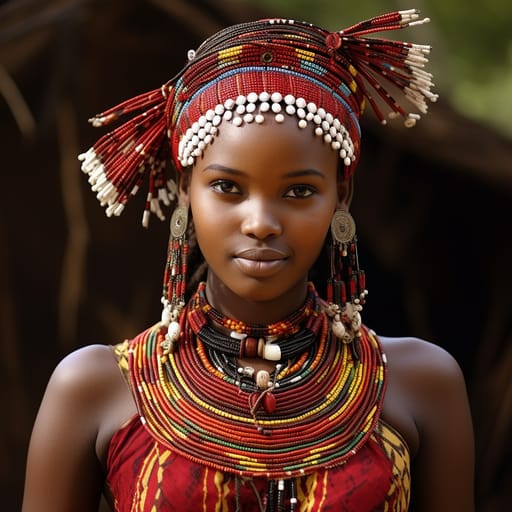
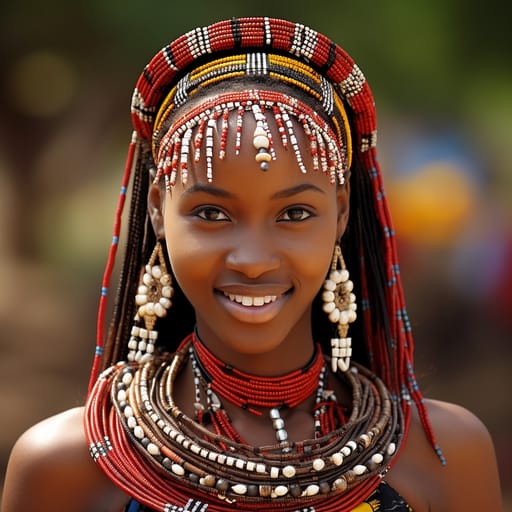
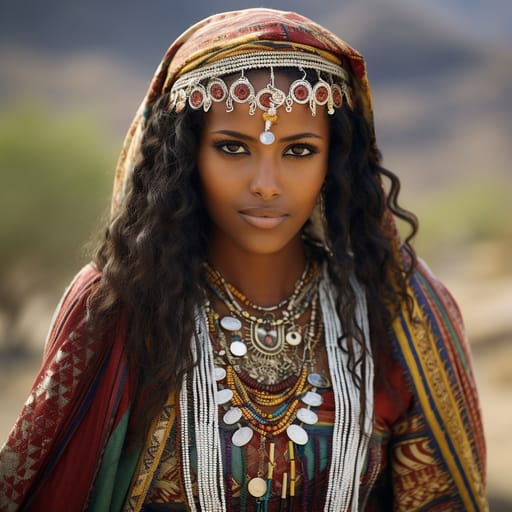
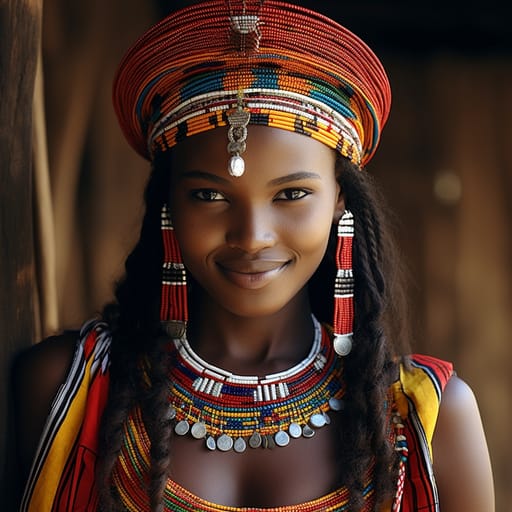
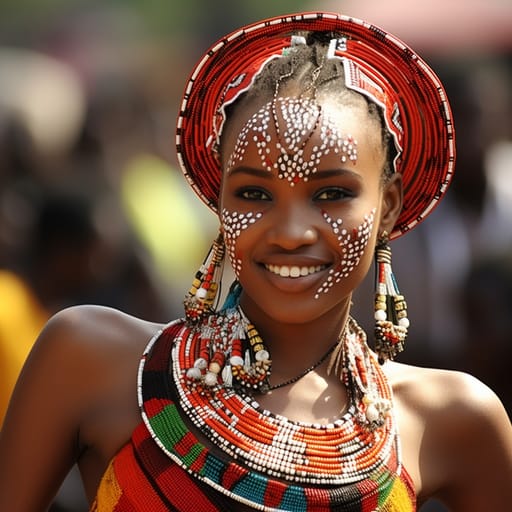
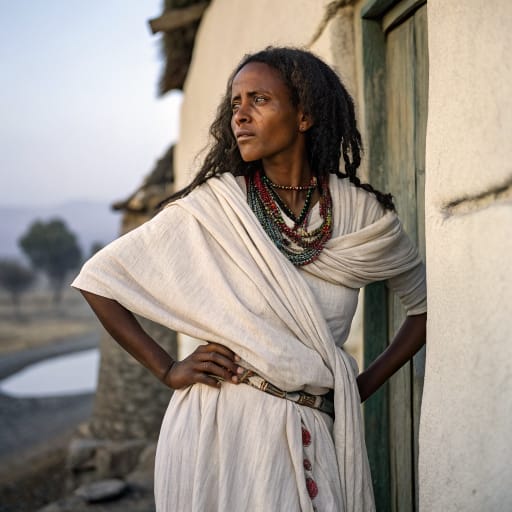
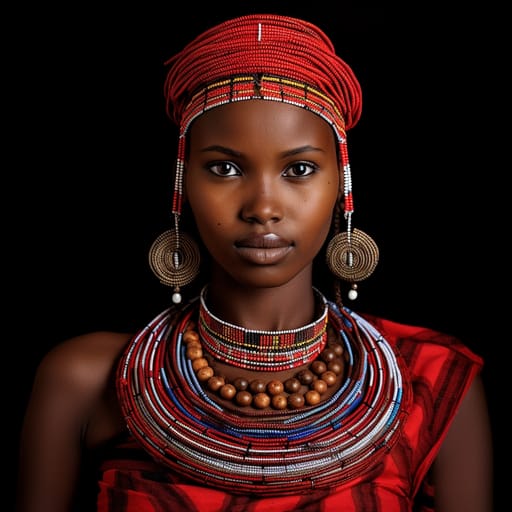
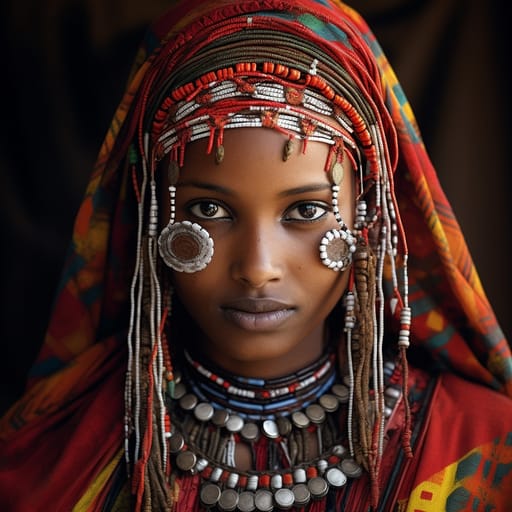
Typical Waata Phenotypes
Reference for AI generation: hair, eyes, skin, facial structure, build
Waata Body & Anatomy Reference
Anatomy by feature, Cushitic / Nilo-Cushitic East African phenotype
Waata Boobs & Breasts
Waata tits and boobs run small-to-medium-cup, high-set, conical, the classic Cushitic / Nilo-Cushitic East African bust profile. Waata nipples and areolas show moderate-to-high areolar pigmentation against the brown-to-deep-brown skin tone, with areolar diameter typically in the 28-38mm range and forward-set positioning rather than the lateral spread of the West African phenotype. Waata breasts trend firmer and less projecting than the African-American or West African norm, a function of the lean ectomorph-to-mesomorph body habitus and the mean adult female BMI 19-22. For anatomically accurate AI-generated Waata nudes the render preserves the small-to-medium-cup, high-set, conical shape, 28-38mm areolas with moderate-to-high pigmentation, and the torso proportions of the Cushitic / Nilo-Cushitic East African phenotype.
Waata Ass & Hips
Waata hips and butt usually read as small-to-medium, high-set, rounded. The skeletal base is narrow-to-medium iliac crests, longer torso-to-leg ratio, the Cushitic / Nilo-Cushitic East African pattern. Set against the wide-set heavy-projection West African or African-American norm, the difference is easy to see, and the hip-to-waist ratio is often what identifies Waata women in photos.
Waata Vagina & Pussy
Expect brown-to-deep-brown labial pigmentation, narrow-to-medium labia minora projection on Waata women, in keeping with Cushitic / Nilo-Cushitic East African ancestry. The pubic hair is tightly-coiled coarse texture, densely distributed. Coloring should run evenly from the brown to deep brown skin of the thighs to the labia, and Waata nude imagery should keep the hair's tightly-coiled coarse texture.
Waata Dicks & Penis
Waata dick and penile anatomy in adult AI generation should anchor on the regional reference data: regional mean ~13.5cm erect, moderate girth, ~12cm circumference, and deeper-pigmented than the West African norm. The Waata cock profile reflects the Cushitic / Nilo-Cushitic East African population's anthropometric measurements. The shaft pigmentation should track the surrounding brown to deep brown skin tone, and the pubic hair should keep its tightly-coiled coarse texture in the typical inverted-V escutcheon.
Waata Body, Curves & Build
Waata body type: lean ectomorph-to-mesomorph, with mean adult female BMI 19-22. This is the typical Cushitic / Nilo-Cushitic East African build. Height range, shoulder-to-hip ratio and fat distribution all follow from it, which is what an accurate Waata nude body should show.
Waata Skin Tone & Hair Texture
Waata skin tone falls in the brown to deep brown (Fitzpatrick V-VI) band, the surface signal most often miscalibrated by generic AI nude generators. Waata hair texture is typically tight 4A-4C coil, often worn natural or in braided/twisted protective styles, characteristic of the Cushitic / Nilo-Cushitic East African phenotype. In Waata nude renders the skin should hold that band consistently across the body.
Explore phenotype categories
Structured taxonomy with peer-reviewed scales · 22 anatomical categories
Erotic Poses & Sex Positions
From the pose catalog: 219 named positions with reference skeletons
Frequently asked questions about Waata people
Where is the Waata homeland?
The Waata homeland is Southern Ethiopia among the Borana, and northern and eastern Kenya, including Marsabit, Isiolo, the Tana River and the coastal hinterland around Tsavo and Kilifi in Eastern Africa.
What language do Waata people speak?
Waata people primarily speak Oromo, locally the Waata variety close to Orma (Cushitic, Afroasiatic); Swahili and Giriama also spoken near the coast (Bantu, Niger-Congo).
What religion do Waata people practice?
The predominant religion among Waata people is Islam, especially in Kenya; some Christians and followers of traditional Oromo Waaqa belief.






Make your own Waata images
Five a day, free, no credits to buy. The studio starts from this group's phenotype data, so you can set body type, pose and style and keep the traits accurate.
Start with Waata