Help us get this right
Does this portrait look right for Chamba?
Nobody has judged this one yet. You would be the first.
Chamba Erotic
Alantika Mountains and nearby plains on the Nigeria-Cameroon border, in Adamawa and Taraba states of Nigeria and in northern Cameroon, with chiefdoms founded by Chamba migrants further south
Chamba Daka (Dakoid, Niger-Congo) and Chamba Leko (Leko branch of Adamawa, Niger-Congo); Fulfulde, Hausa, English or French widely spoken as second languages
Christianity and Islam, alongside indigenous rites for the dead, clan-owned cults and masquerades
Two main branches, Chamba Daka and Chamba Leko; chiefdoms founded by Chamba include Donga in Nigeria and Bali Nyonga in the Cameroon Grassfields
About Chamba People
The Chamba are held together less by a single language than by a shared name, a web of clans and a long history of moving out of the hills along the Nigeria-Cameroon border. Their heartland is the Alantika Mountains and the plains below them. That country now lies in Adamawa and Taraba states of Nigeria and in northern Cameroon. Ganye is a local center, but most Chamba still farm, and village life follows the rains.
What surprises outsiders is that there are two Chamba languages, and they are not close relatives. Chamba Daka belongs to the Dakoid group, while Chamba Leko belongs to the Leko branch of the Adamawa languages. Both are Niger-Congo, but a speaker of one cannot simply follow the other. People on both sides of that divide still call themselves Chamba. Most also speak Fulfulde or Hausa, the region's working languages, and English or French, depending on which side of the border they grew up on.
History changed course in the nineteenth century. The Fulbe jihad that built the emirate of Adamawa pushed into Chamba country, and communities responded in different ways. Some held out in the hills. Some came under Fulbe rule and took up Islam. Some left. Raiding bands led by Chamba moved south and west, picking up followers from other peoples and founding chiefdoms as they went. Donga, in Taraba State, is one of those foundations. Another is Bali Nyonga in Cameroon's Grassfields, whose ruling line traces itself to Chamba raiders even though its people now speak a Grassfields language.
Kinship is where Chamba life gets distinctive. Clans carry real weight. Depending on the community, you can belong through your mother's line, your father's line or both, and the balance between them has shifted over generations. Religion is layered in a similar way. Most Chamba today are Christian or Muslim, but older practice has not gone away: rites for the dead, dealings with the powers of the bush and cults owned by particular clans all continue. Masquerades are the public face of that tradition. Chamba carvers are known well beyond the region for horizontal wooden masks modeled on the bush buffalo, with swept-back horns and a wide, open mouth.
Related ethnic groups
Groups that share Chamba's homeland, region, language, or religious tradition. These are likely candidates for comparative phenotype reference.
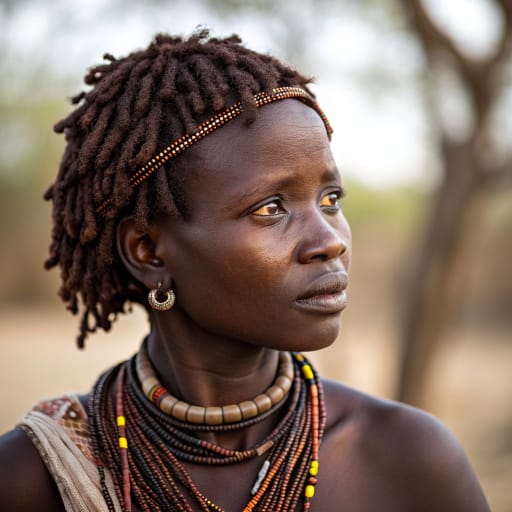
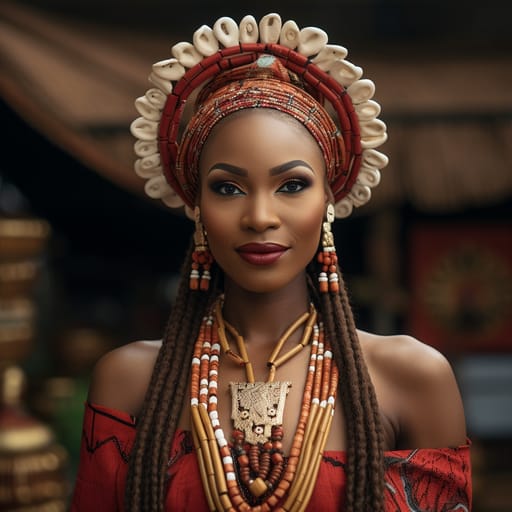
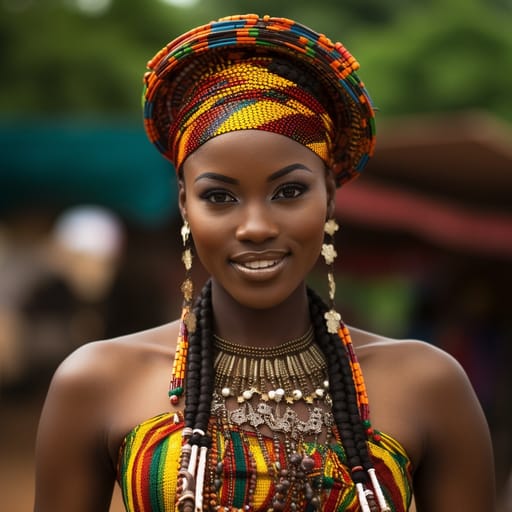
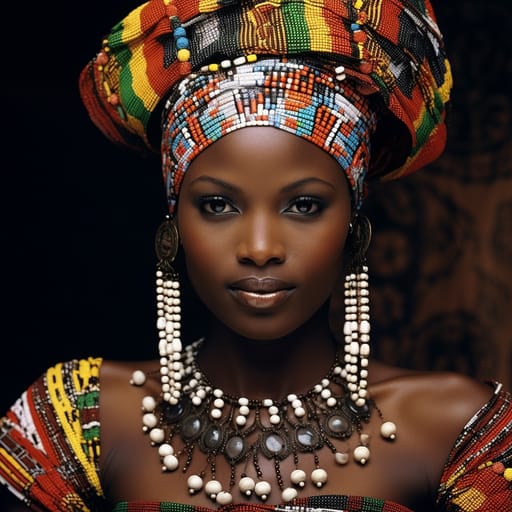
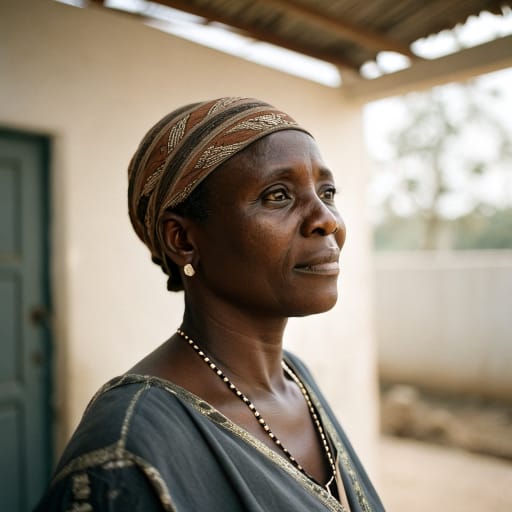
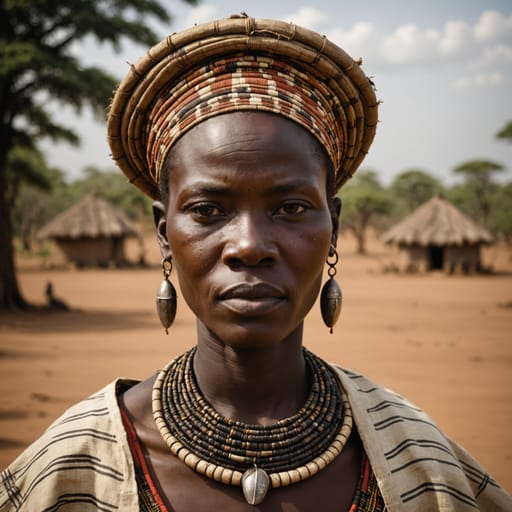
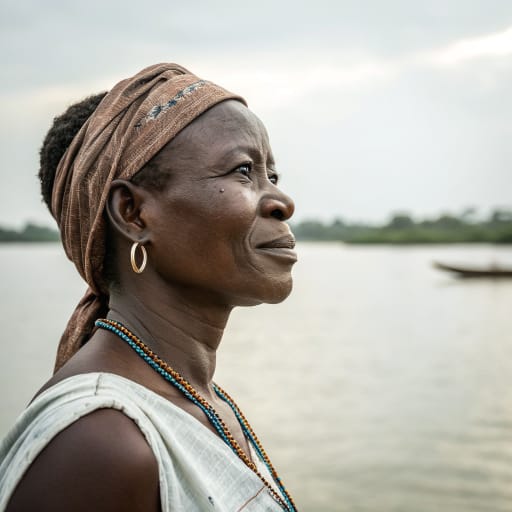
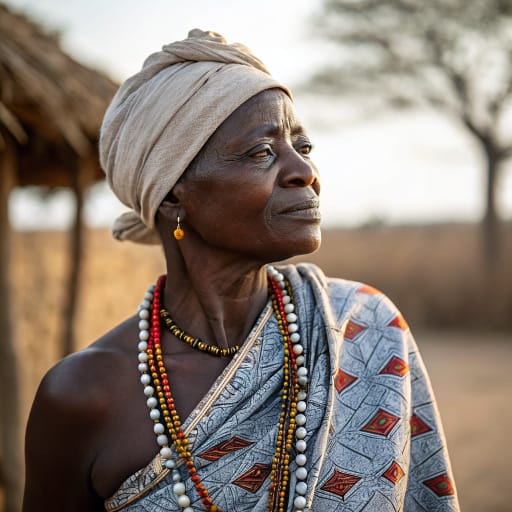
Typical Chamba Phenotypes
Reference for AI generation: hair, eyes, skin, facial structure, build
Chamba Body & Anatomy Reference
Anatomy by feature, West African Niger-Congo phenotype
Chamba Boobs & Breasts
Chamba boobs follow the West African Niger-Congo profile: medium-to-large cup, full, projecting. Areolar diameter is usually 35-50mm, and the coloring is deep-brown to near-black areolar pigmentation against the medium-to-deep-brown skin tone. Breast shape tracks body composition (mesomorph with strong gluteal-femoral fat distribution, mean adult female BMI 24-27), so Chamba breasts tend to be fuller and more projecting than the East African norm. Expect a forward-set shape, not the smaller conical Cushitic East African profile.
Chamba Ass & Hips
Chamba ass and hip morphology presents as wide-set, full, heavily projected glutes, distinctly different from the slim narrow-hip Cushitic East African profile. The Chamba pelvic profile shows wide iliac crests, broad gynoid pelvic pattern, high glute-to-waist ratio, anchored in the West African Niger-Congo skeletal pattern. Chamba butt shots in adult AI imagery should render the wide-set, full, heavily projected glutes silhouette with the overall build (mesomorph with strong gluteal-femoral fat distribution) and the fat distribution typical of the West African Niger-Congo phenotype.
Chamba Vagina & Pussy
Chamba pussy anatomy typically shows deep-brown to near-black labial pigmentation, fuller labia minora. Pubic hair is usually tightly-coiled coarse texture, densely distributed. In AI-generated Chamba nudes, labial color should blend into the medium-brown to deep-brown skin with a gradual transition, and the hair should keep its tightly-coiled coarse texture.
Chamba Dicks & Penis
Penis reference for Chamba men: regional mean ~14-15cm erect, above-average girth, ~13cm circumference. Coloring: deep-brown-to-near-black shaft pigmentation. An accurate Chamba cock in AI imagery matches the surrounding medium-brown to deep-brown skin rather than a generic porn default. Circumcision depends on religion and custom, not ancestry.
Chamba Body, Curves & Build
The Chamba figure is generally mesomorph with strong gluteal-femoral fat distribution, with mean adult female BMI 24-27, characteristic of West African Niger-Congo ancestry. AI image tools tend to flatten regional body types into a few stock shapes; here the Chamba build is kept as its own reference.
Chamba Skin Tone & Hair Texture
Skin: medium-brown to deep-brown (Fitzpatrick V-VI). Hair: tight 4A-4C coil, often worn natural, braided, or relaxed. Both are typical of West African Niger-Congo ancestry. The most common mistake in AI nudes of Chamba women is a body rendered lighter than the face.
Explore phenotype categories
Structured taxonomy with peer-reviewed scales · 22 anatomical categories
Erotic Poses & Sex Positions
From the pose catalog: 219 named positions with reference skeletons
Frequently asked questions about Chamba people
Where is the Chamba homeland?
The Chamba homeland is Alantika Mountains and nearby plains on the Nigeria-Cameroon border, in Adamawa and Taraba states of Nigeria and in northern Cameroon, with chiefdoms founded by Chamba migrants further south in Western Africa.
What language do Chamba people speak?
Chamba people primarily speak Chamba Daka (Dakoid, Niger-Congo) and Chamba Leko (Leko branch of Adamawa, Niger-Congo); Fulfulde, Hausa, English or French widely spoken as second languages.
What religion do Chamba people practice?
The predominant religion among Chamba people is Christianity and Islam, alongside indigenous rites for the dead, clan-owned cults and masquerades.






Make your own Chamba images
Five a day, free, no credits to buy. The studio starts from this group's phenotype data, so you can set body type, pose and style and keep the traits accurate.
Start with Chamba