Help us get this right
Does this portrait look right for Bakulu?
Nobody has judged this one yet. You would be the first.
Bakulu Erotic
Southern Kaduna State, north-central Nigeria
Ikulu (Niger-Congo, Benue-Congo, Plateau); Hausa and English widely used as second languages
Predominantly Christian, with some continuing traditional religious practice
One of the Plateau-speaking peoples of Southern Kaduna, alongside neighbors such as the Atyap, Bajju and Ham
About Bakulu People
The Bakulu, also known as the Ikulu after the language they speak, are a farming people of southern Kaduna State, in the hill and savanna country of Nigeria's Middle Belt. Southern Kaduna is one of the most crowded parts of Nigeria for languages. Dozens of separate peoples live close together there, and in that setting a group is marked out by three things: its own language, its own home territory and a traditional ruler who answers to that community rather than to outsiders. The Bakulu have all three, and holding on to them is a large part of who they are.
Ikulu belongs to the Plateau branch of the Benue-Congo languages, within the huge Niger-Congo family. The languages around it are relatives: Tyap, Jju and Hyam, spoken by the Atyap, Bajju and Ham, come from the same Plateau stock. Hausa is the language of trade across the region, and English is used in school and government, so many Bakulu switch between at least three languages as a matter of routine. The home language is the one that marks who belongs.
History here was shaped by the old frontier with the Zazzau emirate to the north. In the nineteenth century the non-Muslim peoples of southern Zaria were targets of slave raids. British indirect rule then placed them under emirate administration, a grievance that drove southern Kaduna politics for generations. Christian missions arrived during the colonial period, and today the Bakulu are largely Christian, with church life setting much of the social calendar, though traditional religious practice has not disappeared. The long campaign for chiefdoms run by southern Kaduna peoples themselves eventually succeeded, and the Ikulu now have a chiefdom with their own paramount ruler, a political gain that still carries weight.
Daily life still follows the farming calendar. Households grow grains, yams and other staples, and the area lies within southern Kaduna's ginger belt, one of the main sources of the crop in Nigeria. Years of rural insecurity across the region have made that farming life harder, and some younger Bakulu now divide their time between home villages and cities such as Kaduna.
Related ethnic groups
Groups that share Bakulu's homeland, region, language, or religious tradition. These are likely candidates for comparative phenotype reference.
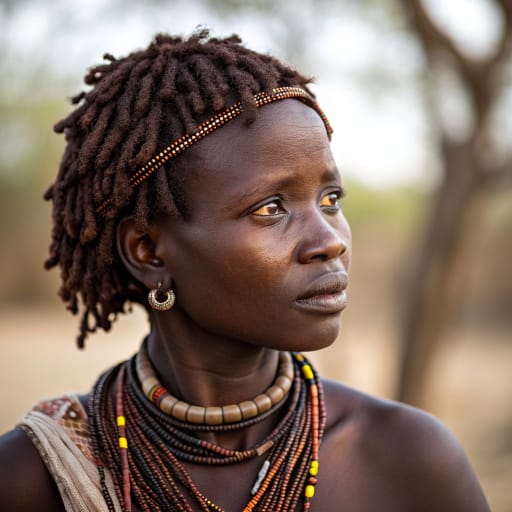
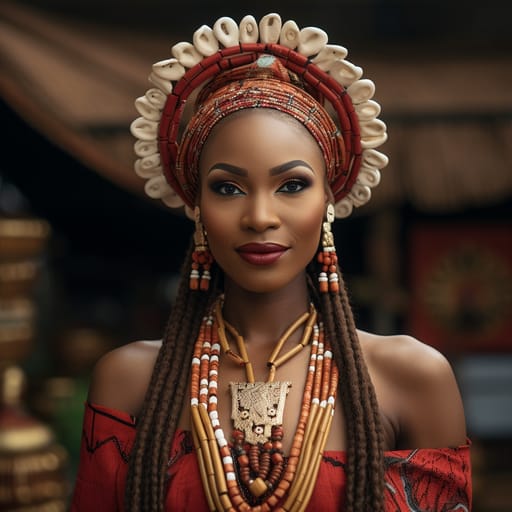
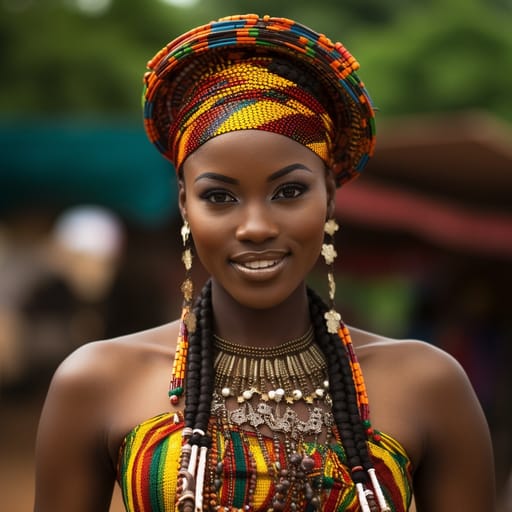
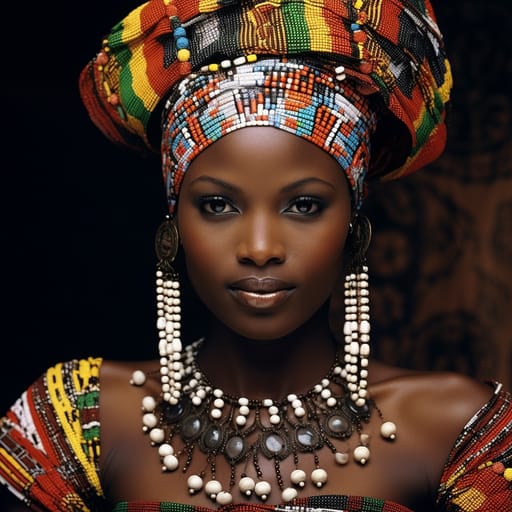
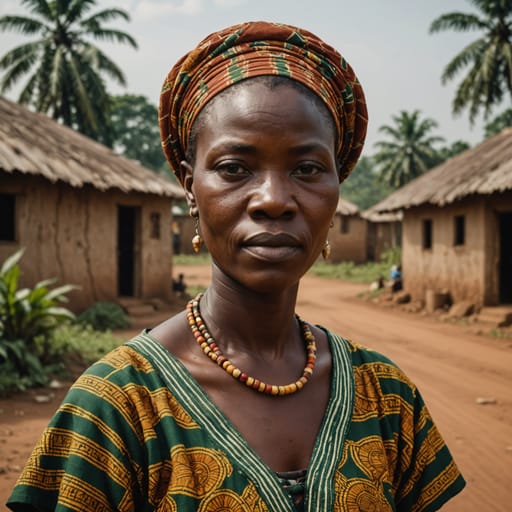
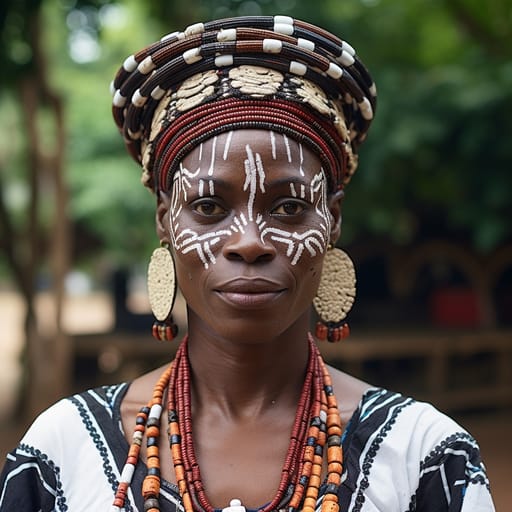
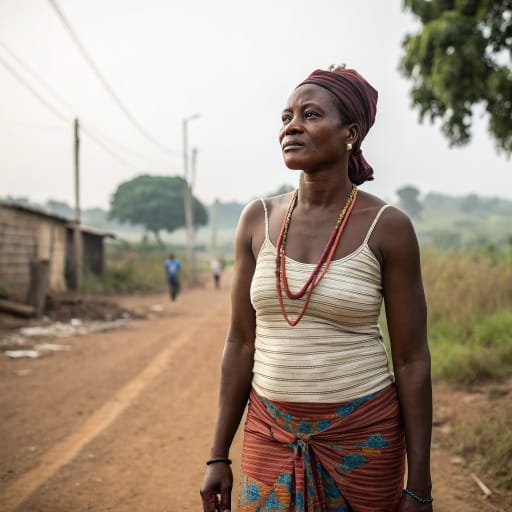
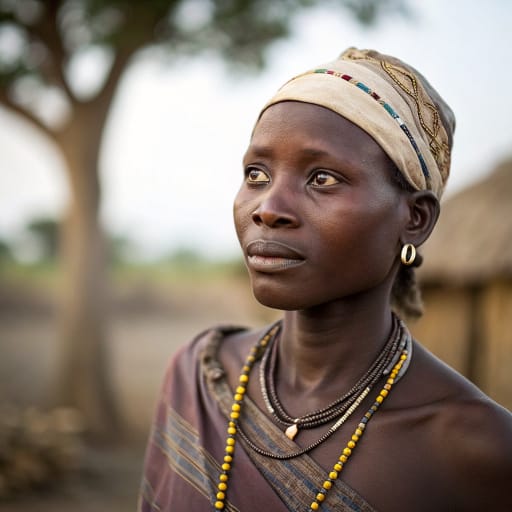
Typical Bakulu Phenotypes
Reference for AI generation: hair, eyes, skin, facial structure, build
Bakulu Body & Anatomy Reference
West African Niger-Congo phenotype: anatomy reference for AI nude generation
Bakulu Boobs & Breasts
Bakulu tits and boobs run medium-to-large cup, full, projecting, the classic West African Niger-Congo bust profile. Bakulu nipples and areolas show deep-brown to near-black areolar pigmentation against the medium-to-deep-brown skin tone, with areolar diameter typically in the 35-50mm range and forward-set positioning rather than the smaller conical Cushitic East African profile. Bakulu breasts trend fuller and more projecting than the East African norm, a function of the mesomorph with strong gluteal-femoral fat distribution body habitus and the mean adult female BMI 24-27. For anatomically accurate AI-generated Bakulu nudes the render preserves the medium-to-large cup, full, projecting shape, 35-50mm areolas with deep-brown to near-black pigmentation, and the torso proportions of the West African Niger-Congo phenotype.
Bakulu Ass & Hips
Bakulu hips and butt usually read as wide-set, full, heavily projected glutes. The skeletal base is wide iliac crests, broad gynoid pelvic pattern, high glute-to-waist ratio, the West African Niger-Congo pattern. Set against the slim narrow-hip Cushitic East African profile, the difference is easy to see, and the hip-to-waist ratio is often what identifies Bakulu women in photos.
Bakulu Vagina & Pussy
Expect deep-brown to near-black labial pigmentation, fuller labia minora on Bakulu women, in keeping with West African Niger-Congo ancestry. The pubic hair is tightly-coiled coarse texture, densely distributed. Coloring should run evenly from the medium-brown to deep-brown skin of the thighs to the labia, and Bakulu nude imagery should keep the hair's tightly-coiled coarse texture.
Bakulu Dicks & Penis
Bakulu dick and penile anatomy in adult AI generation should anchor on the regional reference data: regional mean ~14-15cm erect, above-average girth, ~13cm circumference, and deep-brown-to-near-black shaft pigmentation. The Bakulu cock profile reflects the West African Niger-Congo population's anthropometric measurements. The shaft pigmentation should track the surrounding medium-brown to deep-brown skin tone, and the pubic hair should keep its tightly-coiled coarse texture in the typical inverted-V escutcheon.
Bakulu Body, Curves & Build
Bakulu body type: mesomorph with strong gluteal-femoral fat distribution, with mean adult female BMI 24-27. This is the typical West African Niger-Congo build. Height range, shoulder-to-hip ratio and fat distribution all follow from it, which is what an accurate Bakulu nude body should show.
Bakulu Skin Tone & Hair Texture
Bakulu skin tone falls in the medium-brown to deep-brown (Fitzpatrick V-VI) band, the surface signal most often miscalibrated by generic AI nude generators. Bakulu hair texture is typically tight 4A-4C coil, often worn natural, braided, or relaxed, characteristic of the West African Niger-Congo phenotype. In Bakulu nude renders the skin should hold that band consistently across the body.
Explore phenotype categories
Structured taxonomy with peer-reviewed scales · 22 anatomical categories
Erotic Poses & Sex Positions
From the pose catalog: 219 named positions with reference skeletons
Frequently asked questions about Bakulu people
Where is the Bakulu homeland?
The Bakulu homeland is Southern Kaduna State, north-central Nigeria in Western Africa.
What language do Bakulu people speak?
Bakulu people primarily speak Ikulu (Niger-Congo, Benue-Congo, Plateau); Hausa and English widely used as second languages.
What religion do Bakulu people practice?
The predominant religion among Bakulu people is Predominantly Christian, with some continuing traditional religious practice.






Make your own Bakulu images
Five a day, free, no credits to buy. The studio starts from this group's phenotype data, so you can set body type, pose and style and keep the traits accurate.
Start with Bakulu