Help us get this right
Does this portrait look right for Isoko?
Nobody has judged this one yet. You would be the first.
This portrait replaced one that 3 of 5 readers said looked off.
Isoko Erotic
Isoko region (Nigeria)
Christianity
About Isoko People
The Isoko occupy a stretch of the Niger Delta's freshwater swamp belt in southern Delta State, where the land sits low and the creeks do most of the talking. They are often grouped with the Urhobo by outsiders — the languages are close cousins within the Edoid branch of Niger–Congo, and the two peoples share a long border — but the Isoko hold the distinction firmly. The split is audible to a speaker within a sentence or two, and politically the Isoko fought for and won their own administrative recognition in the colonial and post-colonial reshuffling of the Delta.
There is no single Isoko kingdom in the way the Benin or Yoruba traditions produced one. Instead the group is a federation of around a dozen and a half autonomous clans — Olomoro, Owhe, Iyede, Ozoro, Emevor, Uzere, Aviara, and others — each historically governed by its own council of elders under an Odio-Ologbo, the senior man whose authority rested on age and on the standing of his lineage. This decentralization is part of why outsiders historically underestimated them: there was no court to send an envoy to, no throne to convert. Decisions were taken clan by clan.
The land itself shapes daily life. Yam is the prestige crop and still anchors the agricultural calendar; cassava, plantain, and palm produce fill in around it, and fishing matters more the closer a community sits to the Niger's distributaries. Palm wine has a ceremonial weight here that goes beyond refreshment — it accompanies negotiation, funeral rites, and the formal welcoming of guests. Christianity, mostly Anglican and Pentecostal varieties introduced through twentieth-century mission work, is now the dominant religious affiliation, but the older cosmology of Oghene as creator and a layered set of ancestral and territorial spirits has not so much been replaced as folded underneath. Funerals in particular still carry pre-Christian protocol regardless of the church a family attends.
The discovery of oil under Isoko soil in the mid-twentieth century — Uzere was one of the early producing fields in Nigeria — pulled the region into the Delta's long, unresolved argument over resource control, environmental damage, and who benefits from what comes out of the ground. That tension has shaped a generation of Isoko activism and migration: a substantial diaspora in Lagos, Port Harcourt, and abroad, paired with hometown unions that send money and political pressure back to the clans.
Related ethnic groups
Groups that share Isoko's homeland, region, language, or religious tradition. These are likely candidates for comparative phenotype reference.
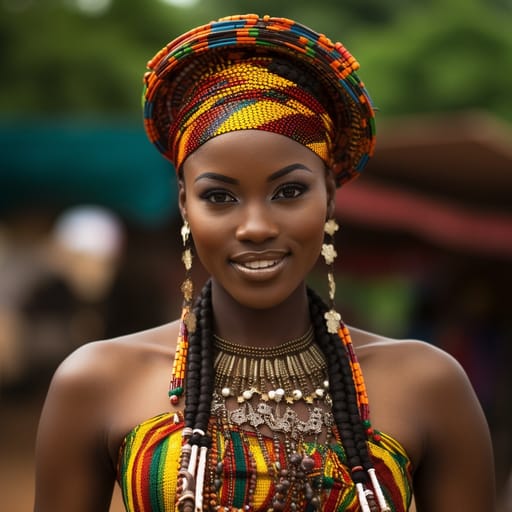
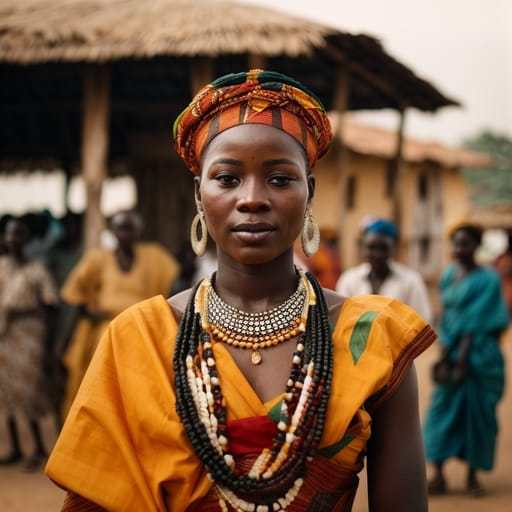
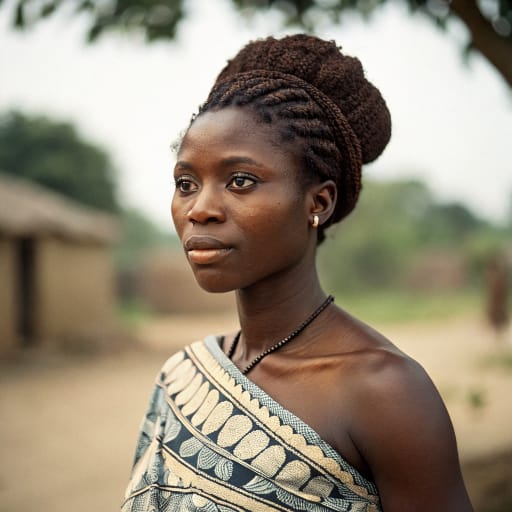
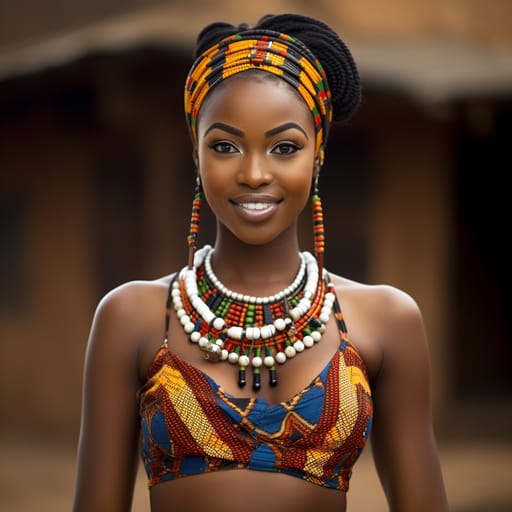
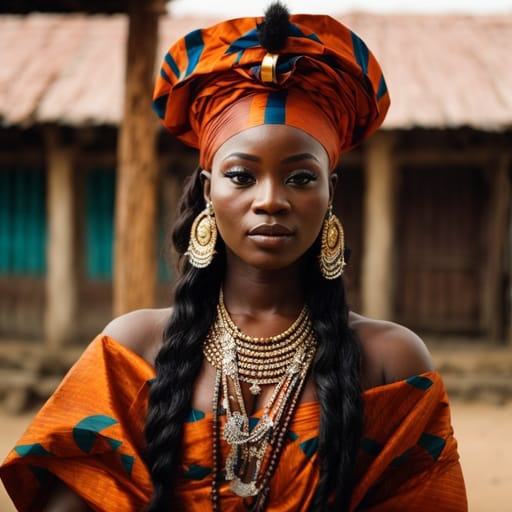

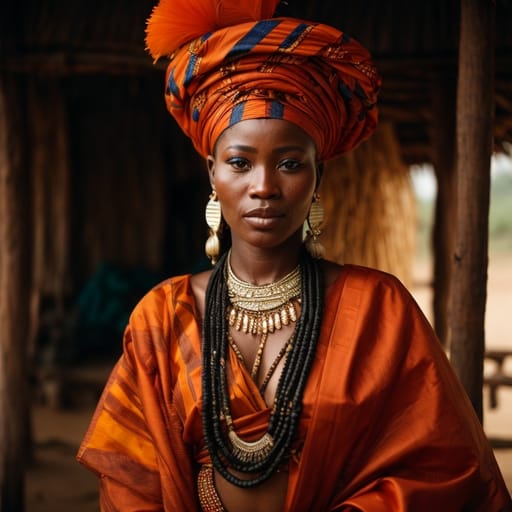
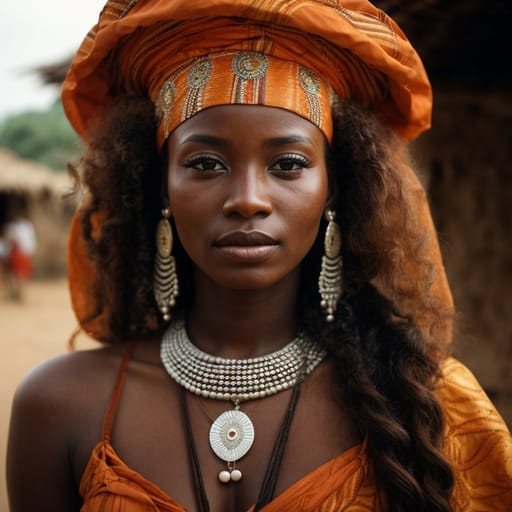
Typical Isoko Phenotypes
Reference for AI generation: hair, eyes, skin, facial structure, build
The Isoko, an Edoid-speaking people of the southern Niger Delta in Delta State, share the broad West African phenotype of the lower Niger basin but read as distinct from their Yoruba neighbors to the west and the Igbo to the east — closer in build and feature to the Urhobo and Itsekiri they border. Hair is uniformly Type 4 — tight coils, dense and dry-textured — and uniformly black or near-black. Greying tends to come late and concentrates at the temples first; the soft 4A patterning seen in some Akan populations is rare here, with 4B and 4C textures dominant.
Eyes sit in the dark-brown to near-black range, occasionally with a faint amber cast under direct light. The eyelid is full and smooth without an epicanthic fold, and the brow ridge is moderate rather than heavy. Skin runs Fitzpatrick V to VI — deep brown through to genuinely dark, with warm red-brown undertones rather than the cooler blue-black undertones common further inland. The riverine, humid climate of the Delta means weathered or sun-leathered skin is uncommon; complexions read smooth and even.
Facial structure is where the Isoko phenotype shows its character. Noses tend to be broad at the alar base with a low-to-medium bridge, but rarely flat — there is usually visible bridge projection. Lips are full top and bottom with a well-defined vermilion border. Cheekbones are moderately set, the jaw squared in men and softly rounded in women, and the overall face shape leans oval rather than long. Footballers like Victor Ikpeba and Jonathan Akpoborie illustrate the typical male build: medium-tall stature (men averaging roughly 173–178 cm), athletic with naturally developed lower-body musculature, narrow hips, and broad shoulders. Women tend toward a curvier hip-to-waist ratio than is typical in the Sahel populations to the north, with fuller busts and a softer overall body line. The defining read is warm-toned dark skin paired with broad-based features and an athletic, proportionate frame — visible across performers from Daddy Showkey to Eva Alordiah.
Isoko Body & Anatomy Reference
West African Niger-Congo phenotype: anatomy reference for AI nude generation
Isoko Boobs & Breasts
Bust reference for Isoko women: medium-to-large cup, full, projecting, which is typical of West African Niger-Congo ancestry. Areolas measure about 35-50mm across, with deep-brown to near-black pigmentation. Body type (mesomorph with strong gluteal-femoral fat distribution) shapes the bust as well, so Isoko tits are usually fuller and more projecting than the East African norm. In AI imagery, keep the forward-set shape rather than drifting toward the smaller conical Cushitic East African profile.
Isoko Ass & Hips
The Isoko ass is typically wide-set, full, heavily projected glutes, which sets it apart from the slim narrow-hip Cushitic East African profile. Underneath, the pelvis shows wide iliac crests, broad gynoid pelvic pattern, high glute-to-waist ratio, part of the West African Niger-Congo skeletal pattern. For Isoko butt pics and AI renders, match that silhouette and the overall build (mesomorph with strong gluteal-femoral fat distribution).
Isoko Vagina & Pussy
Isoko pussy and vulvar anatomy presents deep-brown to near-black labial pigmentation, fuller labia minora, consistent with the West African Niger-Congo phenotype's pigmentation pattern. Isoko pubic hair is typically tightly-coiled coarse texture, densely distributed, in the inverted-triangle pattern. For anatomically accurate Isoko pussy renders the labial coloration should match the surrounding medium-brown to deep-brown skin tone with a continuous gradient, and the hair should keep its tightly-coiled coarse texture.
Isoko Dicks & Penis
Isoko dicks follow the West African Niger-Congo reference data: regional mean ~14-15cm erect; above-average girth, ~13cm circumference; deep-brown-to-near-black shaft pigmentation. Shaft color should track the medium-brown to deep-brown skin tone with a smooth change toward the glans, and Isoko pubic hair keeps its tightly-coiled coarse texture.
Isoko Body, Curves & Build
Isoko body type and overall build presents as mesomorph with strong gluteal-femoral fat distribution, with mean adult female BMI 24-27: the characteristic West African Niger-Congo habitus. Isoko curves and proportions should keep the regional skeletal frame (height, shoulder-to-hip ratio, limb proportions) rather than a generic mesomorph default.
Isoko Skin Tone & Hair Texture
Isoko skin sits in the medium-brown to deep-brown (Fitzpatrick V-VI) band. Hair is typically tight 4A-4C coil, often worn natural, braided, or relaxed, in keeping with the West African Niger-Congo phenotype. In nude renders the skin should stay one even tone from face to body, and body, pubic and head hair should match.
Data depth
65/100Coverage of image-grounded phenotype observations · drives AI generation diversity
- Sample size
- 20/40· 11 images
- Image quality
- 30/30· 73% high
- Confidence
- 15/20· mean 0.79
- Source diversity
- 0/10· wikipedia
- ·Modest sample (n<25)
- ·Wikipedia-only source, not population-representative
Observed Distribution: Image Sample
Empirical observations from analyzed photographs · supplementary signal, not population truth
Sample: 11 images analyzed (11 wikipedia). Quality: 8 high, 3 medium, 0 low, 0 very_low. Avg analyzer confidence: 0.79.
Skin tone (Fitzpatrick): V (18%), VI (82%)
Hair color: black (91%), blonde (9%)
Hair texture: straight (18%), coily (55%), shaved (9%), covered (18%)
Eye color: dark brown (64%), unclear (36%)
Epicanthic fold: 0% present, 64% absent, 36% unclear
Caveats: Sample size 11 is modest, so secondary patterns may not be reliable. Sample is 100% Wikipedia notable people, which skews toward male, public-life, and modern figures, not population-representative.
Last aggregated: May 7, 2026
Explore phenotype categories
Structured taxonomy with peer-reviewed scales · 22 anatomical categories
Notable Isoko People
23 reference figures, sourced from Wikipedia
- Obaro Ikime, Professor of History, University of Ibadan
- Stella Omu, Senator of the Federal Republic of Nigeria
- Jonathan Akpoborie, Nigerian international footballer
- D'Prince, Afropop singer
- Victor Ikpeba, Nigerian international footballer and brand ambassador
- Joel-Onowakpo Thomas, Senator currently representing Delta South
- Zeb Ejiro, Veteran Film Maker
- Chico Ejiro, Veteran Film Maker
- Eva Alordiah, rap musician
- Jeta Amata, filmmaker
- Bovi, comedian
- Patience Oghogho Maseli, first female Deputy Director of Upstream Division at the Department of Petrol…
- Evi Edna Ogholi, reggae musician
- Orezi, musician
- Daddy Showkey, garala singer
- Masai Ujiri, President and former GM of the Toronto Raptors
- Solid Star, musician
- Samuel Oboh, Canadian architect
- Cornelius Adam Igbudu, 1914-1981), founder of the Anglican Adam Preaching Society
- Ogaga Ifowodo, human rights activist, lawyer, and writer
- Moses James, Boxer, Olympic medalist 1992, two time world boxing champion.
- Paul Ufuoma Omu, July 1940 to 29 April 2025), Nigerian Major General, politician, and former M…
- Gen. Alexander Ogomudia, retired Nigerian Army general who served as Chief of Defence Staff of Nigeria…
Erotic Poses & Sex Positions
From the pose catalog: 219 named positions with reference skeletons
Frequently asked questions about Isoko people
Where is the Isoko homeland?
The Isoko homeland is Isoko region (Nigeria) in Western Africa.
What language do Isoko people speak?
Isoko people primarily speak Niger-Congo / Edoid / Isoko.
What religion do Isoko people practice?
The predominant religion among Isoko people is Christianity.






Make your own Isoko images
Five a day, free, no credits to buy. The studio starts from this group's phenotype data, so you can set body type, pose and style and keep the traits accurate.
Start with Isoko