Help us get this right
Does this portrait look right for Mehri?
Nobody has judged this one yet. You would be the first.
Mehri Erotic
About Mehri People
The Mehri are the people of the Mahra, the arid southeastern stretch of the Arabian Peninsula that runs from eastern Yemen into Oman's Dhofar. They are tribal, historically pastoralist, and concentrated in a landscape most outsiders never see — limestone plateaus, monsoon-touched escarpments, and a coastline that for centuries pushed them out toward the Indian Ocean as sailors and traders rather than inland toward the rest of Arabia.
What sets them apart most clearly is the language. Mehri is a Modern South Arabian language, part of the Semitic family but a separate branch from Arabic — closer in some structural ways to the ancient Semitic of South Arabia than to the Arabic that surrounds it today. A Mehri speaker and an Arabic speaker do not understand each other. The language preserves sounds and grammatical features that disappeared from mainstream Arabic long ago, which is part of why linguists have spent decades working with Mehri-speaking elders before the language thins further. It is largely unwritten; transmission is oral, through poetry, sung verse, and the genealogical recitations that hold tribal memory together. Soqotri, spoken on the island of Socotra, is a sister language in the same small family, and Socotrans are often grouped with the Mehri culturally even though the island's isolation has carried its people in their own direction.
Islam — overwhelmingly Sunni, of the Shafi'i school typical of southern Arabia — has been the religious framework for more than a millennium, but daily life still runs on a tribal architecture older than the conversion: sheikhly authority, customary law, hospitality codes that obligate the host more than they flatter the guest, and an inherited set of obligations around feud, mediation, and protection. The Mahra were politically distinct well into the twentieth century, ruled by the Mahra Sultanate of Qishn and Socotra under loose British protection until 1967, and the memory of that separateness still shapes how Mehris regard the Yemeni and Omani states they now sit inside.
The contemporary picture is harder. The Yemeni half of the Mahra has lived through the long war's spillover, while the Omani side has urbanized faster, with younger Mehris increasingly switching to Arabic for work and schooling. The language is not yet endangered in the acute sense, but its domain is narrowing, and that — more than anything visible from the outside — is what Mehris themselves tend to talk about when they talk about being Mehri.
Related ethnic groups
Groups that share Mehri's homeland, region, language, or religious tradition. These are likely candidates for comparative phenotype reference.
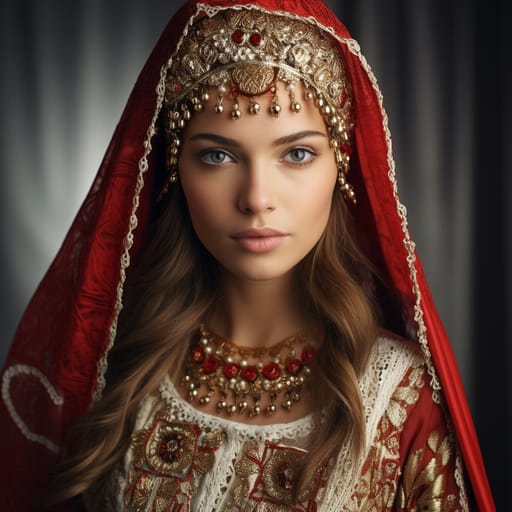
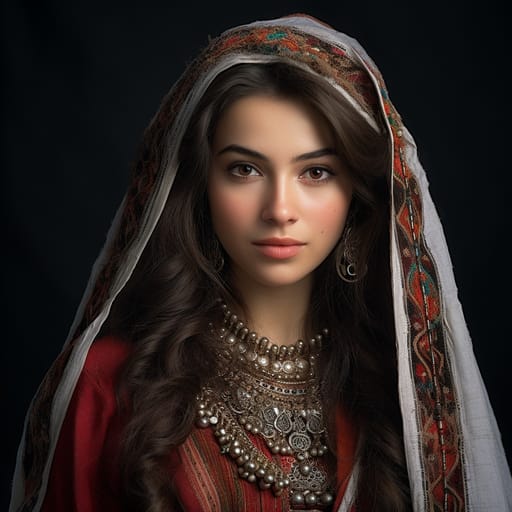
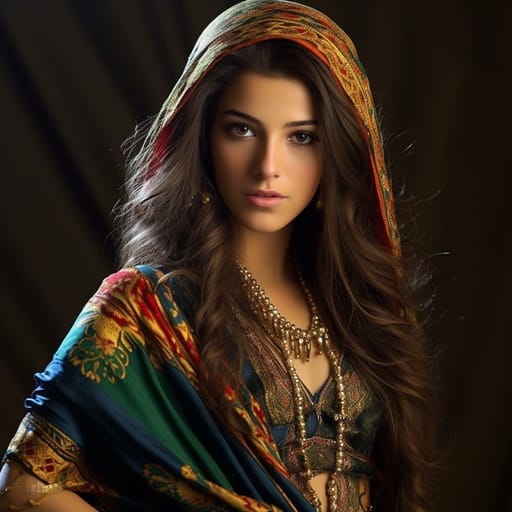
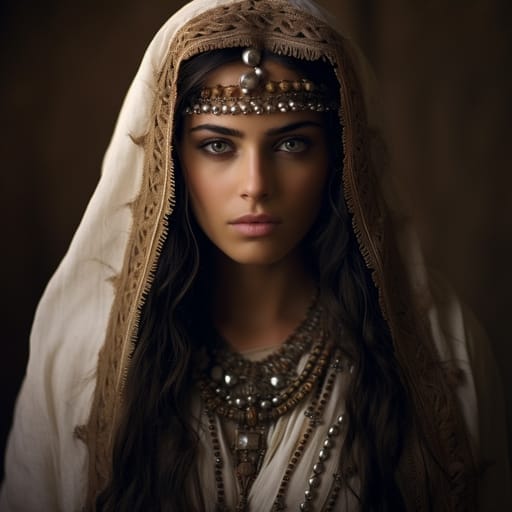
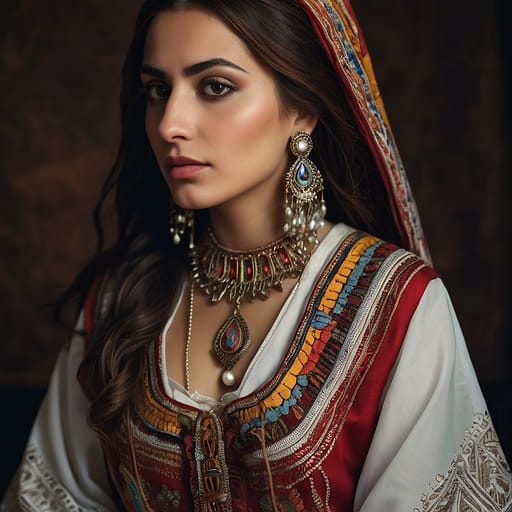
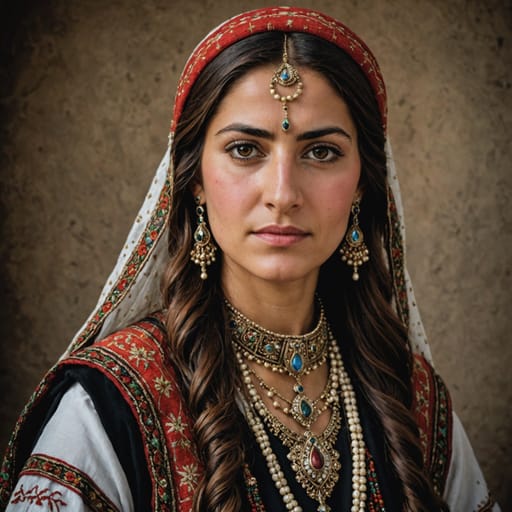
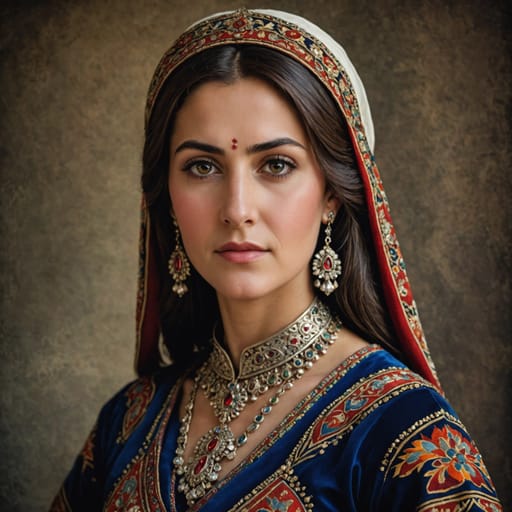
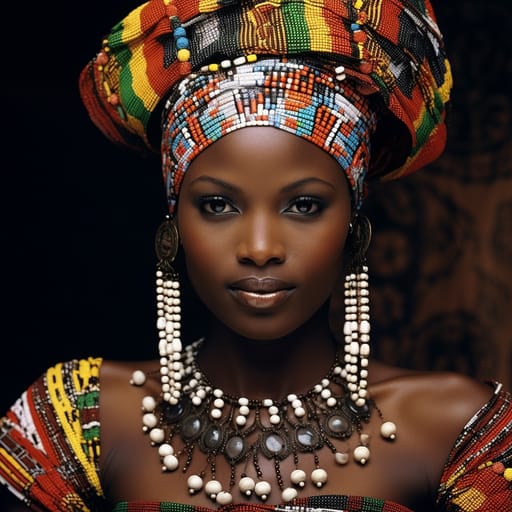
Typical Mehri Phenotypes
Reference for AI generation: hair, eyes, skin, facial structure, build
The Mehri are a South Arabian population concentrated in the Mahra governorate of eastern Yemen and the Dhofar region of Oman, with the Soqotri branch isolated for millennia on Socotra island. Their phenotype reflects this geographic position: predominantly Arabian features with measurable East African admixture along the coast, and a distinct island-evolved profile among the Soqotri.
Hair runs near-universally black to very dark brown, with a faint reddish or auburn cast visible in sunlight on some mainland Mehri. Texture is typically straight to loosely wavy on the Omani interior side, shifting to wave and looser curl patterns along the Yemeni coast where Hadhrami and East African contact has been heaviest. Soqotri islanders show notably more curl and occasional tight coil, alongside taller, leaner builds.
Eyes are dark brown to near-black in the overwhelming majority. Lighter hazel and rare green-grey eyes turn up sporadically, more often in the Omani Mehri than the Yemeni side. There is no epicanthic fold; eye shape is almond, often deep-set under a defined brow ridge, with thick lashes that read as a recognizable regional trait.
Skin tone spans Fitzpatrick III through V, with strong olive and warm-bronze undertones. Inland mountain Mehri tend toward the lighter end, while coastal communities and Soqotri sit darker, sometimes into deep brown. Sun exposure in this arid, intensely lit region pushes most adults toward the upper register of their genetic baseline.
Facial structure is the most consistent marker: a long, narrow face with a high, often prominent nasal bridge and a relatively narrow alar base — classic South Arabian morphology. Lips are medium full, neither thin nor heavy, with a defined cupid's bow. Cheekbones are high and the jaw tends to be long and angular rather than square.
Build is typically slender and wiry, with men averaging around 170–175 cm and a low body-fat tendency that persists into middle age. The Soqotri stand out anthropometrically — taller, longer-limbed, and darker-skinned than their mainland kin, a result of long island isolation overlaying the shared South Arabian base.
Mehri Body & Anatomy Reference
Levantine / Mediterranean Middle Eastern phenotype: anatomy reference for AI nude generation
Mehri Boobs & Breasts
Bust reference for Mehri women: medium-to-large cup, full, moderate-to-high projection, which is typical of Levantine / Mediterranean Middle Eastern ancestry. Areolas measure about 32-46mm across, with medium-brown to dark-brown pigmentation. Body type (mesomorph with fuller hip-and-bust deposition) shapes the bust as well, so Mehri tits are usually full and soft, fuller projection than the North-African Berber norm. In AI imagery, keep the forward-set shape rather than drifting toward the smaller East Asian bust profile.
Mehri Ass & Hips
The Mehri ass is typically medium-to-full, moderate projection, broader hip profile, which sets it apart from the slim East Asian narrow-hip profile. Underneath, the pelvis shows medium-to-wide iliac crests, fuller gluteal-femoral deposition, part of the Levantine / Mediterranean Middle Eastern skeletal pattern. For Mehri butt pics and AI renders, match that silhouette and the overall build (mesomorph with fuller hip-and-bust deposition).
Mehri Vagina & Pussy
Mehri pussy and vulvar anatomy presents medium-brown to dark-brown labial pigmentation, fuller labia minora, consistent with the Levantine / Mediterranean Middle Eastern phenotype's pigmentation pattern. Mehri pubic hair is typically wavy-to-coiled medium-coarse dark texture, dense distribution, in the inverted-triangle pattern. For anatomically accurate Mehri pussy renders the labial coloration should match the surrounding olive to medium-brown skin tone with a continuous gradient, and the hair should keep its wavy-to-coiled medium-coarse dark texture.
Mehri Dicks & Penis
Mehri dicks follow the Levantine / Mediterranean Middle Eastern reference data: regional mean ~14cm erect; moderate-to-above-average girth; medium-brown shaft pigmentation. Shaft color should track the olive to medium-brown skin tone with a smooth change toward the glans, and Mehri pubic hair keeps its wavy-to-coiled medium-coarse dark texture.
Mehri Body, Curves & Build
Mehri body type and overall build presents as mesomorph with fuller hip-and-bust deposition, with mean adult female BMI 25-28: the characteristic Levantine / Mediterranean Middle Eastern habitus. Mehri curves and proportions should keep the regional skeletal frame (height, shoulder-to-hip ratio, limb proportions) rather than a generic mesomorph default.
Mehri Skin Tone & Hair Texture
Mehri skin sits in the olive to medium-brown (Fitzpatrick III-V) band. Hair is typically wavy-to-curly 2B-3B, predominantly dark-brown to black, in keeping with the Levantine / Mediterranean Middle Eastern phenotype. In nude renders the skin should stay one even tone from face to body, and body, pubic and head hair should match.
Data depth
0/100Coverage of image-grounded phenotype observations · drives AI generation diversity
- Sample size
- 0/40· 0 images
- Image quality
- 0/30· 0% high
- Confidence
- 0/20
- Source diversity
- 0/10
- ·No image observations yet
Explore phenotype categories
Structured taxonomy with peer-reviewed scales · 22 anatomical categories
Erotic Poses & Sex Positions
From the pose catalog: 219 named positions with reference skeletons
Frequently asked questions about Mehri people
Where is the Mehri homeland?
The Mehri homeland is Mahra (Yemen, Oman) in Western Asia.
What language do Mehri people speak?
Mehri people primarily speak Afroasiatic / Semitic / Mehri.
What religion do Mehri people practice?
The predominant religion among Mehri people is Islam.






Make your own Mehri images
Five a day, free, no credits to buy. The studio starts from this group's phenotype data, so you can set body type, pose and style and keep the traits accurate.
Start with Mehri