No portrait yet
Pazuki Erotic
Eastern Turkey, historically the uplands between Erzurum and Lake Van; a branch settled in Iran
Kurmanji Kurdish (Indo-European, Iranian); Turkish or Persian widely spoken as a second language
Islam
A Kurmanji-speaking tribe of the Kurds; historically a chiefly lineage on the Ottoman-Safavid frontier, with a branch settled in Iran
About Pazuki People
The Pazuki are a Kurdish tribe, and in the Kurdish world that word carries real weight. A tribe is a named lineage with its own chiefs, its own remembered history and a claim on its members' loyalty that has outlasted empires. For at least five centuries, the Pazuki name has belonged to people in the high country between Erzurum and Lake Van, in what is now eastern Turkey. Today it also turns up as a family name across Iran, where a branch of the tribe settled.
Their language is Kurmanji, the northern and most widely spoken form of Kurdish, an Iranian language of the Indo-European family. That leaves the Pazuki in a position many Kurds know well. In Turkey they speak a relative of Persian inside a Turkish-speaking state. In Iran they speak Kurdish in a Persian-speaking country. Most are bilingual, and in towns and cities many younger people speak Turkish or Persian at least as easily as their grandparents' language. They are Muslims, and faith shows up in daily life much as it does for other rural Kurds: in prayer and fasting, in marriage and burial customs, and in the respect paid to local religious figures.
The tribe comes most clearly into the written record in the sixteenth century, when eastern Anatolia was contested ground between the Ottoman Empire and Safavid Iran. Kurdish chiefs in that borderland could raise horsemen, hold fortresses and change sides. Pazuki leaders did all three, holding districts such as Hınıs and Malazgirt and switching between the two powers as the war turned. Sharaf Khan Bidlisi gave the Pazuki their own account in the Sharafnama, his 1597 history of the Kurdish ruling houses, and it is still where anyone tracing the tribe begins.
That era also explains why the Pazuki are split across two countries. Border wars, deportations and the Safavid practice of moving Kurdish tribes onto distant frontiers scattered Kurdish communities far from home, and Pazuki families put down roots in Iran, where the name, often spelled Pazouki, is now a familiar surname. In Turkey the tribal name matters less in public than it once did. Migration to cities, changes in landholding and long state pressure on Kurdish identity have loosened the old structures. What lasts is genealogy: which tribe your family belongs to still counts at weddings, in disputes and in the quiet business of working out who is kin.
Related ethnic groups
Groups that share Pazuki's homeland, region, language, or religious tradition. These are likely candidates for comparative phenotype reference.
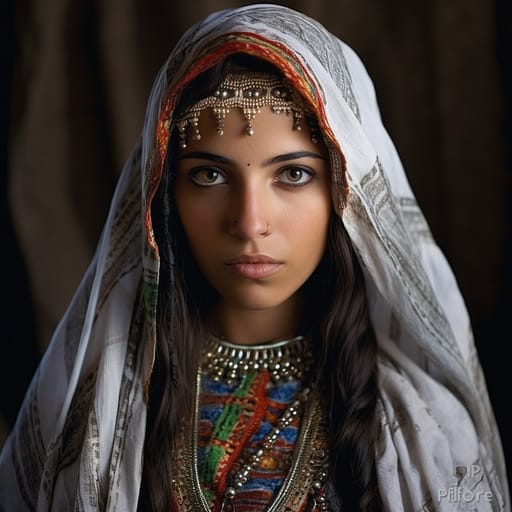
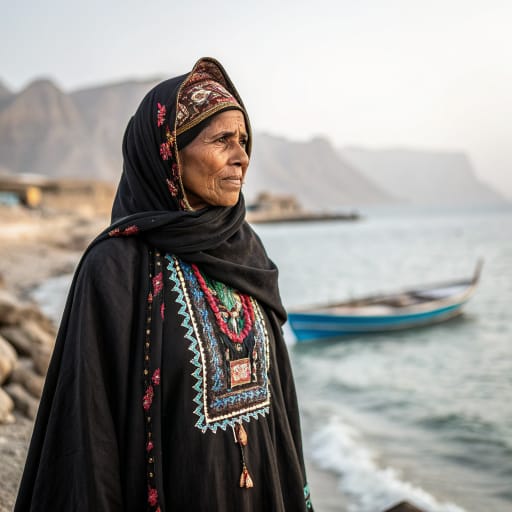
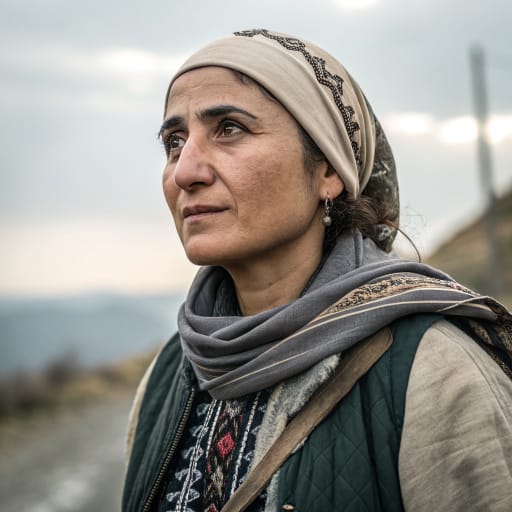
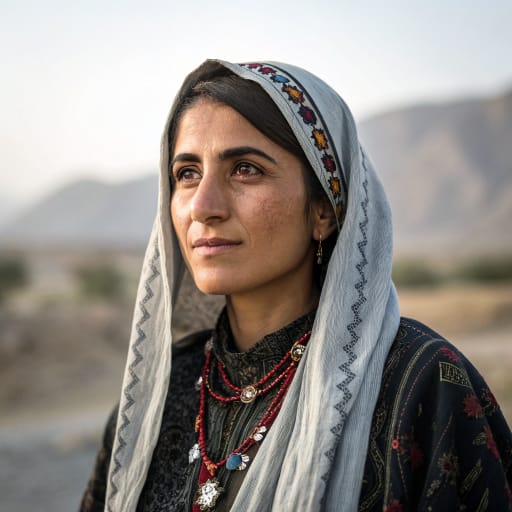
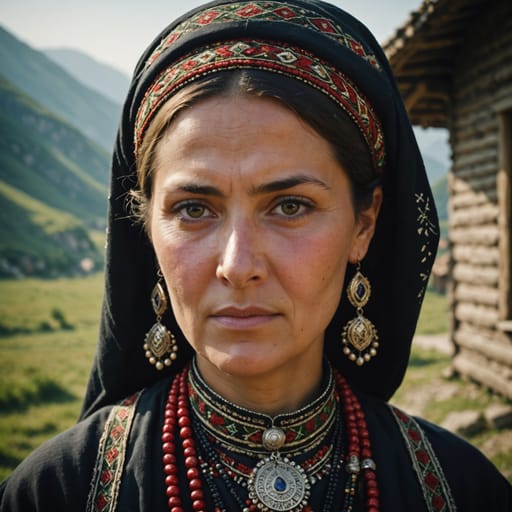
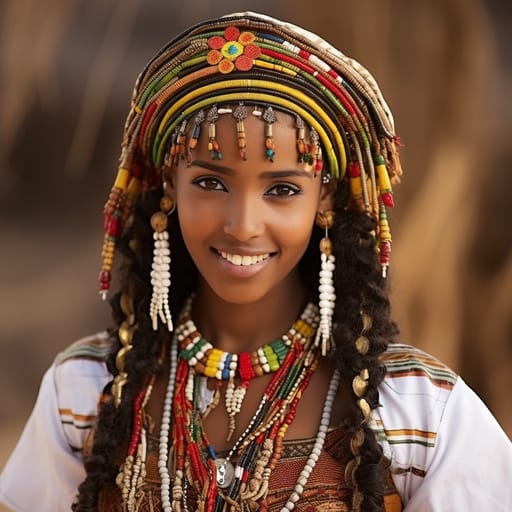
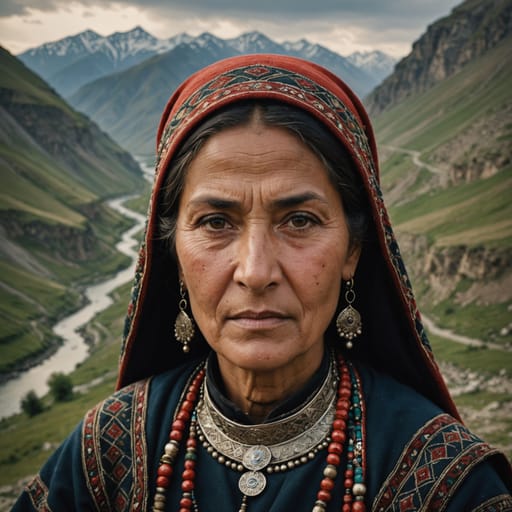
Typical Pazuki Phenotypes
Reference for AI generation: hair, eyes, skin, facial structure, build
Pazuki Body & Anatomy Reference
Anatomy by feature, Levantine / Mediterranean Middle Eastern phenotype
Pazuki Boobs & Breasts
Pazuki tits and boobs run medium-to-large cup, full, moderate-to-high projection, the classic Levantine / Mediterranean Middle Eastern bust profile. Pazuki nipples and areolas show medium-brown to dark-brown areolar pigmentation against the olive-to-light-brown skin tone, with areolar diameter typically in the 32-46mm range and forward-set positioning rather than the smaller East Asian bust profile. Pazuki breasts trend full and soft, fuller projection than the North-African Berber norm, a function of the mesomorph with fuller hip-and-bust deposition body habitus and the mean adult female BMI 25-28. For anatomically accurate AI-generated Pazuki nudes the render preserves the medium-to-large cup, full, moderate-to-high projection shape, 32-46mm areolas with medium-brown to dark-brown pigmentation, and the torso proportions of the Levantine / Mediterranean Middle Eastern phenotype.
Pazuki Ass & Hips
Pazuki hips and butt usually read as medium-to-full, moderate projection, broader hip profile. The skeletal base is medium-to-wide iliac crests, fuller gluteal-femoral deposition, the Levantine / Mediterranean Middle Eastern pattern. Set against the slim East Asian narrow-hip profile, the difference is easy to see, and the hip-to-waist ratio is often what identifies Pazuki women in photos.
Pazuki Vagina & Pussy
Expect medium-brown to dark-brown labial pigmentation, fuller labia minora on Pazuki women, in keeping with Levantine / Mediterranean Middle Eastern ancestry. The pubic hair is wavy-to-coiled medium-coarse dark texture, dense distribution. Coloring should run evenly from the olive to medium-brown skin of the thighs to the labia, and Pazuki nude imagery should keep the hair's wavy-to-coiled medium-coarse dark texture.
Pazuki Dicks & Penis
Pazuki dick and penile anatomy in adult AI generation should anchor on the regional reference data: regional mean ~14cm erect, moderate-to-above-average girth, and medium-brown shaft pigmentation. The Pazuki cock profile reflects the Levantine / Mediterranean Middle Eastern population's anthropometric measurements. The shaft pigmentation should track the surrounding olive to medium-brown skin tone, and the pubic hair should keep its wavy-to-coiled medium-coarse dark texture in the typical inverted-V escutcheon.
Pazuki Body, Curves & Build
Pazuki body type: mesomorph with fuller hip-and-bust deposition, with mean adult female BMI 25-28. This is the typical Levantine / Mediterranean Middle Eastern build. Height range, shoulder-to-hip ratio and fat distribution all follow from it, which is what an accurate Pazuki nude body should show.
Pazuki Skin Tone & Hair Texture
Pazuki skin tone falls in the olive to medium-brown (Fitzpatrick III-V) band, the surface signal most often miscalibrated by generic AI nude generators. Pazuki hair texture is typically wavy-to-curly 2B-3B, predominantly dark-brown to black, characteristic of the Levantine / Mediterranean Middle Eastern phenotype. In Pazuki nude renders the skin should hold that band consistently across the body.
Explore phenotype categories
Structured taxonomy with peer-reviewed scales · 22 anatomical categories
Erotic Poses & Sex Positions
From the pose catalog: 219 named positions with reference skeletons
Frequently asked questions about Pazuki people
Where is the Pazuki homeland?
The Pazuki homeland is Eastern Turkey, historically the uplands between Erzurum and Lake Van; a branch settled in Iran in Western Asia.
What language do Pazuki people speak?
Pazuki people primarily speak Kurmanji Kurdish (Indo-European, Iranian); Turkish or Persian widely spoken as a second language.
What religion do Pazuki people practice?
The predominant religion among Pazuki people is Islam.






Make your own Pazuki images
Five a day, free, no credits to buy. The studio starts from this group's phenotype data, so you can set body type, pose and style and keep the traits accurate.
Start with Pazuki